India's Import of S-400 missiles and the CAATSA
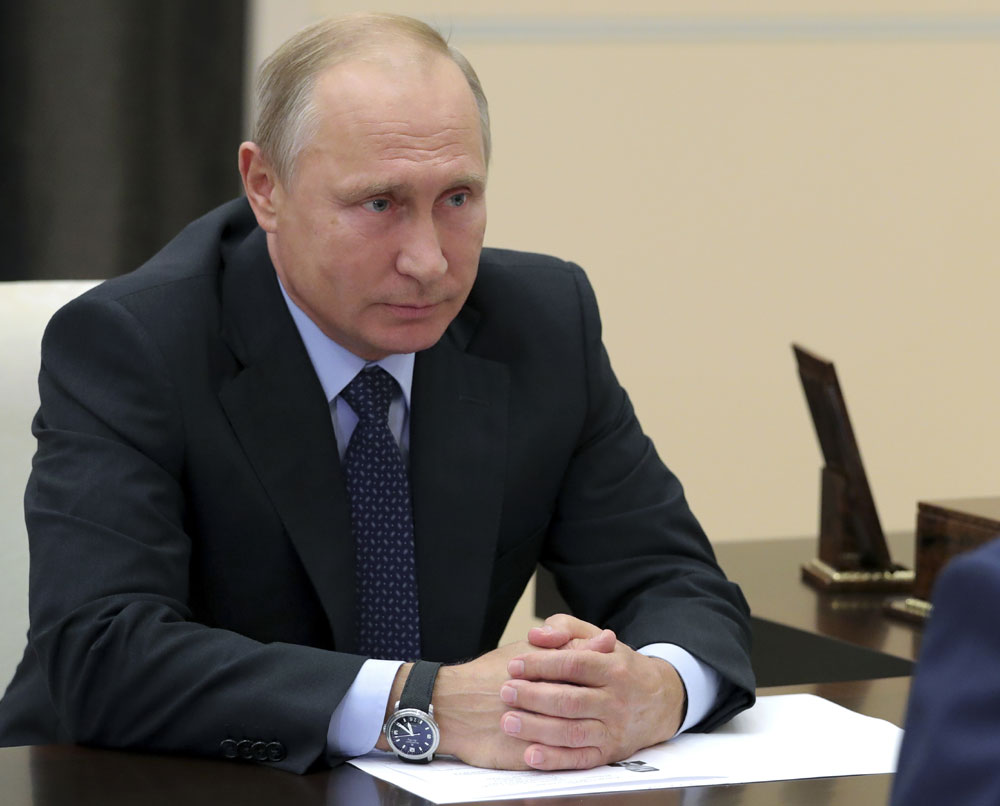
The delivery of the S-400 air defence system began in November last year with an Indian official confirming the same. “We will get the S-400 on schedule. The first squadron will arrive and it will be inducted this year,” Indian Air Force Ch...
The delivery has once again raised doubts over CAATSA sanctions by the U.S on India, which were initially introduced to stop military exchanges between Russia, Iran, North Korea and the rest of the world [1].
James O’Brien, President Joe Biden’s nominee for Coordinator for Sanctions Policy recently shed light on the U.S's position on India acquiring the Russian S-400 missile defence system. During a hearing with the lawmakers, he clarified that the U.S is clearly "discouraging India" to acquire the system [2]. Mr O’Brien said that it was difficult to compare the two situations, with a NATO ally that is breaking with legacy defence procurement systems, and then with India, a partner of growing importance, but that has legacy relationships with Russia.
The recent India-Russia summit, the first Prime Minister-level summit to happen in person, was hosted by the Indian Prime Minister in December 2021. The summit was followed by the creation of a 2+2 ministerial dialogue including the defence and the foreign ministries, boosting Indo-Russian ties. With parts of the S-400 missile defence system supplies landing in India, despite the threat of US sanctions under CAATSA, and the defence deals signed with Russia, New Delhi has broadened her strategic autonomy space.
While over 60% of India’s military hardware is of Russian origin, the recent agreement on the manufacture of AK-203 rifles in India with Russian technology transfer is critical for India soldiers as it will re-equip and upgrade their capability, who are still using the old INSAS rifles. Co-production and manufacture of four frigates and supply of the SU-MKI and MiG-29 aircraft were among the other defence deals [3].
Calculated Risk
India had placed a $5.3-billion order for five units of S-400 in 2018 and paid Russia the first tranche of $800 million in 2019. Considered one of the most advanced defence systems in the world, the S-400 has the capability to protect against almost all sorts of aerial attacks, including drones, missiles, rockets and even fighter jets. Deliveries of all five missiles in instalments are expected to be completed by April 2023. While India knew the risks of making the deal with Russia, it went ahead with the exchange in the spirit of ‘strategic autonomy’. Legally, only two of the twelve designated sanctions may apply to India including Prohibition of Banking transaction and Export sanction which will have large scale implications for India-US Defence and strategic partnership.
On being asked about the effect of the deal on the India-US partnership, India’s spokesperson Anurag Srivastava said “India and the US have a comprehensive global strategic partnership. India has a special and privileged strategic partnership with Russia. India has always pursued an independent foreign policy. This also applies to our defense acquisitions and supplies which are guided by our national security interests”.
In spite of a border standoff with China in Eastern Ladakh, the S-400, several Indian media reported that the first squadron deployed a Russia-made S-400 missile system in the Punjab sector, to boost India's western air defence capabilities [4].
US Support
While the U.S has been vocal on the issue and potential CAATSA sanctions, there are voices of support from the community. Last year, Republican senators Ted Cruz, Todd Young and Roger Marshall introduced the ‘Circumspectly Reducing Unintended Consequences Impairing Alliances and Leadership Act of 2021’ (CRUCIAL Act), which creates a 10-year exemption for member countries of the Quadrilateral Security Dialogue—Australia, Japan, and India—from U.S. sanctions passed in 2017. Both Young and Marshall have been supportive of the QUAD group [5]. “The CRUCIAL Act provides an incredibly important sanctions exemption for our partners who are standing with the U.S. against China’s economic coercion and military aggression. As China continues to threaten its neighbours and attempt to overturn the rules-based international order, our relationships with key Democracies such as India, Japan, and Australia will only become more important – serving as a multiplier in our efforts to ensure a free and open Indo-Pacific,” the legislation read.
Later, a letter was sent to President Biden, extending support to India by a group of parliamentarians. “As such, we strongly encourage you to grant a CAATSA waiver to India for its planned purchase of the S-400 Triumf surface-to-air missile system,” Republican Senator Cornyn and Democratic Senator Warner said in a letter sent to Biden [6]. “The sanctions could strengthen the position of those political forces in India that do not see the United States as a reliable partner, and, as a result, the restrictions could thwart the Indian government’s efforts and long-term strategy to reduce Russian purchases and reliance on Russian defence hardware,” according to the letter.
Earlier, in 2018, the United States passed a modified waiver authority through an amendment to Section 231 of CAATSA, which made it possible for a country to exchange military equipment with the three countries on a case-by-case basis. Analysts then commented that the amendment was brought in, presumably keeping India in mind [7]. It is interesting to note that while shielding India, all lawmakers have pointed towards defending against China. Another lawmaker, Tommy Tuberville, who is a member of the Senate Armed Services Committee recalled his meeting with Prime Minister Modi. "I was heartened that Prime Minister Modi not only committed the continuing support of our Freedom of Navigation Operations but that India will increase them," he said.
During the hearing as well, Brian made a passing remark over India as a "vital ally" in the competition against China. "I believe we should resist taking any actions that might drive them away from us and the Quad. I am therefore strongly supportive of waiving CAATSA sanctions against India, given our shared foreign policy interests,” he said. “As most here know, the Indians have a lot of legacy systems from previous decades, and they are interoperable with the Russians’ systems. And the Indians seek to defend their land border from Chinese incursions and defend the Indian Ocean from an increasingly adventurous and lawless blue ocean navy in the People’s Liberation Army,” he said.
Since the delivery has begun and the deployment is expected to start soon, it seems likely that the US is willing to take a chance on India, especially given the current geopolitics of the Indo-Pacific theatre and its main area of focus, China.
References:
[1]https://home.treasury.gov/policy-issues/financial-sanctions/sanctions-programs-and-country-information/countering-americas-adversaries-through-sanctions-act
[2] U.S. discourages India from acquiring Russian S-400 missile defence systems: President Biden’s nominee. The Hindu, URL: https://bit.ly/3tHWFuS
[3]https://www.orfonline.org/research/india-russia-reinvigorate-bilateral-ties/
[4]https://economictimes.indiatimes.com/news/india/deployment-of-first-regiment-of-s-400-to-be-completed-next-month/articleshow/88635251.cms
[5]https://www.cruz.senate.gov/newsroom/press-releases/sens-cruz-young-marshall-introduce-bill-to-prevent-sanctions-from-undermining-quad-unity-against-china#:~:text=The%20CRUCIAL%20Act%20would%20prohibit,allies%20in%20the%20Indo%2DPacific.
[6]https://www.firstpost.com/india/two-us-senators-urge-joe-biden-not-to-impose-caatsa-sanctions-on-india-10089001.html
[7]https://thediplomat.com/2021/02/assessing-indias-caatsa-sanctions-waiver-eligibility/
Pic Courtesy-Russia Today
(The views expressed are those of the author and do not represent views of CESCUBE.)
Apoorva Jain is a graduate in political science from Delhi University. Her interest in politics, governance and international relations led her to pursue a master's degree in Politics and International Studies from Jawaharlal Nehru University. Her research interests include Diplomacy, Indian Foreign Policy and Indo-Pacific Affairs. She is presently research intern with CESCUBE.