
India's Maritime Security: Advancements in Indigenous Technologies and Autonomous Boat Swarms
Tensions between China and India have been escalating since 2020, which requires a lot of technological breakthroughs to strengthen India's coastal security; Indian Navy is deploying marine boats and unmanned underwater swarms to detect underwater threats. These vessels will be stationed at various locations along the country's coastline.
Defence Innovation Organization (DIO) and iDEX:
In collaboration with the DIO, the NIIO is planning to introduce at least 75 indigenous technologies to the Indian Navy during the Mahotsav celebrations. The project, which is also known as SPRINT, is collaboration between the DIO, the TDAC, and the NIIO. It aims to support the development of indigenous technologies for the Pole-Vaulting project. This project was launched by PM Narendra Modi in July 2022. However, IDEX is also a program that seeks to encourage defence organizations in India to develop innovative technologies. The program's objective is to encourage the development of innovative technologies in the defence and aerospace industry by working with various stakeholders such as start-ups, academic institutions, and industry. Through its partnership with various incubators in the country, iDEX has been able to provide technical support and handholding to the program's winners. And the DIO, which is responsible for overseeing the program's activities, is a non-profit organization that was formed by the two founder members of the project under Section 8 of 2013 Companies Act. As the executive arm of the DIO, iDEX is responsible for carrying out all the necessary activities. The DIO will also provide its members with high-level policy guidance. Through the DIO, iDEX has also been able to provide financial support to start-ups and other innovators.
Autonomous Weaponized Boat Swarms:
Furthermore, the 12 autonomous weaponised boat swarms has been given accordance of necessity (AON) approval by the Indian Navy, which are being developed by Sagar Defence Engineering (Based in Pune). The Indian Navy's contract with the company marked the 50th SPRINT deal. The objective of this project is to encourage domestic defence firms to develop unique technologies and the use of these boat swarms for naval tactics is a strategic choice. They are capable of deploying several unmanned vessels to overwhelm an enemy's naval defences. These boats are equipped with an onboard system that can handle various security and naval missions. Some of these include coastal surveillance, littoral patrol, high-speed interdiction, C4ISR and local intensity maritime defence.
Nikunj Parasher (the founder of Sagar Defence Engineering) mentioned that the development of these boats would provide the naval forces with a tactical advantage in underwater warfare, as these boats are capable of doing multiple missions. These boats have been equipped with advanced cameras and a day-night radar tracking system. They can also be controlled remotely using a remote station. They are armed with 12.7mm SRCG guns and can neutralize any threat. An unmanned aerial vehicle has also been incorporated into the system. One can operate the entire fleet from a single monitoring station. These boats can run for 48 hours using a single tank of fuel. They also possess to have a 360-degree internal and external situational awareness. Swarms are also equipped with the NaVIC system of ISRO, which ensures navigation even if GPS doesn't exist. The Indian Navy will keep 10 of these boats for its operational activities, while two of them will be utilized by the Indian Army for patrolling at Pangong Lake. The Pangong Tso, which is a saltwater lake located in eastern Ladakh, has been continuously monitored by the Indian and PLA forces. China, on the other hand, has been increasing its patrol boats in the area since the border standoff started in 2020. In response to China's growing threat, the Indian Army ordered 17 fiberglass boats and 12 fast patrol boats in 2021. These vessels are part of the country's efforts to enhance its surveillance capabilities. They are designed to counter the People's Liberation Army's (PLA) heavier patrol boats. While, in the contemporary scenerio, Navy's approval for the autonomous weapnised boat swarms is a significant step in ensuring coastal security. The next step is for the Navy to issue a request for proposals. This process will involve the delivery of these advanced boats. The Navy has also ordered 30 underwater drone swarms, which are essentially unmanned boats that can operate independently. These vessels will be utilized for detecting mines and performing countermeasure operations. These autonomous underwater vehicles (AUV) will be able to communicate with one another underwater. In the process, when a mother AUV spots an underwater mine, it can deploy another AUV to carry out surveillance and neutralize it. The AUVS can also be used for asset monitoring and hydrographic surveys. Additionally, Indian Navy included seven drones to its army, which are designed to perform various functions such as medical evacuation and cargo lifting. Moreover, "Mata Matangi" boat is also considered in Indian Navy that can operate at night and have a payload capacity of over 2,000 kilograms. They can also reach speeds of up to 50 knots. Moreover, they can withstand waves of up to six meters in length if they capsize or fall. This development is a significant step in the modernization of India's maritime security. It enhances the naval forces' operational capabilities and reinforces the country's maritime safety.
Conclusion:
The country's proactive approach toward maritime security and geopolitics and the introduction of indigenous technologies and the weaponized boats emphasizes India's dedication to safeguarding its territorial waters. The technological advancements made by the country's defence industry are designed to counter external threats and reinforce India's position as a major naval power. They also help strengthen the country's diplomatic leverage. The DIO and iDEX's collaboration with private organizations highlights the importance of fostering innovation within the government sector. The development of autonomous systems has a political and operational advantage, as it allows the naval forces to respond more effectively to threats and reduce the risk of fatalities. The integration of ISRO's NaVIC platform with the civilian and defence sectors also highlights the country's maritime security approach. In today's maritime-centric environment, where boundary contentions are escalating, India's sustained investments in cutting-edge technological capabilities prove its steadfast commitment to safeguarding the region's peace and stability.
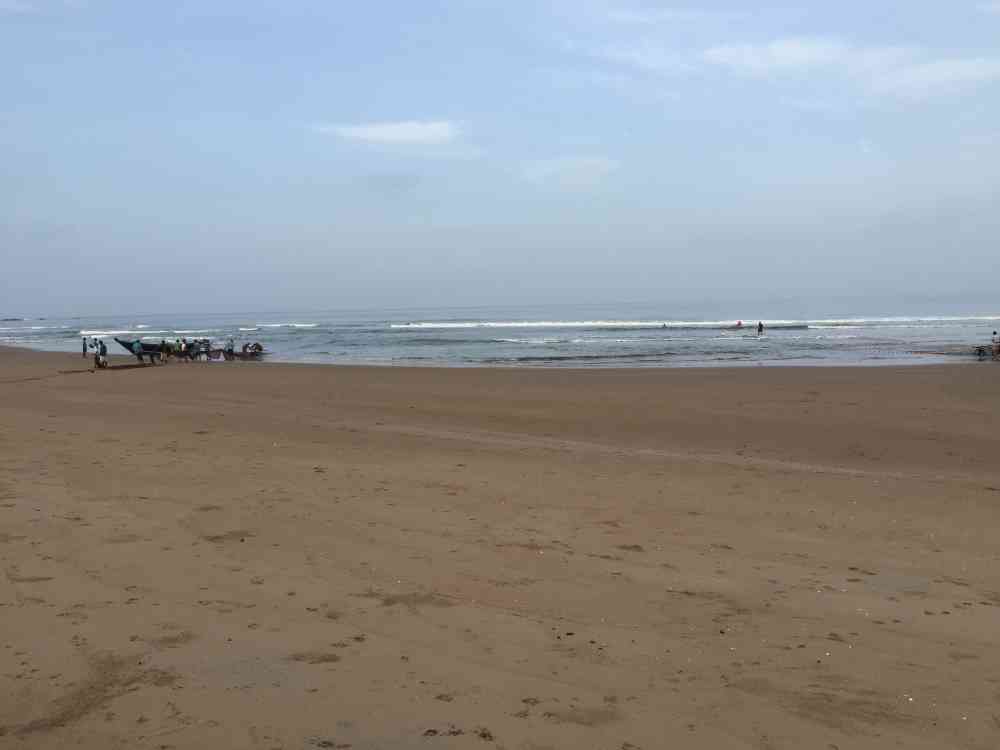
Pic Courtsey-Pankaj Jha
(The views expressed are those of the author and do not represent views of CESCUBE.)

Vaibhav Tomar is pursuing his MA in Environment and politics , and done his MBA from Narsee Monjee Institute of Management Studies, Mumbai. His Key interest areas are International relations, maritime security, defence strategies, foreign policies etc. Email: vtomar866@gmail.com