India's Renewed Engagement with Afghanistan: Is Taliban keen to engage?
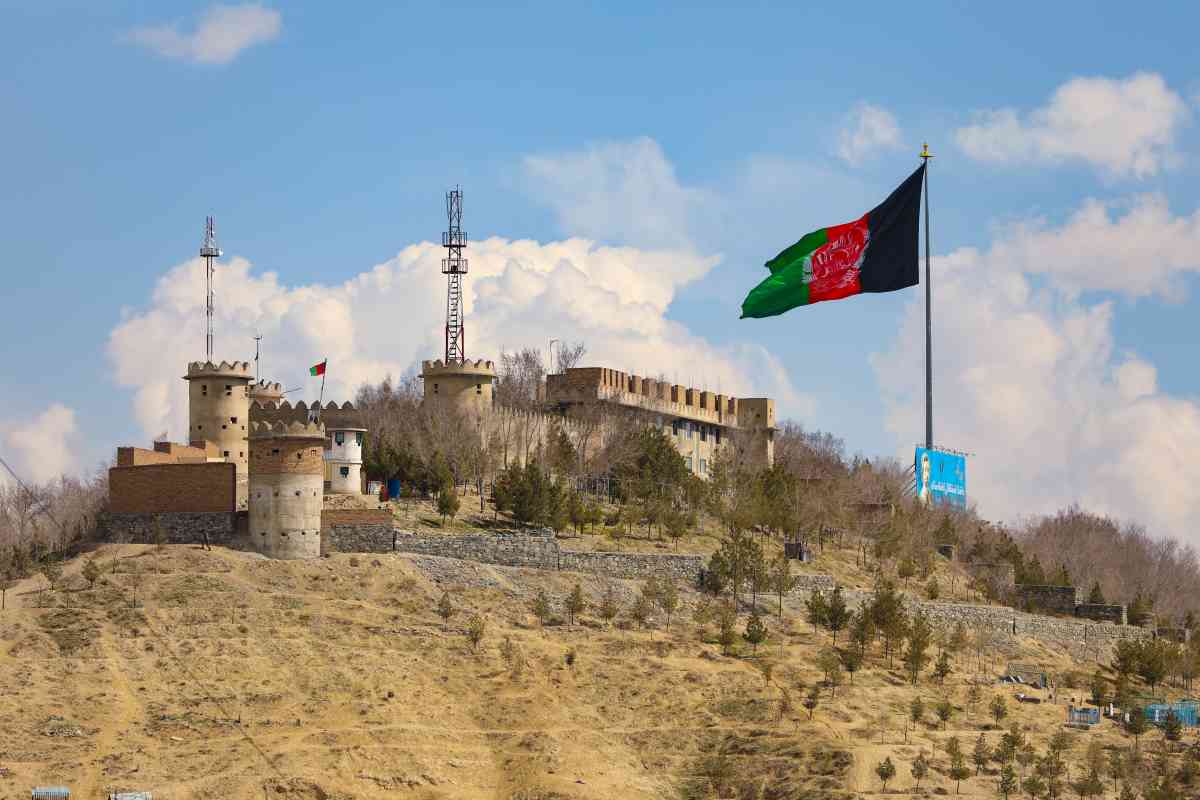
India re-established its presence in Afghanistan after sending a "technical team" of officials and reopening its Embassy in Kabul after nearly ten months, in the backdrop of a severe earthquake that devastated parts of Paktika and Khost pro...
However, New Delhi has clarified that sending the team of officials and reopening the embassy is to closely monitor and coordinate the effective delivery of humanitarian assistance to the people of Afghanistan and it does not amount to granting diplomatic recognition to the Taliban regime. The newly reopened Embassy is expected to increase its operations in Afghanistan which till now has only been focusing on the distribution of humanitarian assistance, and consular and visa arrangements.
India has been an all-weather friend for the people of Afghanistan for decades. India carried out multiple developmental projects in Afghanistan since the Taliban regime was overthrown by the US in the wake of the 9/11 attack. However, yesteryear's decision by the US Government to retreat their army from Afghanistan helped the Taliban to regain the territory with very minimal trouble. The fall of Ashraf Ghani's government left India with no choice but to leave Afghanistan as well along with its diplomatic staff and close its Embassy in Kabul in August, last year.
Still and all, New Delhi remained committed to the people of Afghanistan in the time of crisis owing to its strategic interests and "historical and civilizational relationship" with the Afghan people. While addressing the 4th regional security dialogue held in May 2022 at Dushanbe, Tajikistan, National Security Advisor (NSA) Ajit Doval sternly pointed out that "India was, is, and will remain an important stakeholder in Afghanistan" as its special relationship with the Afghan people over centuries will guide New Delhi's approach[1]. Even though Indo-Afghan relations witnessed a cut back in the backdrop of Kabul's takeover by the Taliban, India helped the Afghan people with the much-needed humanitarian aid that includes the distribution of 50,000 tonnes of wheat through the World Food Programme (WFP) of which India has already delivered 40,000 tonnes of wheat via trucks through Pakistan, along with 500,000 doses of Covaxin, 13 tonnes of essential life-saving medicines, 60 million doses of polio vaccine and winter clothing. India had also sent about one million doses of Covaxin to Iran to inoculate the Afghan refugees in Iran[2]. The Russia-Ukraine war made the food crisis worse not only in Afghanistan but in many other countries. On May 13th, India banned its wheat exports to manage the overall food security in the country but continued to provide wheat as humanitarian aid to vulnerable countries like Afghanistan.
The massive earthquake on June 22nd in Afghanistan that led to the death of over a thousand Afghans and several thousand injured made the conditions worse for the already crisis-hit nation. India as the first true responder provided 27 tons of emergency relief assistance for the people of Afghanistan. The relief assistance included essential items such as family ridge tents, sleeping bags, sleeping mats, blankets, etc [3]. The relief assistance consignments were handed over to the United Nations Office for Coordination of Humanitarian Affairs (UNOCHA) and the Afghan Red Crescent Society (ARCS) in Kabul [4]. The Afghan people facing various humanitarian crises made it necessary for India to have a diplomatic presence in Kabul.
India, although, did open diplomatic channels with the Taliban soon after America's exit from Kabul. The Indian Ambassador to Qatar, Deepak Mittal, met Sher Mohammad Abbas Stanekzai, the then head of Taliban's Political Office in Doha on 31st August 2021[5] at the latter's behest. Over the past one year, the Taliban on several occasions showed their desire to restore diplomatic relations with India. On June 2nd, the Taliban's Defence Minister and son of Taliban's Supreme Leader Mullah Omar, Mullah Yaqoob expressed willingness to send Afghan Army personnel to India for military training in an interview [6]. In a global exclusive interview with CNN-News18, Anas Haqqani, a top Taliban leader expressed his views on the crucial role India can play in Afghanistan and how cricket can cement ties between the two nations [7]. Afghanistan cricket team stays in India for training and other purposes for most of the time.
India's move to reopen its embassy came a few weeks after a team headed by senior MEA official J.P. Singh met the Taliban-appointed acting Foreign Minister Amir Khan Mottaqi and acting Interior Minister Sirajuddin Haqqani in Kabul, and received assurances on the security of the team of officials to be deployed[8]. Lack of security has been a concern for New Delhi and it was the reason why Indian diplomats left Afghanistan in the aftermath of its takeover by the Taliban. The terror attack on Gurdwara Kart-e-Parwan by Islamic State-Khorasan (IS-K) on June 18th, in which two people were killed, forced the Indian Government to review the situation and its decision regarding the deployment of the team of officials in Kabul which was earlier expected to arrive in Kabul by mid-June[9].
India's passive engagement with the Taliban and its focus on isolating the Taliban till now, will soon start to yield diminishing returns as India remains an important stakeholder in Afghanistan, and several countries including China, Russia, and Pakistan have started to engage with the Taliban. New Delhi needs to ensure that Afghanistan's soil is not used for anti-India activities of any form. Other than humanitarian concerns, the threat of terrorism, narcotics trafficking, and filtration of weapons from Afghanistan into Kashmir remain some of India's major concerns[10]. These concerns cannot be addressed without improved engagement with the Taliban and its help. Taliban has promised New Delhi to not allow space for Lashkar-eTaiba (LeT) and Jaish-e-Mohammed (JeM). The improved diplomatic engagement and reopening of India's embassy also help the Taliban to give the message that the diplomatic missions can function there as the security situation in Afghanistan is under control. This may also reduce the hostility of the International community towards the Taliban regime.
India has carried out multiple development projects in Afghanistan and the fate of those projects has been uncertain since America's exit from Afghanistan. For now, the Indian embassy has focused on the distribution of food and medicine, and ensuring the upkeep of the Indian projects that had been handed over to the local administration including electricity stations and water projects. In the upcoming phase, Indian infrastructure companies are hoping to return to complete the stalled infrastructure projects. India cannot keep isolating the Taliban regime and also serve its interests in Afghanistan. Taliban's presence in Afghanistan may not end soon and therefore, India has to find a way to actively engage with the Taliban administration.
References
[1] "India was and is an important stakeholder in Afghanistan, this will not change: NSA Doval at Regional Security Conference". ANI, May 27, 2022. Available at: https://www.aninews.in/news/world/asia/india-was-and-is-an-important-stakeholder-in-afghanistan-this-will-not-change-nsa-doval-at-regional-security-conference20220527111857/
[2] “India’s humanitarian assistance to Afghanistan”. Ministry of External Affairs, GOI, Press Release, June 2, 2022. Available at: https://www.mea.gov.in/press-releases.htm?dtl/35381/Indias_humanitarian_assistance_to_Afghanistan
[3] “Earthquake Relief Assistance for the people of Afghanistan”. Ministry of External Affairs, GOI, Press Release, June 24, 2022. Available at: https://www.mea.gov.in/press-releases.htm?dtl/35440/Earthquake_Relief_Assistance_for_the_people_of_Afghanistan
[4] Ibid
[5] “Meeting in Doha” Ministry of External Affairs, GOI, Press Release, August 31, 2021. Available at: https://mea.gov.in/press-releases.htm?dtl/34208/Meeting_in_Doha
[6] “Taliban willing to send Afghan troops to India for training: Mullah Yaqoob”, The Express Tribune, June 4, 2022. Available at: https://tribune.com.pk/story/2360038/taliban-willing-to-send-afghan-troops-to-india-for-training-mullah-yaqoob
[7] “Afghanistan Doors Open for India, Cricket Can Cement Ties: Taliban Leader Anas Haqqani”. News18 Global, May 27, 2022. Available at: https://www.news18.com/news/world/afghanistans-doors-open-for-india-cricket-can-cement-ties-emirate-leader-anas-haqqani-to-news18-in-global-exclusive-interview-5255479.html
[8] Major move towards engaging Taliban, re-establishing presence in Afghanistan”. The Hindu, June 24, 2022. Available at: https://www.thehindu.com/news/national/india-reopens-embassy-in-kabul/article65558557.ece
[9] Ibid
[10] “With the Taliban's Rise, India Sees A Renewed Threat In Kashmir”. The Associated Press, September 14, 2021. Available at: https://www.npr.org/2021/09/14/1036877490/with-talibans-rise-india-sees-renewed-threat-in-kashmir
Pic CourtSey-Shhiab Ghyasi at unsplash.com
(The views expressed are those of the author and do not represent views of CESCUBE.)
Devesh singh is a Post Graduate in Political Science. He is a quiz enthusiast. His research interests include India's foreign policy, Indian polity, Security and Diplomacy. He is presently research intern with CESCUBE.