India’s second aircraft carrier and Indian ocean security
In the present international order, territorial conflicts are becoming increasingly common. Every day, we hear about territorial disputes between states. These disputes are not confined to control of land, but also control of the water, as ...
But what is an aircraft carrier? Oxford Dictionary defines an aircraft carrier as “a large ship that carries military aircraft and has a long, flat surface where they take off and land”. As per Britannica, carriers were first used in combat during World War II. The Japanese attack on Pearl Harbor by carrier-based planes on December 7, 1941, demonstrated the potential of the aircraft carrier. Since then, they have evolved to become the dominant combat vessels of the war.
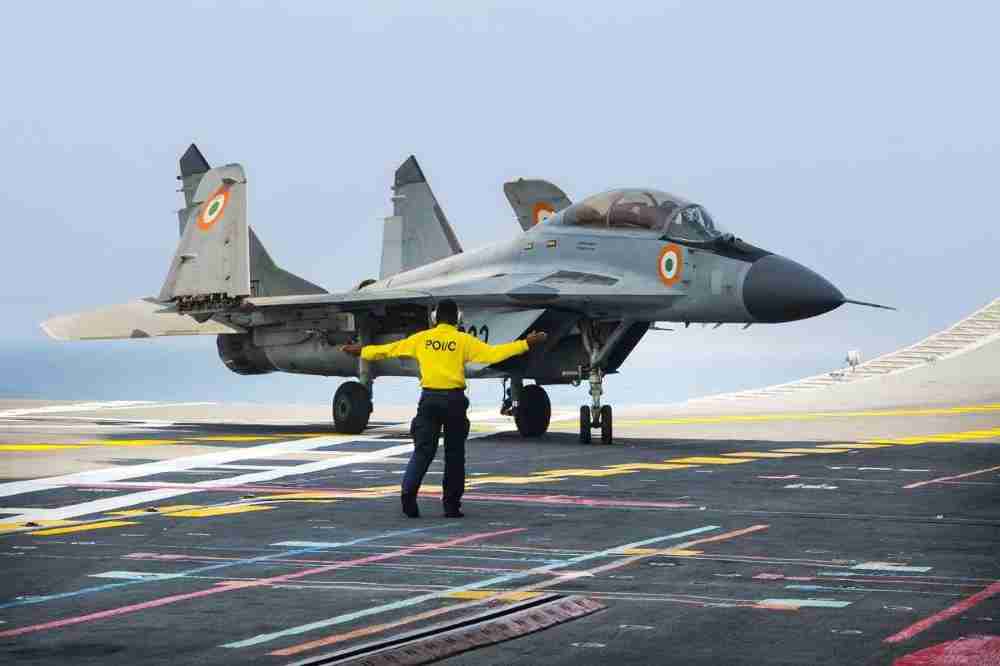
India has approximately 60 years of experience with aircraft carriers. India's first aircraft carriers were INS Viraat, which entered service in 1987, and INS Vikrant (R11), which entered service in 1961. Both aircraft carriers were British. Just 2 weeks ago, India launched its first indigenous aircraft carrier, INS Vikrant (one should not confuse it with INS Vikrant R11). The newly launched carrier is also known as Indigenous Aircraft Carrier 1 (IAC-1). The launch of its own indigenous aircraft carrier is a significant milestone achieved by India on the basis of the Atmanirbhar Bharat campaign. With the launching of INS Vikrant, India has proudly joined the United States, the United Kingdom, China, Russia, France, and Japan, which have the technical know-how and capability to create such complex and large warships.
The aircraft carrier was built for the Indian Navy at the Cochin Shipyard (CSL) in Kochi, Kerala. The Economic Times reports that the carrier is 262 meters long, 62 meters wide and has a height of 59 meters. There are 14 decks in all, five of which are in the superstructure. In terms of aircraft carrier capacity, the ship employs an aircraft operation mode known as "Short Take Off But Arrested Recovery" (STOBAR). It has a ski-jump for launching aircraft and three arrest wires for recovering them onboard. CSL is also working on installing the LR-SAM, or long-range Surface-to-Air missile system, and MF-STAR, or Multi-Functional digital Active Electronically scanned array radar, aboard it. The LR-SAM was developed in collaboration with the DRDO and Israel Aerospace Industries, and is manufactured by Bharat Dynamics Ltd. The IAI, on the other hand, manufactures MF-STAR, which is also used on other frontline warships of the Indian Navy. The displacement capacity of the carrier is 42,800 tonnes, and it is powered by four General Electric engines. INS Vikrant can also transport an airwing of 30 helicopters, fighters, and unmanned aerial vehicles (UAVs).
The Vikrant carrier would initially be utilized to operate the existing Mig-29Ks in service, followed by some upgraded fighters. The selection has not yet been finalized, but negotiations are underway to select between the Boeing F/A-18 E/F Super Hornet and the Dassault Aviation Rafale.
How INS Vikrant will ensure Indian Ocean security.
India has a 7,517 km-long coastline, including the coasts of its islands, and is encircled by the sea on three sides. The Exclusive Economic Zone of India is approximately 2 million square kilometers, according to the Territorial Waters, Continental Shelf, Exclusive Economic Zone, and Other Maritime Zones Act of 1976. The Indian Maritime Doctrine 2015 further highlights secondary regions of maritime interest, which include the South and East China Seas, as well as the Western Pacific Ocean, in addition to the immediate neighborhood and the whole Indian Ocean, which remain the principal areas of maritime interest.
Further, India’s 90% of trade in volume (70% in value) is transported by sea, more specifically through the South China Sea (around 55%). This requires India to ensure that all the sea routes, specifically those in the Indo-Pacific region, remain open, inclusive, stable, peaceful, and secured. India has to ensure that no power can establish its hegemony in the region. But how China is becoming more assertive is not a secret anymore. China is marking its footprints in various Indian Ocean countries. For instance, it has access to Bangladesh’s Chittagong and Mongla ports; Sri Lanka’s Hambantota Port, which has been given to China on a 99-year lease; Pakistan’s Gwadar Port, which is under operational control of China; and a military base in Djibouti. India is also concerned that BRI projects will boost China's stature while undermining India's influence over smaller South Asian countries and Indian Ocean littoral states, as India has traditionally regarded this region as its back yard, over which it has traditionally maintained a position of influence.
This whole situation puts an additional responsibility on India to not only ensure the abovementioned things but also to make its maritime capability so strong so that it can become a net security provider in the region. For achieving this, an aircraft carrier like Vikrant can bestow on India a capability to maintain its influence in these waters and achieve a strategic “dissuasion” against any inimical extra-regional power.
Furthermore, it may also be used for non-military purposes such as humanitarian assistance and disaster relief or evacuation operations. As stated previously, India is surrounded on three sides by the sea and has several neighboring countries that may be affected by natural calamities. In such a case, INS Vikrant would act as an extra hand in India's mission to provide humanitarian assistance and disaster relief. Additionally, the flattop of INS Vikrant can also be effectively utilized as carriers have the potential to project military power in times of peace, unlike "soft-power" platforms like hospital ships or combat weapons like destroyers and frigates.
Although up to this point, we have highlighted the potential benefits of a carrier, but there are some commentators who have criticized India's actions. They say that investing billions in a carrier strike force to secure the adjacent seas is pointless as near-seas defense can be simply ensured from airbases on India's island territories. According to critics, aircraft carriers are logistically non-viable and highly susceptible to emerging hypersonic weapons and disruptive technologies. They say that the flattop is defenseless against submarine strikes, strategic airpower, and ballistic missiles.
But, as the phrase goes, "it's better to be three hours early than a minute late," because if India is to confront China, it must think not only in multidimensional terms but also ahead of time. It must safeguard both its land boundaries and its sea borders. Furthermore, there is nothing wrong in developing indigenous carriers because increasing India's marine capability will benefit the country in the long run as a maritime state enjoys greater economic benefits than a landlocked one. India's goals also align with the ship's slogan, Jayema Sam Yudhi Sprdhah, which is taken from the Rig Veda and means "I defeat those who fight against me."
Conclusion
Though India has already taken a number of steps to improve its maritime capacity, such as the Development of Production Partner Initiative; Defence India Startup Challenge; SRIJAN Portal; FDI limit increased from 49% to 74%; Innovations for Defence Excellence (iDEX); and Positive Indigenisation List, much more concerted efforts are required, such as granting the Navy approval to build the third aircraft carrier, which it has been seeking since 2015. This would unquestionably improve India's standing as a maritime power on the global stage and turn India's navy into a blue-water force.
Pic Courtsey- Indian Navy Twitter handle
(The views expressed are those of the author and do not represent views of CESCUBE.)

Neha Dayma has recently completed her Masters in Politics with Specialization in International Studies from Jawaharlal Nehru University. She is a political science graduate and also a current intern at Online Foreign Policy School. Her areas of interest include South- East Asia, West Asia, geopolitics, Indo- Pacific and India's foreign policy.