India’s UNSC Non-Permanent membership : Expectations of Sri Lanka
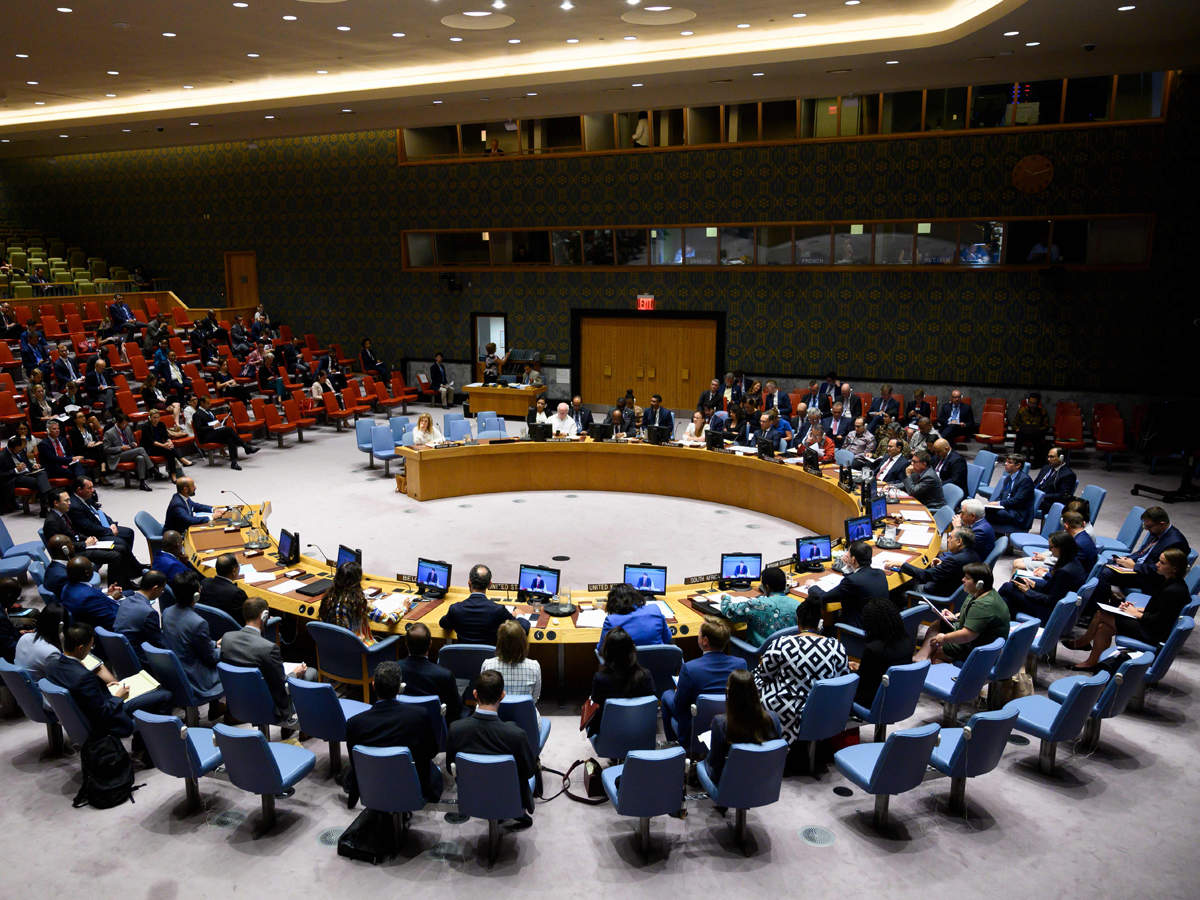
Being the largest nation in South Asia, India was elected as non-permanent member of the powerful United Nations Security Council (UNSC) with an overwhelming number of votes crossing the two-thirds majority mark. According to Article 2...
Surprisingly among the five newly elected member countries, India has served the maximum of seven terms. Now, given the realities dependent on neighbours, India’s non-permanent membership at the UNSC is relatively more important for neighbouring small states such as Sri Lanka and the Maldives. Nearly a year ago being one of the nearest neighbours in the South Asian region, Sri Lanka endorsed India's candidature as a non-permanent member of the UN Security Council. Also, two years directly prior to the non-permanent member UNSC effort, the southern Island had supported India's bid for a permanent membership at the UNSC (August, 2018, Hindu). With this background, India and Sri Lanka might have several advantages to forge closer ties in the coming years.
UN, India - Sri Lanka Relations
Meanwhile, India being a regional superpower and slowly moving towards being a global power after getting elected as non-permanent member of the powerful United Nations Security Council (UNSC) bring about political, economic and military stability in this region. Furthermore India, is already pushing for deeper ties with its southern neighbour, Sri Lanka, under its “Neighbourhood First” foreign policy doctrine. Despite this progress made by India, the foreign policy of Sri Lanka with big nations like India and China is not very clear. Thereby, safeguarding the territorial integrity of Sri Lanka should be the prime priority of India. This will lead towards developing interdependency policies between the two nations. Building a realistic foreign policy can lead to stronger cooperation and enhance relations between India and Sri Lanka. However, there may be potential stumbling blocks for effective bilateral relations... But one of the most diplomatically challenging situation Sri Lanka faced in these very recent years was the controversial US-backed United Nations Human Rights Council (UNHCR) resolution for promoting reconciliation and accountability' in Sri Lanka. This resolution increasingly isolated Sri Lanka from its Western allies and ultimately led to a change in government in 2015. India was among the 24 countries that voted against Sri Lanka at that session of the United Nations Human Rights Council in Geneva, however China and Russia threw its weight behind Sri Lanka, at the UNSC.
Sri Lanka and the UNHCR
On 26th February 2020, the Sri Lankan government formally notified the United Nations Human Rights Council (UNCHR) that it was withdrawing from the UN resolution adopted in 2015 calling for an investigation into alleged human rights violations during the island nation's civil war, which ended in 2009. At the 43rd session of UNHRC in Geneva Foreign Relations Minister Dinesh Gunawardena stated that the first Resolution 30/1 of October 2015, and the subsequent Resolution 34/1 of March 2017, have "eroded Sri Lankans' trust in the international system, and the credibility of Sri Lanka as a whole in the eyes of the international community”. However, the Human Right Council chief Michelle Bachelet expressed regret over Sri Lanka's decision to withdraw in 2015. Furthermore, opposing views claim that Sri Lanka cannot pull out of the resolution until 2021, as the island nation and 11 other countries co-sponsored the UNHRC resolution in 2015. On the other hand the international community must recognize that Sri Lanka needs time to investigate and implement a homegrown solution towards a lasting solution to the ethnic problem. Nonetheless, Russia, along with China, has left a lasting influence for protecting Sri Lanka at the UNSC. Currently, India has been enjoying strong and close ties with Sri Lanka. As a reassurance practice, India will have to adapt to new trends in the international order, allowing the island nation some breathing space to fully implement commitments it made on transitional justice and accountability issues, several years ago at the UNHRC. More specifically, international standing meant to safeguard southern neighbours' sovereignty rights, security and development interest may deepen long-term interest in India’s favor.
Sino – India Diplomacy and Bandaranaike
For India and China, Sri Lanka has always been the topmost priority for one another, because of their geographical proximity. Moreover, Sri Lanka wants to maintain good relations with both India and China. Looking back of the Sino-Indian war of 1962, Ceylon Prime Minister Sirimavo Bandaranaike played a pivotal role in calming tensions between India and China. Mrs Bandaranaike was requested by both India and China to visit both countries with the proposals. India recognised the proposal but China accepted it on principle as the basis to commence negotiations. Even now, fifty years after Mrs Sirimavo Bandaranaike’s negotiations with India and China are of particular relevance in the present context, where the India-China standoff at Galwan valley requires third party diplomatic channelling like those days.
Looking at the regional foreign policy scenario, there is no doubt that the contribution of India’s non-permanent seats at the UNSC will be beneficial for Sri Lanka. It is clear that there is a chance for India to engage more proactively with Sri Lanka. Definitely, the current foreign policy approach are strong indicating signs of an inclination towards India in the near future.
Pic Courtesy-Srimal Fernando
(Srimal Fernando is a Doctoral Fellow at Jindal School of International Affairs (JSIA), India and Advisor / Global Editor of Diplomatic Society for South Africa. He is the winner of the 2018/2019 ‘Best Journalist of the Year’ award in South Africa, and has been the recipient of GCA Media Award for 2016.In the field of politics, and Policy affairs, Fernando is a specialist, with over ten years of first hand experience in Sri Lanka and the Maldives.The views expressed are personal)

Srimal Fernando is a Doctoral Fellow at Jindal School of International Affairs (JSIA), India. Fernando was the recipient of the prestigious O.P. Jindal scholarship to pursue a Doctor of Philosophy (PhD) in International Affairs on “Political and Economic Integration in South Asia: A Prerequisite for Regional Community Building”. He is also the Advisor / Global Editor of Diplomatic Society for South Africa and, the winner of the 2018/2019 ‘Best Journalist of the Year’ award in South Africa .He has been the recipient of many other accolades for his journalistic work over the years including the GCA Media Awards for 2016. Having graduated with a Masters of Philosophy (M.Phil.) degree in Sociology from the South Asian University (SAU) in India, he was a South Asian University (SAU) Scholarship holder awarded under the SAARC umbrella spanning 8 regional countries in 2016 His former positions and experience include the handling of media and publications as a Publication Assistant /Press Officer to the Office of the Former President of Sri Lanka H.E Chandrika Bandaranaike Kumaratunga at the Presidential Secretariat as well as a Visiting Lecturer and International Speaker for several reputed academic institutions. A highly skilled analyst, he has undertaken various roles over the years; as Regional Advisor to International Alert UK Peace Building –INGO, he headed the Business for Peace Alliance, a consortium of 25 Regional Bossiness Chambers of Commerce during the Sri Lanka conflict period. He has also, in the past, undertaken the effective coordination of EU, UN and INGO funded projects and has been a key thought leader in the Multi party Political dialogue process in Sri Lanka. Over the years, as an Advisor, he has worked with policy makers for various peace building and conflict resolution initiatives that include working on the Post conflict Human Development Index (HDI) Report after the liberation of the Eastern Province of Sri Lanka. In the field of politics, and Policy affairs, Fernando is a specialist, with over ten years of first hand experience in Sri Lanka and the Maldives. Upon completion of his Doctoral studies , it is his aspiration to pursue a career in politics and to steer his island nation towards the path of a new and robust foreign policy.