India Singapore Defence Cooperation
India and Singapore have a longstanding partnership in the field of defence cooperation. Covering three major areas - armed forces, defence technology cooperation and maritime security, India-Singapore defence relationship have become stron...
India and Singapore share close relationship since 19th century. India was one of the very few countries in the world to recognize Singapore as a sovereign nation in 1965 but their relationship traces back to them having same colonizers - Britain. Britain exploited Singapore for its India-China trade route. This led to movement of Indian people, good and services across the countries but Singapore eventually also become home for many Indians.
The bilateral relations between both the countries improved after the Cold War as there was a renewed commitment from both the countries to increase their interactions. This not only led to an increase the bilateral visits by state officials in both the countries but also advancement of cooperation in spheres of trade and investment, political partnerships including defence sector.
India's Look East Policy emphasized heavily on Singapore. For India, Singapore not only had an excellent geographical location which made it a great trading country, it was economically also one of the most economically developed country in South-east Asia. While trading and economic cooperation is vital in promotion of the bilateral relationship, defence cooperation often shows that there exist amicable relations between the countries which is established on trust and mutual benefits. The same is the case for India-Singapore bilateral relationship and both the countries have made significant developments in the sphere of army cooperation, defence trade and investment and even defence technology.
The cooperation in the field of defence between India and Singapore dates back to 1990's when both the countries started regular naval exercises which included anti-submarine warfare techniques. This further paved way for signing a MoU between both the countries in 1994 which would allow Singapore Navy to have access to Indian submarines and ASW training. This action set in motion various processes of cooperation between both the countries which has also benefited the South Asian and Southeast Asian region as a whole, given that ASEAN countries too have become a part of certain defence cooperation exercises. MILAN is one such multilateral naval exercise hosted by the Indian Navy once every two years. From the command center of the Andaman and Nicobar. Started in 1995, seventeen nations including India and Singapore participate in this exercise. The last exercise was held in 2018 and the a new one was supposed to be organized in 2020 but has been postponed due to the ongoing pandemic.
In 2003 Singapore-India Defence Cooperation Agreement was signed between both the countries and focused on the threat of international terrorism and maritime security, and sought to establish intelligence exchange and a defence policy dialogue between the countries. The aim behind this move was to deepen the defence ties between both the countries and also expand the cooperation to various areas of defence cooperation. Since then, the naval exercises which started in 1994 with ASW, it has now expanded to include air, surface and sub-surface dimensions. The Singapore India Maritime Bilateral Exercise (SIMBEX) have taken care of this expansion and the latest SIMBEX exercise took place in 2019 on the South China Sea and included tracking exercises and tactical exercises while the 27th edition took place in 2020 from 23 to 25 November 2020 in the Andaman Sea. Apart from the joint exercise, there has been a regular exchange of intelligence to counter terrorism, and for the same, both the countries established a Joint Working Group on combating terrorism. Regular exchange programs, courses and staff talks have been conducted in all three spheres - air, water and land.
Apart from joint exercises, Singapore also receives access to Indian military training facilities. According to an agreement signed between the two countries in October 2004, the Singaporean army and air force can conduct exercises on Indian Territory and airspace. In 2007, RSAF (Republic of Singapore air Force) got the permission from IAF (Indian Air Force) to have access to Kalaikunda air base for a lease of five years. This allowed RSAF to not only train in India, but also have a place for its personnel and equipment in country and this lease have been renewed may times, the latest being in 2017 for another five years. Additionally, in 2009, in yet another agreement between SAF (Singapore Armed Force) and the Indian Army (IA), the former gets access to Indian firing ranges and artillery and armor exercises. Singapore has also increased the usage of Indian military facilities for its training as it already uses mechanized forces at Babina, artillery at Deolali ranges and F-16 fighter jets at the Kalaikunda airbase. Both the countries took an advanced step and established a Defence Technology Steering Committee in October 2006 to increase the cooperation between n India's Defence Research and Development Organization and Singapore's Defence Science and Technology Agency.
Therefore, the new cooperation through the signing of submarine rescue support and cooperation agreement on 20 January 2021 does not come as a surprise. This has not only broadened the scope of cooperation between the countries but has also strengthened the relationship between both the countries. This pact will involve helping Singapore if one of its submarines get disabled underwater as India in 2018 inducted two deep submergence rescue vehicles which have the capability of rescuing trapped sailors from a disabled submarine.
The increase in cooperation between India and Singapore lays focus on the fact that Southeast Asia and its countries are now playing an important role in global politics as the region’s importance increases. Close defence ties with Singapore not only help India in having a strong ally in its pockets but also helps in fulfilling its great power aspirations both regionally and globally. For Singapore, India not only adds as an ally and an attractive partner, but also helps in diversifying its partnerships, thereby striking a balance between its bilateral relationships with the other countries. The agreements and cooperation will increase as both the countries have a firm eye on China whose aggressive attitude in the region has bought in many changes. India's cooperation with Singapore has also strengthened its position with ASEAN countries, a move which will help India in keeping a check on the China's expansionist behavior in the Asia Pacific Region. In all, the strengthening of defence cooperation between both the countries might be worrisome for China. It is nothing but an advancement and sign of mutually beneficial friendship between both Singapore and India.
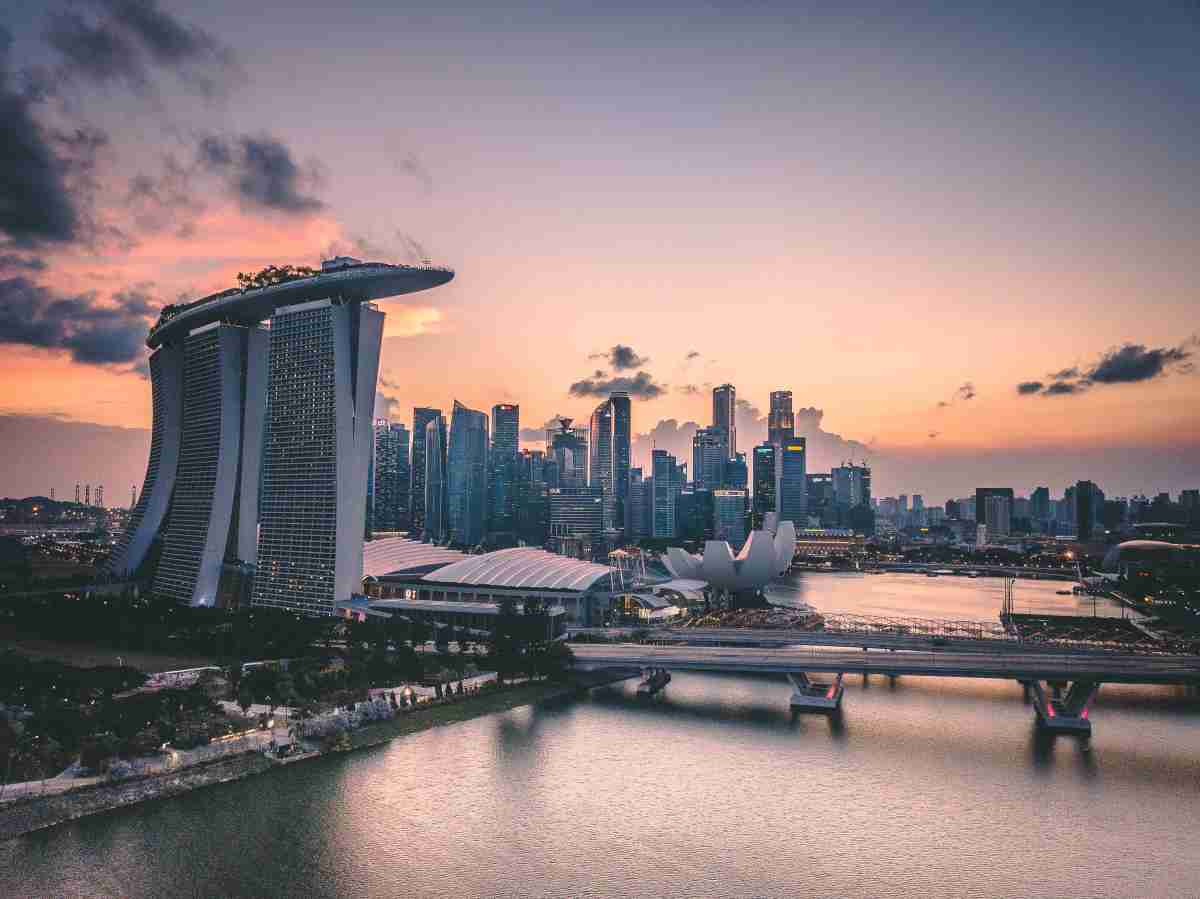
Pic courtesy- Swapnil Bapat at unsplash.com
(the views expressed are those of the author and do not represent the views of CESCUBE.)
Krupa Vasani is a current Scholar at The Vedica’s Scholar Program, New Delhi and is pursuing her MBA in Management and Leadership. An undergraduate from O. P Jindal Global University, Krupa holds a bachelors in International Relations. Over the course of three years as an undergraduate, Krupa has developed an interest in the Security and Strategic Studies and Development Sector. Indian Foreign Policy, South South Cooperation and the Strategy in Indo-Pacific and South Asian Politics and the emerging Quadrilateral Diplomacy are some of her areas of interest. She is currently associated with CESCUBE as part time researcher.