LIVE DISPATCH
Loss and Damage Finance: From COP28 Pledges to Policy Architecture Extended Deterrence Under Strain: Credibility, Assurance, and the Stability-Instability Paradox in the Indo-Pacific Beyond Consultation: BIMSTEC's Emerging Role in Regional Intelligence and Security Cooperation Maritime India: Security, Trade, and Great Power Competition Between the Desert and the Savannah: Conflict and the Political Economy of Instability in the Sahel Beyond Ukraine: Understanding Putin's Vision of Russian Power The Politics of Ali Khamenei's Funeral Silicon Sovereignty: How Semiconductors Are Redrawing Global Power Hierarchies Operation Sindoor and the Changing Dynamics of India–Pakistan Security The Negative Impact of US–Iran War on the Pacific Region Generative AI, Labour Sovereignty, and the Geoeconomics of India's Service Economy BRICS Expansion and the Multipolar Moment: Opportunity or Strategic Contradiction? India's AI Diplomacy and the Future of Strategic Technologies Foot-Dragging as Feminism: Iran, South Korea, and the Ungovernable Body Lethal Autonomous Weapons Systems and the Governance Deficit: Challenges to International Humanitarian Law and Accountability Beyond Proximity: Why the UAE Occupies a Growing Place in Iran’s Strategic Calculus Great Power Rivalry and the Crisis of the United Nations Why Fiji Matters: The New Geopolitics of the Indo-Pacific Islands Ten Years After Brexit: Regret, Reform, or Reversal? The Long Shadow of 1953: Understanding the Iran–US Conflict Sports, Strategy and Statecraft of Mega Sporting Events as Geoeconomic Instruments: Qatar 2022 to Saudi Arabia 2034 Border Fencing and National security: India’s Strategy along the Bangladesh Border Hardening the Quad: From Strategic Dialogue to Operational Cooperation Lingering Effects of the Bush Doctrine on Contemporary US Foreign Policy The Maghreb of States: Identity, Sovereignty, and the Limits of Non-Interference India’s BRICS 2026 Chairmanship Navigating a tightrope Amidst the Chinese Geopolitical Rise Beyond the Battlefield: Understanding Unconventional Security Challenges in Contemporary Geopolitics The Control Paradox: How Proxy Warfare Enables Strategic Deniability While Constraining Strategic Control Trapped in Deterrence: Nuclear Stability and the Persistence of Conflict in South Asia The Return of Unipolarity? U.S Strategic Primacy and the Future of the Global Order Supply Chains and Complicity: The Role of Global Corporations in Forced Labour in Xinjiang The Distant Threat: Is Israel Constructing a Strategic Rival in Pakistan Island Militarisation and Techno-Diplomacy: Turkey’s Eastern Mediterranean Fault Lines Amid India-Greece Alignment India’s Security Scenario: An Assessment of its Continental and Maritime Challenges The Geopolitical Architecture of European Defence: Navigating NATO Synergies, Transatlantic Retrenchment, and the Hybrid Threat Landscape The Artemis Accords and the Future of Global Space Governance AI and the Securitization of Critical Infrastructure: Implications of India's AI Summit Beyond Rhetoric: Evaluating the Effectiveness of International Sanctions on China’s Treatment of Uyghur Muslims The Emerging Maritime Rivalry in the Western Indian Ocean: India’s Response to Extra-Regional Powers India's Maritime Grand Strategy on Trial : The IRIS Dena Incident and the Indian Ocean Question Loss and Damage Finance: From COP28 Pledges to Policy Architecture Extended Deterrence Under Strain: Credibility, Assurance, and the Stability-Instability Paradox in the Indo-Pacific Beyond Consultation: BIMSTEC's Emerging Role in Regional Intelligence and Security Cooperation Maritime India: Security, Trade, and Great Power Competition Between the Desert and the Savannah: Conflict and the Political Economy of Instability in the Sahel Beyond Ukraine: Understanding Putin's Vision of Russian Power The Politics of Ali Khamenei's Funeral Silicon Sovereignty: How Semiconductors Are Redrawing Global Power Hierarchies Operation Sindoor and the Changing Dynamics of India–Pakistan Security The Negative Impact of US–Iran War on the Pacific Region Generative AI, Labour Sovereignty, and the Geoeconomics of India's Service Economy BRICS Expansion and the Multipolar Moment: Opportunity or Strategic Contradiction? India's AI Diplomacy and the Future of Strategic Technologies Foot-Dragging as Feminism: Iran, South Korea, and the Ungovernable Body Lethal Autonomous Weapons Systems and the Governance Deficit: Challenges to International Humanitarian Law and Accountability Beyond Proximity: Why the UAE Occupies a Growing Place in Iran’s Strategic Calculus Great Power Rivalry and the Crisis of the United Nations Why Fiji Matters: The New Geopolitics of the Indo-Pacific Islands Ten Years After Brexit: Regret, Reform, or Reversal? The Long Shadow of 1953: Understanding the Iran–US Conflict Sports, Strategy and Statecraft of Mega Sporting Events as Geoeconomic Instruments: Qatar 2022 to Saudi Arabia 2034 Border Fencing and National security: India’s Strategy along the Bangladesh Border Hardening the Quad: From Strategic Dialogue to Operational Cooperation Lingering Effects of the Bush Doctrine on Contemporary US Foreign Policy The Maghreb of States: Identity, Sovereignty, and the Limits of Non-Interference India’s BRICS 2026 Chairmanship Navigating a tightrope Amidst the Chinese Geopolitical Rise Beyond the Battlefield: Understanding Unconventional Security Challenges in Contemporary Geopolitics The Control Paradox: How Proxy Warfare Enables Strategic Deniability While Constraining Strategic Control Trapped in Deterrence: Nuclear Stability and the Persistence of Conflict in South Asia The Return of Unipolarity? U.S Strategic Primacy and the Future of the Global Order Supply Chains and Complicity: The Role of Global Corporations in Forced Labour in Xinjiang The Distant Threat: Is Israel Constructing a Strategic Rival in Pakistan Island Militarisation and Techno-Diplomacy: Turkey’s Eastern Mediterranean Fault Lines Amid India-Greece Alignment India’s Security Scenario: An Assessment of its Continental and Maritime Challenges The Geopolitical Architecture of European Defence: Navigating NATO Synergies, Transatlantic Retrenchment, and the Hybrid Threat Landscape The Artemis Accords and the Future of Global Space Governance AI and the Securitization of Critical Infrastructure: Implications of India's AI Summit Beyond Rhetoric: Evaluating the Effectiveness of International Sanctions on China’s Treatment of Uyghur Muslims The Emerging Maritime Rivalry in the Western Indian Ocean: India’s Response to Extra-Regional Powers India's Maritime Grand Strategy on Trial : The IRIS Dena Incident and the Indian Ocean Question
ADVERTISEMENT
Politics March 5, 2020 1628 Reads

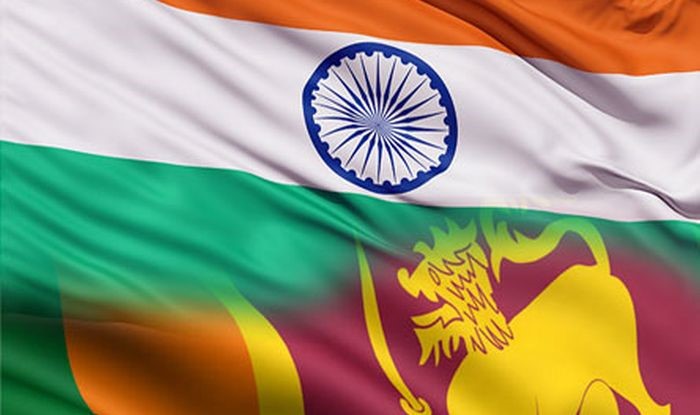
India – Sri Lanka Foreign Affairs: New Chapter in Defence Cooperation Beyond Commerce
M
By Mohit Vashisth and CeSCube Team
Author • Centre for Security & Strategic Studies
India – Sri Lanka Foreign Affairs: New Chapter in Defence Cooperation Beyond Commerce
Share Analysis:
EXECUTIVE SUMMARY & STRATEGIC TAKEAWAYS

Separated by the narrow Palk Strait, India and Sri Lanka have a rich history of ethnic, religious cultural and economic collaboration. Furthermore, a shared maritime boundary has also made these neighbors realise their strategic maritime am...

ADVERTISEMENT

With Indian foreign policy playing an increasingly important role in the world the ongoing collaboration and close cooperation between these two nations will further intensify the economic and diplomatic opportunities for India and Sri Lanka beyond the South Asian region and the  Indian Ocean realm . Similarly, India being a regional superpower and slowly moving towards being a global power requires its foreign and defence policy to be transformed to a higher level concerning to a responsible behaviour towards its neighbour to bring about stability in this region. This transformation requires a collective approach not only from the big nations like India but also from small island states like Sri Lanka.

 India’s foreign and defence policy with its southern neighbour Sri Lanka is intact and it needs to get its southern neighbours on its side to create an environment of collective security and for enhancing the connectivity of the Exclusive Economic Zone(EEZ) between India, Sri Lanka and Maldives to approximately 3.7 million sq.km. For India, Sri Lanka is a vital strategic partner in the Indian Ocean realm to maintain a strong balance of power in this region. On the hand, for India, Sri Lanka an island nation positioned to its South, links West Asia to East Asia through important sea-lanes where an estimated 60,000 ships, passes through this maritime route each year. It is in the interest of both India and Sri Lanka to seek for a stable Indian Ocean Region and have strong and capable naval forces working in coordination to deal with the menace of piracy as well protect the Sea Lanes of Communication (SLOCs) through which cargo worth trillions of dollars is traded.

Moreover, to curtail China’s ‘One Belt One Road’ (OBOR) initiative and the ‘String of Pearls’ strategy, India has to reinforce its air, naval, land and nuclear defence abilities. In this manner, safeguarding the territorial integrity of these small island states should be the prime importance of India. Perhaps the most significant modernising chapter of the Sri Lankan Navy  was the mode in which it had paved the way for the creation of fast attack crafts, special arrow boat squadron, amphibious vessels, high frequency surface wave radar system, and the commissioning of several Offshore Patrol Vessels (OPV). The Government of Sri Lanka ( GoSL) had also ordered two advanced OPV’s worth $150 million from India. For that reason, for a small island state like Sri Lanka to allocate twelve percent of its annual budget estimated to be around $2 billion is much higher than the big nations like China and India. Since Sri Lanka is having a huge national security budget, big nations like India can directly profit by selling the defence capacities to Sri Lanka. However, India has also been sensitive to the issue of post-civil war nation building efforts in Sri Lanka. Therefore, these initiatives can lead towards developing interdependence policies between India and Sri Lanka.

Like all other South Asian nations, there are many opinions regarding the foreign and defence  cooperation strategies pursued by India and Sri Lanka. The Presidential elections of 2019 undeniably opened a new window of opportunity for both nations to strengthen this long standing association. Viewing through the prism of two-way diplomacy it is evidently worthwhile to say that both neighbourly nations share common interests, values and beliefs from generation to generation. Despite these promising signs, in years ahead India together with Sri Lanka needs to fashion out a new policy strategy.


Srimal Fernando is a Doctoral Fellow at Jindal School of International Affairs (JSIA),O P Jindal University, India and a Global Editor of Diplomatic Society for South Africa. He is the winner of the 2018/2019 ‘Best Journalist of the Year’ award in South Africa, and has been the recipient of GCA Media Award for 2016 


Mohit Vashisth and CeSCube Team
About Mohit Vashisth and CeSCube Team →

Senior Research Fellow at Centre for Security & Strategic Studies.
ADVERTISEMENT

Related Strategic Analysis