Indian Drones along the India- China Border
Armed forces of various great powers and regional powers are now integrating drones into their force structures and operational doctrines. They are being deployed not only for intelligence, surveillance, and reconnaissance (ISR) purposes bu...
In future, state of the art technologies like artificial intelligence (AI), internet of things (IoT), and advanced robotics[i] would make drones more potent and lethal. Indian armed forces have also been actively strategizing over these developments.
The Two Triggers
India has been a late starter in adopting drones for its security requirements. However, some recent events have provided a solid push to 'dronization' of the Indian border security apparatus. The two most important triggers of this process have been the border standoff with China, following the Galwan Valley clash and the Armenian-Azerbaijan war.
Many scholars have touted the 2020 war in the Nagorno-Karabakh region as the start of the next revolution in military affairs (RMA) after the Gulf War of 1990-91. Azerbaijan deployed drones heavily against the Armenian forces tilting the balance of military power in its favour and making vital strategic gains in the region. Militaries world over watched and realized the effectiveness of these platforms as tactical equipments and as strategic weapons.[ii]
The 2020 violent and bloody showdown in the Galwan Valley clash and subsequent border standoff with China at the Line of Actual Control (LAC, 3488km) brought India in terms with a new strategic reality.[iii] Realizing that trust and reassurance are expensive commodities when dealing with China, New Delhi took a slew of measures to enhance border controls and security.[iv] Faster acquisition and deployment of drones along the LAC were vital parts of these.
Steps Taken on Procurement Front
In January 2021, the Indian army had selected ideaForge, a local defence manufacturer for the supply of SWITCH, its specialized tactical drones for ISR.[v] The total contract value was around ?140crores. The standard SWITCH is a man-portable Fixed-Wing VTOL (Vertical Take-off and Landing) UAV weighing 6.5 kg with an endurance of 2 hours. It has a range of 15km at the attitude of 4000m with maximum operating altitude of 1000m, having a wind resistance up to 20km/hr. Its imaging capabilities include a 1280x720p daylight camera with 25x optical zoom and a thermal camera of 640x480p. It has two main wings and two tail booms with stabilizers and multiple global positioning system sensors to provide fail-safe redundancy and more reliability in case of signal loss.[vi]
The army received an advanced version of this drone with better specifications on all counts, including encrypted communication and long-range target detection. They were operated in high altitudes with high winds, low temperature, and low air density. These drones excelled at their ISR performance in the harsh conditions of the LAC, and hence the army again placed a fresh order for these advanced indigenous drones in January 2022.[vii]
The Israeli Heron unmanned aerial vehicles (UAV), which are much larger and more sophisticated than tactical drones like SWITCH are also being deployed at the LAC.[viii] They are medium-altitude long-endurance drones keeping an eye round the clock over the mountainous terrain and sending crucial data and images to command and control centres.
In November 2021, the army also procured Heron TP UAVs, an upgraded version of the Heron UAV.[ix] The Heron lacks satellite-based communication (SATCOM) capabilities, making it capable only of line of sight communication with a maximum operating altitude of 28000ft and a 7-8km vision. This severely restricts ISR capabilities in mountainous regions of the LAC. Heron TP removes this bottleneck as they come with SATCOM systems and automatic taxi-takeoff and landing (ATOL). They can be operated at an altitude of 35000ft with an endurance of 45 hours. They also have better sensors, range, and anti-jamming capabilities.
Most of these procurements by the army are under the emergency financial powers provisions granted by the government. The defence forces can buy equipment and systems worth ?500crores to strengthen their warfighting capabilities at short notice.[x]
India is also close to acquiring larger and lethal weaponized drones such as the MQ-9 Reaper.[xi] Earlier, the Trump Administration had moved ahead with the reinterpretation of the Missile Technology Control Regime (MTCR) provisions to not to treat drones flying under 800km/hr as cruise missiles, allowing their export to potential buyers like India.[xii]
Steps Taken on Operationalization Front
Since the start of the border standoff at the LAC, the aviation branch has been receiving a lot of focus from the military planners in the Indian establishment. The most important step has been bringing drones under the watch of the Army Aviation Corps instead of the artillery. This ensures that all the flying assets of the Indian army form a single integrated unit. It has also set up three new aviation brigades, one each under the Eastern, the Western, and the Southern command, for localized control and better coordination of the assets.[xiii]
Post-Galwan, the army has been extensively using a variety of drones (discussed above) for ISR activities at the LAC. Daulat Beg Oldie sector, Gogra heights and other friction points in the area witness intense drone activity by the Chinese.[xiv] It is being continuously monitored by the Indian army, which has more than doubled the number of drone sorties in the region.[xv] It has also ramped up the day and night ISR activities over the dense forests of Arunachal Pradesh.
This has boosted the operationalization of the "sensor to shooter" concept. The drones can now communicate with the command-and-control centre throughout their flight, which can coordinate with the operators of firing assets to carry out precision strikes on the targets acquired.[xvi] Now, the focus needs to be on developing and practising various drone warfare tactics. Specialized joint exercises with other experienced armed forces of like-minded strategic partners can assist in this pursuit.
Given the rapid economic rise of China in recent decades, the balance of hard power is fast towards the Peoples Liberation Army (PLA) on the LAC. It means that the adoption of asymmetric capabilities like drones will be more effective in checking the Chinese threat at the border. Even though flying assets usually carry a greater risk of escalating the tense situation, the new strategic circumstances and challenging terrain along the LAC make drones are sine qua non. India’s Project Cheetah and plan to induct more than 5000 drones over the next ten years indicates that India recognizes this reality and is unwilling to waste further time to build its UAV capabilities.[xvii]
Notes
[i]Best Border Security and Control methods- Airborne Drones https://www.airbornedrones.co/best-border-security-and-control-methods/
Drone Uses: Border Security Applications- ideaForge https://www.ideaforge.co.in/drone-uses/border-security-applications/
[ii] How Drone Warfare Tilt Battle with Armenia in Favour of Azerbaijan- BharatShakti https://bharatshakti.in/how-drone-warfare-tilt-battle-with-armenia-in-favour-of-azerbaijan/
A Look at the Military Lessons of the Nagorno-Karabakh Conflict- Russia Matters https://www.russiamatters.org/analysis/look-military-lessons-nagorno-karabakh-conflict
The Second Nagorno-Karabakh War_ Takeaways for Singapore’s Ground-Based Air Defense- The US Department of Defense https://media.defense.gov/2021/Aug/24/2002838133/-1/-1/1/Ho%20-%20Nagorno-Karabakh%20War.pdf
[iii] Sun, Yun. (2020). China's Strategic Assessment of the Ladakh Clash – War on the Rocks https://warontherocks.com/2020/06/chinas-strategic-assessment-of-the-ladakh-clash/
[iv] Tarapore, Arzan. (2021).The Crisis After the Crisis: How Ladakh Will Shape India’s Competition With China- Lowy Institute https://www.lowyinstitute.org/publications/crisis-after-crisis-how-ladakh-will-shape-india-s-competition-china
[v] Indian firm bags Army’s Rs 140-crore deal for high altitude UAVs, eyes exports too- The Print https://theprint.in/defence/indian-firm-bags-armys-rs-140-crore-deal-for-high-altitude-uavs-eyes-exports-too/585258/
[vi] SWITCH UAV- ideaForge https://www.ideaforge.co.in/drones/switch-uav/
[vii] As stand-off with China continues, Army orders more India-made drones for LAC surveillance- The Print https://theprint.in/india/as-stand-off-with-china-continues-army-orders-more-india-made-drones-for-lac-surveillance/811619/
[viii] India ramps up day & night surveillance at LAC in Arunachal Pradesh sector using advanced drones- India Today https://www.indiatoday.in/india/story/india-surveillance-lac-arunachal-pradesh-sector-advanced-drones-1865922-2021-10-18
[ix] Indian Army deploys new Heron drones along LAC- Tribune India https://www.tribuneindia.com/news/nation/new-heron-drones-deployed-along-lac-344836
Keeping An Eye On Chinese PLA, India Deploys ‘Advanced’ Israeli-Origin Heron TP Drones Near Disputed Border- The Eurasian Times https://eurasiantimes.com/india-deploys-advanced-israeli-origin-heron-tp-drones-near-china/
[x] Galwan Valley clash: Govt grants emergency financial powers to three services- The Times of India https://timesofindia.indiatimes.com/india/amid-border-dispute-with-china-defence-forces-get-financial-powers-to-buy-critical-weapons-ammunition/articleshow/76494188.cms
For Third Time, Defence Ministry Extends Emergency Powers Granted to Army, Navy, IAF to Buy Ammunition – News18 https://www.news18.com/news/india/emergency-powers-granted-to-army-navy-iaf-to-procure-ammo-extended-for-third-time-amid-lac-tensions-4433312.html
[xi] How $3 billion contract for 30 Predator drones with the US will help India – FirstPost https://www.firstpost.com/india/how-3-billion-contract-for-30-predator-drones-with-the-us-will-help-india-9989631.html
MQ-9 Reaper Drone: After Rafale & S-400, New Delhi Inching Closer To Acquire ‘Next-Big Weapon’ For Indian Military- The Eurasian Times https://eurasiantimes.com/mq-9-reaper-drone-closer-to-acquire-next-big-weapon-for-india/
India okays US predator drones deal; Russian S-400 arrives- The Economic Times https://economictimes.indiatimes.com/multimedia/defence/india-okays-us-predator-drones-deal-russian-s-400-arrives/articleshow/87724172.cms
[xii] U.S. relaxes rules to export more aerial drones- Reuters https://www.reuters.com/article/us-usa-arms-trump-idUSKCN24P2IC
[xiii]Army turns its focus to flying arm, sets up 3 integrated Aviation Brigades amid tensions at LAC- The Print https://theprint.in/defence/army-turns-its-focus-to-flying-arm-sets-up-3-integrated-aviation-brigades-amid-tensions-at-lac/764413/
[xiv] India closely monitoring Chinese drone activity along LAC in eastern Ladakh – Livemint https://www.livemint.com/news/india/india-closely-monitoring-chinese-drone-activity-along-lac-in-eastern-ladakh-11632660784037.html
[xv]Army’s drone formation sees massive changes as tensions with China mount at LAC- The Print https://theprint.in/defence/armys-drone-formation-sees-massive-changes-as-tensions-with-china-mount-at-lac/752296/
[xvi] How has the Indian Army improvised its drone formation in response to Chinese movements at LAC?- 100Knots https://www.100knots.com/how-has-the-indian-army-improvised-its-drone-formation-in-response-to-chinese-movements-at-lac/
From Sensor to Shooter, Faster- USAASC https://asc.army.mil/web/news-alt-jas19-from-sensor-to-shooter-faster
[xvii]Paul, Mihir. Future is Unmanned- FORCE https://forceindia.net/aero-india-2019/future-is-unmanned/
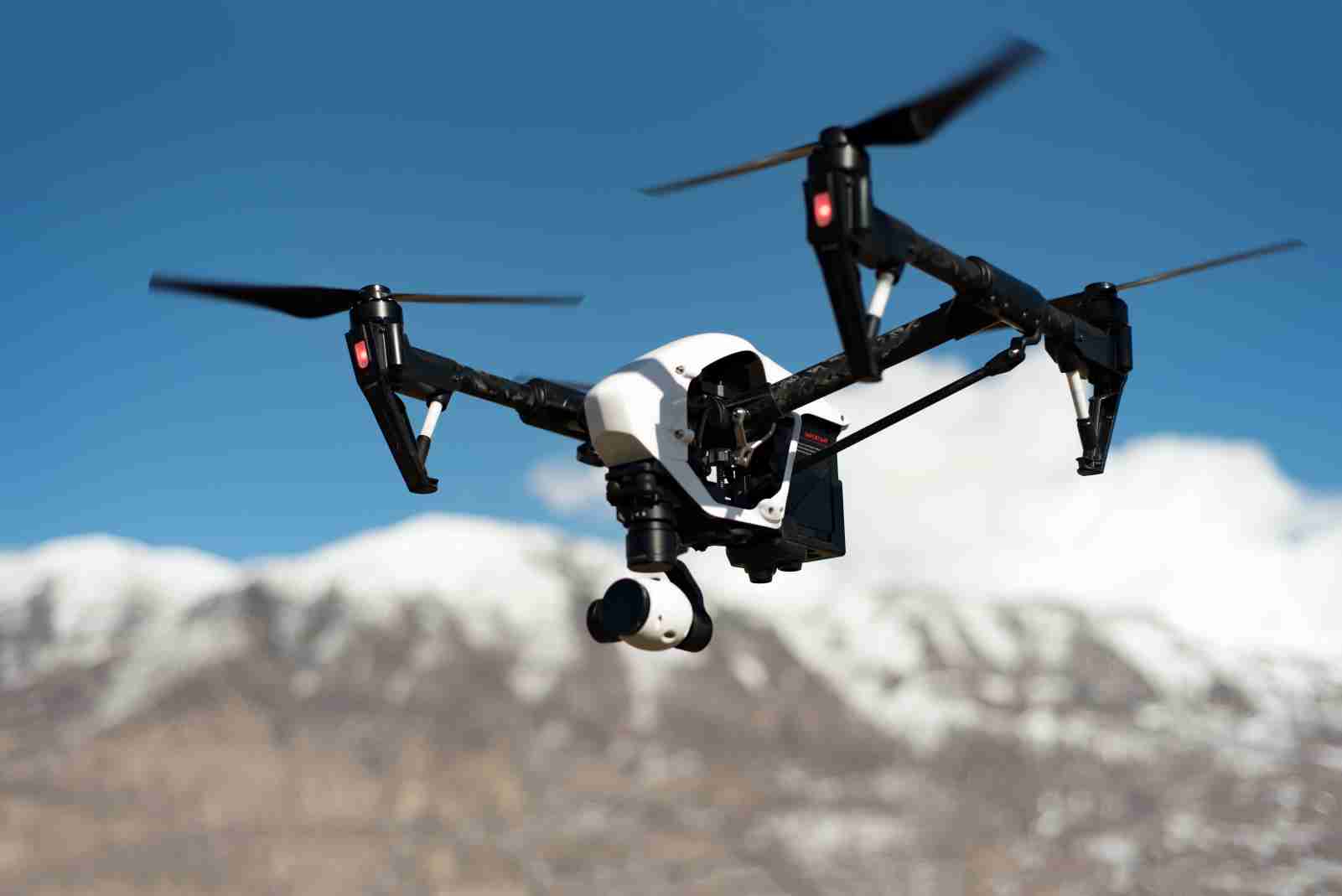
Pic Courtsey-Mitch Neilsen at unsplash.com
(The views expressed are those of the author and do not represent views of CESCUBE.)

Siddhant Bajpai is currently pursuing MA in Politics (with specialization in International Studies) from Jawaharlal Nehru University, New Delhi. After completing engineering from NIT Allahabad and subsequently working in the oil and gas sector, he switched gears to pursue international relations as an academic. He has a keen interest in the realist-constructivist theoretical debate and is passionate about investigating the technological, identity, and economic aspects of inter-state and intra-state politics. Feel free to reach out to bajpaisiddhant@gmail.com with your critiques and suggestions.