Indonesian submarine incident- A tragedy or a sabotage?
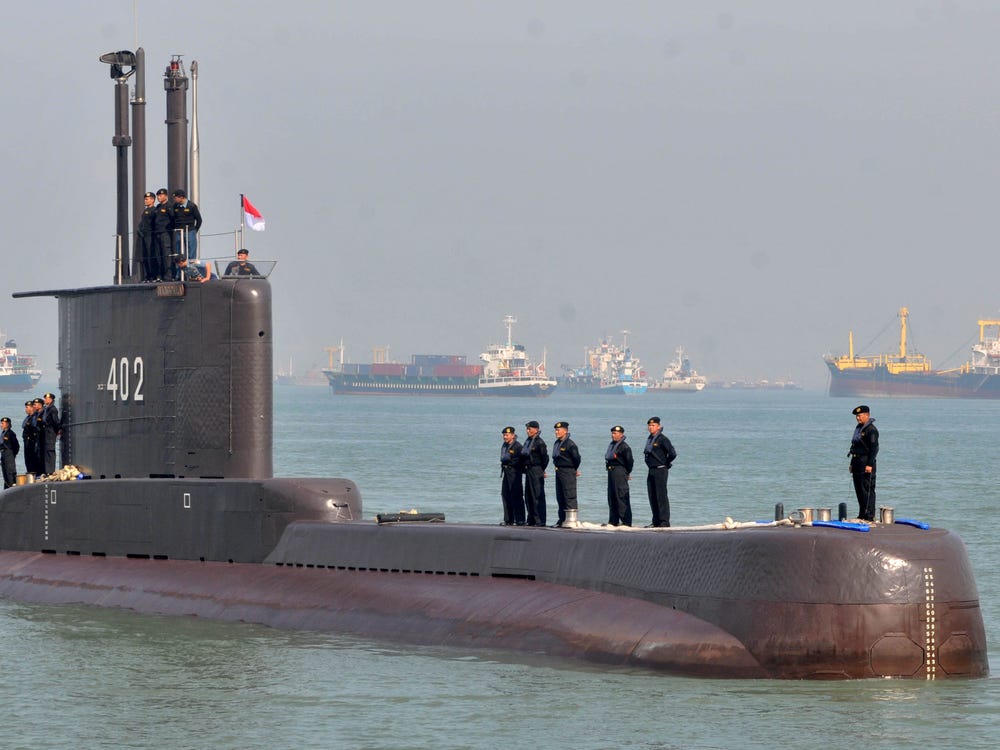
The Indonesian submarine incident flashed the headlines as the KRI Nanggala 402 that sank off the coast of Bali on April 21 was found in pieces on the seabed. It went from a sub-miss to a sub-sunk phase and soon became a mission failed lead...
An important role here was that played by the regional naval cooperation, facilitated by International submarine escape and rescue Liaison office (ISMERLO). It enables international response for distressed submarines and improves assistance through coordination activities. While one may point it out or not, the fact that ISMERLO is a NATO organization getting politicized is inevitable, especially in a global political atmosphere we now are faced with. Also while submarine disasters are not a new occurring, those getting lost surely presents a challenging task.
In its first, Chinese naval fleet has moved forward expressing diplomacy by undertaking part in the rescue team of Indonesia’s submarine recovery mission. This humanitarian aid can be expected to further mutual trust and cooperation between the two country’s militaries as they work together on deep sea salvage. It has likely made communication transparent and amicable. Singapore and Malaysian navies also sent their rescue vehicles alongside the US airship and presence of Australian vessels on site.
Another significant aspect to highlight while we understand the submergence is the fact that Lombok strait is a strategic waterway that lies in between, to be used as an important transit point for submarines. The geostrategic importance of the missing submarine poses questions of sabotage. Yet, however, with no definite proof of conspiracy and probable findings of study so far, speculations have zeroed out on the “presence of an undersea phenomenon”. Indonesian naval findings suggests an internal wave might have pushed KRI Nanggala below its pressure depth, causing the sink of the vessel and all of the 53 people aboard. Substantial evidence is being cited through the presence of Japanese Himawari satellite images which show the presence of the same. Lombok strait is in itself a region known for the presence of such strong internal waves.
While most of the argument is based on the plausibility of the presence of internal waves, a US navy report of 1966 titled, “Internal water : their influence upon naval operations” suggested that even during World War 2, submariners avoided the Strait of Gibraltar because of its reputation for hazardous undersea waves. In 1984, a Soviet submarine that was apparently running below the tanker to cover its exit from the Strait suddenly barged into the tanker's hull, causing damage to both vessels and forcing the submarine to surface. In case of KRI Nanggala, Scholars suggest the exact opposite. Instead of pushing the submarine to surface, the internal wave might have pushed it deeper into the sea, below its designed safety limit. But the critical question that must not be missed remains, if the criticalities of Lombok strait were known, what made the submariners walk the path of their own grave.
Another noticeable observation is that Nanggala was apparently preparing for torpedo exercise at the time of lost contact, and torpedo accidents have significantly been the cause of submarine losses in the past as well. Some questions have been raised over the issue of overloading and the vessel being out in the service beyond its serving time. The ideal life cycle of a ISMERLO is pegged around 30-35 year at maximum, in contrast to KRI Nanggala which was built in 1977 and with Indonesia since 1981. Therefore approximately out in the waters for more than 40 years. Hence, some have argued that it was an accident on the brink of its occurrence and waiting for its turn. Other than these factors, the search team has also found the presence of an oil spill and an unidentified object exhibiting high magnetism at about 21 nautical miles north of Bali.
What now lies ahead are the upcoming concerns regarding the viability of continuing such defense operations and more specifically, on how to prevent the recurrence of such events in the future when naval countries are on an ever high in their intent towards maritime defense cooperation. Some voices suggest for decommissioning KRI Cakra next in line. These views have been aroused amidst noticeable ground facts that a country like Indonesia with its vast land area, airspace and territorial waters undeniably need some kind of defense platform. Economically too, it makes little sense with respect to the withdrawal of defense equipment before they have been utilized to their full potential.
What Indonesia currently needs to do is to ensure avoidance of any further such occurrences. First step would be to maintain the standard of equipment and ensure they remain fit- for purpose despite their obsolescence. Strict operational restrictions must be imposed on older submarines. Serious testing and training improvements are needed throughout the pacific, before expanding navies, overlooking the mundane protocols of operation. Extensive inspections and a more robust system of communication along with the necessary geo-strategic guidance are an imperative must. Modern systems of equipment such as data driven logistics, inter and intra country communication must be areas of focus. Lastly, submarine rescue resources require real push beyond all engineering limitations. It is better to be safe than sorry by learning through avoidable accidents that cost enormously on the national security.
Indonesia as an archipelagic country holds enormous resource and geographic potential in its prime maritime location. It is therefore important that it makes significant use of its multilateral scope when it comes to safeguarding its fleet. The submarine incident comes across as no less of a tragedy which was pre-set for sabotage. An avoidable failure on multiple fronts was nothing but exactly what gave away to the Nanggala incident. What lies ahead is how the incident paves way for lessons to be learnt, given it is not forgotten. An evident new trend seems plausible on the horizon in the form of aggravated geopolitical tensions, advanced training imperative and newer technologies being adopted by navies. Such changes are inevitable if one doesn’t want more Nanggala like disasters.
References
Aditya, A. K. (2021, april 23). Missing Indonesian Submarine Was Old, Overloaded, AnalystSays. Retrieved from bloomberg: https://www.bloomberg.com/news/articles/2021-04-23/missing-indonesian-submarine-was-old-overloaded-analyst-says
Chengappa, B. (2021, May 03). End of an era: Indonesian submarine tragedy. Retrieved from deccan herald: https://www.deccanherald.com/opinion/in-perspective/end-of-an-era-indonesian-submarine-tragedy-981771.html
Chengappa, B. (2021, May 4). Indonesian submarine tragedy: What happened and how. Retrieved from thefederal: https://thefederal.com/explainers-2/indonesian-submarine/
Hooper, C. (2021, april 26). The KRI Nanggala Tragedy: Old Subs Are Getting Pushed To The Limit. Retrieved from Forbes: https://www.forbes.com/sites/craighooper/2021/04/26/the-kri-nanggala-402-tragedy-old-subs-are-getting-pushed-to-the-limit/?sh=2f03146c3288
Indonesia’s Navy Declares Missing Submarine With 53 Crew Members Has Sunk. (2021, april 24). Retrieved from marine insight: https://www.marineinsight.com/shipping-news/indonesias-navy-declares-missing-submarine-with-53-crew-members-has-sunk/
NEUMAN, S. (2021, april 30). What Is An 'Internal Wave'? It Might Explain The Loss Of An Indonesian Submarine. Retrieved from npr.org: https://www.npr.org/2021/04/30/992496772/what-is-an-internal-wave-it-might-explain-the-loss-of-an-indonesian-submarine
Submarine sinks, splits: The Statesman editorial. (2021, May 03). Retrieved from straits times: https://www.straitstimes.com/asia/submarine-sinks-splits-the-statesman-editorial
Yeo, M. (2021, may 10). Questions arise over Indonesian military’s maintenance programmes after submarine sinking. (c. n. asia, Interviewer)
Pic Courtsey-https://www.insider.com/
(The views expressed are those of the author and do not represent views of CESCUBE.)

Aastha Saluja is a graduate from lady Shri Ram college, Delhi University and is currently pursuing her masters in politics with specialization in international relations at Jawaharlal Nehru University. Her area of interest includes emerging trends of the Indo -pacific region and challenges of democratization and economic development post Cold War.