LIVE DISPATCH
Loss and Damage Finance: From COP28 Pledges to Policy Architecture Extended Deterrence Under Strain: Credibility, Assurance, and the Stability-Instability Paradox in the Indo-Pacific Beyond Consultation: BIMSTEC's Emerging Role in Regional Intelligence and Security Cooperation Maritime India: Security, Trade, and Great Power Competition Between the Desert and the Savannah: Conflict and the Political Economy of Instability in the Sahel Beyond Ukraine: Understanding Putin's Vision of Russian Power The Politics of Ali Khamenei's Funeral Silicon Sovereignty: How Semiconductors Are Redrawing Global Power Hierarchies Operation Sindoor and the Changing Dynamics of India–Pakistan Security The Negative Impact of US–Iran War on the Pacific Region Generative AI, Labour Sovereignty, and the Geoeconomics of India's Service Economy BRICS Expansion and the Multipolar Moment: Opportunity or Strategic Contradiction? India's AI Diplomacy and the Future of Strategic Technologies Foot-Dragging as Feminism: Iran, South Korea, and the Ungovernable Body Lethal Autonomous Weapons Systems and the Governance Deficit: Challenges to International Humanitarian Law and Accountability Beyond Proximity: Why the UAE Occupies a Growing Place in Iran’s Strategic Calculus Great Power Rivalry and the Crisis of the United Nations Why Fiji Matters: The New Geopolitics of the Indo-Pacific Islands Ten Years After Brexit: Regret, Reform, or Reversal? The Long Shadow of 1953: Understanding the Iran–US Conflict Sports, Strategy and Statecraft of Mega Sporting Events as Geoeconomic Instruments: Qatar 2022 to Saudi Arabia 2034 Border Fencing and National security: India’s Strategy along the Bangladesh Border Hardening the Quad: From Strategic Dialogue to Operational Cooperation Lingering Effects of the Bush Doctrine on Contemporary US Foreign Policy The Maghreb of States: Identity, Sovereignty, and the Limits of Non-Interference India’s BRICS 2026 Chairmanship Navigating a tightrope Amidst the Chinese Geopolitical Rise Beyond the Battlefield: Understanding Unconventional Security Challenges in Contemporary Geopolitics The Control Paradox: How Proxy Warfare Enables Strategic Deniability While Constraining Strategic Control Trapped in Deterrence: Nuclear Stability and the Persistence of Conflict in South Asia The Return of Unipolarity? U.S Strategic Primacy and the Future of the Global Order Supply Chains and Complicity: The Role of Global Corporations in Forced Labour in Xinjiang The Distant Threat: Is Israel Constructing a Strategic Rival in Pakistan Island Militarisation and Techno-Diplomacy: Turkey’s Eastern Mediterranean Fault Lines Amid India-Greece Alignment India’s Security Scenario: An Assessment of its Continental and Maritime Challenges The Geopolitical Architecture of European Defence: Navigating NATO Synergies, Transatlantic Retrenchment, and the Hybrid Threat Landscape The Artemis Accords and the Future of Global Space Governance AI and the Securitization of Critical Infrastructure: Implications of India's AI Summit Beyond Rhetoric: Evaluating the Effectiveness of International Sanctions on China’s Treatment of Uyghur Muslims The Emerging Maritime Rivalry in the Western Indian Ocean: India’s Response to Extra-Regional Powers India's Maritime Grand Strategy on Trial : The IRIS Dena Incident and the Indian Ocean Question Loss and Damage Finance: From COP28 Pledges to Policy Architecture Extended Deterrence Under Strain: Credibility, Assurance, and the Stability-Instability Paradox in the Indo-Pacific Beyond Consultation: BIMSTEC's Emerging Role in Regional Intelligence and Security Cooperation Maritime India: Security, Trade, and Great Power Competition Between the Desert and the Savannah: Conflict and the Political Economy of Instability in the Sahel Beyond Ukraine: Understanding Putin's Vision of Russian Power The Politics of Ali Khamenei's Funeral Silicon Sovereignty: How Semiconductors Are Redrawing Global Power Hierarchies Operation Sindoor and the Changing Dynamics of India–Pakistan Security The Negative Impact of US–Iran War on the Pacific Region Generative AI, Labour Sovereignty, and the Geoeconomics of India's Service Economy BRICS Expansion and the Multipolar Moment: Opportunity or Strategic Contradiction? India's AI Diplomacy and the Future of Strategic Technologies Foot-Dragging as Feminism: Iran, South Korea, and the Ungovernable Body Lethal Autonomous Weapons Systems and the Governance Deficit: Challenges to International Humanitarian Law and Accountability Beyond Proximity: Why the UAE Occupies a Growing Place in Iran’s Strategic Calculus Great Power Rivalry and the Crisis of the United Nations Why Fiji Matters: The New Geopolitics of the Indo-Pacific Islands Ten Years After Brexit: Regret, Reform, or Reversal? The Long Shadow of 1953: Understanding the Iran–US Conflict Sports, Strategy and Statecraft of Mega Sporting Events as Geoeconomic Instruments: Qatar 2022 to Saudi Arabia 2034 Border Fencing and National security: India’s Strategy along the Bangladesh Border Hardening the Quad: From Strategic Dialogue to Operational Cooperation Lingering Effects of the Bush Doctrine on Contemporary US Foreign Policy The Maghreb of States: Identity, Sovereignty, and the Limits of Non-Interference India’s BRICS 2026 Chairmanship Navigating a tightrope Amidst the Chinese Geopolitical Rise Beyond the Battlefield: Understanding Unconventional Security Challenges in Contemporary Geopolitics The Control Paradox: How Proxy Warfare Enables Strategic Deniability While Constraining Strategic Control Trapped in Deterrence: Nuclear Stability and the Persistence of Conflict in South Asia The Return of Unipolarity? U.S Strategic Primacy and the Future of the Global Order Supply Chains and Complicity: The Role of Global Corporations in Forced Labour in Xinjiang The Distant Threat: Is Israel Constructing a Strategic Rival in Pakistan Island Militarisation and Techno-Diplomacy: Turkey’s Eastern Mediterranean Fault Lines Amid India-Greece Alignment India’s Security Scenario: An Assessment of its Continental and Maritime Challenges The Geopolitical Architecture of European Defence: Navigating NATO Synergies, Transatlantic Retrenchment, and the Hybrid Threat Landscape The Artemis Accords and the Future of Global Space Governance AI and the Securitization of Critical Infrastructure: Implications of India's AI Summit Beyond Rhetoric: Evaluating the Effectiveness of International Sanctions on China’s Treatment of Uyghur Muslims The Emerging Maritime Rivalry in the Western Indian Ocean: India’s Response to Extra-Regional Powers India's Maritime Grand Strategy on Trial : The IRIS Dena Incident and the Indian Ocean Question
ADVERTISEMENT
Politics April 2, 2022 2264 Reads

Iran Afghan relations after the Taliban takeover
M
By Mahima Chouhan
Author • Centre for Security & Strategic Studies
Iran Afghan relations after the Taliban takeover
Share Analysis:
EXECUTIVE SUMMARY & STRATEGIC TAKEAWAYS

The reappearance of the Taliban in 2021 has put foreign actors, particularly neighbouring countries, in a difficult geopolitical scenario. The Islamic Republic of Iran which shares a border of around 585 miles frontier and a strong cultural...

ADVERTISEMENT

Historically, Iran has tried to achieve its objective by influencing the key religious and ethnic groups of Afghanistan. However, these interactions are not possible without the interplay of many identities, groups, and intermediaries in Afghanistan’s deeply contested society, which has the potential to influence almost every area of life.

To understand the contemporary partnership of the Islamic Republic of Iran, it is significant to comprehend the intricate dynamics of Taliban ideology as well as how Iran perceives its relationship with the United States. Mostly, Iran shares a complex relationship with Afghanistan and has pursued a policy of ‘strategic hedging’ for a very long time. It has been following a dual policy of providing support to the US-backed Afghan govt on the one hand and having cordial relations with the Taliban at the very same time. Thus, this double-barreled approach of Iran has somewhere made it difficult to analyze its intention in war-torn Afghanistan.

Both countries were on the verge of a war in 1998 when the Taliban assassinated Iranian diplomats in Mazar-i-Sharif the interim capital of the Northern Alliance and executed a huge number of Shia Muslims. There was a significant sectarian difference between Iran, a Shia powerhouse, and the Taliban, a Sunni outfit. In the late 1990s, Iran had armed and supported the northern alliance to fight against the Taliban. Since the 9/11 attack, Iran has actively supported the United States' operation against the formation of an interim Taliban government in Afghanistan. However, the situation is different now. Both the parties are having a tactical and more realistic relationship, with no similar intensity of Shia Sunni friction. Iran’s relationship with the Taliban seems to have changed its tone and it sees Afghanistan as an important asset to entrench its ‘axis of resistance’ across the region. Ali-Akbar Velayati, a senior adviser to the supreme leader in international affairs, has said that the Iran-led and -centered “Axis of Resistance” includes “Yemen, Tehran, Baghdad, Al-Bukamal, Damascus, Beirut, Gaza,” adding that “Afghanistan is also part of this axis.”

Though Iran is still not at a point of officially recognizing the Taliban government in Afghanistan, it has in some way welcomed the departure of United States of America. As the statement of the Iranian president, Ebrahim raise signifies, “America’s military defeat must become an opportunity to restore life, security, and durable peace in Afghanistan.” In addition, in the first meeting between the Taliban delegation, led by the group’s Foreign Minister Amir Khan Muttaqi and the Iranian foreign minister Hossein Amirabdollahian in Iran since the retreat of US forces discussed political, economic, refugee and transit issues. Moreover, the Washington’s Afghan catastrophe is significantly more important for Iran than the success of the Taliban, as this particular event shows the world that US policy in Islamic countries would not necessarily have high stakes. The other way round, it also gives Iran a strong bargaining power in the dynamic contours of the middle east region. The tumultuous US Iran relations have been a major determinant in the Afghan Iran relations. The approach of ‘enemy of my enemy is my friend” has created an opportunity for the two parties to come together.

Despite the fact that the partnership is pragmatic in general, it still faces some undercurrent of frictions. When it comes to official recognition of the Taliban, Iran has been extremely clear in its position, stating that it will only happen once the Taliban build an inclusive administration. However, the US special representative for Afghanistan, Thomas west said that No progress has been made by the Taliban for an inclusive govt in Afghanistan. Iran is also been concerned with the 1973 water treaty of the Helmand river which still remains unresolved. In Iran's oil-rich Khuzestan province, a protest erupted due to a serious scarcity of water supply. A report by Al-Monito shows that at least one border position of Iran is been captured by the Afghan fighters on 1 Dec 2021 only to retreat later. Despite media reports to the contrary, both sides publicly denied any casualties. Thus, Iran continues its strategic support to the Afghan government, but the border and water issues remain the same.

Another key issue that might stand in the way of Afghan Iran relations is the refugee crisis. According to the UNHCR, the United Nations Refugee Agency, there will be roughly 2.8 million Afghan refugees worldwide by the end of 2020, the vast majority of whom will be in Iran and Pakistan. Following the arrival of the Taliban-led government in Afghanistan, the influx of Afghan refugees has only increased in Iran. In September 2021, Iran even stated that it will stop welcoming Afghan refugees. However, on January 8, 2022, both parties met to diffuse the tensions, knowing the mutual benefits of their cooperation.

As Iran's major priorities are multifold, it is keen to maintain a favorable balance of power in post-American Afghanistan. Alongside, the Taliban wants to be seen as a domestic actor of Afghanistan in the international world, and thus it wants to please as many regimes as possible. Both parties seek to avoid conflicts like the ones that erupted between the Islamic Republic and the Islamic Emirate in the 1990s. Some scholars also feel that Iran will normalize its relations with the Taliban, if other countries do so first, as Iran may be hesitant to be the first country in the world to recognize the present Afghan government.


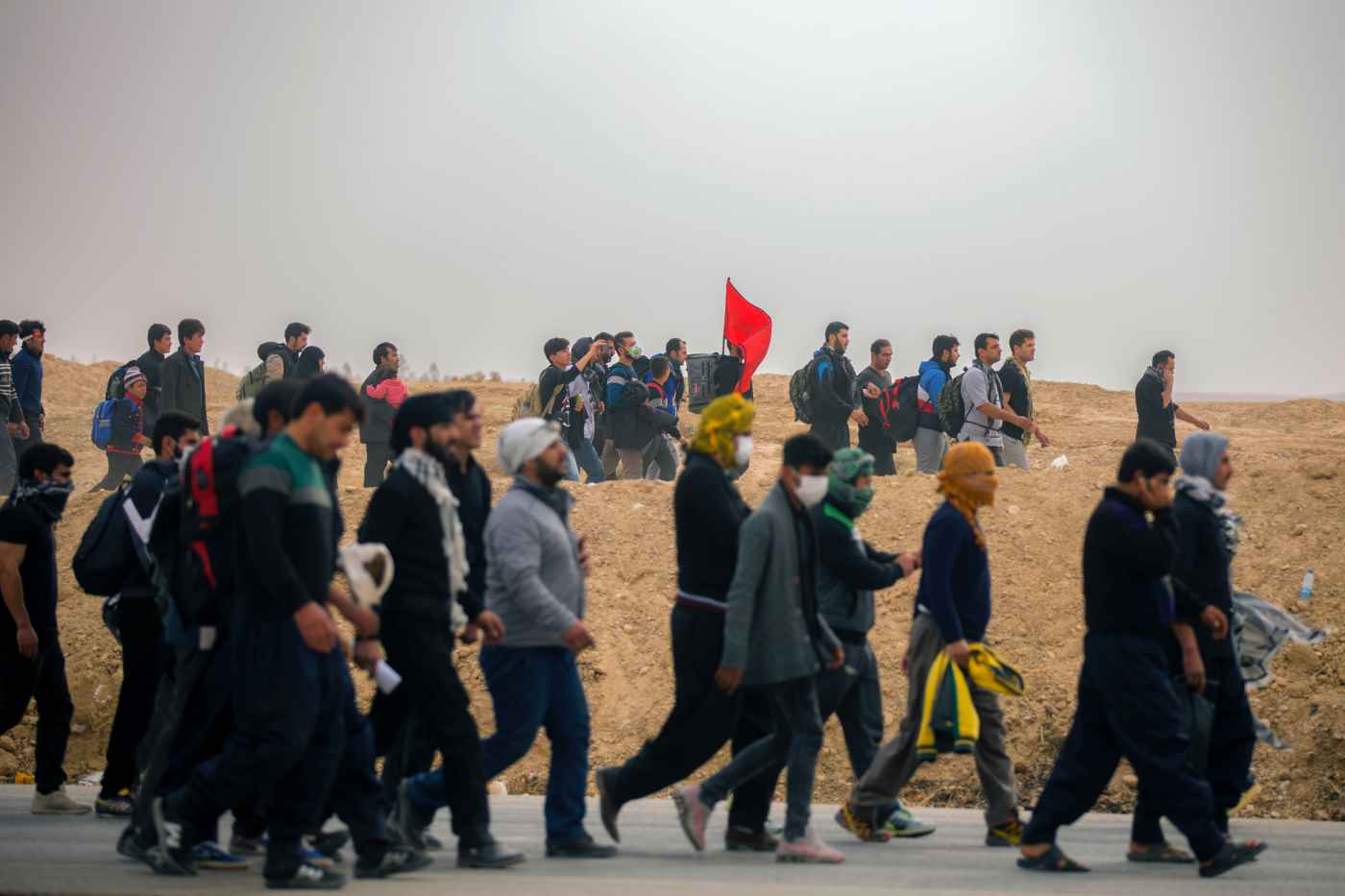
Pic Courtsey-Mostafa Meraji at unsplash.com

(The views expressed are those of the authro and do not represent views fo CESCUBE.)

Mahima Chouhan
About Mahima Chouhan →

Mahima Chouhan is a Postgraduate student of Politics with Specialization in International Studies at Jawaharlal Nehru University. Her area of interest lies in the cultural and political aspects of West Asia, Central Asia and the challenges of Internally Displaced people and refugees.
ADVERTISEMENT

Related Strategic Analysis