Iran-China relations and its impact on India’s projects in Iran
In a recently leaked partnership agreement document between China and Iran, the scholars and analysts all over the world are arguing what the future would look like if this agreement is formally signed. Tehran and Beijing have had historica...
Iran-China Bilateral Relations
The relationship between China and Iran is of an interest to everyone internationally. Both the powers are very ambitious and pragmatic when it comes to their relations with the other countries and to top it off, also have a common animosity towards United States of America. Both these regional powers are thought to pose a challenge to the hegemony of USA, and a significant portion of their respective foreign policy aims towards it. Both Iran and China trace back their history to ancient civilisations and have risen from strong and vibrant empires. Both the countries are important regional players; China in Asia and Iran in West and Middle East. China is one of the largest entities in Asia and its power in past few decades has increased exponentially across all sectors. Iran is the second largest country in the Middle East and has become an important played in Gulf politics.
While both Iran and China, have emerged as significant regional players in their respective region, they have also become prominent in the international realm. Geographically, they have a highly strategic location which has aided them developing economic, trade and political potential across the time which has enabled them to exercise considerable influence in their region and international politics. Iran and China have had a history of cultural, political and economic exchanges along the Silk Road since 200 BC. This historical bilateral relationship has paved the way for a friendly economic and strategic partnership between the two nations.
During the 1990's, China's growing energy needs and Iran's abundant oil and gas resources formed the foundation of a partnership, which over the years has augmented into strong bilateral relations. The 2000's proved to be another juncture where their relationship became strengthened, as due to the US pressure, Europe, Japan and Russia had to reduce their ties and investments in Iran. This forced Iran to adopt a 'Look East' economic strategy, and China, since then, has become a primary nation for Iran emerging as its important economic power. China’s companies have also heavily invested in the Iranian oil and gas market and has tapped an unexploited resource market. It continues to play a crucial role in expanding the Iran's refining capacity, injecting capital into the extractive industries and developing the transportation infrastructure.
Many scholars regard the relationship between Iran and China as special, but there is more to it. China has showed this benevolent attitude to a lot of countries in the Middle East, namely Saudi Arabia and United Arab Emirates, hence, for it, Iran is not special. Saudi Arabia is now one of the top oil suppliers to China and many Chinese firms have committed $123 billion in investments and construction to the GCC countries since 2013. For China's economic expansion strategy, Iran is one of the major players. Iran too knows the extent of its relationship with China and has been using the benefits from Chinese investments to put up a tough front against United States of America, and welcome any investments and economic cooperation in lieu of the sanctions which have been imposed by the Trump administration. Therefore, while Iran and China’s relationship can be seen as special in terms of the increased cooperation, it is not-so special, as these kinds of bilateral relationships are very common in the international system, where an enemy’s enemy, is a friend.
China has been following this policy of garnering all the support from the states for its ambitious One Belt One Road Initiative Project. Iran is a promising geographical location as a Caspian Sea state which connects Arabian Sea and the Indian Ocean. It is a perfect location for the China Europe rail route, which bypasses Russian territory. It is also situated to become the hub of the International North South Transit Corridor and has signed the Belt and Road Initiative Agreement, thus having decided to be a part of China ambitious modern-day Silk route project in December, 2019. After the signing of the agreement, Iran opened up an array of sectors to Chinese investments, ranging from infrastructure to transportation. Iran relaxed its visa laws and consequently employed thousands of Chinese workers for construction work under the initiative.
Iran is said to benefit greatly from the initiative as it will not only boost economic trade via the maritime routes, a new railway route with a high-speed train system is also being laid which will connect Tehran with Mashhad, the second largest city of Iran. Iran is also seeking to expand its energy delivery network across the region under the BRI project. Iran has already built a natural gas pipeline to its border with Pakistan, and it will soon be expanded.
Moreover, if the fresh inputs are taken under consideration, China and Iran are on a course to sign a comprehensive 25-year partnership agreement. According to the available information, China is set to invest US $ 120 billion for upgrading the transport infrastructure of Iran with the 23,000 km road which will link Tehran with Urumqi in China's Xinjiang province. The road will be dovetailed with Urumqi-Gwadar link under the China Pakistan Economic Corridor. This ambitious project will link and provide connectivity with Kazakhstan, Kyrgyzstan, Uzbekistan and Turkmenistan and thereafter via Turkey into Europe. Major pipelines will be built for oil and gas transport and Iran will import Iranian oil, thereby going against the US sanctions.
Implications of Iran – China Relations on Indian Projects in Iran
The increased involvement of China in Iran has been viewed speculatively by the Indian analysts and scholars. For India, the growing relations between Iran and China is a reason for worry and changing strategic landscape. It portrays the growing Chinese dominance in alignment with Pakistan, in not only Afghanistan, but also in the region as a whole. With most of the South Asian countries signing up the BRI deal, India now is grappling with the tensions from all corners.
Chabahar is considered to be of great importance to India. It not only provides access to Afghanistan but is also a part of International North-South Transport corridor which links India to Eurasia. India and Iran, jointly laid foundation for the building the Chabahar port and was inaugurated in December 2017. While the movement of goods using the Chabahar port has started, India and Iran had also agreed to develop a 628 km long Chabahar Zahedan railway line. In mid-July, reports surfaced online which said that Iran has dropped India from the Chabahar rail project, but these claims have been dismissed by both the sides. But one cannot ignore that the progress of the project has been rather slow. This is not only due to the lack of funds from India's side but also because of the heavy sanctions imposed by USA on Iran.
According to the recent reports, India is now longer a part of the Farzad-B gas field exploration project. The Ministry of External Affairs of India has confirmed that it no longer is involved in the gas project where ONGC had already signed an agreement in 2002 and has invested huge amounts so far. In past few years, India's pro-USA stance has raised alarm bells for its neighbours and important powers like Iran, Pakistan, and China. This has translated into political deadlock when it comes to investing in certain projects in Iran for India. Iran has shifted its balance towards China and has been reaping benefits from the bilateral ties.
Another significant development which has raised the alarms for New Delhi is the recent 25 year long comprehensive partnership signed between Iran and China on June 21. If finalised, the partnership would work closely on development of infrastructure, including the BRI projects and will provide an opportunity to attract huge investments in various fields.
India can no longer ignore the intensifying political, military and economic ties of China with Iran and other Middle Easter countries. If China gets a foothold in the development of the Chabahar port, which is regarded as a counter balance by many scholars for the Gwadar Port in Pakistan built under BRI, it could lead to shift in balance of power in China's favour. Additionally, emergence of Iran-China-Pakistan-Russia grouping can be detrimental for the India's interest.
While nothing is finalised yet and New Delhi should not read too much into the un-finalised business, it cannot ignore the repercussions the new deal would have, if successful. The projection of the draft bilateral agreement with China could be an away for Iran to show that it is getting close to one of its adversaries. However, the Chinese media has not disclosed any details about the agreement and neither they have commented on the news being circulated. China's silence can be due to portraying itself as non-committal, which can be very pragmatic strategy, if the deal actually happens. China has been garnering a lot of criticism due to the on-going pandemic, its aggressive role in South China Sea, its on-going war with USA and other Western nations.
Conclusion
While Iran offers India many opportunities in various sectors of energy, trade and connectivity, the present relations between the two countries do not seem positive. India has stopped its oil imports from Iran after US sanctions in 2019. The imports have dropped to $ 1.35 billion from $ 13 billion (till January 2020). Similarly, exports have declined to $ 2.80 billion from $ 3.5 billion. Both the countries have been trying to enhance the cooperation in trade and connectivity, the recent withdrawal of India from the gas project and the slow and lacking progress of the rail project, tells a different story.
Geographically, both the countries face same regional challenges when it comes to Afghanistan and Central Asia and hence, cooperation between India and Iran makes utmost sense. However, India's pro-USA stance has not been welcomed by most of the Iranians. New Delhi has always been cautious in balancing its relations with the countries who do not get along and this is the time when that cautious and hedging strategy is needed the most.
The growing confrontation between Iran and USA will continue to cast a shadow on India-Iran cooperation, and give opportunities to China. India needs to take advantage of the raging pandemic and deteriorating Chinese image to re-align its interest with Iran and take pragmatic steps to strengthen the partnership between India and Iran.
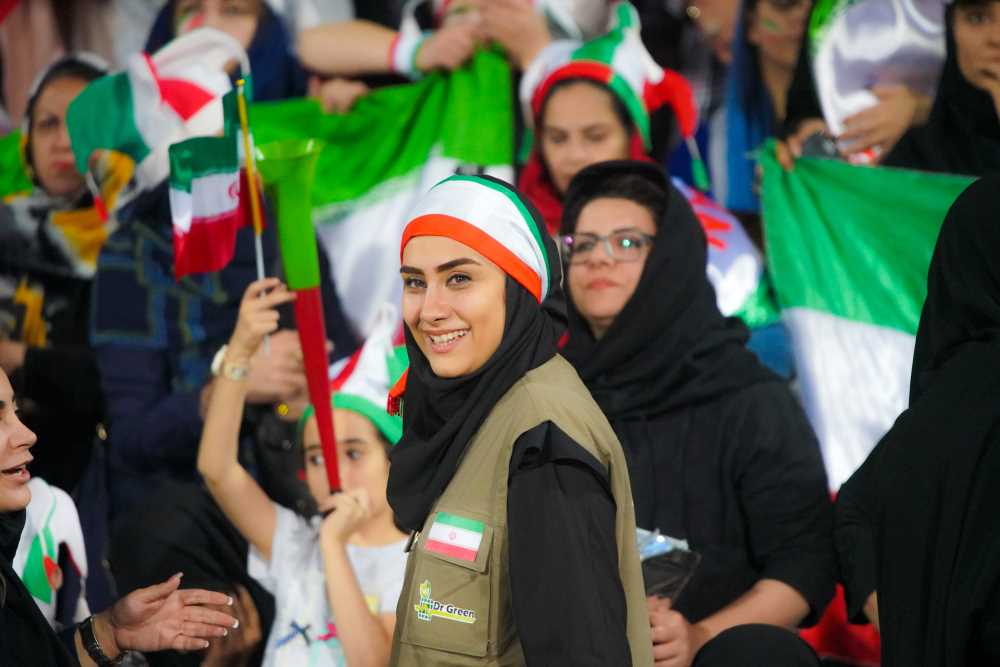
Pic Courtesy - Hadi Yazdi Aznaveh at unsplash.com
(The views expressed are personal)

Krupa Vasani is a current Scholar at The Vedica’s Scholar Program, New Delhi and is pursuing her MBA in Management and Leadership. An undergraduate from O. P Jindal Global University, Krupa holds a bachelors in International Relations. Over the course of three years as an undergraduate, Krupa has developed an interest in the Security and Strategic Studies and Development Sector. Indian Foreign Policy, South South Cooperation and the Strategy in Indo-Pacific and South Asian Politics and the emerging Quadrilateral Diplomacy are some of her areas of interest. She is currently associated with CESCUBE as part time researcher.