LIVE DISPATCH
Loss and Damage Finance: From COP28 Pledges to Policy Architecture Extended Deterrence Under Strain: Credibility, Assurance, and the Stability-Instability Paradox in the Indo-Pacific Beyond Consultation: BIMSTEC's Emerging Role in Regional Intelligence and Security Cooperation Maritime India: Security, Trade, and Great Power Competition Between the Desert and the Savannah: Conflict and the Political Economy of Instability in the Sahel Beyond Ukraine: Understanding Putin's Vision of Russian Power The Politics of Ali Khamenei's Funeral Silicon Sovereignty: How Semiconductors Are Redrawing Global Power Hierarchies Operation Sindoor and the Changing Dynamics of India–Pakistan Security The Negative Impact of US–Iran War on the Pacific Region Generative AI, Labour Sovereignty, and the Geoeconomics of India's Service Economy BRICS Expansion and the Multipolar Moment: Opportunity or Strategic Contradiction? India's AI Diplomacy and the Future of Strategic Technologies Foot-Dragging as Feminism: Iran, South Korea, and the Ungovernable Body Lethal Autonomous Weapons Systems and the Governance Deficit: Challenges to International Humanitarian Law and Accountability Beyond Proximity: Why the UAE Occupies a Growing Place in Iran’s Strategic Calculus Great Power Rivalry and the Crisis of the United Nations Why Fiji Matters: The New Geopolitics of the Indo-Pacific Islands Ten Years After Brexit: Regret, Reform, or Reversal? The Long Shadow of 1953: Understanding the Iran–US Conflict Sports, Strategy and Statecraft of Mega Sporting Events as Geoeconomic Instruments: Qatar 2022 to Saudi Arabia 2034 Border Fencing and National security: India’s Strategy along the Bangladesh Border Hardening the Quad: From Strategic Dialogue to Operational Cooperation Lingering Effects of the Bush Doctrine on Contemporary US Foreign Policy The Maghreb of States: Identity, Sovereignty, and the Limits of Non-Interference India’s BRICS 2026 Chairmanship Navigating a tightrope Amidst the Chinese Geopolitical Rise Beyond the Battlefield: Understanding Unconventional Security Challenges in Contemporary Geopolitics The Control Paradox: How Proxy Warfare Enables Strategic Deniability While Constraining Strategic Control Trapped in Deterrence: Nuclear Stability and the Persistence of Conflict in South Asia The Return of Unipolarity? U.S Strategic Primacy and the Future of the Global Order Supply Chains and Complicity: The Role of Global Corporations in Forced Labour in Xinjiang The Distant Threat: Is Israel Constructing a Strategic Rival in Pakistan Island Militarisation and Techno-Diplomacy: Turkey’s Eastern Mediterranean Fault Lines Amid India-Greece Alignment India’s Security Scenario: An Assessment of its Continental and Maritime Challenges The Geopolitical Architecture of European Defence: Navigating NATO Synergies, Transatlantic Retrenchment, and the Hybrid Threat Landscape The Artemis Accords and the Future of Global Space Governance AI and the Securitization of Critical Infrastructure: Implications of India's AI Summit Beyond Rhetoric: Evaluating the Effectiveness of International Sanctions on China’s Treatment of Uyghur Muslims The Emerging Maritime Rivalry in the Western Indian Ocean: India’s Response to Extra-Regional Powers India's Maritime Grand Strategy on Trial : The IRIS Dena Incident and the Indian Ocean Question Loss and Damage Finance: From COP28 Pledges to Policy Architecture Extended Deterrence Under Strain: Credibility, Assurance, and the Stability-Instability Paradox in the Indo-Pacific Beyond Consultation: BIMSTEC's Emerging Role in Regional Intelligence and Security Cooperation Maritime India: Security, Trade, and Great Power Competition Between the Desert and the Savannah: Conflict and the Political Economy of Instability in the Sahel Beyond Ukraine: Understanding Putin's Vision of Russian Power The Politics of Ali Khamenei's Funeral Silicon Sovereignty: How Semiconductors Are Redrawing Global Power Hierarchies Operation Sindoor and the Changing Dynamics of India–Pakistan Security The Negative Impact of US–Iran War on the Pacific Region Generative AI, Labour Sovereignty, and the Geoeconomics of India's Service Economy BRICS Expansion and the Multipolar Moment: Opportunity or Strategic Contradiction? India's AI Diplomacy and the Future of Strategic Technologies Foot-Dragging as Feminism: Iran, South Korea, and the Ungovernable Body Lethal Autonomous Weapons Systems and the Governance Deficit: Challenges to International Humanitarian Law and Accountability Beyond Proximity: Why the UAE Occupies a Growing Place in Iran’s Strategic Calculus Great Power Rivalry and the Crisis of the United Nations Why Fiji Matters: The New Geopolitics of the Indo-Pacific Islands Ten Years After Brexit: Regret, Reform, or Reversal? The Long Shadow of 1953: Understanding the Iran–US Conflict Sports, Strategy and Statecraft of Mega Sporting Events as Geoeconomic Instruments: Qatar 2022 to Saudi Arabia 2034 Border Fencing and National security: India’s Strategy along the Bangladesh Border Hardening the Quad: From Strategic Dialogue to Operational Cooperation Lingering Effects of the Bush Doctrine on Contemporary US Foreign Policy The Maghreb of States: Identity, Sovereignty, and the Limits of Non-Interference India’s BRICS 2026 Chairmanship Navigating a tightrope Amidst the Chinese Geopolitical Rise Beyond the Battlefield: Understanding Unconventional Security Challenges in Contemporary Geopolitics The Control Paradox: How Proxy Warfare Enables Strategic Deniability While Constraining Strategic Control Trapped in Deterrence: Nuclear Stability and the Persistence of Conflict in South Asia The Return of Unipolarity? U.S Strategic Primacy and the Future of the Global Order Supply Chains and Complicity: The Role of Global Corporations in Forced Labour in Xinjiang The Distant Threat: Is Israel Constructing a Strategic Rival in Pakistan Island Militarisation and Techno-Diplomacy: Turkey’s Eastern Mediterranean Fault Lines Amid India-Greece Alignment India’s Security Scenario: An Assessment of its Continental and Maritime Challenges The Geopolitical Architecture of European Defence: Navigating NATO Synergies, Transatlantic Retrenchment, and the Hybrid Threat Landscape The Artemis Accords and the Future of Global Space Governance AI and the Securitization of Critical Infrastructure: Implications of India's AI Summit Beyond Rhetoric: Evaluating the Effectiveness of International Sanctions on China’s Treatment of Uyghur Muslims The Emerging Maritime Rivalry in the Western Indian Ocean: India’s Response to Extra-Regional Powers India's Maritime Grand Strategy on Trial : The IRIS Dena Incident and the Indian Ocean Question
ADVERTISEMENT
COMMENTARY April 17, 2024 2056 Reads

Iranian drones & missiles attack on Israel
M
By Mohit Vashisth
Author • Centre for Security & Strategic Studies
Iranian drones & missiles attack on Israel
Share Analysis:
EXECUTIVE SUMMARY & STRATEGIC TAKEAWAYS

Iranian drones and missiles under “Operation True Promises” truck Israel during the night hours (local time) on April 13, 2024.Israel Defence Force (IDF) confirmed that drones and surface-to-surface missiles were launched from Iran towards ...

ADVERTISEMENT

Analysis:

·        The historical backdrop of animosity between Iran and Israel stems from deep-seated geopolitical rivalries, ideological disparities, and regional power struggles. Iran's backing of proxy groups like Hezbollah, Houthis and Hamas, alongside its nuclear ambitions and anti-Israel rhetoric, has intensified long-standing tensions. Recent events, including an Israeli airstrike on an Iranian consulate in Syria on April 01st, 2024 and subsequent retaliatory actions by Iran, have worsened the situation. The ongoing Israeli-Palestinian conflict, notably sparked by Hamas' attack on October 7th, 2023, and the ensuing Israeli military operations in the Gaza Strip, have further heightened tensions in the Middle East, resulting in significant casualties.

·        During the night hours (local time) of April 13, large number of sources indicated about high level government meetings in Israel, following closing of Israeli, Iranian, Iraqi, Yemen, Lebanon and Jordanian airspace. Sources also indicated significant disruptions to GPS signals in Israeli and Jordanian airspace, most likely caused by Israeli Jamming efforts in the region.

·        Following that, multiple reports started claiming high likelihood of Iranian attack on Israel in the coming hours.

·        Later, sources confirmed a large number of Iranian drones being airborne and heading towards Israel.

·        The drone attack from Iran happened in three waves. First wave included UAVs launched from Iran. Second wave began from Syria, Yemen and Iraq and included drones and rockets. In third wave, cruise and ballistic missiles were launched.

·        Hezbollah also confirmed that it fired two barrages of rockets at an Israeli military base in the Golan Heights.

·        Some sources also indicated towards reported cyber-attacks targeting Israeli radars.

·        Israel Air Force jets along with the US, the UK, Jordan, and other allies tried to intercept drones outside Israeli territory, notably inside Iraqi and Jordanian airspace to reduce their numbers. Israeli air defence systems could be seen intercepting the projectiles in the Israeli airspace.

·        At the time of writing, most of the countries mentioned above have reopened their airspaces.

·        According to the reports, The US Navy dispatched the nuclear-powered aircraft carrier USS Dwight Eisenhower towards Israel and UK Air Force has dispatched its Voyager KC2 refuelling aircraft.

·        An urgent UN Security Council meeting on the attack is scheduled for 20:00 GMT.

Assessment:

·        The recent conflict between Iran and Israel showcased a complex interplay of military capabilities, geopolitical tensions, and strategic narratives.

·        A significant number of the launched projectiles were intercepted by Israel, the US and other allies before approaching Israeli territory, the remaining were taken down by Israeli missile defence systems. Though, a few missiles were able to penetrate Israeli air defences, there were no reports of substantial damage to life and property. This highlighted the effectiveness of their defence systems.

·        Sources indicate that Iran utilized outdated models from their military inventory for the attacks, which had previously been relegated to storage due to concerns regarding their reliability. Despite their antiquated status, these drones and missiles effectively depleted resources of Israeli and allied forces by necessitating the deployment of costly anti-missile and anti-aircraft systems in response.

·        According to Islamic Revolutionary Guards Corps (IRGC), for the first time Iran used missiles with separable warheads to break through Israel's air defences.

·        Both Iran and Israel presented narratives favourable to their respective audiences, claiming success in intercepting or hitting targets. Israel claimed to have intercepted all missiles, while Iran boasted about successfully hitting all intended targets.

·        Iran's decision to retaliate without escalating aggression indicates a calculated approach to avoid further confrontation, potentially reflecting internal and external pressures.

Forecast:

·        Israel is likely to retaliate against Iranian proxies in Lebanon and Syria rather than directly targeting Iran. This approach allows Israel to assert its military capabilities while minimizing the risk of wider conflict. Retaliatory strikes on Yemen and Iraq, particularly against Iranian-backed groups, may occur but could carry diplomatic ramifications and potential escalation risks.

·        Israeli actions will be influenced by the need to balance deterrence with the avoidance of further escalation, considering both domestic political dynamics and international implications.

·        Retaliatory strikes by Israel could provoke responses from Iranian proxies and allies, potentially leading to further violence and regional instability.

·        Direct strikes on Iran are improbable in the near term but cannot be entirely ruled out, especially if the situation deteriorates or if Israel perceives a significant threat to its security.

·        Diplomatic efforts will be crucial in mitigating tensions and preventing a broader conflict, with key stakeholders likely engaging in behind-the-scenes negotiations to de-escalate the situation.

·        Israeli decision-making may be influenced by internal political considerations, including the influence of ultra-Orthodox forces and the broader political landscape.

·        The need to maintain domestic support while navigating regional tensions will shape Israel's response strategy and diplomatic engagements.


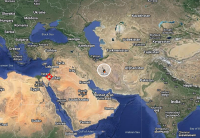
Pic Courtsey- Google Maps.

(The views are those of the author only and do not represent views of CESCUBE.)

Mohit Vashisth
About Mohit Vashisth →

Mohit Vashisth is a Doctoral Research Fellow at Jindal School of International Affairs, O.P. Jindal Global University, Haryana, India. He was earlier associated with Max Security Solutions as a coordinator at Global Security Operations Centre (GSOC). At MAX, he was responsible for intelligence gathering, analysis, travel & security operations, and risk mitigation on a global scale during routine and emergency. He also has three years of experience working in the renewable energy sector. He is an engineering graduate with a major in Electronics and Communications and holds a Master’s degree in Political Science and International Affairs. His research areas are critical and disruptive defence technologies, counter-terrorism and Open-Source Intelligence (OSINT). He can be reached at https://www.linkedin.com/in/mohit-vashisth-29a4501b1/
ADVERTISEMENT

Related Strategic Analysis