Islamic State’s influence across Afghanistan
Islamic State (IS) emerged as splinter group from a faction of Al-Qaeda in Iraq, during a chaotic conflict in 2003 after the United States led invasion. The vision, which still remains constant, is to establish an ‘Islamic Caliphate’, cover...
Why Afghanistan?
Khorasan as region attracts many Sunni radical groups from around the world. It is believed that, Khorasan is a region from where an army of the Mujahedeens (Islamist fighters) carried the black banners or flags to move towards the End of Times. It is because of this Hadith, propagated by Prophet Muhammad, that the jihadists feel that Afghanistan-Pakistan is a region from where they will defeat their enemies and implement an Islamic Caliphate, making Muslims once again the global leaders.
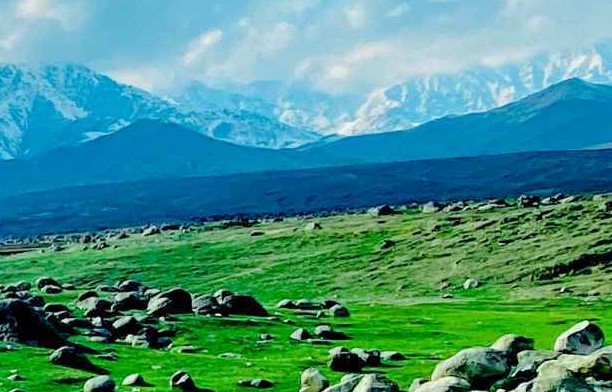
Afghanistan also becomes an ideal destination for the extreme ideologies of the terrorist organisations like IS-K to grow because it’s already a conflict-ridden area with many societal, political and economic cleavages. There are numerous ungoverned places across the country, which are not regulated by the weak government and hence, it is conducive breeding ground for radical organisations like IS. The prevalent anti-Western and American sentiments make it easy for the disfranchised populations to be influenced by radical ideologies. The mountain range of Spin Ghat forms an impenetrable boundary between the Nangarhar and Pakistan, which provides refuge to IS-K terrorist organisation, and is not penetrable by the US, Pakistan, and Afghan military. Other allied militant groups have a good network of communication, transport and infrastructure in place for cooperation. IS's aim of creating a Sunni Muslim Caliphate has won itself many pro-Sunni allied forces like Tehrik-e-Khilafat, Jandullah and the Baju faction of Pakistan Taliban. Networks like Lashkar-e-Jhangvi Al Amami, Lashkar-e-Islam and Jamat-ul-Ahrar have are also a part of the tactical and transactional support.
Considering the territorial losses, infrastructural damages and depleting finances in Iraq and Syria, IS has shifted its focus to Wilayat. IS-K has launched itself in the districts and sub-districts of Nangarhar and other parts of eastern Afghanistan, because it not only provides the terrorist organisation with valuable resources, but also opportunities for the insurgent groups as it borders a very secured haven for the terrorists. It also is an ideal location to spread its influence and propaganda of the radical ideology.
Increasing Opportunities and Influence
IS-K is largely active in the east of Afghanistan, mainly in – Nangarhar and Kunar. It has also been observed that over the years, that IS has transferred most of their commanders and fighters in the Afghanistan-Pakistan region. Headquartered in Nangahar, IS-K initially controlled nine districts but its power has not been reduced to only controlling two districts (Achin, Deh Bala and Chaparhar). It is estimated that there currently 5000-6000 fighters of Afghan, Pakistani and Indian nationality, with a few from Arab countries in the Afghan region being a part of IS-K. The airstrikes by United States, ground operations led by the Afghan forces and the inter-group fighting between the IS-K and Taliban has not only reduced the number of IS-K jihadists in the area, but IS-K has been also forced to relocate most of its fighters and commanders to the Kunur region, but it has not been able to reduce its influence and neither has been successful in depleting its organisational capacity and structure.
While the IS-K has gained substantial territory in the past couple of years, it has worked increasingly on expanding its ideological influence across the various levels to make the organisation stronger. Under IS-K, social media radicalisation of the people by targeting them and playing on their insecurities (of identity and religion) to attract them to be a part of the organisation has been immense. IS-K has used the social media very strategically to recruit most of its learned members. These members are mostly radical university students and professionals (lawyers, businessmen, doctors, engineers) from Pakistan and Afghanistan, who not only provide logistical support and help in spreading the ideology and recruiting new members but also in bringing in funding from various sources. IS-K as an organisation has also recruited some of these educated radicals as leaders to lead its powerful propaganda operations online. This is done by creating social media content, high quality videos and publications in various languages.
In 2015, IS-K launched a radio channel in Pashto language called ‘Voice of Caliphate’ to recruit new members in eastern parts of Afghanistan. The 90-minute show was broadcasted on radio daily and included interviews, messages, nasheeds (songs) and lectures about Islamic State. The aim of the broadcast was to encourage youth to join the organisation and find a sense of direction in the life. This broadcast has been highly successful as the organisation has recruited many people from the Kunar area.
The influence of IS-K is not just restricted to social media. The organisation has been very active in forming alliances too. In 2014, a three-member delegation of IS met Pakistan’s Taliban splinter group Jandullah, in Balochistan, Pakistan. The purpose of the visit was to seek allegiance of Jandullah to IS-K and thereby unite Pakistani splinters with IS-K presence in Afghanistan. After a week, Jandullah pledged its allegiance to IS. Over the years, many more such splinter organisations have been pledging their allegiance to IS-K like the Afghan Taliban and Uzbek militant group of IMU. The IS-K has been slowly absorbing and integrating the rival splinter groups either through the means of its ideology or through means of its pro-Sunni and anti-Shia strategy, thereby remaining in power and being true to its goals.
IS-K also have a very strong presence in the education sector of Afghanistan. Madrassas are prominent place in Afghanistan where the kids are educated, with keeping the religious guidelines in mind. All of Afghanistan is not under the control of the government, due to which it cannot support them. The increasing financial support to the mosques with madrassas is a proof that money is being mushroomed into these institutions by a third actor. All the students in the eastern part of Kunar are getting free education, thereby raising alarms. It has become increasingly clear that the madrassas have become the breeding ground for the IS-K to propagate their ideology through education. In this way, they are not only inculcating the need and relevance of IS-K in region but also making the region a fertile ground to recruit many members in future.
It has been responsible for many high-profile attacks in different parts of Afghanistan. On 8 March 2017, IS-K was responsible for an assault on the military hospital in Kabul which killed 30 people and left more than 50 people injured. It was also responsible for the horrendous terror attack on maternity ward in Kabul on 12 May 2020, which killed 24 civilians and left 16 injured. At the same time a twin attack was carried out in eastern Nangarhar province, when a suicide bomb explosion took place during a funeral which killed 32 people, and left more than 100 wounded. There have been many such high-profile attacks which have been carried by IS-K and there have been several small attacks carried out by IS-K over the years. The psyche behind carrying such attacks is to be relevant as an organisation in the region, thereby maintaining its highly achieved clout over the years and also acting as a rival power against the Afghan Taliban.
Increasing Influence of IS and its implications
The IS-K has witnessed stiff resistance from the Afghan Taliban, the US military via air, drone strikes and also the Afghan government military operations, but it has been successful in creating a space for itself in the Afghanistan militant landscape. It has showcased regenerative capacity by building its organisational strength repeatedly. Its organisational structure has become strong, and so have the skills to carry out large scale attacks in Afghanistan with its allied groups.
IS has found an ideological base among the radicalised youth of urban areas. Pro-IS allegiances and the spread of online propaganda among the educated youth of middle and upper middle classes has made IS an important influencer in the region. This addition of the new support base has not only reshaped the existing jihadist landscape but as made it more complex, violent and differentiated. Moreover, IS-K has not only succeeded in challenging the existing jihadist order, it has also become an important player in the region. Additionally, it has IS-K has also emerged as an alternative for the younger generation of jihadists.
It can also be seen that IS has emerged as a rival group to the present Afghan Taliban and has been continued to be viewed in a more favourable light than the Taliban. Many new jihadists are of an opinion that Taliban's Afghan centric focus is just another way to restore the Afghan government, rather than fighting for Islam. Afghan Taliban is therefore seen more as an apolitical force rather than an Islamic force. Therefore, IS has become more lucrative alternative for the youth who was a rapid radical change.
Furthermore, IS only aligns with anti-Shia militant groups and not only targets the Shia civilian belts but also the Sunni groups who do not follow the extreme version of Salafi Islam. IS is therefore is a Sunni supremacist organisation and has been responsible for many attacks on Shia mosques and shrines. It has a sectarian and violent attitude, and therefore more lucrative to the younger jihadis who are more attached to their sect identity, than Afghan Taliban, which, despite being a Sunni extremist group, has remained pan-Islamist, non-sectarian and nationalist in nature.
IS's has also been very effective in the use of internet and has increased the threat of online radicalisation. It has revolutionised the recruitment prospects and has expanded the realm of cyber terrorism and introduced the real world to a new battlefield.
Conclusion
IS has become considerably stronger and more powerful than what it was before. It has emerged as an independent actor which has currently has stronger stance in the politics of Afghanistan. IS's defeat has been one of the major goals of USA. In a meeting in December 2016, which comprised of Moscow, Beijing and Islamabad, it was pointed out that the Islamic State was a “main threat” in Afghanistan. This indicates that IS has made enough space in the international to be part of the regional security debates.
Establishing alliances with anti-Shia militant groups and absorbing the local splinters of militant groups have made IS a force to be reckoned with. Moreover, its partnership and their ideology with the urban, educated youth has been a huge factor in sustaining the organisation. The increased use of cyber-radicalisation, usage of social media and online platforms has taken it a step ahead than all the existing organisations. IS has embedded itself in the local culture and population and also enjoys popular support from Middle-East, Europe and Central Asia.
The security implications of IS's rise are drastic and catastrophic, despite it being an important player, it has not been involved in the Peace Talks. It has also refused discussion with its rival group, Afghan Taliban. A rogue organisation and currently leaderless, IS-K will do anything in its power to make its voice heard across the region and achieve its goals. While they have not had a negative impact on the peace efforts, given its volatile, not to mention violent nature, and increasing influence, it is too early to declare IS-K defeated in Afghanistan.
Pic Courtesy-Sebghatullah moid at unsplash.com
(The views expressed are personal)
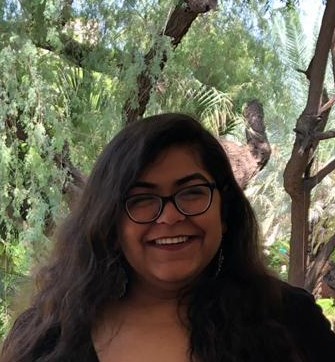
Krupa Vasani is a current Scholar at The Vedica’s Scholar Program, New Delhi and is pursuing her MBA in Management and Leadership. An undergraduate from O. P Jindal Global University, Krupa holds a bachelors in International Relations. Over the course of three years as an undergraduate, Krupa has developed an interest in the Security and Strategic Studies and Development Sector. Indian Foreign Policy, South South Cooperation and the Strategy in Indo-Pacific and South Asian Politics and the emerging Quadrilateral Diplomacy are some of her areas of interest. She is currently associated with CESCUBE as part time researcher.