Japan and Germany in South China Sea
Japan and Germany conducted their first ever “2 plus 2 dialogue” on 13th April 2021, albeit in virtual mode due to the raging pandemic. This comes after Germany announced that its frigate “Bayern” will set sail for the South China Sea in Au...
Japan Germany bilateral ties:
Japan and Germany share cordial bilateral relations which is evidenced by frequent political visits and cooperation in multilateral forums as the two are members of the G7, G20, Organization for Security and Cooperation in Europe and lastly, North Atlantic Treaty Organization.
German chancellor Angela Merkel met Prime Minister Shinzo Abe during her official visit to the country in 2015, and post that during the G8 summit in 2016. Furthermore, on the sidelines of the Asia-Europe meeting in 2018, the two leaders met for a brief period. Prime Minister Shinzo Abe visited Germany and met the chancellor in 2017, on the sidelines of the Asia-Europe meeting in 2018 the two leaders met and lastly on an official visit to the country in 2019.
Since 1985, Japanese-German Centre Berlin has played a crucial role in fostering ties between the two sides through exchanges in the field of politics, business, culture, and academia. In addition to that, it is also utilized as the German secretariat for the annual German Japanese forum.
As far as bilateral trade is concerned, two-way trade accounted for about 44.7 billion euros in the year 2019-2020. The COVID-19 crisis evidently led to a slowdown as the bilateral trade dropped to 38.8 billion euros. Hopefully, things would improve on the economic front once the world recovers from the pandemic.
On the security front, the two nations signed an agreement on the security of Information in Tokyo on 22nd March this year. The accord is significant as it would permit the exchange of classified information and is a sign of trust enjoyed by the two countries. In the 2+2 dialogue conducted on 13th April, Japan invited Germany to conduct naval drills when its frigate “Bayern” will traverse through the South China Sea.
Japan’s plans:
The 2+2 dialogue is aimed at seeking new partners, while Germany is geographically distant, but we need to keep in mind that it will be sending its warship to the South China Sea for the first time since 2002. According to Defence Minister Nobuo Kishi, the principal aim here is to cooperate with like-minded countries and uphold rule of law and freedom of navigation.
Through the 2+2 dialogue, Tokyo is hoping to enhance its cooperation with Berlin although Germany is an extra-regional actor and as a result, China’s aggressive postures in the region does not directly affect it. The meeting of foreign and defence ministers of the two countries signals Tokyo’s desire to diversify its partners in the region and not be too dependent on the United States.
The colloquy between the sides is not limited to the two but it is part of Yoshihide Suga’s larger plan to get Beijing to respect international rules and regulation, and thereby ensure stability. For instance, UK plans to send HMS Queen Elizabeth to the South China Sea, and it is expected to conduct exercises with Japan’s self defence forces later this year. France announced in February that its amphibious assault ships, the Tonnere and frigate Surcouf are on a three-month mission to the South China Sea wherein they would cross the region twice and participate in the US-France-Japan’s combined naval exercise.
Tokyo’s plans to enhance cooperation with NATO members in the South China Sea is understandable since it cannot challenge the dragon singlehandedly. As a result, partnering with European member states serves two purposes. First is to enhance security ties with more countries and thereby reduce its dependency on America, and secondly, a coalition of states would enable them to constrain China’s aggressive tendencies.
Germany’s case:
German Foreign and Defence Ministers will be taking part in the virtual 2+2 dialogue with Japan, this comes after it was announced that a German frigate “Bayern” will sail through the South China Sea later this year. The Indo-Pacific policy launched in September last year titled “Germany-Europe-Asia: shaping the 21st century together” would guide Germany’s inroads in the region. With the guideline in place, Berlin intends to extend its foot in Indo-Pacific although unlike UK and France, it does not hold any territory in the region.
Cooperation with ASEAN and working with countries to fight climate change and maritime pollution would be one of the mainstays of German policy with regards to the region. As far as cooperation with Japan is concerned, it reflects the cordial ties enjoyed by both nations. Secondly, the plan to send a frigate to the South China Sea conveys a change in the policy towards China. The frigate “Bayern” will be crossing the South China Sea as part of the freedom of navigation operation on its return, but it will not cross the 12-nautical mile zone which suggests that it does not want to antagonize Beijing given its vibrant trade ties.
China’s reaction:
Beijing sees Tokyo’s expanding ties with NATO countries such as Germany, France, and UK as destabilising since such manoeuvres will constrain the dragon’s aggressive posturing in the South China Sea. Wang Yi, the Chinese foreign minister during a call with the Japanese counterpart Toshimitsu Motegi urged ‘Japan not to invite wolves in the house’ which suggest that it is wary of Europeans entering the region and tinkering with the supremacy it enjoys in the region.
China’s call for Japan to not side with the western countries to contain its rise indicates that it is hell-bent on ensuring that Tokyo does not spoil the relations between the two countries, and secondly to restrain Japan from launching a containment strategy aimed at constraining the dragon’s rise.
When Germany announced that it would be sending its frigate “Bayern” to the South China Sea later this year, the Chinese foreign ministry spokesperson responded by arguing that although countries can exercise freedom of navigation and overflight according to international law, they cannot be used in any circumstance to undermine the sovereignty and security of coastal states.
Conclusion:
Japan and Germany conducted their first ever “2+2 dialogue” on 13 April this year wherein they discussed East and South China Sea, where China has upped the ante with its aggressive policies. Furthermore, they stressed on the importance of the rules-based international order which China has been violating as it enjoys unchallenged supremacy in the region. Germany would be sending its frigate “Bayern” later this year and during the dialogue Japan invited Germany to hold naval drills together when its frigate will arrive in the region later this year.
Tokyo’s plans to deepen its security ties with Berlin seems not limited to the two but could be a part of a larger agenda wherein Japan in cooperation with European countries aims to constrain china’s aggressive outlook in the region. Germany deciding to send its warship and deepening ties with Japan comes after it released its Indo-Pacific policy last year.
China has reacted aggressively as Wang Yi, on a phone call with Toshimitsu Motegi, cautioned Japan against ‘inviting wolves in the house’ and with regards to Germany sending its warship, China responded by saying that freedom of navigation operations cannot be used as a basis for violating the sovereignty of the littoral states.
End Notes
1)https://www.reuters.com/article/us-japan-germany-diplomacy-idUSKBN2BR0RI
2)https://www.aljazeera.com/news/2021/3/4/german-warship-to-sail-through-south-china-sea
3)https://asia.nikkei.com/Politics/International-relations/Japan-woos-Germany-on-Indo-Pacific-with-first-2-plus-2-talks
4)https://www.mofa.go.jp/press/release/press4e_002304.html
5)https://www.mofa.go.jp/erp/c_see/de/page1e_000246.html
6)https://www.mofa.go.jp/erp/c_see/page6e_000166.html
7)https://japan.kantei.go.jp/97_abe/actions/201703/20article1.html
8)https://www.reuters.com/article/us-japan-germany-idINKBN2C01HC
9)https://www.auswaertiges-amt.de/en/aussenpolitik/laenderinformationen/japan-node/japan-agreement-security-information/2449392
10)https://www.auswaertiges-amt.de/en/aussenpolitik/laenderinformationen/japan-node/japan/229264
11)https://www.scmp.com/week-asia/politics/article/3128366/japan-germanys-first-2-plus-2-dialogue-shows-extent-tokyos
12)https://news.usni.org/2021/02/03/carrier-hms-queen-elizabeth-will-drill-with-japanese-in-pacific-during-deployment
13)https://www.livemint.com/news/world/france-sends-warships-to-south-china-sea-ahead-of-maritime-exercise-with-us-11613887575497.html
14)https://www.taiwannews.com.tw/en/news/4141064
16)https://www.auswaertiges-amt.de/en/aussenpolitik/regionaleschwerpunkte/asien/german-government-policy-guidelines-indo-pacific/2380510
17)https://gpil.jura.uni-bonn.de/2021/03/germany-announces-deployment-of-warship-to-the-south-china-sea/
18)https://www.globaltimes.cn/page/202104/1220369.shtml
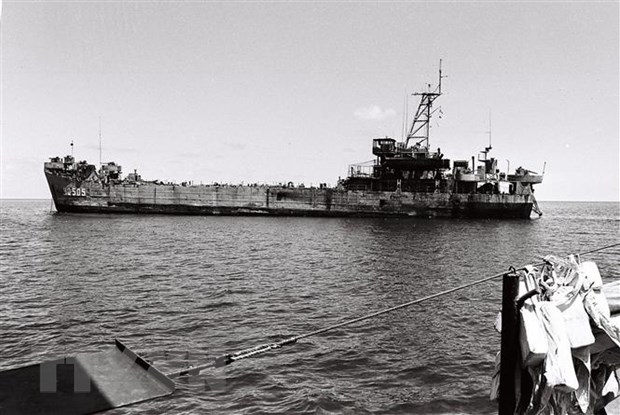
Pic Courtesy- Vietnam News Agency
(The views expressed are those of the author and do not represent views of CESCUBE.)

Abhijeet Nehra is a M.A. International Relations from University of Sheffield and has done his graduation in Global Affairs from Jindal School of International Affairs, O P Jindal Global University . He was research associate with CESCUBE.