Japan and Indonesia arms trade agreement
Japan and Indonesia’s 2+2 dialogue reached another high point when the defense and foreign ministers of the two countries came together to sign the much-awaited arms trade agreement facilitating exchange and operability in the region. Japan...
Japanese technology has since long witnessed a certain awaiting in the defence market. It is known for its radar and rescue technology specifically, which it aims to enhance and capitalize upon to level up its defence industry exports. Until 2014, Japan’s defence exports followed a partial lockdown, until when it decided to uplift the ban allowing the technology in non-Japanese market on three principles; barring exports to countries involved in conflicts, allowing exports that contribute to the country’s peace and security, and lastly required consent for resale to another country. The arms export ban of 1967 was one of the main pillars of the Japanese pacifist foreign policy. Such a shift has now cemented Japan’s recent but a long bothering interest in the Southeast Asia.
It is important to consider that, the trade agreement gained speed amidst the loitering Chinese militia ships around the Whitsun reef in Philippines Exclusive Economic Zone (EEZ). The trade agreement therefore was not the idle outcome of this incident, but rather the two nations agreed to tactically cooperate and participate in joint military exercises in the region, to maintain and further a strong and open maritime space. China has therefore been a crucial character in the Asian equation. Whether be its west or east, China’s continuing dominance and aggressive policy actions have unraveled changes with a dynamo effect.
Japan has begun to act upon its intent of a “Free and Open Indo – Pacific”. Being a QUAD member and a significant Asian economic political power, it would be unwise to consider that the trade agreement is an episode. Rather, it must be witnessed as a part of Japan’s broad South Asian program. Also, given Indonesia has constantly been enjoying a strong equation with japan, having engaged in a high-level maritime dialogue in 2017 and pledged to work together on island reconstruction in South China Sea, the two enjoy considerable unanimity in their plan of action and concerns with regards to China. The Natuna waters and China’s Nine Dash line claim along with Senkaku islands in the East China Sea, both remain crucial chokepoints in their relationship with China. In this light, the signing of the arms agreement only seems imperative.
Other than the arms deal, the two nations also pledged to cooperate on commitments under the idea of a “Free and Open Indo-Pacific”. These include namely, coming together to establish an international order based on rule of law, free trade and respect for human rights, greater economic connectivity, adherence of international law and order to further stability and maritime security. Japan also expressed concerns regarding North Korea’s ballistic missile activity and emphasized on the complete implementation of the UN Security Council’s resolution towards dismantling Weapons of Mass Destruction (WMD) across the region. It can be then assumed that Japan realizes Indonesia’s critical importance in path of its sea lanes of communication.
Equally significant concerns are being hovering the talks debating the possibility that the agreement may escalate to the use of force to face the revisionist China. However, the Japanese foreign and defence ministers- Toshimitsu Motegi and Nobuo Kishi, along with their Indonesian counterparts- Retno Marsudi and Prabowo Subianto agreed on the importance to ensure the existence of a rule based and legally adherent international maritime order such that violence is never the first resort and neither a dead rule.
The agreement also clearly highlights Indonesia’s much needed break from its slumber. It has often been labelled for its flawed history of defence procurement and loosened activity. This is despite the extravagant strategic centrality and neutrality it enjoys in the international maritime order. However, it is only true that the Indonesian military, navy, and coast guard have become outdated. This became apparent in 2016 and 2017 when the newly emergent South China Sea concerns came to light. The country’s armed forces lag regional peers such as the Vietnamese military in equipment, which makes it even more difficult for Jakarta to defend its exclusive economic zones. However, in the past two years, the Jokowi administration has emphasized acting upon three major security threats: potential conflict in the South China Sea, the growth of militant groups linked to the Islamic State, and maritime piracy. Of these issues, Tokyo and Jakarta share significant common areas of cooperation creating the potential for joint action to address them. It can therefore be argued that while the arms agreement is as much a result of Chinese assertiveness in the region, it is the also the effect of a common Indo- Pacific dream envisioned by both Japan and Indonesia.
The coming together of the two countries could mean serious ramifications for the changing nature of association in the Indo- Pacific. Indonesia has a struggling equation with Washington. While some scholars are of the view that Japan would iron out the crease enabling Indonesia to maintain its neutrality principle, it also is a deterrent to a comprehensive QUAD grouping. It was already much of a scenario to witness how the Japan- Indonesia ties transitioned until now, that it is also important to consider what this equation would mean for the rest of Indo- Pacific equations. Not to forget, the entire façade of Chinese assertiveness continues to cloud the Southeast Asia. China, which is now predominantly everywhere through its maritime Silk Road and pacific dominance, it is to see what its reaction to this new arrangement would be. Especially amidst the pandemic, countries have been seen increasingly shifting sides, these being no exceptions to the same. The implications of the arms deal must be therefore understood in an environment of changed international dynamics. China is vulnerable and draconian at the same time today. It is under the scanner from multiple standpoints. Gaining a strategic defense and bilateral cooperation between Japan and Indonesia is likely to unfurl new grounds of opportunities for both the nations.
References
1. Japan, Indonesia sign pact to transfer arms amid China concerns. (2021, march 30). Retrieved from business-standard: https://www.business-standard.com/article/international/japan-indonesia-sign-pact-to-transfer-arms-amid-china-concerns-121033001084_1.html
2.Japan-Indonesia Foreign and Defense Ministerial Meeting (“2+2”). (2021, march 30). Retrieved from mod.go.jp: https://www.mod.go.jp/en/article/2021/03/75c44a78cff796f2aea1b9f9c9b4a662e0bb332e.html#1
3.Kadib, C. (2021, april 15). Has Indonesia ditched its neutrality policy? Retrieved from defence connect: https://www.defenceconnect.com.au/key-enablers/7884-has-indonesia-ditched-its-neutrality-policy
4.Kobara, J. (2021, march 29). Japan to iron out deal on arms exports to Indonesia. Retrieved from asia.nikkei: https://asia.nikkei.com/Politics/International-relations/Japan-to-iron-out-deal-on-arms-exports-to-Indonesia
5.Maslow, A. S. (2020). Japan’s new arms export policies: strategic aspirations and domestic constraints. Australian Journal of International Affairs , 649-669.
6.Strangio, S. (2021, march 31). With an Eye on Beijing, Japan and Indonesia Sign Arms Export Equipment. Retrieved from the diplomat: https://thediplomat.com/2021/03/with-an-eye-on-beijing-japan-and-indonesia-sign-arms-export-equipment/
7.Yamaguchi, M. (2021, march 31). Japan, Indonesia sign arms transfer pact. Retrieved from canberra times: https://www.canberratimes.com.au/story/7190455/japan-indonesia-sign-arms-transfer-pact/
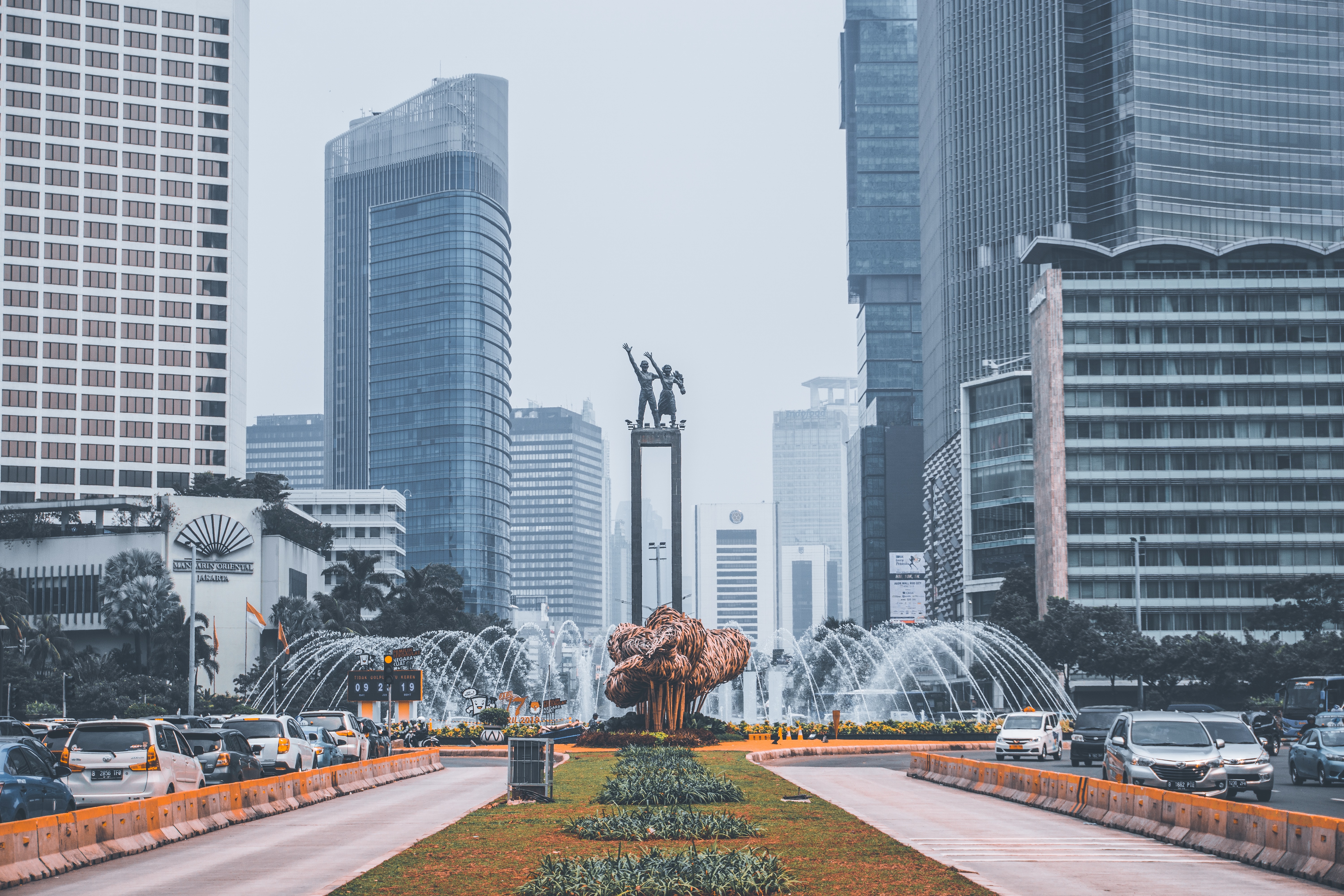
Pic Courtesy-Eko Herwantoro at unsplash.com
(The views expressed are those of the author and do not represent views of CESCUBE.)

Aastha Saluja is a graduate from lady Shri Ram college, Delhi University and is currently pursuing her masters in politics with specialization in international relations at Jawaharlal Nehru University. Her area of interest includes emerging trends of the Indo -pacific region and challenges of democratization and economic development post Cold War.