Joe Biden and the Debate around America’s China Policy
The issue of persistent China policy in the United States has been of eternal contestation, many scholars attribute the lack of coherent policy towards China mainly to endless election that takes place in every four years that allows a new ...
Given these challenges along with unique and precarious way of his predecessor, President Joe Biden seems struggling against the need of possible and coherent approach towards China; that could prove sufficient considering China’s increasing power which is extracting pressure upon the United States and its allies. There are many areas of conflict between the U.S. and China starting from the trade war, technology transfer, human rights abuse, espionage incidents, cyber overreach amongst others but the real issues to be addressed here primarily are the Economic, Strategic and Technological ones that became a bone of contention well before Biden had taken the command of White House. The article would only try to sketch the policy approach of the Biden administration towards China emanating from the actions taken itself by the Biden administration so far and observed by the spectators around the world, the policy towards China might differ in future.
Biden has completed more than 100 days in the White House, it has been a matter of observation that from the Bill Clinton days Democratic presidents have tilted towards tougher actions on China; with its stated goals of being tougher on China, new president Joe Biden seems to have worked hard in ‘shaping the contours of China rise’. However, there are some calls for co-operation with China on many levels but it does not seem to materialize because the theory of International Relation does not allow to do so. China’s rise definitely presents security threats for the United States and its allies, Beijing’s Military spending alarms the U.S. security elites about the imminent Chinese aggression in the South China sea or across Taiwan strait. Joe Biden, without aberration, likely to work on the U.S. long held strategy of being military preponderate, reassuring allies, containing competitors, promoting free market system and working for freedom of navigation. Although the theater has been shifted from the Atlantic to Indo-Pacific, where China might be the topper of the class but not the undisputed king.
President Biden have proposed the Pentagon budget with huge increase in military spending much of it devoted to reinforce the U.S. prominence in the Indo Pacific, he sought to throw out the Trump era ‘America first’ rhetoric to re-emphasize the U.S. global leadership and the engagements with allies. Biden’s reintroduced its commitments for the ‘QUAD’ by hosting its first meeting. The Biden administration seems to have undertaken the task of democracy protection under which he has introduced sanctions on the Myanmar in response to the military coup and on Chinese officials in reaction on its human rights violation in Xinxiang province. In coming days, if ‘QUAD’ takes the charge of being the torchbearer of liberal values in the greater Indo-Pacific which is likely to happen, Biden administration could prove to be instrumental in facilitating the arrangement that represents the American values to its fullest.
However, in meantime Biden administration has accelerated the pace of the ‘freedom of navigation’ operations in the Indo-Pacific especially in the South China sea and dispatched the warships to trespass the Taiwan strait. He has expressed the strong commitment for the security of the Taiwan, though maintaining the long held strategic ambiguity, and assured the Japanese control of the islets of Senkaku claimed by China. President also invited the Taiwan's functional ambassador to the inauguration, challenging the ‘One China Policy’. As Biden administration ‘front and centers’ the Indo-Pacific in its foreign diplomacy, ‘sovereignty hawk’ India is likely to be perceived as the center of pole in coming days. However, Biden administration confusion over ‘Free or Open’ Indo-Pacific invites suspicion in India which shied away from being part of any bloc.
President Biden nullified the former assessment that he will do away with the trade war, started by Donald Trump administration, and would seek for co-operation with China on economic front. Moreover, he recently dodged a question asked by the reporter during White House press meeting that too when these two biggest economies of the world reached to a ‘phase one’ deal in January 2021. President Biden seems reluctant to end the tariffs introduced by former president Donald Trump in 2018, Kathrine Tai, U.S. Trade Representative, recently indicated the likely continuation of tariffs imposed by Trump saying that it will affect the U.S. companies, manufacturer and the workers who have adapted according to the environment. However, economist argues the unlikability of the Biden administration to confront China directly on the economic front especially when the country's economic situation is in dire state due to Covid-19 pandemic. Nonetheless president Joe Biden demonstrated that the deep economic ties do not guaranty the waiving off of the fundamental issue like Chinese military buildup, human rights violations and the territorial ambitions.
Disregarding the scholarly assumptions, Biden has taken the technology war with China to the next level; while the Trump administration had undertaken the offensive action, which culminated in the sanctions and the export ban of essential technologies to Chinese companies. Biden’s approach has presented the summit of the offensive plus the proactive policies such as investment in the domestic capabilities. The department of commerce, under trump presidency, released an ‘Entity list’ in which it puts the 77 companies in the trade backlist out of which 60 companies are Chinese including the country’s top chipmaker SMIC and Chinese drone manufacturer SZ DJI Technology Co. Trump also introduced the rule to cut off the Chinese giant Huawai from the critical semiconductor supplies that is threatening the company's image as the world largest smartphone manufacturer. Although Biden has continued with these hardline policies, he also put emphasis on the advancing the American leadership in the critical technologies around the world; the ‘Endless frontier act’ recently relabeled as ‘United States Innovation and Competition Act’ has a sprawling budget of $US250 billion – Sought to crackdown on the international technological transfer. From ensuring the supply of semiconductor by enacting the supply chains including Japan and South Korea to grouping the international allies, Biden administration looks determined to prevent China from gaining any permanent technological benefit.
It seems like many issues remain unaddressed in this short essay but that is only because of the ‘most complex relationship’ the two nations share with each other. With the coming of the likely Bi-polarity, the relationship, many observers believe is destined for confrontation. Biden while talking to the reporters said he wants to restore the relationship with China but only when ‘China plays with the International norms’, further he says “I see stiff competition with China as China has overall goals of becoming the world's leading, wealthiest and powerful country, that’s not going to happen on my watch”. However, we cannot imagine the future likelihood of this relationship but we can say that it is for the first time after second world war that the United States is facing a country that is economically and technologically comparable to its own.
Notes
1.Sara Hsu (April,2021) ‘Senate’s Strategic Competition Act Will Make China-US Relations Worse, Not Better’, in the Diplomate
2. Stephen Bartholomeus (may 31,2021) ‘Biden unleashes $US250 billion plan to frustrate China’, From The Sunday morning herald.
3. Joshep Gerson (June 01,2021) ‘Biden Dangerously Accelerating the New Cold War with China’, retrieved from Common Dreams.
https://www.commondreams.org/views/2021/06/01/biden-dangerously-accelerating-new-cold-war-china
4. Tim Culpan (February 5, 2021) ‘It's Joe Biden's Technology Cold War Now’, in the Bloomberg Opinion.
5.David P. Goldman (Oct 23, 2020) ‘Biden might de-escalate China tech war’ in ASIA TIMES.
https://asiatimes.com/2020/10/biden-might-de-escalate-china-tech-war/
6. Arjun kharpal ( April 28, 2021) ‘First 100 days: Biden keeps Trump-era sanctions in tech battle with China, looks to friends for help’ CNBC.
7. Arjun Kharpal (Aug 2020) ‘Bleak but salvageable’: Huawei has limited options as U.S. sanctions cut off supply to smartphone chips’ CNBC.
8. Salvatore Babones (Nov 2020) ‘Note to Biden: Forget Trade, the Real War With China Is Over Tech’ Foreign Policy.
https://foreignpolicy.com/2020/11/18/biden-china-huawei-technology-manufacturing/
9. David and Crowley (Mar 19, 2021) ‘How US president Joe Biden plans to counter China with a new American policy’ The Economic Times.
10. Abhijnan Rej(March 19, 2021) ‘US Defense Secretary Arrives in India as Biden Confronts Free and Open Dilemma’ The Diplomate.
11. Jonathan Ponciano (Mar 28, 2021) ‘Trade War: Biden Administration Not Ready To 'Yank' China Tariffs, But Open to Talks’ Forbes.
12. Sergei Klebnilkov (Dec 13, 2020) ‘U.S., China Reach Initial Trade Deal, But Is It As ‘Amazing’ As Trump Claims?’ Forbes.
13. Under Biden, China faces renewed trade pressure, The Economic Times.
14. Orange Wang (27 May, 2021), ‘US-China trade war: overdue talks restart on Biden’s watch, but analysts ask if real progress can be made’ South China Morning Post.
15. Joe Biden: How US president Joe Biden plans to counter China with a new American policy - The Economic Times
16 Bu Le and Dingding Chen (May 05, 2021) ‘3 Reasons Why the US Doesn’t Have a Coherent China Strategy’ – The Diplomat
https://thediplomat.com/2021/05/3-reasons-why-the-us-doesnt-have-a-coherent-china-strategy/
17. The Biden Administration and the Indo-Pacific
https://asiasociety.org/australia/explainer-biden-administration-and-indo-pacific
18. Valerie Niquet (November 10, 2020) Biden Must Not Be Tempted by the Mirage of a US-China Reset – The Diplomat
https://thediplomat.com/2020/11/biden-must-not-be-tempted-by-the-mirage-of-a-us-china-reset/
19. Kawashima Shin (April 06, 2021) ‘The Challenges of US China Policy’ – The Diplomat
https://thediplomat.com/2021/04/the-challenges-of-us-china-policy/
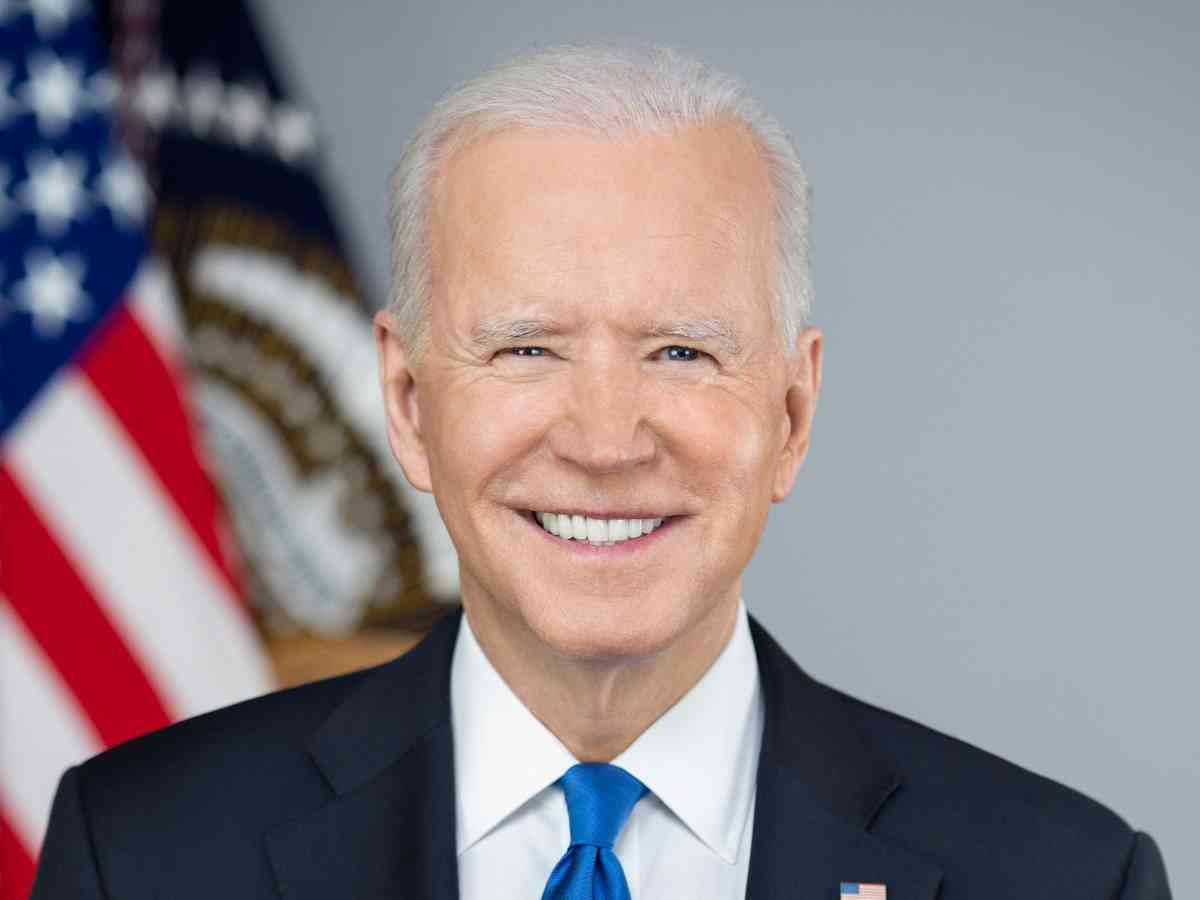
Pic Courtesy- The White House website
(The views expressed are those of the author and do not represent views of CESCUBE.)

Gaurav Sen is a graduate from Delhi University. He is currently doing his Masters in International relations from Jawaharlal Nehru University, New Delhi. His research area includes IR theories, Great Power competition in Indo-Pacific, Maritime Security, Emerging Warfare Concepts, and Military Strategies.