Looking into Russia’s future after Putin
As one of the most commanding leaders in global politics enters his 22nd year as a leading politician with his term coming to an end in 2024, talks about the future of Russia has gained momentum. The latest legislation that was passed in th...
The past month saw a surge in speculations about Putin’s early resignation when Russian Political Scientist Valery Solovei went on air to claim that the supreme leader is suffering from Parkinson’s and will step down in January 2021. He also claimed that there have been arrangements to make legislation, making him a lifetime senator. In order to shut the news, Putin’s press secretary Dmitry Peskov had to issue a statement saying “It is absolute nonsense,” and “Everything is fine with the president.”
Russia has been in the limelight since the beginning of the year, not just for the rising number of cases of Covid-19 patients, but also because of the overhaul of the constitution proposed in January. Putin introduced the new Prime Minister Mikhail Vladimirovich Mishustin and promised new reforms. He presented his amendments to the constitution as a significant change to Russia's governing document and called for the first nationwide referendum since 1993 to validate them. The unexpected move led to the questioning of motivation behind these major changes and what his plans for the future of Russia might be. Another question could be the length of time Putin would hold his position. The method of changing the constitution to preserve their power has been the most opted move by any authoritarian leader. Is it the same case when it comes to the Russian President, or there is more to it? Does Putin intend to follow the Kazakhstani example where Nursultan Nazarbayev remained head of the Security Council and the “Leader of the Nation" for life? These have been some of the most debated questions not just in Russia but all over the world and have given rise to numerous speculations.
The recently passed legislation is part of the series of changes that were introduced in early January which later gained support in the referendum held in July. The amendments enable Putin to reset his presidential term and allow him to stay as president post-2024 up until 2036. If he remains in power till 2036, he will be the longest-serving leader of Soviet, a legacy Putin would want to leave behind. When asked about the recent changes in the constitution and if he did them to continue being in power, Putin said "There is a universal rule: will it be for the good of the country? If it will, then we should do it; if it won't, then we shouldn't,”
First elected as Russia’s President in 2000, he is the longest-serving Russian leader since Stalin. The opponents feel he will never leave the office and the reforms introduced in January will allow him to stay in power for another two 6 years terms. According to the opposition, the referendum was just to provide a democratic veneer, done to legitimize his continuation as the president and to establish that there exists solidarity of the people on the lines, he has set the future of Russia. Many believe he is giving himself options to stay in power, or even if he steps down, to hold on to the position of authority that allows him to keep "Putinism” alive and find a way to relinquish control without losing his privileged status.
Putin has been the Hero the Russian society needed post the collapse of communism. He brought order to a chaotic society. His popularity was based on this image of a hero who rescued Russia in times of adversity. Putin's dominant personality symbolized the return of Russia as a great power. But the current political situation in Russia is not stable, and there is rising resentment in Russians against the challenges posed by low oil prices, sanctions from the west, and the current Pandemic has made the situation even worse. It has impacted the country’s economy and has intensified the problem of decade long zero-growth and stagnation. He has been this one-man army in himself with rumors of him stepping down the question of the future of Russia without Putin has been put forth. The political turmoil and rising unrest in the neighbouring country of Belarus have acted as an indication and have put Kremlin on alert. Belarus is a great example of how unaddressed grievances of the citizens by a reluctant ruler can result in civil unrest and protests all across the country. The possibility of the occurrence of a similar situation in Russia is something appealing to the opposition activists and the possibilities can’t be denied completely. The recent protest in Khabarovsk against the arrest of Governor Sergei Furgal on criminal charges showed that the quiescent population, if needed, can come out and protest. The rising dissatisfaction of Russians was reflected in the decline in what’s called the “Putin’s majority” which came down from 80% during the annexation of Crimea in 2014 to 60 %, and has declined since.
The recent political shift in the United States of America and the winning of Democratic candidate Joe Biden is also going to have an impact on the way the west deals with Russia. The recent assassination attack on the opposition leader Navalny also unmasked rifts among different groups in the opposition that exists in Russia. The future would highly depend on the choice of a successor if and when Putin steps down. The reforms ensured Putin's influence over policies even after his presidential term ends in 2024. But what does this transition mean for Russia? To answer this, there is a need for much more clarity, because as of now things are too abstruse. With 4 years left of his presidency, there have been dramatic changes since the start of 2020 for Russia. Whereas certain reforms indicate his intentions to stay in power after 2024. The recently passed legislation to grant immunity combined with the news of his illness has intensified the rumors of him stepping down. Though with the lack of a dynastic strategy and no successor in line, many hold the view that Putin is here to stay and news of his resignation is premature. Recent developments, instead of clearing the doubts about the future of the kremlin have made it more ambiguous. It seems like it is trying to have options ready for every possible situation. Be it continuing of Putin, his incapability to lead due to illness, him acquiring a position of authority to avoid taking accountability of the growing discontent, etc. What the future holds for Russia will be much clearer in the coming years, though the recent developments make it an interesting theatre in international politics that will be closely observed. However, in order to have something concrete, the world still needs to wait for the events to unfold in the politics of the Kremlin.
End Notes
[1] https://www.hrw.org/news/2020/03/16/russias-political-and-constitutional-drama
[2] https://www.theguardian.com/world/2020/dec/17/vladimir-putin-aggressive-policies-show-sign-of-a-worried-regime
[3] https://carnegie.ru/commentary/83413
[4] https://www.bbc.com/news/world-europe-54979804
[5] https://www.jstor.org/stable/resrep11649?seq=7#metadata_info_tab_contents
[6] https://thewire.in/world/vladimir-putin-kremlin-behind-scenes
[7] https://nypost.com/2020/11/19/kremlin-putin-is-fine-after-coughing-fit-at-covid-meeting/
[8] https://www.wionews.com/world/russias-lower-house-of-parliament-approves-bill-to-give-putin-lifetime-immunity-343890
[9] https://www.ft.com/content/18cfbd71-df9e-4587-a410-d61acf92960d
[10] https://thediplomat.com/2020/03/one-way-to-look-at-the-overhaul-in-russia-putin-lacks-a-dynastic-exit-strategy/
[11] https://www.businesstoday.in/current/world/russian-president-vladimir-putin-step-down-observers-got-serious-disease/story/421258.html
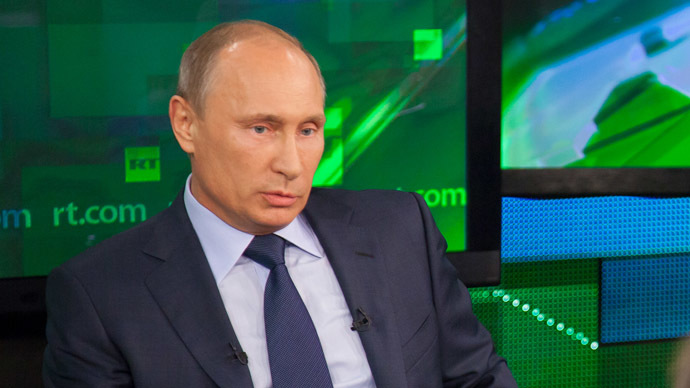
Pic courtesy- www.rt.com(For representational purposes only.)
(The views expressed are personal.)

Ragini Kashyap is a graduate from Delhi University and is currently pursuing Masters in Politics with specialisation in International Relations from Jawaharlal Nehru University, New Delhi. Her research area includes global political economy, Indo-China Relations and Emerging politics in the Indo-Pacific.