Maldivian politics and the decentralization process
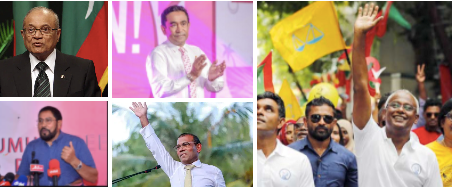
Throughout the last decade since Maldives became a multi-party democracy, several changes occurred in the country for greater political integration. During the early years the new constitution gave more powers ...
The 2019 Parliamentary Election
In the 2019 parliamentary polls, Ibrahim Solih led Maldivian Democratic Party (MDP) won 65 out of the 87 People’s Majis (parliament), seats than the arch-rivals, Progressive Party of Maldives (PPM), Jumhooree Party (JP) People's National Congress or the Maldives Development Alliance (MDA). Following the election victory the ruling Maldivian Democratic Party (MDP) with a two-thirds majority unanimously selected Former President Mohamed Nasheed, for the speakership. Moreover in the Maldivian parliament the opposition allies are 22 seats short of the majority mark of 44. At the same time, at the forthcoming local council elections (LCEs) the election of over 950 island councilors can determine a new political direction for small and large political parties. Between now and 6th January 2021 is a transformative period for political parties to win over the voters. There are reasons to believe that the changes in the Maldivian voters behavior at the local council elections (LCEs) will lead to the formation of new alliances between major and minor political parties. Those choices alone by the voters and political parties can have a huge influence on the next Presidential or Parliamentary elections in the Maldives.
Local Council Elections (LCEs) and the Decentralization Act
Over the years the Decentralization Act gave the local island councils considerable amount of political and economic power from “Haa Atoll” to “Seenu Atoll”. the Article 230 of Chapter eight of the Constitution, enacted and ratified in 2011, states that the “administrative divisions of the Maldives shall be administered in a decentralized manner”. The ratified Decentralization Act created an institutional basis through the Local Government Authority (LGA) to steadfastly support the newly created administrative units in the Maldives. As a result of the Decentralization Act increased the number of Local Council Elections (LCEs), giving islanders some amount of control of their Islands and increased the overall democratic credibility of the nation. Presently the nation has laid a solid legal framework for improving economic values of Islanders through the decentralization process. For instance, the decentralization has helped tourist resorts to work closely with nearby island councils. Furthermore this new decentralized process ensures small and medium-sized enterprises (SMEs) in the local islands to generate revenue and depend on the flourishing tourism and fisheries industry. Within this policy there is a wider geographical opportunity for the Maldivians to encourage firmer commercial activities within the Atolls. For instance in many Atolls, the decentralization process along with the economic development activities goes hand in hand with the Local Government Authority (LGA) strategies which constitute a political response from the respective island councilors. In addition to better serve the islanders, improving all aspects of educational and health quality, increasing access to clean drinking water, building new fisheries harbours along with community support systems are dividends that are expected from new councilors after assuming office. These elected councillors provide a bridge between the island community and the Male administration with regard to the implementation and decentralized services delivery. Obviously the islands are much more regionally oriented than Male or Addu City, politics. Additionally the councillors representation on socio -economic issues within a island will have direct influence on the results on national politics.
However the Local Council Elections (LCEs) and Women’s Development Committee (WDC) elections were initially set for 4th April , but were rescheduled to 18th April . Furthermore, on 10th May the Maldivian President Solih ratified the sunset bill to postpone the local council and WDC elections until the coronavirus pandemic is successfully controlled. Given this precedent, the Local Council Elections and Women’s Development Committee elections must be held before January 6, 2021.
Covid-19 Socio- Economic Implications
In the Maldives, 2400 coronavirus cases have so far been reported since 7th March. Imposing of strict border control measures, saw massive revenue losses to the nations tourism sector. This resulted in 90 percent of the resorts deciding to send almost 11,000 workers on no-pay leave. Additionally, Fisheries, the second largest source of livelihood has also taken considerable financial losses during coronavirus crisis. These Socio economic issues can have direct or indirect effects on the political environment of Maldives.
From a political point of view, socio-economic changes are indications to determine the transformation of the voters perception. In the coming months, the local council elections (LCEs) will be the real litmus tests for the ruling as well as for the opposition parties to chart out a plan for the future direction in Maldivian politics.
Srimal Fernando is a Doctoral Fellow at Jindal School of International Affairs (JSIA), India and Advisor / Global Editor of Diplomatic Society for South Africa in partnership with Diplomatic World Institute (Brussels ) .He is the winner of the 2018/2019 ‘Best Journalist of the Year’ award in South Africa, and has been the recipient of GCA Media Award for 2016.In the field of politics, and Policy affairs, Fernando is a specialist, with over ten years of first hand experience in Sri Lanka and the Maldives

Srimal Fernando is a Doctoral Fellow at Jindal School of International Affairs (JSIA), India. Fernando was the recipient of the prestigious O.P. Jindal scholarship to pursue a Doctor of Philosophy (PhD) in International Affairs on “Political and Economic Integration in South Asia: A Prerequisite for Regional Community Building”. He is also the Advisor / Global Editor of Diplomatic Society for South Africa and, the winner of the 2018/2019 ‘Best Journalist of the Year’ award in South Africa .He has been the recipient of many other accolades for his journalistic work over the years including the GCA Media Awards for 2016. Having graduated with a Masters of Philosophy (M.Phil.) degree in Sociology from the South Asian University (SAU) in India, he was a South Asian University (SAU) Scholarship holder awarded under the SAARC umbrella spanning 8 regional countries in 2016 His former positions and experience include the handling of media and publications as a Publication Assistant /Press Officer to the Office of the Former President of Sri Lanka H.E Chandrika Bandaranaike Kumaratunga at the Presidential Secretariat as well as a Visiting Lecturer and International Speaker for several reputed academic institutions. A highly skilled analyst, he has undertaken various roles over the years; as Regional Advisor to International Alert UK Peace Building –INGO, he headed the Business for Peace Alliance, a consortium of 25 Regional Bossiness Chambers of Commerce during the Sri Lanka conflict period. He has also, in the past, undertaken the effective coordination of EU, UN and INGO funded projects and has been a key thought leader in the Multi party Political dialogue process in Sri Lanka. Over the years, as an Advisor, he has worked with policy makers for various peace building and conflict resolution initiatives that include working on the Post conflict Human Development Index (HDI) Report after the liberation of the Eastern Province of Sri Lanka. In the field of politics, and Policy affairs, Fernando is a specialist, with over ten years of first hand experience in Sri Lanka and the Maldives. Upon completion of his Doctoral studies , it is his aspiration to pursue a career in politics and to steer his island nation towards the path of a new and robust foreign policy.