Minorities in the Middle East: The Case of Oman
The diversity and multi-layered identities of the minority groups in the Middle East makes it one of the most interesting yet sensitive one. The diverse nature of political systems, historical experiences, geography, and demography are some...
While studying the minority groups in the Middle Eastern countries, the one country that stood out is the Sultanate of Oman. An absolute monarchy by nature of government, when studying Oman, one cannot sidestep the dynamics of a large expatriate population that makes for almost half the population. According to Omani government’s National Centre for Statistics and Information, the total Omani population is around 4.7 million, out of which only 57% makes up for the native population. Around 2 million people that make up for the rest are expatriates or migrant workers called “guest workers”.
The socio-cultural fabric of Oman is less sectarian and divisive as in countries like Lebanon and Syria. The minority groups can be identified as Shia and Ibadi sect that is predominantly present in Oman. The Ibadi is a school of Islam that originated in Oman itself, dating back to Kharijite secession of 657 CE. Other than the heterodox sects, the expatriate population consists of Hindus and Christians. The official number of these minority groups is difficult to ascertain given the government of Oman does not publish demographic data that distinguishes between the various sects of the Islam. As per some estimates, the Ibadi Muslims constitute 45% of the population (some other call it 75%), Sunnis 50% while Shias along with Hindus, Christians, Sikhs, Baha’is, Buddhists, and others make upto 5% of the total population.
According to the most recent Constitution of 1996 along with 2011 amendments, Oman identifies itself as an Arab and Islamic state with sharia as the basis of the law in the state, like most of the Arabic countries in the region. The post of Sultan is hereditary and restricted to male and Muslim descendants of Turki bin Said bin Sultan. However, the constitutional framework that speaks in favour of minorities include prohibition on discrimination based on religion and protection granted to the right of individuals to practice other religions if doing so does not “disrupt public order or contradict morals.” All citizens are equal before the rule of law and they enjoy same public rights and duties irrespective of differences on the grounds of gender, origin, colour, language, religion, sect, domicile, or social status as per Article 17 of the constitution. But the equality is only extended to citizens and not temporary residents or migrant population. Article 28 extends the freedom of religion which is not granted in many of the Islamic states and Article 35 extends freedom of life and property to foreigners which make it a unique segment, unseen in any other country. When compared to other states with large expatriate populations, Oman provides better working conditions and the migrant population enjoys much more extensive and broader freedoms to practice their religions and social practices within the broad confines prescribed by the Omani state.
In Oman, there is no law specifically addressing apostasy, conversion, or renunciation of religious belief. On the question of faith, it is criminal to defame any faith and thus envisions a broader area than just Abrahamic faiths. The religious identity is specified in national ID of citizens and resident IDs of non-citizens but it has been scrapped for passports. The non-Muslims are allowed and welcomed to serve in the Omani military. The most unique and favourable feature that makes Oman is a favourite is limited or no presence of an anti-Shia bias in the society and political elites. The people of Baha’i faith who are discriminated in most of the countries on the pretext of being non-Muslims are not prevented from practicing their faith in Oman. Civil cases in Oman are decided based on non- sectarian codes, and besides Shia Muslims have the option of deciding family and personal matters as per Shia jurisprudence. The state recognizes places of worship of non-Islamic faith and practice is allowed in lands granted by the ruler. There are three officially recognized Hindu temples and two Gurudwaras along with seven churches for different groups. Import of religious literature is permitted on prior approval with no review process. No private gathering without permission from authorities is allowed. The organization responsible to oversee religious activities is The Ministry of Endowments and Religious Affairs (MERA). It regularly conducts inter-faith dialogues and outreach programs.
The Omani government has prohibited all public proselytising, although activists complain of concessions being granted to Islamic groups. Islamic Studies are mandatory for Muslim students; non-Muslims can be exempted from it. Foreign clergy can teach and lead the worship as per the visa norms and are not prohibited from doing so.
Another factor that makes Oman a lucrative option for the minorities is its foreign policy. A member of the Arab League and the Gulf Cooperation Council, Oman refused to be part of military endeavours of bombing its neighbour Yemen or even in the blockade of Qatar. It has largely remained a neutral force and played significant mediation roles in the past such as in the case of the Iran nuclear deal it was Oman which acted as an intermediary between Iran and the Western powers. Oman also played an essential role in gradual normalisation of Egypt’s relations with the Arab League as the Sultan made a state visit after Egypt was suspended from the League. Oman continues to devise its own vibrant, dynamic and broad-based foreign policy outlook.
Irrespective of an open and relatively liberal society, some problems that the minority groups of the country face include: One, on-issuance of ID cards or ID cards not recognizing the faith of the person. In Oman’s case the non-identification of sect is often highlighted. With no ID card, a person is devoid of any social security benefits and faces issues in family matters like marriage, divorce, custody and inheritance. Two, being a monarchy, the civil and political rights of the population are less compared to what enjoyed by democratic states. For instance, there is a prison sentence of three to 10 years for “insulting the Sultan”. The country is not a party to the International Covenant on Civil and Political Rights.
The International Religious Freedom Report 2020 published by U.S. Department of State highlighted reports of religious groups complaining of opaque processes and unclear guidelines for registration with the MERA. However, it noted that MERA reportedly employed the same criteria whether the group was Muslim or non-Muslim.
Given the track record of countries in the Middle Eastern region, Oman appears to be benevolent and accommodating of diverse faiths and cultures. It is favourable for not just people of Abrahamic faiths but equally accommodative of non-Abrahamic faith which is less likely in other Middle Eastern countries.
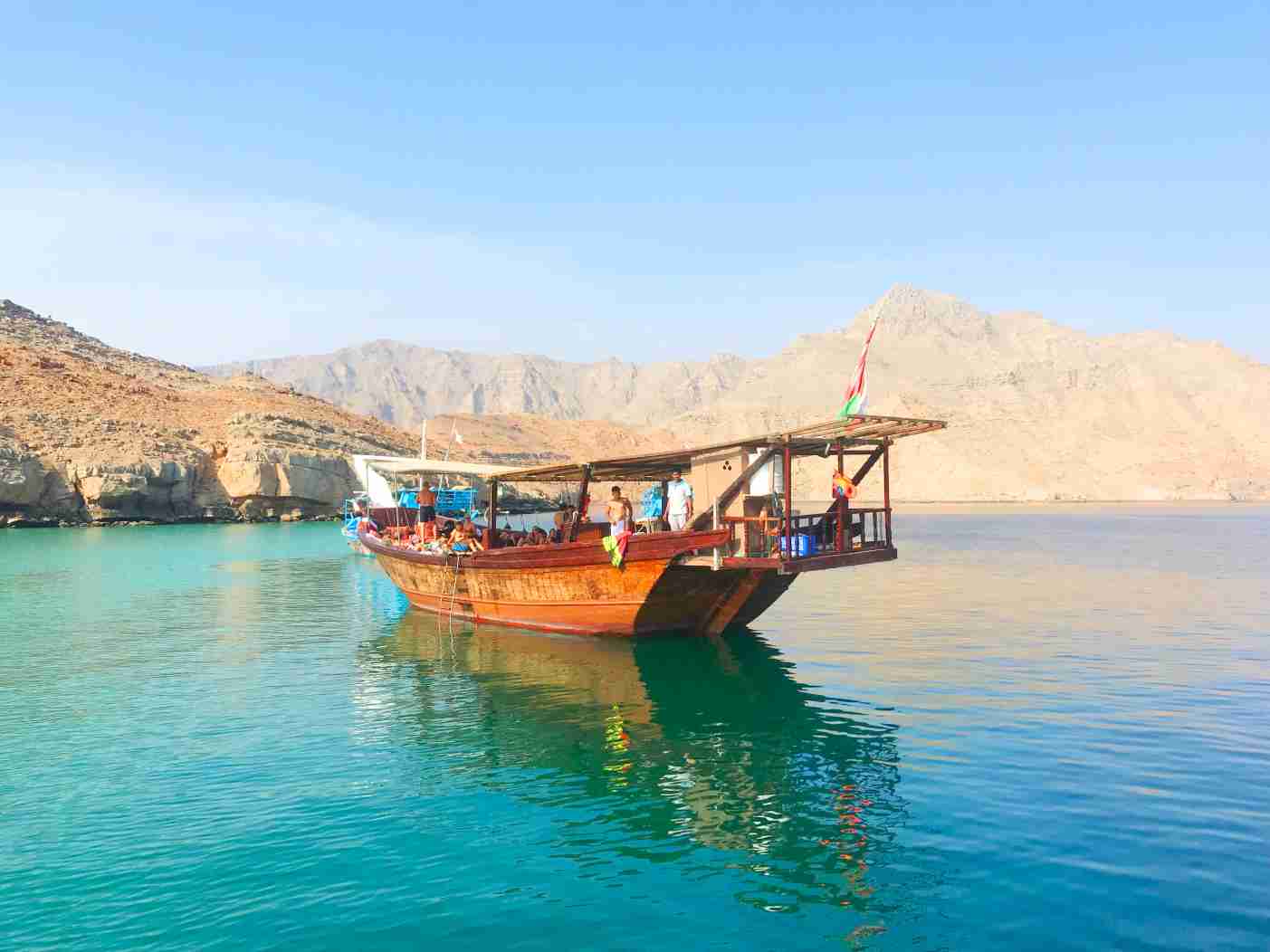
Pic Courtesy-Musandam Dhow Tours at unsplash.com
(The views expressed are those of author and do not represent views of CESCUBE.)

Apoorva Jain is a graduate in political science from Delhi University. Her interest in politics, governance and international relations led her to pursue a master's degree in Politics and International Studies from Jawaharlal Nehru University. Her research interests include Diplomacy, Indian Foreign Policy and Indo-Pacific Affairs. She is presently research intern with CESCUBE.