LIVE DISPATCH
Loss and Damage Finance: From COP28 Pledges to Policy Architecture Extended Deterrence Under Strain: Credibility, Assurance, and the Stability-Instability Paradox in the Indo-Pacific Beyond Consultation: BIMSTEC's Emerging Role in Regional Intelligence and Security Cooperation Maritime India: Security, Trade, and Great Power Competition Between the Desert and the Savannah: Conflict and the Political Economy of Instability in the Sahel Beyond Ukraine: Understanding Putin's Vision of Russian Power The Politics of Ali Khamenei's Funeral Silicon Sovereignty: How Semiconductors Are Redrawing Global Power Hierarchies Operation Sindoor and the Changing Dynamics of India–Pakistan Security The Negative Impact of US–Iran War on the Pacific Region Generative AI, Labour Sovereignty, and the Geoeconomics of India's Service Economy BRICS Expansion and the Multipolar Moment: Opportunity or Strategic Contradiction? India's AI Diplomacy and the Future of Strategic Technologies Foot-Dragging as Feminism: Iran, South Korea, and the Ungovernable Body Lethal Autonomous Weapons Systems and the Governance Deficit: Challenges to International Humanitarian Law and Accountability Beyond Proximity: Why the UAE Occupies a Growing Place in Iran’s Strategic Calculus Great Power Rivalry and the Crisis of the United Nations Why Fiji Matters: The New Geopolitics of the Indo-Pacific Islands Ten Years After Brexit: Regret, Reform, or Reversal? The Long Shadow of 1953: Understanding the Iran–US Conflict Sports, Strategy and Statecraft of Mega Sporting Events as Geoeconomic Instruments: Qatar 2022 to Saudi Arabia 2034 Border Fencing and National security: India’s Strategy along the Bangladesh Border Hardening the Quad: From Strategic Dialogue to Operational Cooperation Lingering Effects of the Bush Doctrine on Contemporary US Foreign Policy The Maghreb of States: Identity, Sovereignty, and the Limits of Non-Interference India’s BRICS 2026 Chairmanship Navigating a tightrope Amidst the Chinese Geopolitical Rise Beyond the Battlefield: Understanding Unconventional Security Challenges in Contemporary Geopolitics The Control Paradox: How Proxy Warfare Enables Strategic Deniability While Constraining Strategic Control Trapped in Deterrence: Nuclear Stability and the Persistence of Conflict in South Asia The Return of Unipolarity? U.S Strategic Primacy and the Future of the Global Order Supply Chains and Complicity: The Role of Global Corporations in Forced Labour in Xinjiang The Distant Threat: Is Israel Constructing a Strategic Rival in Pakistan Island Militarisation and Techno-Diplomacy: Turkey’s Eastern Mediterranean Fault Lines Amid India-Greece Alignment India’s Security Scenario: An Assessment of its Continental and Maritime Challenges The Geopolitical Architecture of European Defence: Navigating NATO Synergies, Transatlantic Retrenchment, and the Hybrid Threat Landscape The Artemis Accords and the Future of Global Space Governance AI and the Securitization of Critical Infrastructure: Implications of India's AI Summit Beyond Rhetoric: Evaluating the Effectiveness of International Sanctions on China’s Treatment of Uyghur Muslims The Emerging Maritime Rivalry in the Western Indian Ocean: India’s Response to Extra-Regional Powers India's Maritime Grand Strategy on Trial : The IRIS Dena Incident and the Indian Ocean Question Loss and Damage Finance: From COP28 Pledges to Policy Architecture Extended Deterrence Under Strain: Credibility, Assurance, and the Stability-Instability Paradox in the Indo-Pacific Beyond Consultation: BIMSTEC's Emerging Role in Regional Intelligence and Security Cooperation Maritime India: Security, Trade, and Great Power Competition Between the Desert and the Savannah: Conflict and the Political Economy of Instability in the Sahel Beyond Ukraine: Understanding Putin's Vision of Russian Power The Politics of Ali Khamenei's Funeral Silicon Sovereignty: How Semiconductors Are Redrawing Global Power Hierarchies Operation Sindoor and the Changing Dynamics of India–Pakistan Security The Negative Impact of US–Iran War on the Pacific Region Generative AI, Labour Sovereignty, and the Geoeconomics of India's Service Economy BRICS Expansion and the Multipolar Moment: Opportunity or Strategic Contradiction? India's AI Diplomacy and the Future of Strategic Technologies Foot-Dragging as Feminism: Iran, South Korea, and the Ungovernable Body Lethal Autonomous Weapons Systems and the Governance Deficit: Challenges to International Humanitarian Law and Accountability Beyond Proximity: Why the UAE Occupies a Growing Place in Iran’s Strategic Calculus Great Power Rivalry and the Crisis of the United Nations Why Fiji Matters: The New Geopolitics of the Indo-Pacific Islands Ten Years After Brexit: Regret, Reform, or Reversal? The Long Shadow of 1953: Understanding the Iran–US Conflict Sports, Strategy and Statecraft of Mega Sporting Events as Geoeconomic Instruments: Qatar 2022 to Saudi Arabia 2034 Border Fencing and National security: India’s Strategy along the Bangladesh Border Hardening the Quad: From Strategic Dialogue to Operational Cooperation Lingering Effects of the Bush Doctrine on Contemporary US Foreign Policy The Maghreb of States: Identity, Sovereignty, and the Limits of Non-Interference India’s BRICS 2026 Chairmanship Navigating a tightrope Amidst the Chinese Geopolitical Rise Beyond the Battlefield: Understanding Unconventional Security Challenges in Contemporary Geopolitics The Control Paradox: How Proxy Warfare Enables Strategic Deniability While Constraining Strategic Control Trapped in Deterrence: Nuclear Stability and the Persistence of Conflict in South Asia The Return of Unipolarity? U.S Strategic Primacy and the Future of the Global Order Supply Chains and Complicity: The Role of Global Corporations in Forced Labour in Xinjiang The Distant Threat: Is Israel Constructing a Strategic Rival in Pakistan Island Militarisation and Techno-Diplomacy: Turkey’s Eastern Mediterranean Fault Lines Amid India-Greece Alignment India’s Security Scenario: An Assessment of its Continental and Maritime Challenges The Geopolitical Architecture of European Defence: Navigating NATO Synergies, Transatlantic Retrenchment, and the Hybrid Threat Landscape The Artemis Accords and the Future of Global Space Governance AI and the Securitization of Critical Infrastructure: Implications of India's AI Summit Beyond Rhetoric: Evaluating the Effectiveness of International Sanctions on China’s Treatment of Uyghur Muslims The Emerging Maritime Rivalry in the Western Indian Ocean: India’s Response to Extra-Regional Powers India's Maritime Grand Strategy on Trial : The IRIS Dena Incident and the Indian Ocean Question
ADVERTISEMENT
Military March 4, 2022 1607 Reads

North Korea insatiable desires for missiles
K
By Khyati Singh
Author • Centre for Security & Strategic Studies
North Korea insatiable desires for missiles
Share Analysis:
EXECUTIVE SUMMARY & STRATEGIC TAKEAWAYS

North Korea launched an unidentified projectile off its east coast. According to South Korea's Joint Chiefs of Staff, this unidentified projectile, thought to be a short-range ballistic missile, flew from Jagang Province in North Korea's no...

ADVERTISEMENT

According to North Korean official media, a hypersonic missile, a train-based ballistic missile, and a long-range cruise missile were all demonstrated in September. North Korea displayed a new submarine-launched ballistic missile at a military parade in January 2021, just before President Biden assumed office, and dubbed it "the world's most powerful weapon." The true capabilities of this weapon are unknown because it has not been tested. North Korea's leader, Kim Jong-un, has promised to increase his nuclear weapons and military capabilities, and the country has made progress despite economic restrictions.

North Korea fired a number of missiles in 2017, exhibiting what appeared to be tremendous advancements in military technology. The Hwasong-12 was believed to have a range of 4,500 kilometers (2,800 miles), bringing US military outposts on the Pacific Island of Guam within striking distance. Later, the Hwasong-14 demonstrated even greater potential, with a range of 8,000km although some studies suggested it could travel as far as 10,000km if fired on a maximum trajectory. Pyongyang would have gotten its first genuine intercontinental ballistic missile, capable of reaching New York, as a result of this. The Hwasong-15 was eventually tested, reaching a maximum height of 4,500 kilometers, which is ten times higher than the International Space Station.

North Korea unveiled its latest ballistic missile in October 2020. It hasn't been identified or put to the test yet. It's a two-stage liquid-fueled missile, similar to the Hwasong-15, but with a larger length and diameter. It may be able to carry numerous warheads. It is thought to be capable of delivering a nuclear warhead to any location in the United States, and its scale startled even the most seasoned analysts when it was unveiled in 2020. Long-range cruise missiles, which do not have to follow a straight trajectory and can be designed to evade detection, could pose new issues for defence systems, as they do not have to follow a straight trajectory and can be programmed to escape detection.

It may go up to 1,500 kilometers (930 miles), putting much of Japan within range, according to state media, though it is unclear how it is guided or whether it could carry a nuclear payload. North Korea is not prohibited from testing cruise missiles under current UN Security Council sanctions, unlike ballistic missiles. Hypersonic missiles can move at far quicker speeds and elude primary radar for much longer than ballistic missiles, according to a test conducted in September. North Korea is thought to be able to carry and store it fully fueled, allowing for rapid deployment.  

North Korea conducted its greatest nuclear test to date on September 3rd, 2017 at its Punggye-ri test site. The device's destructive power, or yield, was estimated to be between 100 and 370 kilotons. The test would be six times more effective than the bomb unleashed on Hiroshima in 1945, with a yield of 100 kilotons. This was North Korea's first thermonuclear weapon test, which is the most powerful type of nuclear explosion in which an atomic bomb is enhanced by a secondary fusion process to produce a far larger blast. North Korea announced in April 2018 that it would stop conducting nuclear tests until its capabilities were "confirmed." North Korea also pledged to deconstruct the Punggye-ri site, and in May 2018, it did so in front of foreign journalists, but without outside specialists. Pyongyang also declared it will dismantle all of its nuclear material enrichment facilities as talks between Kim Jong-un and President Trump's government began that year.

The talks with the US, on the other hand, were inconclusive. According to satellite photos, North Korea seemed to have restarted the Yongbyon reactor, which is expected to be its main source of weapons-grade plutonium, in 2021, according to the UN's atomic agency. With work on plutonium separation, uranium enrichment, and other activities, the International Atomic Energy Agency (IAEA) declared the nuclear programme was moving "full steam ahead."

With multiple major domestic challenges to address and other foreign policy concerns such as Russia and China to address, Biden is appropriately devoting his time and energy to areas other than trying to win the Nobel Peace Prize for bringing peace to the Korean Peninsula. A list of the top 18 public policy worries of Americans issued by the Pew Research Center on February 16 hardly touched on global affairs and did not mention North Korea. Furthermore, Biden is well aware that making a meaningful diplomatic approach to Pyongyang would expose him to charges of naiveté or appeasement from his political foes. Notwithstanding, with over one million army soldiers and estimated reserves of 600,000, North Korea boasts one of the world's largest standing armies. Although much of its weaponry is outdated, its conventional forces might still cause significant damage to South Korea in the event of a war.


References

1.       Edith M. Lederer, “US and 10 other countries condemn North Korea missile launch”, ABC News, 1st March 2022.

2.     US and 10 other countries condemn North Korea missile launch - ABC News (go.com)

3.      “North Korea fires possible ballistic missile for first time in a month”, CNBC, 26th February, 2022.

4.     North Korea fires possible ballistic missile for first time in a month (cnbc.com)

5.     North Korea fires 'unidentified projectile', ignores US offer of talks, Hindustan Times, 27th January, 2022.

6.     North Korea fires 'unidentified projectile', ignores US offer of talks | World News - Hindustan Times

7.     “North Korea launches unidentified missile” Crack Newz, 27th February, 2022.

8.     https://www.cracknewz.com/2022/02/north-korea-launches-unidentified.html

9.     North Korea launches unidentified projectile, possibly ballistic missile: Reports, The Statesman, 17th January, 2022.

10.  North Korea launches unidentified projectile, possibly ballistic missile: Reports (msn.com)

11.    N.Korea resumes missile tests with first launch in a month, Reuters, 28th February, 2022.

12.   N.Korea resumes missile tests with first launch in a month, Reuters, 28th February, 2022


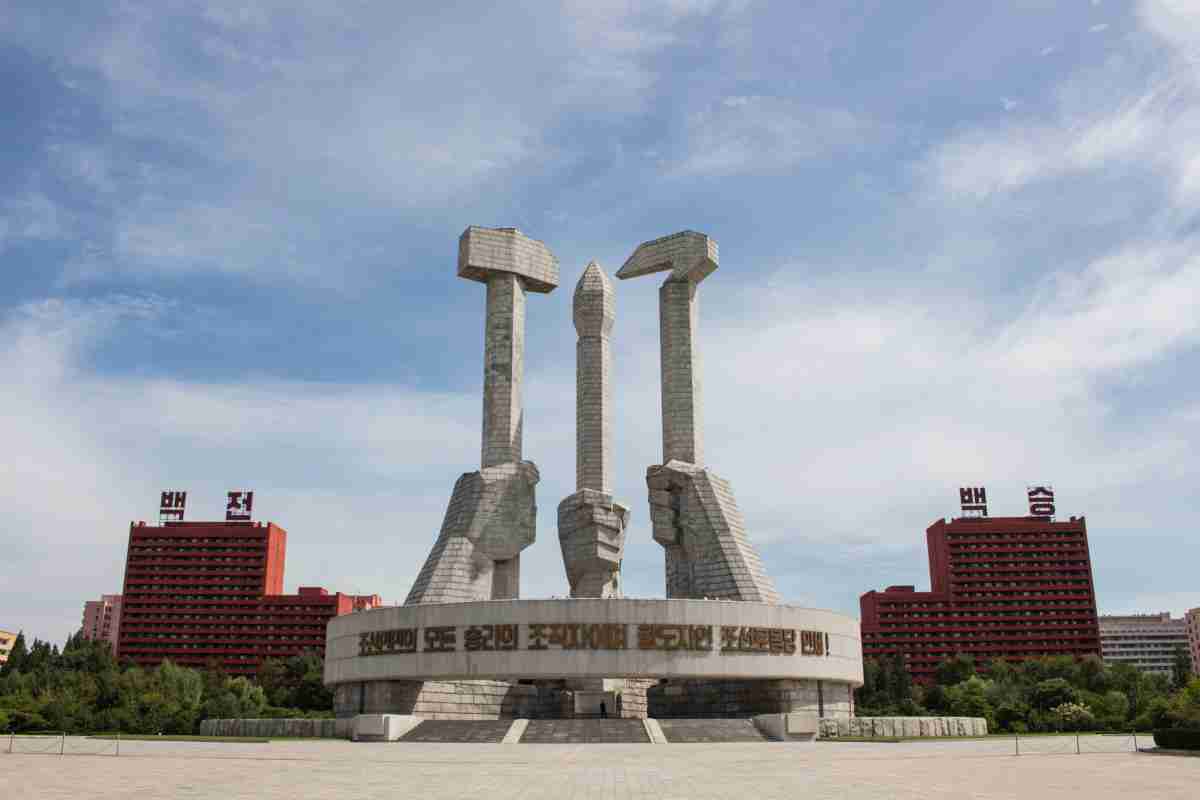
Pic Courtsey-Micha Brandli at unsplash.com

(The views expressed are those of the author and do not represent views of CESCUBE.)



Khyati Singh
About Khyati Singh →

Khyati Singh has a Masters in International Relations from Jawaharlal Nehru University. Her research interest includes AI, Great Debates, Grand Theories, International Relations, and Post Colonial Literature in IR.
ADVERTISEMENT

Related Strategic Analysis