North Korea Nuclear-Armed Underwater Drones
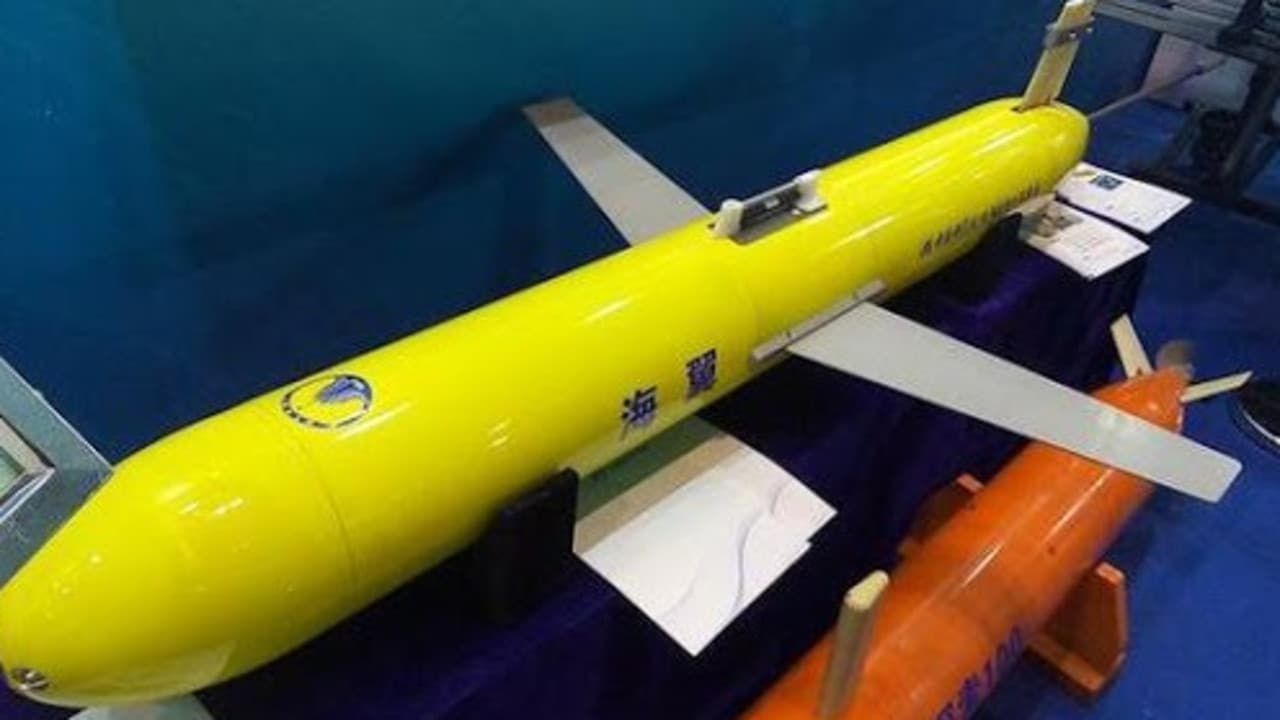
North Korea's recent claim of testing a new underwater drone capable of carrying a nuclear warhead has raised concerns in the international community. The state-run Korean Central News Agency (KCNA) reported that the Haeil-2 Unmanned Underw...
North Korea has been consistently testing its military capabilities, conducting a record number of weapons tests in 2022 and continuing its momentum this year. The country has claimed that the US-South Korean drills, including the use of a US nuclear-capable B-52 strategic bomber this week, are rehearsals for invasion. North Korean leader Kim Jong Un has instructed the military to increase training in preparation for a real war, and satellite photography has revealed a high level of activity at the country's main nuclear complex after a directive from Kim to increase the production of weapons-grade nuclear material. The international community has expressed concern over North Korea's nuclear weapons program and the development of new weapon systems, particularly the Haeil-2 drone. The drone's ability to carry a nuclear warhead underwater could pose a significant threat to regional and global security. The United States and South Korea have condemned North Korea's actions, with the US State Department calling for the country to abide by its international obligations and refrain from further provocations.
It remains to be seen how much progress North Korea has made in developing its underwater drone capabilities and whether the Haeil-2 drone is truly capable of carrying a nuclear warhead. Nevertheless, the country's consistent testing of new weapons systems highlights the need for continued vigilance and diplomatic efforts to address the ongoing threat posed by North Korea's nuclear weapons program.
THE HAEIL
The configuration of the Haeil is very much unknown. So far, open-source analysts have estimated a diameter of 500-800 mm (a typical 21-inch torpedo has a diameter of 533 mm), although the whole length of the UUV has not been disclosed. The reference to the Haeil being deployed at any coast and port or towed by a surface ship in the March 24 release may imply that it is too long and too huge in diameter for a typical torpedo tube. Pyongyang has not specified how the Haeil is propelled, although it is likely definitely powered by batteries. For the March 25-27 Haeil test, the North claimed a 600-kilometre range and 41.5-hour endurance (a 7.8-knot average cruising speed). The North Korean design depicting the newly-unveiled "tactical" nuclear bomb embedded inside the Haeil is consistent with the size of the warhead seen in the March 28 photographs and the estimated diameter of the UUV. According to the Institute for Science and International Security, such a warhead is feasible given North Korea's experience and number of underground tests, with a yield likely in the range of 10 kilotons (kt). The UUV would almost certainly be deployed in fortified shore installations similar to coastal defence torpedo-launching sites, carefully camouflaged and disguised as civilian or other benign structures. As mentioned in the March 24 statement, Haeils might potentially be towed out to sea by North Korean ships during a prewar crisis or prior to an assault decision. The ship might release the UUV at sea or remain connected for eventual launch. However, this technique would boost allied possibilities to detect the UUV in transit or its maritime holding area compared to land-based. It would also be more difficult to verify that launch orders were received, especially during conflict, unless the UUV was still connected to a ship that had not previously been attacked.
Regarding speed and consequently time-to-target, accuracy, and lethality, the Haeil would be inferior to North Korea's nuclear-armed ballistic and cruise missiles; also, it is also confined to in-theatre coastal targets. While it would be immune to coalition air and missile defences, it would be vulnerable to identification and combat by ASW capabilities. A sluggish, battery-powered UUV would probably be quieter than North Korea's conventional submarines, making it less vulnerable to acoustic detection, but we do not know how quiet the Haeil is compared to allied detection limits.
EVALUATING CLAIMS
These reports and images are the earliest open-source evidence of a nuclear UUV, although they are inadequate to prove Haeil's existence, stated development schedule and test activities, or claimed performance. The task of possessing an underwater-launch nuclear strategic weapon, which will be of great importance in raising the long-range nuclear striking capability was mentioned in Kim Jong Un's January 2021 report to the Eighth Party Congress. However, the task was mentioned in the context of solid-fuel engine propelled inter-continental underwater and ground ballistic rockets and a nuclear-powered submarine. The Haeil was informally reported to the Central Committee Political Bureau during the Defence Development Exhibition Self-Defense-2021 held in October 2021, according to the March 24, 2023 statement. However, such a UUV was not visible in the copious photographs given by North Korea at the time.
On March 27, the South Korean Joint Chiefs of Staff (JCS) stated that there have been signs that North Korea has been developing unmanned submarines, but we assess that they are still at an elementary level. Moreover, one expert pointed out that we cannot rule out the possibility that this is an attempt at deception. However, North Korea has the technological capability to create a nuclear-armed UUV. In the 1950s, for example, the United States and the Soviet Union developed nuclear-armed torpedoes. Moreover, acquiring another type of nuclear delivery system based on a new operational concept, in the North's March 24 announcement would be consistent with North Korea's recent emphasis on a diverse nuclear force resistant to preemption and decapitation, as well as demonstrating its technological prowess. Some analysts are unconvinced that the underwater vehicle is ready for deployment, but they believe North Korea is keen to show off its various armament against the US and South Korea, which have been conducting large-scale military manoeuvres in recent weeks. Haeil-2, an underwater nuclear assault drone, travelled 1,000 kilometres i.e. 621 miles of simulated underwater distance.
According to Leif-Eric Easley, associate professor of international studies at Ewha Womans University in Seoul, North Korea's most recent statement that it has a nuclear-capable underwater drone should be viewed with scepticism because no evidence was offered. Analysts later rejected North Korea's assertion that it would have a brand-new intercontinental ballistic missile (ICBM) in March 2022. Russia is believed to have created the Poseidon torpedo, a submarine-launched, nuclear-powered autonomous underwater vehicle capable of carrying both conventional and nuclear explosives. Poseidon's nuclear propulsion technology allowed it to travel practically endlessly. North Korea's putative new submarine weapon varies dramatically from the Poseidon in numerous critical areas. North Korea claims to have tested drones while it claims to have launched nuclear-capable cruise missiles.
De-nuclearisation discussions have stagnated since the failure of the second high-profile meeting between Kim and then-US President Donald Trump in 2019. Under United Nations resolutions, Pyongyang is prohibited from testing ballistic missiles and is subject to international penalties for its weapons activities. Satellite footage has also revealed a high level of activity at North Korea's main nuclear complex following Kim Jong Un's instruction to increase the production of weapons-grade nuclear material. The military of Seoul reported that South Korea and the United States carried out collaborative aerial exercises, which involved at least one strategic B-52H bomber capable of nuclear deployment from the US. North Korea regards such drills as practice for invasion and has responded to previous recent drills with a series of more aggressive prohibited weapons tests.
THE POLITICAL ANGLE
Based on what we can gather from open sources on Haeil's capabilities and military potential, the South Korean JCS's March 27 judgement that "these claims are likely exaggerated and manipulated" appears valid. The UUV appears to have far more political than military usefulness, as is typical with North Korea. Future, more capable Haeil successors cannot be ruled out, and the North may have hinted at this by adopting the Haeil-1 nomenclature on March 28, but battery-powered UUVs are unlikely to provide any military advantage in nuclear delivery over North Korea's ballistic and cruise missile forces.
In terms of politics, introducing the Haeil missile aligns with Pyongyang's recent approach to military advancement and corresponding public relations efforts. They intend to communicate several messages. Firstly, that North Korea boasts a wide range of nuclear delivery capabilities, which they described on March 24 as an offensive nuclear attack capability and on March 28 as part of a strategic plan to operate nuclear weapons through various means in different operational spaces. Additionally, they seek to convey that preemptive strikes, attempts at taking out leadership, and missile defence from allied countries will prove futile, and North Korea will inevitably retaliate with nuclear force, particularly against South Korea. Lastly, North Korea wants to emphasize its advanced technological capabilities, capable of producing weapons on par with those of major powers.
All of these elements come together in North Korea's obvious attempt to debut the Haeil in a fashion that mimics Russia's Poseidon UUV, even down to the boast of being capable of generating a super-scale radioactive tsunami. In contrast to the Haeil missile, the Poseidon is a significantly larger weapon, measuring at least 1,500 mm in diameter. It is propelled by nuclear power, capable of diving to great depths, achieving speeds exceeding 50 knots, and possesses an intercontinental range nuclear warhead. The Poseidon is armed with at least two megatons of explosive force, although some claims suggest it could yield up to 100 megatons. However, even this level of explosive power would not generate a tsunami.
CONCLUSION
The unveiling of the Haeil UUV by North Korea appears to hold greater political rather than military significance, a common occurrence with the country's weapons development. This move is in line with their previous efforts to showcase their diverse and significant nuclear delivery capabilities, indicating that preemptive strikes, leadership targeting, and missile defense attempts from allied countries will be ineffective. Furthermore, North Korea emphasizes its technological prowess, matching that of the United States in weapon production. However, the Haeil UUV does not offer any notable military benefits, and its political value may have already diminished since its disclosure. It remains unclear how much investment Pyongyang will make in implementing this system. Some analysts suggest that North Korea is unlikely to deploy many Haeil UUVs and will instead rely on ballistic missiles for most of its nuclear attack capabilities. Due to its slow speed, probable vulnerability during transit, and limited attack potential, this UUV is an ineffective nuclear delivery tool. Its primary utility to North Korea is as a propaganda tool, though its value may have already been exhausted merely by revealing its existence.
REFERENCES
Chen, M. T., Heather. (2023, April 8). North Korea claims to have tested Haeil-2 underwater nuclear drone. CNN. https://www.cnn.com/2023/04/07/asia/north-korea-underwater-drone-nuclear-warhead-test-intl-hnk/index.html
Diepen, V. H. V. (2023, April 6). North Korea’s New "Unmanned Underwater Nuclear Attack Craft”: Red October or White Elephant? - 38 North: Informed Analysis of North Korea. 38 North. https://www.38north.org/2023/04/north-koreas-new-unmanned-underwater-nuclear-attack-craft-red-october-or-white-elephant/
intern. (n.d.). Underwater Nuclear Drone: North Korea’s Nuclear Madmen | Institute for Science and International Security [Text], from https://isis-online.org/isis-reports/detail/underwater-nuclear-drone-north-koreas-nuclear-madmen
N Korea says tested another underwater nuclear attack ‘drone.’ (n.d.), 2023, from https://www.aljazeera.com/news/2023/4/8/n-korea-says-tested-another-underwater-nuclear-attack-drone
North Korea says held another test of underwater nuclear attack “drone.” (2023, April 8). Deccan Herald. https://www.deccanherald.com/international/world-news-politics/north-korea-says-held-another-test-of-underwater-nuclear-attack-drone-1207699.html
North Korea’s nuclear threat takes an underwater turn – Asia Times. (n.d.), 2023, from https://asiatimes.com/2023/03/north-koreas-nuclear-threat-takes-an-underwater-turn/
North Korea’s underwater nuclear-powered drones: What are they and which other countries have them? (n.d.). WION, from https://www.wionews.com/world/north-koreas-underwater-nuclear-powered-drones-what-they-are-and-which-other-countries-have-them-580499
On The News—North Korea’s Nuclear Threat: A Timeline of Kim Jong Un’s New Weapons. (n.d.), from https://www.wsj.com/video/series/on-the-news/north-koreas-nuclear-threat-a-timeline-of-kim-jong-uns-new-weapons/0AF9FEEC-200F-42DC-BBB9-C8D215592872
Zaveria. (2023, March 27). North Korea Claimed to Have Tested an Underwater Drone. Analytics Insight. https://www.analyticsinsight.net/north-korea-claimed-to-have-tested-an-underwater-drone/
Pic Courtesy- From the news clip.Only for representational purposes.
(The views expressed are those of the author and do not represent views of CESCUBE.)

Samikshya Das currently is pursuing Masters in International Studies at Symbiosis School of International Studies. She is a law graduate and has worked as a reporter. She is also working as a content writer and research intern for various online portals.