Northeast India’s War Within: The Drug Trade and Its Impact on Internal Security
This article provides a comprehensive analysis of the growing drug crisis in Northeast India, highlighting how the region’s geographical vulnerabilities, socio-political instability, and proximity to the Golden Triangle have made it a hotsp...
The beginning of February 2025 saw a civil society group from Manipur urging the Centre to declare the North-east (NE) region as a “narco-terrorist emergency zone”[i]. The demand, along with several other voices of concern, stems from the expanding illicit production and trade of drugs within the region, which has come into spotlight due to recent conflicts and instances threatening security in Northeast Indian states.
Several factors have led to this rise in drug trafficking and abuse, escalating the situation into a crisis which is affecting public health, social stability as well as internal security. The drug menace has emerged as not just a challenge for law enforcement, but also as a critical issue for national security due to its links with organised crime, insurgency movements and border vulnerabilities.
A Growing Crisis
A major reason behind Northeast India becoming a hotspot for drug trafficking is the vulnerabilities posed due to its geographical location and the socio-political conditions. Its proximity with the Golden Triangle, one of the largest opium producing areas in the world, as well as the historically porous border of India with Myanmar has made the region vulnerable to narcotics production and trade. Number 4, the highest refined version of Heroin was made popular through smuggling from Myanmar during the 1980s. In the recent years, a lesser refined version, locally known as Thum Morok or Salt and Chilli (due to its red and white appearance) has become more popular due to its easier refinement process and cheaper prices. This has also resulted in lesser dependence on smuggling refined opioids from Myanmar, with a rise in illegal and indigenous mobile production units within Indian borders. Other prominent drugs being trafficked include synthetic drugs like Methamphetamine or Yaba tablets. Another frontier for drug smuggling is the India Bangladesh border, with smuggling done from Myanmar to Bangladesh via states like Tripura and Mizoram.
Most of the cross-border trafficking happens via prominent routes like the Temu-Moreh border in Manipur and Rih-Champai route in Mizoram. Recent developments, including the tightening of laws against drug trafficking in many Southeast Asian countries, instability following the coup in Myanmar, and rising prices of drugs coming in from the Golden Crecent route due to Taliban’s opium ban, have all contributed to the rise of narcotics production, trade and consumption in Northeast India.
The Overlap of Illicit Drug Economy and Security Issues
One of the most alarming aspects of the drug menace in Northeast India is its close ties with insurgent groups. Various militant organizations, including the National Socialist Council of Nagaland (NSCN), United Liberation Front of Asom (ULFA), and factions of the Kuki and Meitei militants in Manipur, have reportedly been involved in the illicit drug economy. Reports of militants being caught in drug related arrests by local police is frequent[ii].
The involvement of insurgent and terrorist organisations with illegal organised crimes of drug and weapons smuggling is well researched. Participation in the illicit trade is seen as a source of money for financing the activities of the organisations. In the vulnerable border towns of north-east India, armed militants often have community support and sway over border routes. Often, children are used as mules to traffic the drugs across borders, and as young individuals become more addicted to the substance, it is easier to manipulate them into continuing doing so. The corruption within the law enforcement agencies and nexus with politicians also allows such groups to support and conduct smuggling operations.
Apart from insurgent groups, the drug smuggling operation also has linkages with the illicit trade of Small Arms and Light Weapons (SALW), with drugs being used as currencies for purchase of arms. The circulation of such weapons adds to the intensity of conflicts already ongoing in the region[iii].
What is also underscored at times are the linkages between development in the region and the militant outfits. For example, one of the most powerful drug lords from Myanmar, Khun Sa, was known for investing in development projects, including roads and infrastructure. Similar reports have been found in cases of involvement of drug king pins in local development in states like Manipur. This complex interdependence allows insurgent groups to gain more support from locals as an alternative to the government, while also gaining more structural power in the process[iv].
However, the biggest challenge to security in Northeastern states due to drugs does not come from the militant outfits, but from the government officials who represent a decaying system caused by corruption.
There has been alleged rerouting of Urea meant for agriculture in multiple states like Manipur towards poppy cultivation and smuggling of the same to Myanmar[v]. Another incident from 2013 involved an Indian Army colonel, who was arrested with illegal drugs amounting to over Rs 50 crore, meant to be smuggled into Myanmar[vi]. Similarly in January 2023, five cops in Manipur were caught with contraband drugs worth over Rs 3 Crore[vii]. Allegations often come up regarding the involvement of top elected officials with local drug lords. Another Police Officer from Manipur, Thounaojam Brinda accused the then CM Biren of pressurising her into releasing an arrested drug lord in an affidavit to the state high court[viii]. In 2021, the Manipur Human Rights Commission suo moto registered a case after a speech by MLA Lourembam Rameshwor, blaming politicians and police for supporting drug lords[ix].
Social and Economic Impacts
The impact of rampant drug trade in Northeast India can also be seen in the form of challenges to health security. The rising drug addiction, particularly amongst the youth in Manipur, Mizoram and Nagaland is leading to widespread dependency and criminal behaviour. The rise of HIV/AIDS cases and Hepatitis C has led to an adjacent health crisis, with lack of awareness and shared needle usage between drug users.
This health crisis has also created a vicious cycle with loss of productivity, healthcare burdens, and economic hardships for families. With lack of better economic opportunities, illegal cultivation of poppy is seen as more profitable than traditional crops. Opium cultivation is also pursued in off seasons for extra income. Additionally, addiction to drugs creates an antagonization of policies attempting to ban its usage as well as of the agencies enforcing it. This could potentially create more negative association with governance institutions in a region where people have historically felt politically and socially alienated.
Law enforcement and government actions
India is one of the largest legal manufacturers and exporters of opium, albeit for pharmaceutical purposes with cultivation in limited and licenced tracts. However, the existence of the licit track also creates possibility for illicit production to grow in the shadows and is boosted by factors like political corruption.
Several laws have been established to tackle drug trade in the country, with the most prominent being the Narcotic Drugs and Psychotropic Substances (NDPS) Act, 1985. Its effective implementation has been a challenge in Northeast India due to multiple factors.
The primary challenge has been the borders. Both India-Myanmar and India-Bangladesh borders have vulnerable tracks, with historically porous barriers. The Free Movement Regime was announced to be stopped by the home ministry in early 2024 following the clashes in Manipur, ending the provision allowing people residing in border hill tribes of Myanmar and India to travel up to 16kms across each side with a licence. With Bangladesh, the challenge is also to guard waterways due to the huge number of crisscrossing rivers along the borders, creating a difficult terrain to monitor.
The government is aiming to increase surveillance and enforcement at key known drug routes, along with empowering the Border Security Force and Coast Guard to act under the NDPS Act. A Narco Co-ordination Centre (NCORD) has also been constituted under the Narcotics Control Bureau to provide a common platform for all drug law enforcement agencies and stakeholders.
State governments on the other hand have routinely come up with their own policies, like War on Drugs Campaigns. A key problem these policies have created though is the politicisation of its execution. For example, one of the causes behind the Meiti-Kuki rift can also be traced back to the Manipur government’s War on Drugs 1 and 2 campaigns, which allegedly targeted communities with a biased approach.
Looking Forward
The government will have to face the challenges of corruption and complicity, as well as the issue of lack of coordination among agencies to better execute its policies with regards to the drug menace. A more stakeholder ship-oriented approach is also needed for reducing the alienation felt by the people in affected regions. An example of the same could be the women led movements like Nisha Bandi and Meira Paibis against alcoholism and drug abuse.
Northeast India’s vulnerability due to its geographical location, insurgency networks, and socio-economic conditions makes it a hot bed for security issues and organised crime. It will only be through sustained and comprehensive methods, which are not only looking at conventional security, but also aiming at social and economic upliftment of the region and its people, that Northeast India can overcome this challenge.
Footnotes:
[i] PTI. 2025. “Meitei Body Asks Centre to Set up Specialised Anti-Narcoterrorist Force.” Www.ndtv.com. NDTV. February 2, 2025. https://www.ndtv.com/india-news/manipur-meitei-body-cocomi-asks-centre-to-set-up-special-anti-narcoterrorism-force-declare-region-narcoterrorism-emergency-zone-7617847.
[ii] Sentinel Digital Desk. 2025. “Assam: Tinsukia Police Arrested Former ULFA Militant with Drugs.” The Sentinel - of This Land, for Its People. February 23, 2025. https://www.sentinelassam.com/north-east-india-news/assam-news/assam-tinsukia-police-arrested-former-ulfa-militant-with-drugs.
[iii] “Challenges to India’s National Security: The Illicit Flow of Drugs from Myanmar to India-Pre and Post Myanmar Coup of 2021 – CENJOWS.” n.d. https://cenjows.in/challenges-to-indias-national-security-the-illicit-flow-of-drugs-from-myanmar-to-india-pre-and-post-myanmar-coup-of-2021/.
[iv] 7Michael K. Steinberg, ‘Generals, Guerrillas, Drugs, and Third World War-Making’, Geographical Review, 90(2), April pp. 262, 263, at http://links.jstor.org/sici?sici=00167428%28200004%2990%3A2%3C260%3AGGDATW%3E2.0.CO%3B2-9
[v] Laithangbam, I. (2021, August 20). Farmers demand inquiry into shortage of urea in Manipur. The Hindu. https://www.thehindu.com/news/national/other-states/farmers-demand-inquiry-into-shortage-of-urea-in manipur/article36012210.ece
[vi] Indian Army colonel held with illegal drugs worth Rs 15 crore. (2013, February 24). Zee News. https://zeenews.india.com/news/nation/indian-army-colonel-held-with-illegal-drugs-worth-rs-15 crore_831249.html
[vii] 1 Manipur cops arrested with drugs worth over Rs 3 crore. (2023, January 16). The Indian Express. https://indianexpress.com/article/north-east-india/manipur/manipur-cops-drugs-worth-over-rs-3-crore-8385624/
[viii] Bahn, D. (2020, July 14). CM pressured me to let off arrested drug lord: Manipur lady cop to High Court. The New Indian Express. https://www.newindianexpress.com/nation/2020/Jul/14/cm-pressured-me-to-let-off arrested-drug-lord-manipur-lady-cop-to-high-court-2169677.html
[ix] Correspondent, S. (2021, April 9). Manipur Human Rights Commission acts on MLA’s allegation of political support for drug lords. The Hindu. https://www.thehindu.com/news/national/other-states/manipur-human-rights commission-acts-on-mlas-allegation-of-political-support-for-drug-lords/article34279058.ece
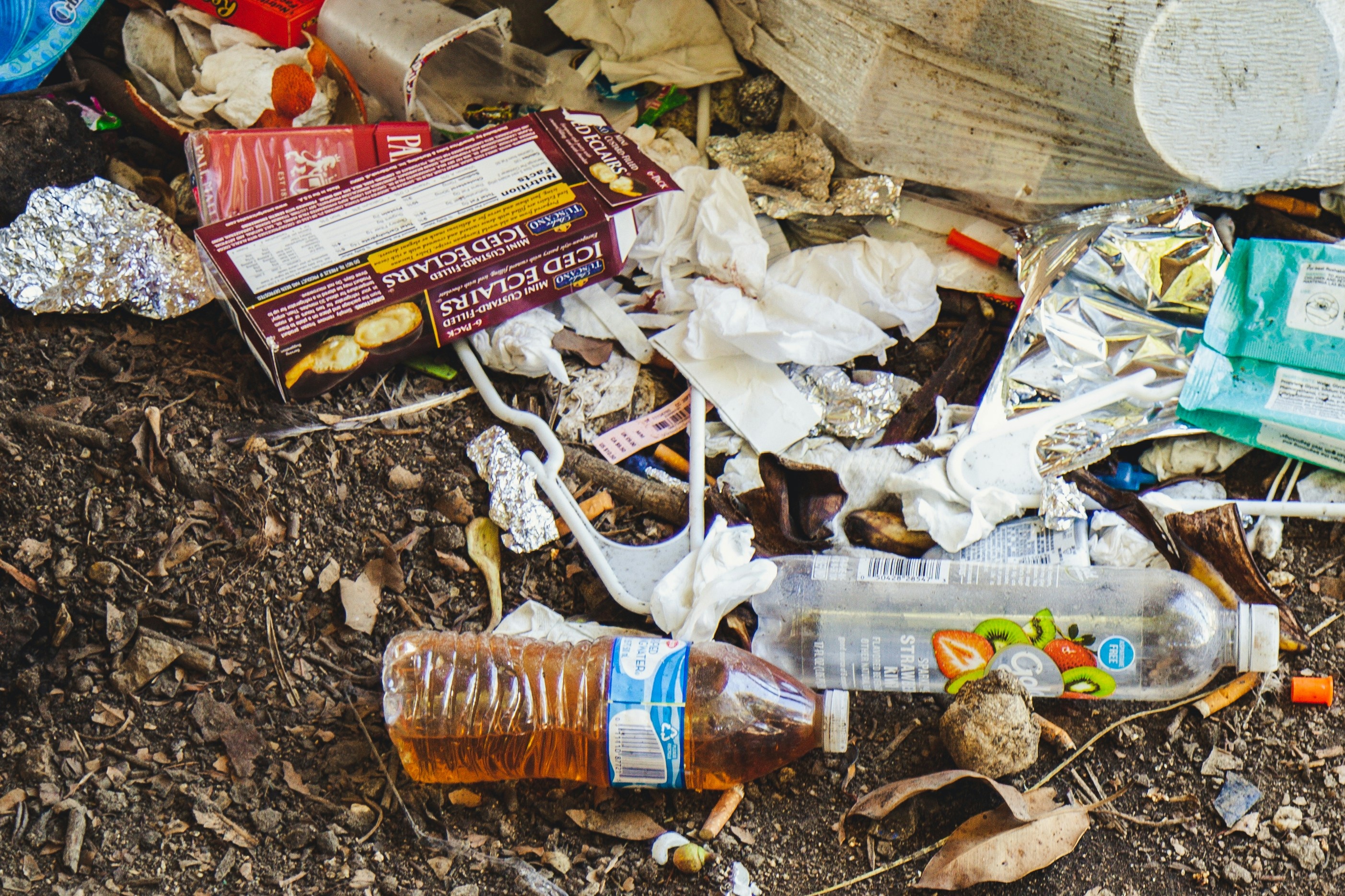
Pic Courtesy- Photo by Jonathan Gonzalez on Unsplash
(The views expressed are those of the author and do not represent the views of CESCUBE.)

Divyashree Jha holds a BA (Hons) in Global Affairs from Jindal School of International Affairs. Her research interest is in the fields of governance, conflict, and development.