Ongoing border tensions between Pakistan and Iran
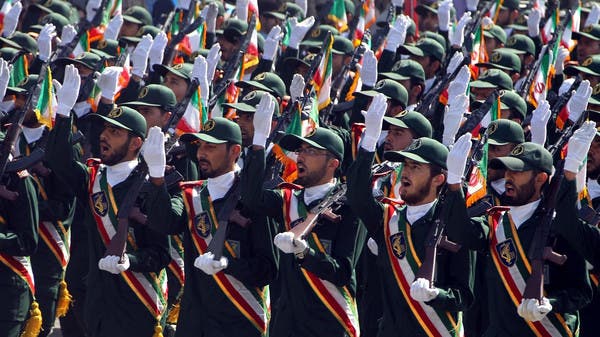
Iran's elite Revolutionary Guards (IRGC) Ground Force's Quds Base claimed that it has freed two of its border guards in a successful intelligence operation on February 2 night. The recent flare up at the border between Shiite Iran and Sunni...
Their relations have turned sour due to tensions at the border, one can sense strong animosity between them as both have lambasted each other for not doing enough to put an end to the militant activities emanating from their respective territories. For example, in February 2019, 27 members of Iran’s revolutionary guard corps (IRGC) were annihilated by the Jaish al Adl, a Sunni group founded in 2012 fighting for the Baloch minority community. Jaish al Adl known as Army of Justice in Arabic is a successor organization to Jundallah or the Soldiers of God whose leader was decapitated by Iran in 2010.
Iranian officials called on their Pakistani counterpart to do more to quell terrorist incidents originating from its territory. Similarly, in another instance which took place in April 2019, 14 passengers on a bus were kidnapped and executed by Baloch Raji Aajoi Saangar (BRAS). BRAS targeted Pakistan navy and coast guard officials who were identified using identity cards before being kidnapped and executed.
Soon Pakistan’s Foreign Minister Shah Mahmood Qureshi contacted the Iranian counterpart and requested them to act against the BRAS militants. Establishment of the Higher Border Commission (HBC) by Islamabad and Tehran in July 2019 is music to the ears as far as tackling terrorist activities is concerned.
The uniting factor between them is suppressing Baloch nationals’ aspirations for Greater Balochistan, but lately the campaigns of the insurgent group across the perimeter has led to hostility between the two. This is something which can be resolved by the HBC through joint work on counterterrorism which would not only foster warm ties but also prevent the Balochis from forming ‘Greater Balochistan’.
Backdrop events & Iran’s Intelligence Operation:
On 16 October 2018, Jaish al Adl abducted 12 Iranian security personnel including 7 elite IRGC members and 5 police commandos near Lulakdan which is a village about 150 kilometres southeast of Zahedan, the capital Sistan-Baluchistan province in Iran. Pakistan had launched active efforts to rescue the Iranians on 17 October 2018 and IRGC commander Mohammed Pakpour had visited Islamabad on 22 October 2018 to follow up on efforts made by Islamabad. In addition, Major General Mohammed Hossein Bagheri, Iran’s top military commander had called Pakistan’s Army Chief General Qamar Javed Bajwa and asked him to intensify search efforts. In the aftermath of the attack, both the nations made efforts to work together on the issue which was to rescue the border guards without further delay. Both the countries were willing to work together despite sour relations.
The release of 5 Iranian guards was secured by Pakistan on 15 November and they were sent home, this was confirmed by the IRGC on 22 November 2018. On 21 March 2019, Pakistan’s army confirmed that 4 soldiers were rescued from the Chaghi district in Balochistan province. Shortly after, Iranian’s foreign ministry spokesman Bahram Ghasemi thanked Islamabad for liberating the men.
Tehran considers Jaish al Adl to be a terrorist organization and it has been a victim of repeated attacks by the non-state actor on its border province. For example, a suicide attack was conducted on Khash-Zahedan road which resulted in the death of 27 Iranian troops apart from 13 soldiers being wounded in February 2019. IRGC commander Major General Mohammed Ali Jafari responded to the attack by issuing a statement saying that Tehran will not hesitate to act against the terrorist organization if Pakistan fails. The IRGC kept their promise of taking action against the terrorists as they conducted an intelligence operation on 2 February 2021 across the border to rescue the border guards which were captured in 2018.
Pakistan’s muted response:
There has been no response from Pakistan as far as IRGC’s intelligence operation is concerned. Neither the officials of the government nor the media has brought up the topic. This is a natural response by Pakistan and has been employed before as well for example when US claimed that they had organised an intelligence operation in Abbottabad to eliminate Osama Bin Laden, Pakistan had denied that such an operation took place. Also, when India claimed to have orchestrated Surgical Strike in 2016, Islamabad had denied the news and it would have been left red-faced if it would have accepted India’s claim.
Implications for Bilateral Relations:
Both the countries have worked together to thwart Baloch nationals attempt to secede and form ‘Greater Balochistan’, for instance Higher Border Commission was formed by the two countries to suppress terrorist incidents across the border whether it be in Sistan-Balochistan province of Iran or Balochistan province of Pakistan. It seems Balochis have succeeded in straining the ties between the two Islamic nations through repeated attacks in Pakistan as well as Iran. In May 2017 when 10 Iranian soldiers were killed after the IRGC head Bagheri threatened to attack terrorist safe havens inside Pakistan if they do not take action to shut down the bases of non-state actors. Islamabad retaliated by summoning the Iranian ambassador to express their frustration for the statement.
It appears that Pakistan’s government had ignored the calls to take decisive action against the terrorist forces ensuing from its soil despite threats from Iran. After IRGC has claimed that it undertook an intelligence operation in Balochistan on the night of 2 February 2021 to take back the guards which were captured by Jaish al Adl. Pakistan simply chose to ignore the issue as there has been no official response to Tehran’s claim nor has it been covered by Pakistan’s media. While internationally the response has been rather muted, but it seems that internally the government would be frustrated at their inability to defend their sovereignty and powerlessness in ending terrorist activities which hurts Pakistan’s standing on the world stage.
The Bilateral relations have already been strained which has been clearly laid out above and it is safe to assume that they would take a turn for the worse considering the latest event. It remains to be seen how the Pakistan government or the media would react but so far, there has been no reaction.
Conclusion:
The two Islamic nations share a porous border which has allowed the Balochis to conduct terrorist activities across the perimeter and thereby strain the bilateral ties despite efforts by Tehran and Islamabad to work together to annihilate such maneuvers. Both the countries have been victim of such attacks be it from Sistan-Balochistan province of Iran or the Balochistan province of Pakistan.
The IRGC has claimed to operate the intelligence operation on 2 February 2021 to rescue the soldiers which were captured by Jaish al Adl in 2018. This organization has repeatedly carried out suicide bombings on the Iranians security forces. Pakistan has not officially acknowledged the operation which is understandable as they would be left red-faced if they did. As far as the impact on bilateral relations is concerned, they would undeniably take a nosedive. Time will tell how Islamabad would act but so far there has been a muffled reaction by the government and the media as far as the military action is concerned.
End notes
1)https://www.visitiran.ir/destination/mirjaveh#:~:text=Mirjaveh%20is%20located%20in%20Sistan,most%20important%20borders%20of%20Iran.
2)https://www.ict.org.il/Article/2548/The_Tensions_between_Iran_and_Pakistan#gsc.tab=0
3)https://www.dawn.com/news/884966/geography-the-borders-of-pakistan
4)https://www.dawn.com/news/1440649
5)https://www.thedefensepost.com/2018/11/22/iran-5-irgc-freed-jaish-al-adl-pakistan/
6)https://www.voanews.com/south-central-asia/pakistan-army-4-iranian-soldiers-rescued-militant-group
7)https://www.bbc.com/news/world-middle-east-47231959
8)https://www.theweek.in/news/world/2021/02/04/iran-conducted-surgical-strike-on-pakistan-terror-outfit-frees-two-soldiers.html
9)https://www.farsnews.ir/en/news/13991115000420/IRGC-Release-2-Brder-Gards-Abdced-by-Jeish-Al-Adl-Terrris-Grp
10)https://ifenewsnetwork.com/just-in-iran-conducts-surgical-strike-deep-inside-pakistan-last-night/
11)https://www.mei.edu/publications/pakistan-protests-top-iranian-military-officials-cross-border-attack-warning
12)https://www.france24.com/en/20190214-jaish-al-adl-shadowy-sunni-extremists-iran-pakistan-border
Pic Courtsey-Al Arabiya net
(The views expressed are personal views of the author.)
Abhijeet Nehra is a M.A. International Relations from University of Sheffield and has done his graduation in Global Affairs from Jindal School of International Affairs, O P Jindal Global University . He was research associate with CESCUBE.