Paradoxes of Authoritarian Revisionism: Understanding Munich Security Conference and Global South
Munich Security conference (MSC) is an informal platform for allies of transatlantic established in the decades of cold war to strengthen discourse on issues concerning transatlantic in specific and world at large. The 59th Munich conferenc...
This year, list of agendas set are broader than previous years objectives of the conference. Highlight agendas remained Russia’s invasions, MSC beyond transatlantic and German’s National security strategy. It has also included climate change, gender, technological and infrastructural agendas as the prime focus on the list of agendas. Participation is not limited to policymakers and governmental stakeholders but has seen immense participation from academia, civil society, media and many more. Overall, it has remained inclusive and holistic in terms of agenda setting and participation. Participants are seen to have been suggesting way forward to establish global cooperation and rule-based world order in their respective capacities.
Agendas to the conference has touched varied issues of foreign policy and security challenges where it majorly revolved around the chaos in international order caused by Russian actions of authoritarian revisionism. What is understood by competing authoritarian Revisionism? Why every panel discussion turned towards discussing about it? According to Harvard University Professors, Steven Levitsky and Lucan A. Way Countries of the world are going through varied form of democratic set-up, but mere prevalence of democracy and scheduled elections does not produce a successful case of democratic regime. As has been the case of Russia, Levitsky and Lucan calls such regimes as competing authoritarian. Considering the fact that they hold regular elections and have institutions of democracy which does not either make them flawed or successful ones but are surely called as ‘Delegative democracies’ as has been stated by O’Donnell. As they are neither completely democratic nor authoritarian as they regular elections under the prism of abuse of power through corrupt executive machinery and lack horizontal accountability.
Countries of such institutional beliefs and core values are the case of concern for the world. Where Russia’s invasive actions have remained chaotic not just regionally but has significant impact on world at large as world is seen facing disruptive political, economic, security, human rights and diplomatic challenges due to that. When 21st century was moving towards democracy, Russia’s actions has brought the world again in the cold war era. For which, Munich security conference still holds its significance as, it is the dominant organization of cold war era. Human rights, rules based international world order and global cooperation was the sought after and in-general paradigm for this year’s Munich conference.
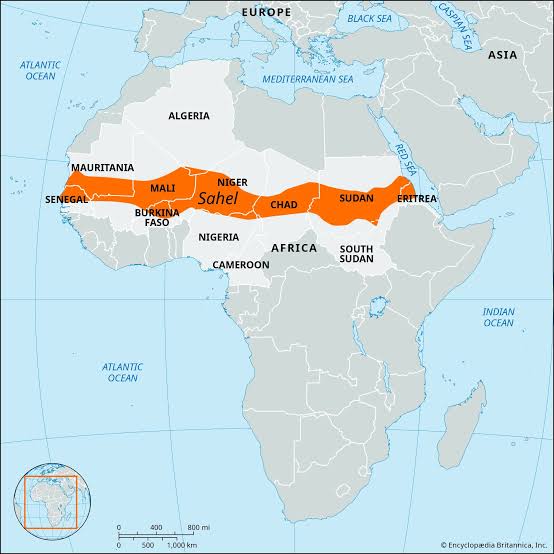
59th MSC Conference has emphasized on moving beyond its transatlantic list of agendas, which has brought global south to the forefront. Global south, according to United Nations are the countries of non-west, third world and the survivors of colonialism. Accordingly, it can be said to have been approximately confined to the regions of Latin America, Middle East, West Asia, South East Asia and Africa. These are the regions of rich resources and demography. Currently global south is richer in population than west, which is a powerful tool for new age global economies of the world. Capturing and harnessing upon the resources of south is the new war of colonialism and imperialism which is widely seen in its prevalence. Invasions, militarily or diplomatically, are vivid in global governance strategies implicitly and explicitly.
Global south is the new strategy and the only possibility of inclusive growth. Where including third world countries are considered as one of the pillars of inclusion and hence international organizations and conferences are seen to have been including third world. This could be the understanding, fear or the nature of sovereignty led international relations that without global south it is insensitive or non-strategic to initiate a discussion on peace and order. . One thing is well established that discussions, deliberations and institutions of global nature remain incomprehensive without including the voices of global south.
In Munich security conference, Global south was a separate panel discussion also where it came to be understood that countries of global south are heavy on their actions on climate change, gender, peace and inclusion considering Brazil’s steps to save amazon etc. As in MSC, Countries of south has remained vocal about what concerns them overall and specifically but west was very keen on Russia overall and specifically. It seems like the onus of protecting the world from authoritarian revision is on the transatlantic west and Global south is seen to have been merely participating in the process.
Cold war has many aspects and international relations is seen to have gone through many forms of cold wars militarily or non-militarily. 59th MSC was established during the decades of cold war and has remained very vocal about transatlantic issues of that time. This has remained fruitful because cold war though impacted the world was systematically was the war of transatlantic countries. Deliberations and discussions is the only rule of diplomacy, where actors and pattern could vary. Munich security conference has been successful on initiating deliberations on prevailing global agendas as the group of leaders. This conference has produced a platform for world leaders and non-governmental organizations to voice concerns and derive solutions to the problems effecting world at large. In action, Munich security index report is the outcome of categorical analysis of state of security and crisis which proves to be a useful tool for policy makers and academia for thorough understanding on world order. It is the necessity of survival that countries, non-governmental organizations or say non-state actors must remain in the vicinity of rule based international order. Failing to do, would eventually disrupt peaceful co-existence. Munich security conference is the state of the art conference that tries and eventually derive ways to instill the idea of global governance and peaceful coexistence. As, rules based international world order is seen as the agenda for and of the globe which is crucial in instating harmony, where voices on it are seen to be cohesive than divisive.
References
1. Agenda and Livestreams: Munich Security Conference 2023 - Munich Security Conference. (2023). https://securityconference.org/en/msc-2023/agenda/
2. Levitsky, S., & Way, L. A. (2010). Competitive Authoritarianism: Hybrid Regimes After the Cold War (Problems of International Politics). Cambridge University Press. https://www.cambridge.org/9780521882521
3. Munich Security Conference. (2023). https://securityconference.org/en/
4. Munich Security Conference - Munich Security Conference. (2023). https://securityconference.org/en/msc/
5. Munich Security Conference 2023 | Digital Watch Observatory. (2023). https://dig.watch/event/munich-security-conference-2023
6. O’Donell, G. A. (1994). Delegative Democracy. Journal of Democracy, 5(1), 55–69. https://doi.org/10.1353/JOD.1994.0010
Pic Courtsey-Michael Afonso at unsplash.com
(The views expresses are those of the author and do not represent views of CESCUBE.)
Author is a Doctoral fellow currently working on Swedish Feminist Foreign Policy. She has completed her graduation and post-graduation from University of Delhi. She is currently working on Feminist methodologies in international relations. Her work experiences include Research Intern at Human Rights commission, Government of India and Ministry of External Affairs, GOI.She can be reached at mansimalhotra156@gmail.com