Partial mobilization of Russia: Causes and consequences
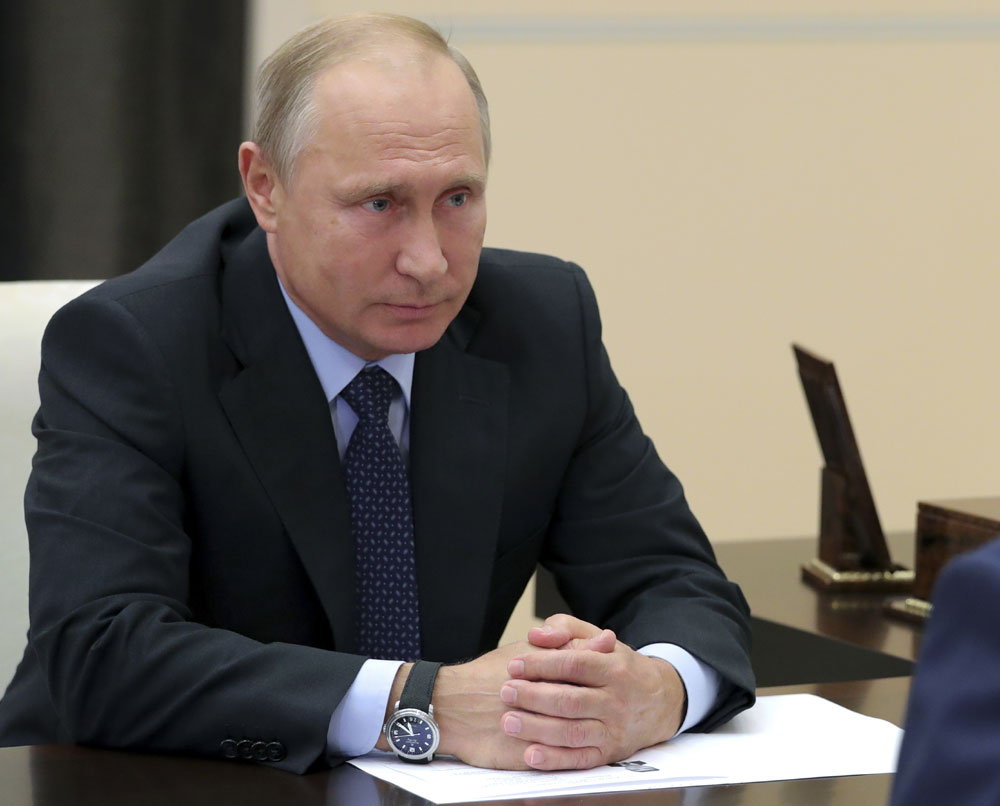
The cost of war is enormous at any time in history, and the current decisions being made by world leaders are a reflection of that, Russian President Vladimir Putin has announced Partial mobilization in the country and given a brief explana...
The media has been highlighting the defection from Russia as the partial mobilization was authorized by the government, the phenomenon of mass defecting after civilian mobilization is being witnessed for a long time in these scenarios and is not something that is limited to Russia. But this partial mobilization only involves people with prior military experience. Most of the fleeing population can be civilians who are afraid of civilian mobilization in future, but only a partial mobilization was declared. A general mobilization would have included all the military-age civilians who are abled.
According to Putin’s speech on September 21, only military reservists who served in the armed forces and have corresponding experience and specific military occupational specialities will be called up to defend their motherland and sovereignty and territorial integrity, and to ensure the safety of their people and the people in the liberated territories. He also mentioned that they are fighting on a line of contact which is over 1000km long against not only the units of neo-Nazis but the entire military machine of the west collectively.
Russia’s defence minister Sergei Shoigu said that they are calling 300,000 people from the vast reserve of 1 million people. We cannot see the conflict as a full-scale war as a full mobilization was not authorised by the president. The mobilization was completed on 31 October. As with any other activity in the war, mistakes were made during this mobilization, President Putin also acknowledged this, we have witnessed people fleeing the country to avoid enrolling in the forces.
A decree was signed by Putin to call 300,000 reservists to be mobilized for the war in Ukraine, last time Russia ordered a general mobilization all the citizens who were above 19 years old are called to contribute towards the war effort. In a general mobilization, the people of military age will be stopped from leaving the country. According to Putin, no further mobilization is being planned after filling the required 300,000 reservists. “There are now 222,000 people mobilized in the troop formations, out of 300,000. I think that within about two weeks all mobilization activities will be completed.”[1]
According to Putin the aim of this mobilization is to liberate the Donbask region, Putin justified his decision by saying that the west wants to destroy Russia and the county wants to defend itself. its been seven months since the armed conflict between Russia and Ukraine started, Shortage of personnel and battlefield reverses can create a requirement for additional mobilizations in the time of war. In a statement, Putin mentioned that the west wants to destroy Russia and they don’t want peace.
The challenges with training and equipping them were pointed out by many observers.[2] This mobilization would show the people in Russia the reality of the ongoing conflict and they will experience and see the effects of the ongoing conflict first-hand. Mobilizations are extremely unpopular, but the partial mobilization only included the people who signed up for the armed services voluntarily and were in the reserved forces.
After the announcement, the value of the Euro decreased and the stock market of Europe also slipped. The currency of Russia hit two month low after the announcement, and investors in the Global market are facing more challenges because of the ongoing conflict. Protests and a few violent clashes were reported after announcing the mobilization, and clashes between police and protestors were reported in the southern Russian region of Dagestan. The protests were held in response to the call-up of 110 men to join the mobilization forces from a village of 8,000 people called Endirey. The protestors blocked the roads and violent clashes erupted, police shot warning shots in the air to disburse the crowds. Videos were posted on social media where the protestors were chanting “no to the war”. The Ukraine military reported 56,700 Russian casualties, in September 2022, and the defence minister of Russia said that 6,000 Russian soldiers have been killed since February 24.
There are no signs of de-escalation in any aspect, and the conflict only ends once Russia wins the conflict. Russia is still calling the conflict “Special military operations”. The United States is asking Ukraine to be open to talks with Russia. The special military operations were started by the high-readiness contract forces, they were not conscripts ( Conscription is the state-mandated enlistment of people in a national service, mainly a military service). Even with the high number of personnel and amount of equipment Russia still has not succeeded in its goals. Russia failed to end the conflict with its military superiority in modern equipment and skilled soldiers, but Russia does have enough numbers in personnel, tanks, fighter jets and attack helicopters to outlast Ukraine. For Ukraine to succeed in this situation the west needs to give every piece of equipment, ammunition and vehicle to Ukraine’s disposal to stem the tide. But currently, we are not seeing that kind of willingness from the west.
Even though the reservists are not soldiers of high readiness, according to the defence minister 218,000 recruits are in training now, 82,000 had been deployed in the conflict zone, and 42,000 of those deployed are assigned to their units. He also mentioned that the recruitment for the Ukraine campaign in the future will be based on volunteers and professional soldiers instead of mobilizing from Russia’s several million reservists. Legally Russia cannot send newly recruited conscripts into hostile zones without completing 4 months of training, but the American Institute for the study of war pointed out a loophole in their legislation where Russia can send conscripts without any training to the annexed regions if they declare martial law in those regions, because according to the Russian laws that are the territory of Russian Federation.
It's unclear how the balance of power has changed at the front lines since the deployments. A surge in attacks by Russian drones has been detected, these drones are known to be targeting power and water supply infrastructure to the cities and villages.
the Centre for Economic Recovery and CIVITTA and EasyBusiness determined that in Russia’s each-day battle, prices are probably to “exceed $ 20 billion” because of the invasion scales. The look determined that direct losses withinside the first 4 days of the battle amounted to about $7 billion, along with army device and employee losses. Citing a look, CIVITTA said: “The overall each day price of the battle for Russia is probably to exceed $ 20-25 billion, along with logistics, employees, missile launches, etc.” Even with its massive resources, Russia cannot continue the conflict for really long without massive internal economic restructuring, considering the sanctions. And these decisions will continue to attract protests from the general public. As we can see Russia’s goal in this conflict is not to last forever but to outlast Ukraine. The European countries are facing many challenges with the economic sanctions they imposed and counter-sanctions imposed by Russia, the LNG gas exports from Russia play a crucial role in meeting the energy needs of many Europeans, and the global supply is stable as of now as the LNG imports of China have decreased, but in case of any escalation in sanctions which will lead to Russia ceasing the gas pipelines to Europe can lead a natural shortage of LNG in Europe. This might be the most concerning outcome of the ongoing conflict for the Europe countries.
Notes
[1] https://www.politico.eu/article/putin-claims-partial-mobilization-to-end-in-2-weeks-russia-ukraine-war/
[2] https://www.csis.org/analysis/what-does-russias-partial-mobilization-mean
Pic Courtsey-Ria Novosti
(The views expressed are those of the author and do not represent views of CESCUBE.)

Sharath Kumar Kolipaka is doing a masters degree at Jindal School of International affairs, specializing in national security and peace and conflict studies.