Philippines Political Puzzlement: After President Duterte Resignation
Philippines has been scoring sound on the economic post the pandemic. It was getting on track to become an upper middle income country, and is witnessing rapid urbanization, and broadening of the middle class group. This was coupled with a ...
President Duterte is suffering from ailments like Buerger’s disease and Barrett’s esophagus, one of which he described as “first stage cancer”. His health issue wasn’t a point of concern during his 2016 Presidential elections, however, ever since then it has become a public concern and has made frequent headlines. President Duterte and the palace used to negate these health concerns that floated in the media back in the days. But as his conditions further deteriorates and things are slipping out of hands, they have started to address these queries heads on. Back in 2020, there was even a petition that was filed demanding President’s medical record but the Supreme Court dismissed it. His health concern started gaining the political attention because of the stature that he holds in his personal capacity. He has humungous following amongst the people, and is one of the strongest leaders of the country.
The resignation has caught everyone’s concern alike because of the big shoes that are to be filled. This resignation will cause a massive turn in the political environment of the country. President Duterte has been on the forefront to counter the communist insurgents and track down the drug mafia. He was determined to keep these human rights abuses in check, and called them “enemies of the state”. This rhetoric started by him went a long way, and further fueled his popularity. Nevertheless, there were accusations that he had draconian ant-terror laws, and tapped on activists that questioned his policies, or criticized him. In addition, there were accusation of corruptions made on him by the opposition that didn’t breathe last. Moreover, he went onto appoint an Anti-Corruption Commission, and approved the recommendation of the Department of Justice led investigating task force that would look into the corruption charges of some of the most esteemed political figures in the country. This list included Morales, Senior Vice President and Chief Information Officer Jovita Aragona, and Chief Operating Officer Arnel De Jesus among others.
The pandemic has affected economies of all the countries in varying capacity. Before the pandemic hit, Philippines was performing well on the economic terms. However, the challenges after it has doubled. The lockdown that hit the world impacted the economic growth and poverty alleviation measures of the government. Growth rate dipped due to a heavy fall in the consumption, and investment rate. Furthermore, tourism and market exports marked a significant decline. This downfall was exacerbated by cut down in remittances due to the global markets and jobs shutting down. In addition, the pandemic even reversed the positive impact that the increased wages, and investment created in the country. Albeit, the country started to recover but it would require a strong political will and able leadership to take this ahead from here. With the announcement of resignation of President Duterte there are serious concerns that have arisen. The country can’t afford a political disturbance, or transition at this crucial juncture where its market and economy needs the stable political backing to counter the odds of pandemic.
After weeks of tumultuous political maneuvering, Duterte's prospective successors have been practically finalised. By all appearances, neither Sara Duterte, the president's daughter, nor Senator Christopher "Bong" Go, a long-time presidential adviser, will be running for president anytime soon. As a result, Ferdinand "Bongbong" Marcos Jr., the sole son of a former Filipino strongman, is the clear leader in next year's presidential elections. This has also raised alrms regarding the shift in foreign affairs of the country. The political environment might witness a shift. Bongbong Marcos is the only candidate among the top contenders who has openly advocated full continuity in Philippine foreign policy toward China, emphasizing the futility of confrontation and the importance of vigorous economic cooperation with the Asian mammoth. He has shown his support for the policy of Duterte especially with respect to China, and has signaled that he would avoid any confrontation. Furthermore, Marcos has the lineage of his father that he will thrive on during the elections. As his father, the late dictator Ferdinand Marcos was one of the first senior US allies in Asia to establish communication lines and solidify diplomatic relations with Maoist China. Therefore, there is a lot of social currency that Marcos has in his kitty to exploit during his campaign.
Thus, the May 2022 elections are going to be very crucial for Philippines. It on the one hand had to decide on the leader that could help put the country back on the economic growth chart, and could push it forth. Moreover, Philippines has been a boisterous democracy and public opinion has been a force to reckon with. The changing political leadership, and the discourse that has been built around it would need to take these cues into account. The public would also have a choice to either keep giving support to a populist and authoritative government that has its roots in the Duterte club, or bring a liberal leaning democratic leader like Marcos to power. This decision will be crucial as it can at once save the eroding democratic credentials of the country, and can also prove fruitful for the post pandemic development that the country dreams for.
REFERENCES
1. Duterte: 'I offered to resign as president because I am sick of corruption', CNN, September 2021.
Duterte: 'I offered to resign as president because I am sick of corruption' (cnnphilippines.com)
2. Philippines’ Duterte offers resignation if bribe smear proven – but threatens to KILL anyone making false allegations. RT, December. 2021.
https://www.rt.com/news/509041-duterte-corruption-allegations-resign-offer/
3. Rodrigo Duterte: The Weak Strongman of the Philippines. THE DIPLOMAT, September 2020.
https://thediplomat.com/2020/09/rodrigo-duterte-the-weak-strongman-of-the-philippines/
4. Philippine President Duterte to retire from politics, N WORLD, October 2021.
https://www.thenationalnews.com/world/asia/2021/10/02/philippine-president-duterte-resigns-from-politics/
5. Philippines' Duterte says he is retiring from politics, but not everyone is convinced. REUTERS, October 2021.
https://www.reuters.com/world/asia-pacific/philippine-president-duterte-says-he-is-retiring-politics-2021-10-02/
6. The Philippines after Duterte: The End of Impunity?, FULCRUM, November 2021.
https://fulcrum.sg/the-philippines-after-duterte-the-end-of-impunity/
7. After Duterte: Presidential Elections and the Future of Philippine-China Relations. CHINA & US FOCUS, December 2021.
https://www.chinausfocus.com/foreign-policy/after-duterte-presidential-elections-and-the-future-of-philippine-china-relations
8. A Duterte Family Drama Is Overshadowing the Philippines Presidential Election. WORLD POLITICS REVIEW, November 2021.
https://www.worldpoliticsreview.com/articles/30151/after-duterte-philippines-faces-a-stark-choice-in-presidential-election
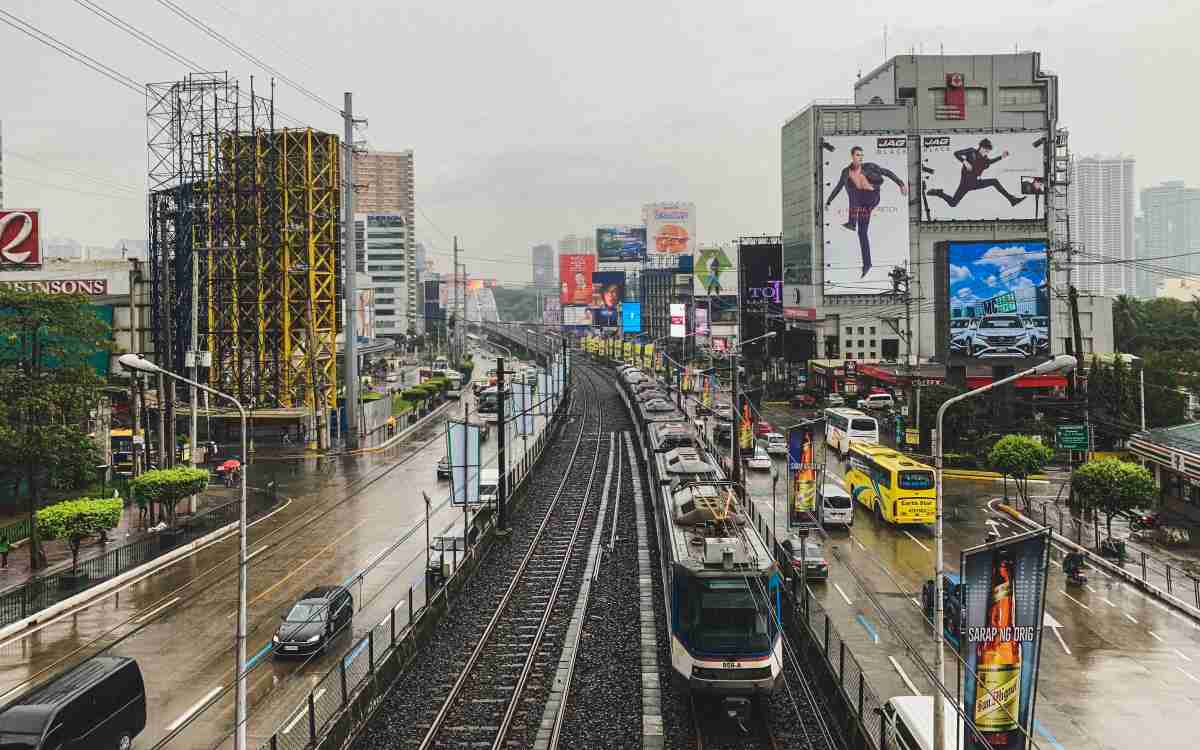
Pic Courtsey-Gino at unsplash.com
(The views expressed are those of the author and do not represent views of CESCUBE.)

Khyati Singh has a Masters in International Relations from Jawaharlal Nehru University. Her research interest includes AI, Great Debates, Grand Theories, International Relations, and Post Colonial Literature in IR.