President Duterte and International Criminal Court Investigation
In September 2021, the Hague-based International Criminal Court (ICC) authorized a full investigation into the Philippines President Rodrigo Duterte “war on drugs” campaign for inherent human rights violations in taking down drug cartels an...
In May 2021, the Prosecutor had submitted a 57-page report to open an investigation into the ‘Situation in the Republic of the Philippines’ [1]. The report cited Article 7 of the Rome Statute, which acts as the legal basis for the ICC, as a ‘reasonable basis’ for launching an investigation into the actions of President Duterte. Article 7 deals with crimes against humanity which include acts of murder, torture, extermination, etc., “when committed as part of a widespread or systematic attack directed against any civilian population, with knowledge of the attack”.
The official statement of the ICC while authorising the investigation noted that “the so-called 'war on drugs' campaign cannot be seen as a legitimate law enforcement operation and the killings neither as legitimate nor as mere excesses in an otherwise legitimate operation” [2]. Many advocacy and human rights groups have claimed this move as a victory for the victims’ families. Organisations like Karapatan and the National Union of People’s Lawyers or NUPL have worked with the victims of the drug war in filing a complaint before the ICC.
Duterte’s response to the ICC allegations has been overly defensive. He not only denies the charges but proudly defends his aggressive anti-drug measures. In his Sixth State of the Nation Address in July 2021, Duterte dared the ICC to record his words, “Those who destroy my country, I will kill you. And those who destroy the young people of our country, I will kill you” [3]. Recently, he agreed to face charges and prepare his defence for the ICC case but only after he steps down from power.
Duterte Anti-Drugs Campaign
Philippines President Duterte entered office in 2016, riding his campaign on ending drug-related crime in the country. Backed by an overwhelming majority, he directly warned of killings. “Forget the laws on human rights?.?.?.?You drug pushers, hold-up men and do-nothings, you better go out. Because I’d kill you,” he said in his final campaign rally.
Before becoming President, Duterte spent two decades as a mayor and vice-mayor of Davao, a town located in the southern islands. As a populist mayor, he ran a similar operation for decades to restore order in the “murder city”. The uncanny motorcycle killings in which a group of policemen, known as the “Davao death squad”, shoot or stab down suspects began from this city. Amnesty International claims that Duterte was directly responsible for over 700 extrajudicial deaths in Davao. Critics and human rights activists accuse Duterte of giving provocative speeches leading to violence and hate crimes in the country.
According to government records, in over 170,000 anti-drug operations, more than 5,800 people have been killed under President Duterte. However, social groups and human rights organisations claim the actual number is higher than 20,000. As per data cited by the ICC, the number of killings is estimated to be somewhere between 12,000 to 30,000 civilians. An investigative report by Financial Times revealed that many of the deaths were not of actual suspects but on accounts of mistaken identity, unlucky bystanders, and the friends and children of the apparent target [4]. Families of the victims claim that the killings happened during the police warning to the “surrender” and “reform” process, locally known as tokhang.
The killings did not stop even during the pandemic as the capital city of Manilla saw a sharp rise in police shootings, abduction and dumping of dead bodies over drug-related crimes. Despite running such an offensive and intrusive campaign, Duterte has massive popularity among the Filipinos which translates into approval of his policies. According to a poll conducted by the Social Weather Stations (SWS), Duterte reached his all-time high to “excellent” level with +79 points in November 2020. This year, despite falling to a +62 in June, 75% of the Filipinos remain satisfied, 12% undecided, and 13% dissatisfied with Duterte's performance [5].
Withdrawal from the ICC
The ICC has jurisdiction to investigate cases in the case of state parties to the Statute where the act of crime is either committed by a national of the State Party or in the territory of the State Party. However, in the case of non-State Parties, the ICC can investigate if that state has accepted the jurisdiction of the court or when a case is referred by the Security Council under Chapter VII of the United Nations Charter [6].
In the case of the Philippines, the country has been the party to the ICC since November 2011. However, in 2018 the country submitted a written notification of withdrawal from the Statute. Duterte critics alleged that it was a unilateral move that came weeks after an ICC prosecutor announced a preliminary examination into thousands of killings in his war on drugs. The withdrawal came into effect in March 2019. Although the move was challenged by minority legislators who called it “illegal and without Senate approval”, the Supreme Court of the Philippines recently refused to reverse the decision, adding that “the judiciary has enough powers to protect human rights contrary to speculation raised by the petitioners” [7].
The withdrawal however will not affect the ICC proceedings against President Duterte for the extrajudicial killings, as highlighted by scholars and international law experts. "A country cannot evade investigation by withdrawing from the ICC. The investigations continue. Whatever has been discovered by that point will still be followed up,” Moritz Vormbaum, a German expert in international criminal law told DW news [8]. “The Court retains jurisdiction with respect to alleged crimes that occurred on the territory of the Philippines while it was a State Party, from 1 November 2011 up to and including 16 March 2019,” ICC’s statement noted. A former congressman Neri Colmenares who is also an Attorney commented that given ICC Prosecutors will not be allowed to step into the country, they might conduct the probe digitally or by using third-party resources such as a different country that might be willing to execute the arrest if Duterte sets foot on that soil [9].
As the Philippines is due to hold elections next year, there were speculations over Duterte running for the vice-president to protect himself against the ICC proceedings given that the Philippine Constitution mandates for only a single six-year term for President. However, he recently announced his retirement from active politics, indicating a definite change in leadership for the country. Reports now suggest his daughter Sara Duterte-Carpio, who is currently mayor of the southern city of Davao is in the race to be the next President, who is likely to protect her father from criminal charges of the ICC investigation. His critics argue that Duterte is likely to use all means including political and criminal if necessary to avoid the investigations. The coming months remain critical to see how the ICC proceeds with the case and detains the heavyweight of the country if an arrest warrant is produced. Given the rising trend of authoritarian figures grabbing power in democratically elected countries, an ICC warrant will signal hope towards communities fighting injustices across the globe.
References
[1] www.icc-cpi.int/CourtRecords/CR2021_05381.PDF
[2] https://www.icc-cpi.int/Pages/item.aspx?name=PR1610
[3] https://www.officialgazette.gov.ph/2021/07/26/rodrigo-roa-duterte-sixth-state-of-the-nation-address-july-26-2021/
[4] https://www.ft.com/content/9d6225dc-e805-11e6-967b-c88452263daf
[5] https://www.reuters.com/world/asia-pacific/satisfaction-with-philippines-duterte-fell-21-pct-nov-june-despite-strong-2021-09-24/
[6] https://www.icc-cpi.int/iccdocs/pids/publications/uicceng.pdf
[7] https://www.reuters.com/article/philippines-icc-idUSL4N2LE2JW
[8] https://www.dw.com/en/philippines-withdrawal-does-not-protect-rodrigo-duterte-from-icc/a-47957746
[9] https://thediplomat.com/2021/08/duterte-vs-the-international-criminal-court/
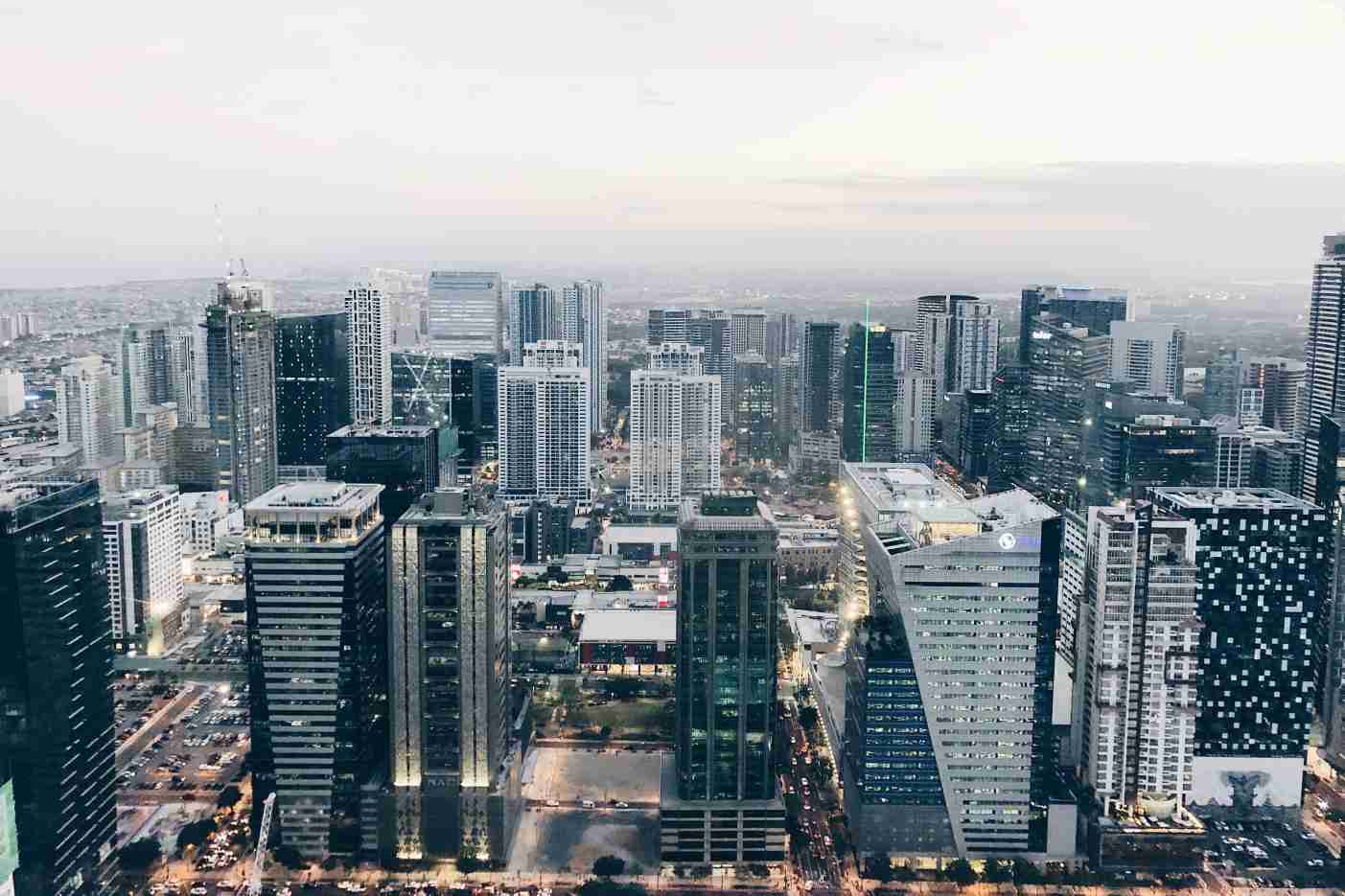
Pic Courtesy- OJ Serrano at unsplash.com
(The views expressed are those for the author and do not represent views of CESCUBE.)

Apoorva Jain is a graduate in political science from Delhi University. Her interest in politics, governance and international relations led her to pursue a master's degree in Politics and International Studies from Jawaharlal Nehru University. Her research interests include Diplomacy, Indian Foreign Policy and Indo-Pacific Affairs. She is presently research intern with CESCUBE.