Putin visit to India: Looking for reinvigorating ties
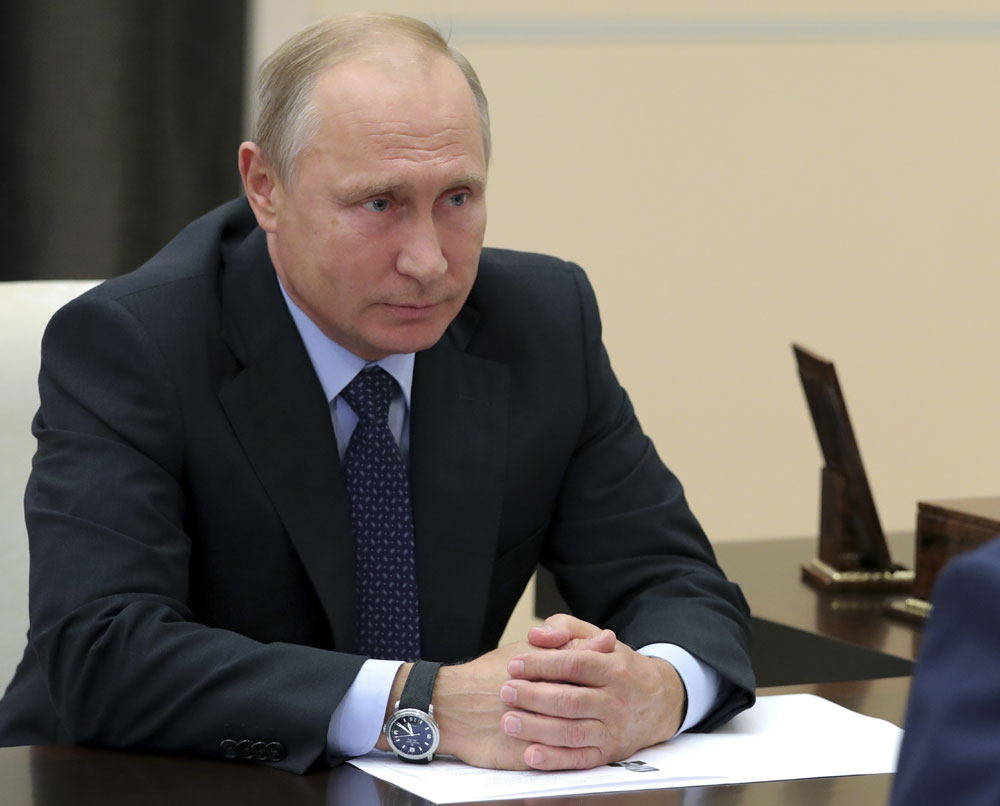
The recent visit of Russian President Vladimir Putin to Delhi for the Covid-interrupted 21st annual India-Russia Summit was made possible by some hard-nosed calculations based on realpolitik. The meeting's timing, right before the Biden-Put...
Earlier, Russian Foreign Minister Sergey Lavrov paid a two-day visit to India and met with his Indian counterpart, S. Jaishankar. Lavrov then took a flight from New Delhi to Pakistan. Both Jaishankar and Lavrov went out of their way to demonstrate that the India-Russia bilateral relationship is strong and that they are looking for ways to strengthen it even further. The two sides talked about their cooperation in areas such as nuclear and space technology, as well as military. The two parties also discussed how the pandemic has harmed their business relationships and decided to look into new opportunities in Russia's Far East. Deals for collaborative exploration of oil and natural gas in Siberia could be the most significant of the dozen or so accords that New Delhi and Russia are likely to sign. According to the prime minister, the globe has seen many fundamental changes in recent decades, with numerous geopolitical equations emerging, but India and Russia's friendship has remained consistent.
There have been many basic inconsistencies between the two countries, but the visit was a clear attempt to indicate the commitment to the multipolar world and to reaffirm strategic balance as an enduring feature in international relations. The lack of Russian understanding and sympathy for India's security concerns, particularly in the aftermath of the Galwan conflict, will remain a problem. It's astonishing that Russia doesn't show any sensitivity to India's security worries regarding China and continues to support Beijing. These comments come during a tumultuous 2020 in the bilateral relationship. Last year, the annual India-Russia summit was cancelled for the first time in two decades, indicating that relations between the two countries were strained and that the annual summit was likely cancelled due to Russia's "severe reservations" about New Delhi's participation in the Indo-Pacific initiative and Quad.
Despite the prospect of US penalties under CAATSA, India has increased its strategic autonomy space with the arrival of parts of the S-400 missile defence system and the signing of defence accords with Russia. Before the meeting, the foreign and defence ministers will meet in a 2+2 arrangement, similar to that used by the US. Defence connections have long been a part of India-Russia relations, and as a result of China's hostility and expansionism, military development has become a top concern. Russian-made military gear accounts for over 60% of India's military hardware. India's soldiers, who are still using antiquated INSAS rifles, will be re-equipped and upgraded as a result of the deal to manufacture AK-203 rifles in India with Russian technology transfer.
The co-production and manufacture of four frigates, as well as the supply of the SU-MKI and MiG-29 aircraft, were among the other defence deals. Russia will construct two nuclear power plants, a pipeline connecting the two countries for oil and gas, sell rough diamonds to India for cutting and polishing, and develop new weapons. According to experts, Russia is annoyed that India is increasingly depending on Western suppliers for military weapons, notably the United States. India denies such fears, asserting that Russia is and will continue to be New Delhi's principal defence partner for decades. Putin claimed that the high level of "trust" between the two countries allows them to move away from selling weapons and toward collaborative development and manufacturing of modern weapons systems.
In the economic realm, India and Russia have more freedom, but their failure to deepen their business connections has been striking. The two sides have consistently emphasised the necessity of increasing economic and investment ties during the last 20 summits with Putin; yet, success has been difficult to come by. India and Russia's yearly goods trade value is currently at $10 billion. Moscow's annual commerce with China, by contrast, is slightly more than $100 billion. Despite positive political connections, Delhi's commercial relations with Moscow have remained stagnant. The problem is certainly not one that can be solved at the level of governments. Business elites from Russia are fleeing to Europe and China. Companies in India are focusing their efforts in the United States and China.
While India is concerned about the China-Pakistan axis, Russia is concerned about China's growing embrace of Central Asia. Neither country wants a China-dominated Asia or a China-centric world order. During the LAC battles between India and China, Russia was quick to respond to India's military requirements, a point that Beijing would not have overlooked.
Russia is acutely aware of the massive power disparity in its power dynamics. Conflicts with the US, Europe, and Japan have brought Moscow closer to Beijing. Russia recognises that India's strategic partnership with the US is unstoppable, and Delhi recognises that it has no veto power over the Sino-Russian strategic partnership. Moscow and Delhi are adjusting to this unsettling reality while also strengthening their political ties. During the pandemic, India added Russia's Sputnik-V vaccine to its list of authorised vaccines for domestic and international usage. While defence, energy, and space cooperation will continue, bilateral relations in trade, tourism, and other areas must be expanded in order to maintain long-term ties.
Notes
1. Did Lavrov’s India Trip Reset India-Russia Ties? – The Diplomat: https://thediplomat.com/2021/04/did-lavrovs-india-trip-reset-india-russia-ties/
2. Russian President to Visit India for 1-Day Summit: https://www.voanews.com/a/russian-president-to-visit-india-1-day-summit/2552914.html
3. Russia’s Putin to land in India to boost military, energy ties | Vladimir Putin News | Al Jazeera: https://www.aljazeera.com/news/2021/12/6/russia-vladimir-putin-india-visit-military-energy-ties
4. India, Russia reinvigorate bilateral ties - Deepstrat: https://deepstrat.in/2021/12/16/12594-revision-v1/
5. C Raja Mohan writes: Putin’s visit must be used to realise the potential of India-Russia ties: https://indianexpress.com/article/opinion/columns/russian-president-vladimir-putin-india-visit-pm-modi-agenda-7657862/
6. A reinvigorated alliance : The Tribune India: https://www.tribuneindia.com/news/comment/a-reinvigorated-alliance-349619
7. India- Russia Joint Statement following the visit of the President of the Russian Federation: https://mea.gov.in/bilateral-documents.htm?dtl/34606/India_Russia_Joint_Statement_following_the_visit_of_the_President_of_the_Russian_Federation
8. India-Russia ties stronger than ever, says PM Modi as he meets Russian Prez Putin at Hyderabad house: https://www.firstpost.com/india/india-russia-ties-stronger-than-ever-says-pm-modi-as-he-meets-russian-prez-putin-at-hyderabad-house-10190151.html
9. Putin's 5-hr visit, 2+2 talks strengthen India and Russia's 'special, privileged strategic' ties: https://theprint.in/diplomacy/putins-5-hr-visit-22-talks-strengthen-india-and-russias-special-privileged-strategic-ties/777564/
Pic Courtesy-Russia Today news
(The views expressed are those of the author and do not represent views of CESCUBE.)
Gaurav Sen is a graduate from Delhi University. He is currently doing his Masters in International relations from Jawaharlal Nehru University, New Delhi. His research area includes IR theories, Great Power competition in Indo-Pacific, Maritime Security, Emerging Warfare Concepts, and Military Strategies.