LIVE DISPATCH
Loss and Damage Finance: From COP28 Pledges to Policy Architecture Extended Deterrence Under Strain: Credibility, Assurance, and the Stability-Instability Paradox in the Indo-Pacific Beyond Consultation: BIMSTEC's Emerging Role in Regional Intelligence and Security Cooperation Maritime India: Security, Trade, and Great Power Competition Between the Desert and the Savannah: Conflict and the Political Economy of Instability in the Sahel Beyond Ukraine: Understanding Putin's Vision of Russian Power The Politics of Ali Khamenei's Funeral Silicon Sovereignty: How Semiconductors Are Redrawing Global Power Hierarchies Operation Sindoor and the Changing Dynamics of India–Pakistan Security The Negative Impact of US–Iran War on the Pacific Region Generative AI, Labour Sovereignty, and the Geoeconomics of India's Service Economy BRICS Expansion and the Multipolar Moment: Opportunity or Strategic Contradiction? India's AI Diplomacy and the Future of Strategic Technologies Foot-Dragging as Feminism: Iran, South Korea, and the Ungovernable Body Lethal Autonomous Weapons Systems and the Governance Deficit: Challenges to International Humanitarian Law and Accountability Beyond Proximity: Why the UAE Occupies a Growing Place in Iran’s Strategic Calculus Great Power Rivalry and the Crisis of the United Nations Why Fiji Matters: The New Geopolitics of the Indo-Pacific Islands Ten Years After Brexit: Regret, Reform, or Reversal? The Long Shadow of 1953: Understanding the Iran–US Conflict Sports, Strategy and Statecraft of Mega Sporting Events as Geoeconomic Instruments: Qatar 2022 to Saudi Arabia 2034 Border Fencing and National security: India’s Strategy along the Bangladesh Border Hardening the Quad: From Strategic Dialogue to Operational Cooperation Lingering Effects of the Bush Doctrine on Contemporary US Foreign Policy The Maghreb of States: Identity, Sovereignty, and the Limits of Non-Interference India’s BRICS 2026 Chairmanship Navigating a tightrope Amidst the Chinese Geopolitical Rise Beyond the Battlefield: Understanding Unconventional Security Challenges in Contemporary Geopolitics The Control Paradox: How Proxy Warfare Enables Strategic Deniability While Constraining Strategic Control Trapped in Deterrence: Nuclear Stability and the Persistence of Conflict in South Asia The Return of Unipolarity? U.S Strategic Primacy and the Future of the Global Order Supply Chains and Complicity: The Role of Global Corporations in Forced Labour in Xinjiang The Distant Threat: Is Israel Constructing a Strategic Rival in Pakistan Island Militarisation and Techno-Diplomacy: Turkey’s Eastern Mediterranean Fault Lines Amid India-Greece Alignment India’s Security Scenario: An Assessment of its Continental and Maritime Challenges The Geopolitical Architecture of European Defence: Navigating NATO Synergies, Transatlantic Retrenchment, and the Hybrid Threat Landscape The Artemis Accords and the Future of Global Space Governance AI and the Securitization of Critical Infrastructure: Implications of India's AI Summit Beyond Rhetoric: Evaluating the Effectiveness of International Sanctions on China’s Treatment of Uyghur Muslims The Emerging Maritime Rivalry in the Western Indian Ocean: India’s Response to Extra-Regional Powers India's Maritime Grand Strategy on Trial : The IRIS Dena Incident and the Indian Ocean Question Loss and Damage Finance: From COP28 Pledges to Policy Architecture Extended Deterrence Under Strain: Credibility, Assurance, and the Stability-Instability Paradox in the Indo-Pacific Beyond Consultation: BIMSTEC's Emerging Role in Regional Intelligence and Security Cooperation Maritime India: Security, Trade, and Great Power Competition Between the Desert and the Savannah: Conflict and the Political Economy of Instability in the Sahel Beyond Ukraine: Understanding Putin's Vision of Russian Power The Politics of Ali Khamenei's Funeral Silicon Sovereignty: How Semiconductors Are Redrawing Global Power Hierarchies Operation Sindoor and the Changing Dynamics of India–Pakistan Security The Negative Impact of US–Iran War on the Pacific Region Generative AI, Labour Sovereignty, and the Geoeconomics of India's Service Economy BRICS Expansion and the Multipolar Moment: Opportunity or Strategic Contradiction? India's AI Diplomacy and the Future of Strategic Technologies Foot-Dragging as Feminism: Iran, South Korea, and the Ungovernable Body Lethal Autonomous Weapons Systems and the Governance Deficit: Challenges to International Humanitarian Law and Accountability Beyond Proximity: Why the UAE Occupies a Growing Place in Iran’s Strategic Calculus Great Power Rivalry and the Crisis of the United Nations Why Fiji Matters: The New Geopolitics of the Indo-Pacific Islands Ten Years After Brexit: Regret, Reform, or Reversal? The Long Shadow of 1953: Understanding the Iran–US Conflict Sports, Strategy and Statecraft of Mega Sporting Events as Geoeconomic Instruments: Qatar 2022 to Saudi Arabia 2034 Border Fencing and National security: India’s Strategy along the Bangladesh Border Hardening the Quad: From Strategic Dialogue to Operational Cooperation Lingering Effects of the Bush Doctrine on Contemporary US Foreign Policy The Maghreb of States: Identity, Sovereignty, and the Limits of Non-Interference India’s BRICS 2026 Chairmanship Navigating a tightrope Amidst the Chinese Geopolitical Rise Beyond the Battlefield: Understanding Unconventional Security Challenges in Contemporary Geopolitics The Control Paradox: How Proxy Warfare Enables Strategic Deniability While Constraining Strategic Control Trapped in Deterrence: Nuclear Stability and the Persistence of Conflict in South Asia The Return of Unipolarity? U.S Strategic Primacy and the Future of the Global Order Supply Chains and Complicity: The Role of Global Corporations in Forced Labour in Xinjiang The Distant Threat: Is Israel Constructing a Strategic Rival in Pakistan Island Militarisation and Techno-Diplomacy: Turkey’s Eastern Mediterranean Fault Lines Amid India-Greece Alignment India’s Security Scenario: An Assessment of its Continental and Maritime Challenges The Geopolitical Architecture of European Defence: Navigating NATO Synergies, Transatlantic Retrenchment, and the Hybrid Threat Landscape The Artemis Accords and the Future of Global Space Governance AI and the Securitization of Critical Infrastructure: Implications of India's AI Summit Beyond Rhetoric: Evaluating the Effectiveness of International Sanctions on China’s Treatment of Uyghur Muslims The Emerging Maritime Rivalry in the Western Indian Ocean: India’s Response to Extra-Regional Powers India's Maritime Grand Strategy on Trial : The IRIS Dena Incident and the Indian Ocean Question
ADVERTISEMENT
Security October 30, 2021 3782 Reads

Resonance on East Sea in 2021 ASEAN Summit meetings
P
By Pankaj Jha
Author • Centre for Security & Strategic Studies
Resonance on East Sea in 2021 ASEAN Summit meetings
Share Analysis:
EXECUTIVE SUMMARY & STRATEGIC TAKEAWAYS

 The developments in South China Sea have been a matter of concern for all the littoral countries in its periphery as well as the dialogue partners. This year has been very eventful in the context of tensions between US and China in th...

ADVERTISEMENT

While there might be many narratives coming from different strategic experts, but the truth can be ascertained US Navy only. The shadow of the incident loomed large over the ASEAN summit meeting which was held in October 26-28 and there has been strong support coming from all quarters about the signing of the code of conduct in South China Sea. As already it is well known that the declaration of code of conduct (DOC) in South China Sea has been the non-binding agreement, which is voluntary in nature, is existing in this context.

China has enunciated the new maritime Coast Guard law which empowers the Chinese Coast Guard to use weapons and enforce its perceived maritime borders in South China Sea. Similarly, China has also initiated the new border law in the context of India China border which empowers the Chinese PLA to make moves to formalize the current border between the two countries. This new border law used to empower the military to define their sovereign territories along the border and legally justify the moves made by the PLA. Drawing analogies between the two laws it seems very pertinent that China is trying to define both land and maritime borders in and around its periphery as per its whims and fancies. China on its part has stated that its new coast guard law and land border law are meant to define provisions related to the delineation of land borders as well as maritime borders to regulate management of borders and promote international cooperation with the peripheral countries.

During the ASEAN meeting this year there have been strong rebuttals of Chinese position on South China Sea. One of the dialogue partners Australia has upgraded its ties with ASEAN to a comprehensive strategic partnership and this is meant to bring more involvement of Australia into the activities of ASEAN. Prime Minister Scott Morrison stated that the comprehensive strategic partnership is meant to bring more substance into the relationship to address complex challenges in future. ASEAN have been approached by China too for upgrading partnership but the member countries have not given any clear indication of upgrading the partnership with China, and ASEAN has given a muted response to Chinese overtures in this regard.

Beijing has been militarizing the South China Sea islands with the improved military infrastructure which includes strengthening the jetties, expanding the area of the reclaimed islands, installing sophisticated radar systems and electronic warfare equipment, deploying surface to air missiles, extending runways to accommodate the operations of maritime surveillance and fighter aircrafts. Apart from these, China has been undertaking maritime surveillance activities in SCS in areas such as Reed bank, Vanguard bank, Whitsun Reef and areas closer to Scarborough Shoal. Earlier this year China has deployed more than 200 fishermen militia boats within Philippine Exclusive Economic Zone and tried to intimidate the Filipino fishermen in that area. After international attention was drawn to this, China has slowly withdrawn from that area. However, it is seen as a Chinese characteristic of salami slicing in that maritime area.

U.S. President Joe Biden also attended the ASEAN meeting and during the East Asia summit meeting which he attended virtually, he clearly stated that US is concerned about the threat to the rules-based order in the region and would strive to maintain rule of law and freedom of the seas. In August 2021, ASEAN has stated that it is drawing close to setting up the code of conduct and standard operating procedures in South China Sea to avert any maritime clashes or disaster in these contested waters. ASEAN has agreed to adopt a single draft for negotiations and concluding the code of conduct agreement in a time bound manner.

Prime Minister Modi during his speech at the meeting between India and ASEAN nations alluded to the South China Sea issue and stated that there can be convergence about India's Indo-Pacific Oceans Initiative and ASEAN outlook on Indo-Pacific. He also opined that there is a need for rules-based order and maintaining peace and tranquility in South China Sea. In the joint statement released after the meeting it was clearly stated that India supports Asian centrality in this Indo-Pacific region and buttressed its strong support for freedom of navigation and over flight in South China Sea. Looking into the statement it seems pertinent to note that India would be upgrading its maritime cooperation with ASEAN countries in the coming year.

The Ministry of External Affairs of India also in a statement clearly stated that India and ASEAN are willing to work on issues related to South China Sea and terrorism, and the two sides have strongly stressed on adherence to international law under the UNCLOS. Almost all the dialogue partners, except for China, have stressed on the rules-based order and resolution of disputes through dialogue mechanisms in South China Sea.

The participation of the dialogue partners in the East Asia summit either through online or in person mode showcase the fact that it has become a premier leader’s forum for discussion and dialogue in the region. The meeting this year also highlighted the need for a fast track approach for resolving the South China Sea issue and maintaining status quo in the contested waters. In the meeting between Japan’s new Prime Minister Kishida Fumio and ASEAN nations, the Japanese PM articulated Japan's strong stance on maritime security in East China Sea and South China Sea, and welcomed the organization's role in promoting peace and stability in the region He urged the Southeast Asian nations for implementing DOC and completing the draft formalities for CoC so that it can be turned into a formal agreement. Of late US and Japan has been conducting bilateral exercises in South China Sea and trying to enforce freedom of navigation and operations in the region. The two countries have time and again strongly demonstrated their commitment towards international law and maintaining freedom of navigation. The international community needs to closely monitor developments and ensure navigation in the Indo-Pacific, including the South China Sea, forcing China to comply with international law, thereby contributing to peace, stability and prosperity in the region. 


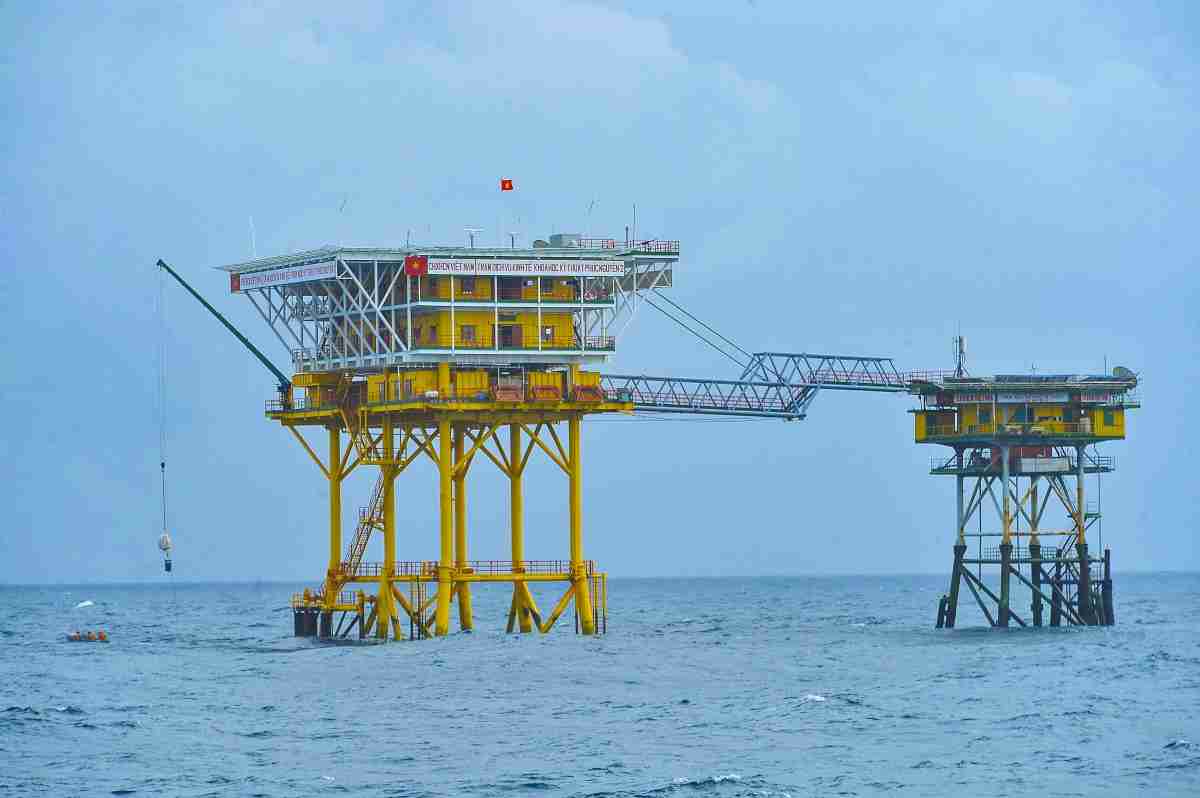
Pic Courtesy-Vietnam News Agency

(The views expressed are those of the author and do not represent views of CESCUBE.)

P
About Pankaj Jha →

Senior Research Fellow at Centre for Security & Strategic Studies.
ADVERTISEMENT

Related Strategic Analysis