Role of Russia in BRICS- An Audit Report
Officially formed in 2006, BRICS is the grouping of five emerging economies in the world comprising of Brazil, Russia, India, China, and South Africa (joined later in 2010). Initially it started as a pressure group which met on the side-lin...
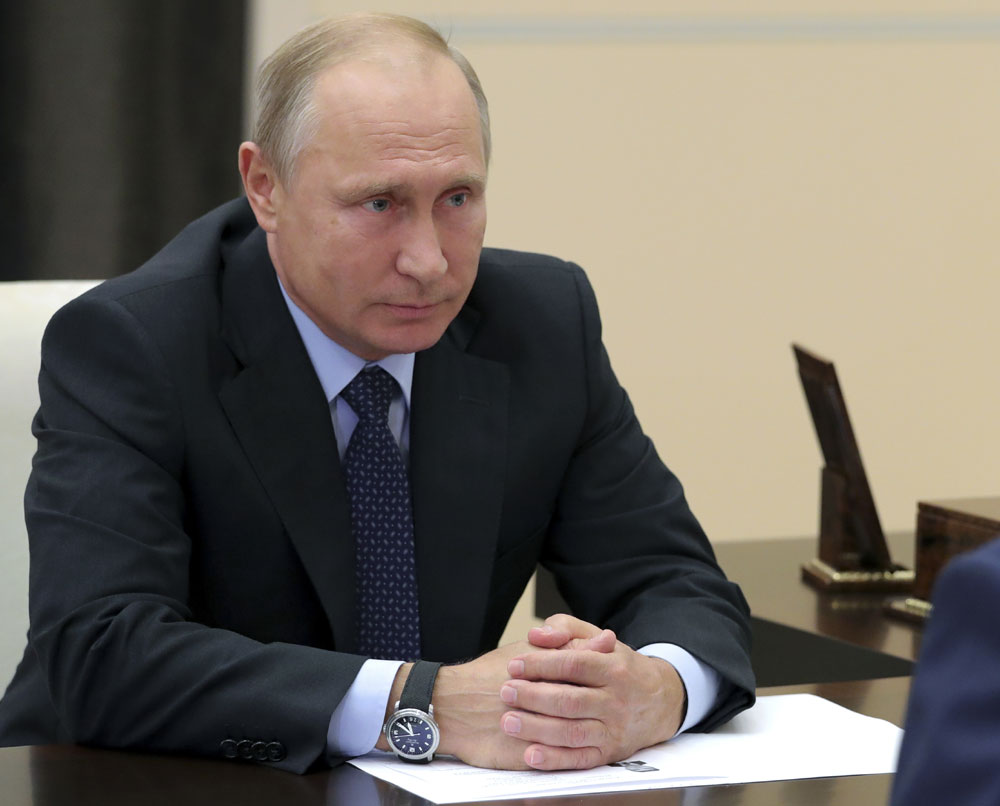
On November 17th, 2020 the 12th annual BRICS summit was hosted by Russia, the summit being virtual due to the pandemic. The theme for this year was “BRICS Partnership for Global Stability, Shared Security and Innovative Growth.” Amidst this unprecedented health and economic crisis, the major focus of the summit was the practical and effective measures to fight the health crisis and help the recovery of economies. In the conference, Russian President Putin said "The task of developing collective BRICS steps to combat infections, increase interactions between anti-epidemic departments, and protect the life and health of our citizens came to the fore." He also emphasized the need to boost the BRICS Vaccine Research and Development Center, which was agreed upon in 2018, as he also talked about focusing on rebuilding the global value chain and international trade.
Among all 5 member countries, Russia has always taken a proactive role in promoting cooperation among the member countries. It was Kremlin that put new vigor in BRICS, post-financial crisis. Since the disintegration of the USSR, followed by the dominance of the west in almost all the international organizations and Financial Institutions. Moscow has been struggling to alter the world order and seize its influence in global politics. For Russia, BRICS provides a platform to coordinate with influential blocks on the common interest of “aversion to western hegemony” and to promote the concept of a multipolar world order and strengthen its stance against the efficiency of unipolar world order. Unlike G-8 or G-20, BRICS does not suffer from the dominance of the west providing an opportunity to Russia to have greater influence and push its agenda. Post-2014, after the annexation of Crimea, Russia faced sanctions from the west, and the need for a grouping like BRICS became all the more important for Kremlin. Russia undertook a policy shift from the integration of Greater Europe towards Greater Eurasia. BRICS doesn't only help Russia to create a counter-narrative against the claims of the west that Russia is isolated internationally. It also helps to provide a much-needed stimulus to the Russian economy. The “UFA declaration in 2015” established the New Development bank in order to pool the resources for infrastructure and realize the sustainable development goals for the member countries for which Russia has been pushing for a long. New regional office of NDB was established in Sau Paulo recently. For Russia, it has always been more about the political side of the cooperation as BRICS is central to the interest of the Kremlin when it comes to the post-American world order and serves as a key instrument for Russia to overturn the existing world order. It looks forward to transforming BRICS into a full-fledged mechanism to coordinate on issues of international and economic importance. Russia took the chairmanship of BRICS in 2019 and promoted its aims to enhance foreign policy coordination with the member countries at International Platforms. Putin even called for the members to take the initiatives to take a leading role at the United Nations.
Russia looks forward to interacting with countries that are interested in enhancing cooperation on an institutional level. And in order to do that Kremlin is looking towards the South to strengthen its political, economic, and security interests. It is exploring all regions to develop its influence and BRICS proves to be an ideal platform to provide an opportunity to expand its presence in regions like South America by fostering relations with Brazil. Russian re-engagement in the African continent has also accelerated, in 2018 on the side-lines of the BRICS summit Russia signed the Southern African Development Community (SADC) in South-Africa. For the first time, Russia-China and South Africa conducted a naval exercise in 2019. However, currently, the economic ties with Brazil and South Africa remain at low due to Russia's own economic decline. India remains an all-time friend with strategic relations and a developed defense ties.
Faced with western sanctions Moscow is looking to enhance ties with BRICS countries, especially with China. The China-US trade war has worked well for Russia bringing Moscow and Beijing closer. The cooperation among both countries sends out a strategic signal. If we try to look at the bilateral trade data of Russia with the other member countries, it is lopsided. In the year 2018 out of a total of $125billion total trade $108billion was just with China followed by India with just $11bn. This has led to the Russia’s dependency on China growing and is likely to grow till the western sanctions remain in place, even as both the countries share a common aversion to the United States and share a strategic partnership. The rise of China is not only worrisome for the US and India, Beijing's rising military influence is also a matter of concern for Moscow. Though without an economic base Russia runs the risk of ending up being a "junior partner" of China. The deeper geopolitics as per many reflects that China and Russia can only be allies of convenience. Currently, China is the largest trading partner of Russia. However, the current economic situation in Russia and China’s different view on the future of global order is going to have some impact on the BRICS, thus challenging the ambitions of Russia to play a more influential role on the global level.
There are two broad categories in which the debate around BRICS can be summed up one which calls it a major force emerging in the East against the West, and another that calls it the grouping of diverging interest with minimal achievement. The diverse economic, political, and security interests of all the members will always be an impediment and contradiction is likely to grow. According to an article published in The Diplomat by Rajeshwari Pillai Rajagopalan, China and Russia have an anti-American political goal for the grouping, which sits very uneasily with Indian interests, considering India has invested significantly in building and nurturing its bilateral ties with the United States as well as engaging in strategic minilaterals such as the Quad, and various trilaterals in the Indo-Pacific, but the grouping is here to stay, its flexibility and cooperation approaches on common interests are the characteristics that would keep the grouping together despite growing tensions between member countries. BRICS has always refrained from establishing it as anti-west thus providing its members to be more flexible in their foreign policies. However, the possibility of this cooperation to convert into a military alliance is very unlikely.
The cooperation among BRICS nations is crucial for Russia to erase the tag of regional power and become a key player in the global order if not a super-power. There is huge potential among the rising economies if they could keep their bilateral differences at bay and cooperate on the common interest areas. The member's focus on the development of institutional capacity and intra-BRICS cooperation is crucial for the future of the grouping. It is yet to reach its maximum potential, even considering all the constraints. There still lies massive potential in different avenues, be it political, economic, or strategic. BRICS remains an important grouping for Russia to put forth its global aspirations and make a comeback at the global theatre as a key player.
References
[1] https://eng.globalaffairs.ru/articles/10-years-of-brics-what-keeps-5-headstrong-powers-together-in-times-of-global-disunion/
[2] https://eng.globalaffairs.ru/articles/greater-eurasia-in-the-indian-century/
[3] https://thediplomat.com/2020/11/contradictions-grow-amid-another-brics-summit/
[4] https://thedeankriel.files.wordpress.com/2014/08/russias-role-in-the-brics-union.pdf
[5] BRICS umbrella to increase India, Russia collaboration on artificial intelligence, India News News | wionews.com
[6] https://indepthnews.net/index.php/the-world/russia/3955-five-brics-countries-accentuate-un-s-central-role-in-international-affairs
[7] https://thediplomat.com/2017/09/2017-brics-summit-post-doklam-india-china-meet-in-xiamen/
[8] https://spectator.clingendael.org/en/publication/brics-useful-framework-russias-global-agenda
[9] https://thediplomat.com/2020/11/why-the-brics-grouping-is-here-to-stay/
[10] https://www.wsj.com/articles/this-group-of-nations-is-a-few-brics-short-of-a-load-11600363751
Pic Courtesy-The Daily Pioneer
(The views expressed are personal.)

Ragini Kashyap is a graduate from Delhi University and is currently pursuing Masters in Politics with specialisation in International Relations from Jawaharlal Nehru University, New Delhi. Her research area includes global political economy, Indo-China Relations and Emerging politics in the Indo-Pacific.