Russia and Its Unionship With Belarus- An Ally or a Stooge?
Russia and Belarus share a traditional bonhomie dating back to the 1990s after the fall of the Soviet Union. Both were the constituent republics of the Union and later became founding members of the Commonwealth of Independent States (CIS)....
Bilateral Relations
Russia and Belarus are in close proximity geographically and have a long history to reminisce. After the breakdown of the Soviet Union, the republics within began to drift apart. Independent Russia was concerned that former Soviet states are involved more with the West and the western military alliance-NATO-is expanding constantly eastwards subsiding Russian control in the region. Circumstances altered when Alexander Lukashenko became the Belarusian head in 1994. In February 1995, the leaders of Russia and Belarus signed the ‘Treaty of Friendship, Good-Neighbourliness, and Cooperation’. As per the historical records, among all the CIS members, Belarus has a deeper connection with Russia. The integration was celebrated with the formation of the 'Union State' in 1999 [1]. It is a supranational organization comprising Belarus and Russia with an aim to increase cooperation in economic and defense domains. Before this, both the countries adopted the ‘Treaty on Equal Rights of Citizens between Belarus and Russia’ covering the areas of health care, education, and employment.
Russia has undertaken continuous efforts to fully integrate Belarus into the Russian Federation, however, the country time and again refused the proposal and was affirmed to maintain the status quo. Russia considers Belarus to be a key partner in the region and its strategic value for Russia is continuously on the rise in light of the current geopolitical developments. The present chain of command of Russia, President Putin, establishes disparate power relations with Belarus as it would be a difficult task to completely subsume the country within Russia. Belarus has been undergoing existential changes in the last few years, the political leaders are embracing the Belarusian identity moving away from Russian dominance. This turning point came to the surface after Russia annexed Crimea and initiated a military intervention in Eastern Ukraine back in 2014. The relationship got strained thereafter.
Belarus and Russia were going through major ups and downs during 2020. Belarusian leaders were not content with increased interference by Russia in its domestic politics and there were various economic setbacks in the same year. The countries are stepping forward to mend their ties as they are interdependent on each other. Russia is an important trade partner and a crucial export market for Belarus. Russia accounts for 49 percent of the Belarusian foreign trade. As per 2021 figures, the mutual trade is calculated to be 40 billion USD among which 16.4 billion USD is Belarusian exports to Russia and 23.7 billion USD is imported from Russia [2]. For Russia, the gateway to European markets is none other than Belarus. The country contributes significantly to the regional energy security of Russia, it is a true ally for safe and secure energy trade. Additionally, in November 2021, both the countries signed a comprehensive economic program and decided to formulate a joint military doctrine [3]. However, the most recent act of Belarus providing unhindered support to Russia’s war on Ukraine proves the relationship is one-sided and Belarus still exists in the shadows of the great military power Russia. Does it make Belarus an unconditional ally or just a mere pawn in geopolitical chess?
In Support of Russia
Belarus held peace talks between Russia and Ukraine in 2015 and now it has opted to facilitate the Russian invasion of Ukraine. The country never officially recognized Crimean annexation. In the past years, Belarus has always been cautious and aware of sustaining an independent foreign policy making sure that the Russian military does not enter its territory. Belarus wishes to maintain affinity with Russia but not at the stake of its own independence. However, growing economic reliance on Russia impedes the country to establish stringent boundaries with this gigantic neighbor.
Belarus is isolated from global politics due to its undemocratic state of affairs, its position has deteriorated extensively because of high levels of corruption and human rights incidents in the country, and even the political regime is actively suppressing the democratic movements. Utter disregard for the international norms and lack of transparency in the administration is widening the chasm between Belarus and the western powers.
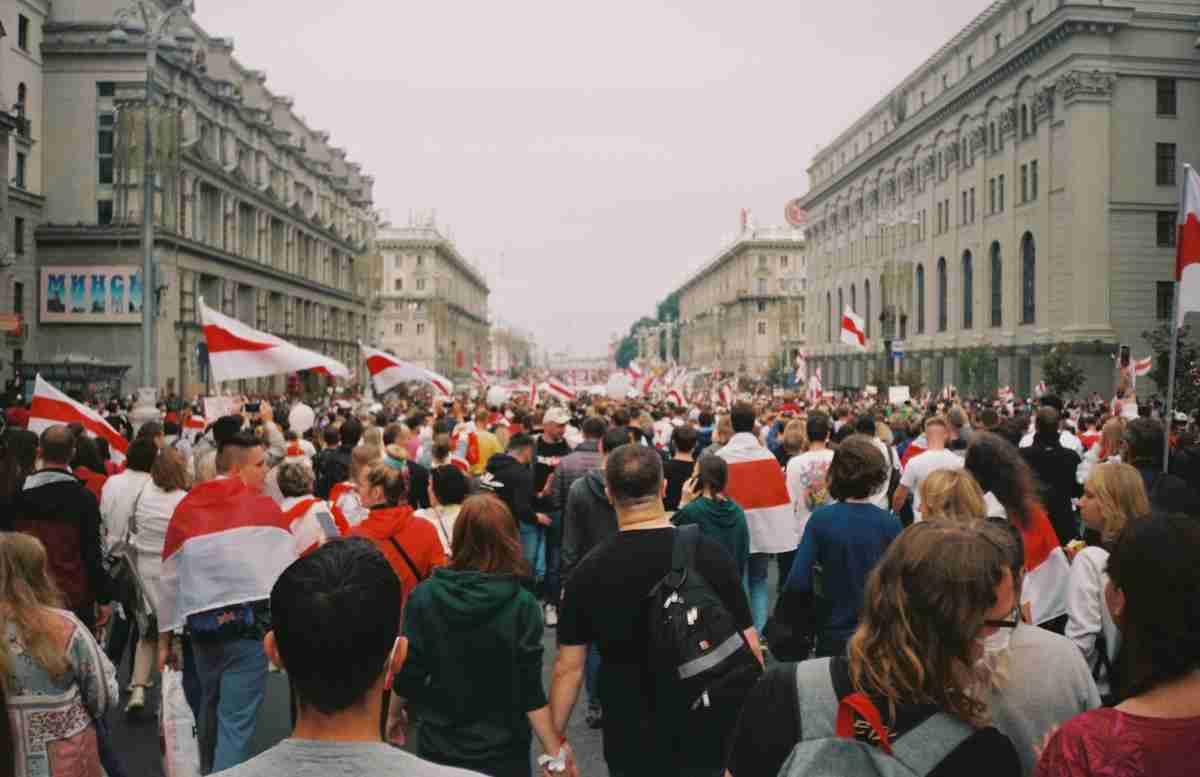
As Belarus feels cornered in the global arena, the country is in a state of compliance with all the demands raised by Russia. Belarusian leadership Lukashenko withered away from the neutrality clause from the country's constitution and publicly announced complete allegiance to Russia [4]. All these events led Belarus to accept the deployment of Russian troops on the Belarusian-Ukrainian border before the full-fledged invasion launched on the evening of February 24. The response of the citizens of Belarus was different, they continue to protest against the enrichment of Russia-Belarus military ties. The people are against the war in the region for a very long time now, albeit the political regime has claimed to conduct a national referendum three days after Russia entered Ukraine to scrap the country's constitutional pledge to remain nuclear-free. Although Belarus refused any direct involvement of its own military troops to support Russian aggression but has given freeway to Russia to use its grounds to execute attacks including stationing nuclear weapons.
Consequences
Belarus is under diplomatic fire as the international community collectively rebukes the invasion. The country is also facing unprecedented sanctions on its defense industry and financial institutions just like Russia. Experts suggest that closer cooperation with Russia has become extremely burdensome and destructive for Belarus. Sanctions have been slapped on Belarusian Defence Minister, two large state-owned banks, several security forms having ties with Russia, and many more [5]. Additionally, Belarusian banks are banned from the SWIFT global financial messaging system after Russia faced the same. Diplomatic relations with the US, UK, and EU countries are now edgy.
The relationship between Belarus and Ukraine has been disrupted for years to come. Ukraine is a crucial trading partner, Belarus exports a large amount of oil and electricity to the country. Ukraine has decided to forbid any nexus with Belarus which opened its borders to Russian attack. Belarus shares around 700 miles of border with Ukraine and has a historical connection, however, the Lukashenko regime owes to Russia for assisting him in continuing his political and autocratic journey [6]. Russia is currently on the path to expanding its sphere of influence in the region and gradually seizing the weaker countries i.e. the former Soviet states and building a 'Great Russia'. President Putin once declared in an article that, “Russian, Ukrainians, and Belarusians are all descendants of the Ancient Rus, which was the largest state in Europe in the period of 9th century with its capital in Kyiv” [7].
The bigger picture here is that by supporting the Russian invasion even further after being reprimanded by the international community, the Lukashenko government is endangering the country's internal and external sovereignty. The government has already sacrificed the democratic aspirations of the people and entirely ignored their concerns regarding support to Russia in its selfish interests. However, the state media has confirmed that Belarusian leadership is willing to aid Russia to whatever extent necessary. In conclusion, Belarus is going to pay more costs than gain any benefit from the Russian invasion of Ukraine. It has become a mere staging ground for the Russian military.
References
[1]https://www.orfonline.org/expert-speak/russia-belarus-relations-future-union-state-65288/
[2]https://mfa.gov.by/en/bilateral/russia/
[3]https://theconversation.com/ukraine-invasion-how-belarus-has-become-russias-pawn-178072
[4]https://www.fpri.org/article/2021/10/examining-belarus-growing-reliance-on-russia/
[5]https://time.com/6151347/belarus-russia-ukraine/
[6]https://www.npr.org/2022/03/11/1085548867/belarus-ukraine-russia-invasion-lukashenko-putin
[7]https://www.trtworld.com/magazine/why-belarus-supports-russia-in-the-ukraine-crisis-55216
Pic Courtesy-
(The views expressed are those of the author and do not represent views of CESCUBE.)

Poonam Jindal is post graduate in International Relations from O.P. Jindal Global University. She did under- graduation in Political Science from Delhi University. She has experience in primary and secondary research and has done a certificate course on Conflict Management from Bar-Ilan University in Israel. Ms Jindal has studied East Asian Politics at National Chengchi University in Taiwan and co- authored a paper on China Military Modernization. Her research interests include China Studies, Geo-politics in Asia, Diplomacy and Security Issues. She is Research Assistant with CESCUBE.