Singapore's Soft Power in global politics
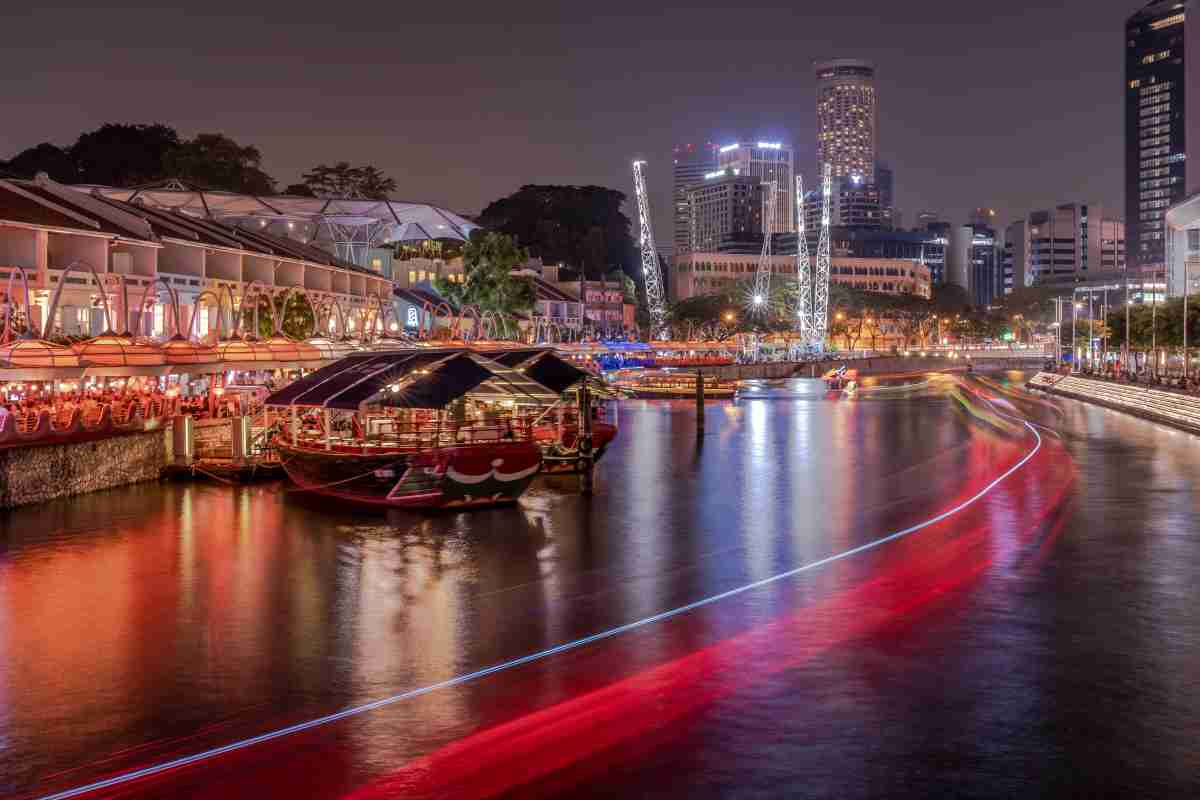
Singapore as a small country in the world but in global ranking of soft power, this country has gained high position in comparison to other smaller countries. So, what are the main characteristics of Singapore's soft power that makes this s...
Judging from the frequently published indicators of national competitiveness by the World Economic Forum and by Foreign Policy magazine for ranking globalization, the Republic of Singapore has a disproportionate image relative to its territory. The country has consistently ranked among the five most competitive and globalized countries in the world. In many ways, this reflects the result of the government's strategic decision to compensate for territorial modesty, political vulnerability, and resource scarcity by expanding national values through a series of soft power measures since the early 1960s. The origins of Singapore's soft power can be traced back to the political situation of the country's ruling elites with difficulty in affirms the island's socio-political differences in the post-colonial Southeast Asian environment.
The art of using soft power is ingrained in the style of the ruling People's Action Party (PAP). The verbal power of community identification in the political economy is no different. Given the sheer geography of a resource-scarce island with a large population, economic autocracy was not a viable option for the newly independent government.
In addition, Singapore's soft power has stretched the concept of diplomatic mediation to include change leadership. In this way, Singapore transcends its geographical destiny by enhancing its global brand as a good international citizen, albeit not a country without envy from its neighbours in the region area.
In international relations, as a small country, Singapore does not aim to change the global system, but only seeks to create political and economic space for itself within the existing structure, Singapore should move towards the Blue Ocean Strategy, which means reinventing competition and moving into markets. In addition, Singapore fully plays the role of a member with good international standing, such as participation in United Nations Peacekeeping Operations (PKOs) - with about 30 PKOs since the 1970s.
Singapore is full of food festivals that are both cheap, delicious, and fun - Tiger Beer was served with chilli crab at the Singapore Food Festival in London 2006. Singapore also hosts the annual World Food Reviews. years with famous chefs come here to serve their delicious dishes. Furthermore, the Culinary Institute of America has established a branch school in Singapore.
Singapore positions itself as the Land of Opportunity for the whole of Asia. Singapore promotes itself as the crossroads of East and West and ensures that Singapore is connected to global systems but rooted in Asian cultures. Singapore's mission is to partner with other cities around the world in terms of nation, culture, communication, and connectivity.
In Southeast Asia, a Singapore, though very small in terms of area, has created its own soft power with the brand name "best city in the world to live and work". Soft power with a flexible and flexible foreign policy has been increasingly asserting its position in international political and economic life.
Singapore's soft power strategies
There are various strategies Singapore uses to strengthen its soft power. First, being an attractive country and a safe city to live and work in is an important part of this country's soft power, as people internalize Singapore's values, internalize how of Singapore, and appreciate the qualities that Singapore stands for. Second, it's network strength. Third, there is financial power. Fourth, there is model power including a disciplined democracy. Fifth, the rare multi-religious cultural strength. For example, M. Riklis, an Israeli, was the first conductor of the Singapore Symphony Orchestra. Sixth, Singapore is the center of malls. Seventh, Singapore is very future-oriented. Eighth, Singapore has strong courage for its beliefs, and can even withstand pressure from superpowers, as the case of Michael Fay has delusional. Ninth, Singapore has a policy of expanding the talent pool by welcoming foreign talents. Tenth, Singapore ensures that it has a backup source. Eleventh, success in many areas helps: this is known as an efficient system and synergy, just as Singapore's anti-corruption reputation helps Singapore attract FDI. Below, Singapore discusses some of these strategies in more detail.
How does Singapore achieve a good image?
This starts by setting clear goals for Singapore as a place many people want to be. Singapore aspires to be clearly separate from the region: to attract FDI, Singapore must create a First World environment within a Third World region. Singapore asks foreign investors: what constitutes such a First World environment? The answers have arrived: clarity, certainty, predictability is desired but not local; corruption and an uneven playing field. Therefore, Singapore has persevered and introduced the following pro-business policies: (1) Consistent: strictly adheres to pro-business policies, like Toyota, always providing high quality products. (2) Backup with multiple careful processes delivers what the business wants.
a) The Power of Singapore's Ideas
An important aspect of soft power is Singapore's intellectual strength: Singapore's ideas, which are seen as important to development, are seen as effective, original, and innovative. Because they are so familiar to us, Singaporeans do not appreciate their impact as much as foreigners who meet them for the first time.
b) Urban planning
Building on its own success as an attractive and well-planned city, Singapore has exported its expertise in urban planning and urban development.
c) Center power
Countries cannot fail to meet Singapore in any field: in the banking and international sectors; in education; health care; transportation and logistics; and in new industries such as IT.
d) Future power
Singapore could plan and predict the future quite well. The country also serves as the standard in many areas, such as defense purchases, as it practices accountability very carefully and is free from corruption.
e) The power of persuasion
Many nations admire Singapore's principled strength and courage in the face of larger nations.
f) The Power of Openness
Singapore can understand its limitations and take electronic measures to address them.
g) Power "Lee Kuan Yew"
Mr. Lee Kuan Yew is a great asset to Singapore. It is because of his international stature that Singapore has access to the top levels of power, and Singapore is highly respected and admired.
h) Singapore Armed Forces as backup
Soft power is attractive, but in the final analysis it needs to be backed up by hard power.
Other assets: A strong economy is another asset for Singapore. Its astute foreign policy is another powerful asset. As a result, Singapore earns the respect of those who understand the foundations of soft and hard power.
If a state can set the agenda for others or shape their preferences, it can save a lot on carrots and sticks. But rarely can it totally replace either. Thus, the need for smart strategies that combine the tools of both hard and soft power - smart power in the future.
Pic Courtesy -Tamal Mukhopadhyay at unsplash.com
(The views expressed are those of the author and do not represent views of CESCUBE.)

Nguyen Thu Thuy is a Fellow at Institute of Scientific Information, Ho Chi Minh National Academy of Politics.