Sri Lanka’s Resurgent Religious Radicalism
The term 'radicalisation' is one of the most important concepts in understanding the nature of violence and conflicts around the world. The case of Sri Lanka is instructive in gaining a better knowledge of the various aspects of Islamic rad...
Since the end of a violent civil war that lasted from 1983 to 2009, Sri Lanka has witnessed sporadic violence. The government, which is dominated by Sinhalese Buddhists, who make up a huge majority in Sri Lanka, fought the Tamil Tigers, a terrorist group that originated from the Tamil minority, which is mainly Hindu and accounts for around 15% of the country's population. Minorities like Muslims and Christians, who make up around 8% to 10% of the population, have historically endured discrimination. More than 250 people were killed and almost 400 more were injured in Sri Lanka's horrific terror assaults on Easter Sunday, which took place in the towns of Colombo, Negombo, and Batticaloa. Since the end of the civil war in 2009, this is the bloodiest attack in Sri Lanka between the Liberation Tigers of Tamil Eelam (LTTE) and the Sri Lankan government. Because the terror attacks include the island's two religious minorities, Christians and Muslims, they highlight fault lines that are not ethnic but religious. Furthermore, these fault lines highlight the Islamic State in Iraq and Syria (ISIS ) of violent extremism, which is linked to local organisations such as the National Thawheedh Jamaath (NTJ) and Jammiyathul Millathu Ibrahim (JMI).
For decades, the island served as an eco-space for Islamic radicalization, but the development of ultra-Sinhala-Buddhist nationalism following the end of Eelam War IV worked as a tipping point. Hard-line Sinhala-Buddhist elements project a sense of insecurity, which is viewed as the underlying background. The primary 'other' switched from Tamils to Sri Lankan Muslims over time. Aside from intercommunal strife, the international jihadist network aided the radicalization of the island's Muslim population. Political unrest caused by disagreements between the then-president and the prime minister served as a welcome diversion from the more pressing security and development concerns. De-radicalism methods taken by successive Sri Lankan administrations in reaction to violent manifestations of radicalisation were largely military in origin. The socio-economic and political aspects of Islamic de-radicalization remain in their infancy, if not completely absent.
Sri Lanka's Prevention of Terrorism Act (PTA) enacted new 'Deradicalization from Holding Violent Extremist Religious Ideology' laws on March 12, 2021. Following the 2019 Easter terror attacks, the state began utilizing the law against Muslims, which it had previously only used against Tamils. Law enforcement can transfer those who surrendered or were arrested under the PTA, or emergency regulations imposed following the Easter assaults, to ‘rehabilitation' under the deradicalization regulations. The backlash against Sri Lankan Muslims in the aftermath of Easter has been fierce and violent. The Easter attacks and the anxieties they sparked have been utilized by nationalist politicians and religious leaders from the majority Sinhalese Buddhist ethno-religious group to reinforce a narrative that blames Muslims collectively for growing "extreme." For nearly a year, the Rajapaksa government infringed on Muslims' religious liberties by forcing cremation rather than burial for anyone who died as a result of Covid-19. Despite the fact that the program had no medical basis, the administration argued it was required to preserve public health. After a lot of internal and international opposition, it was scrapped in March.
The UN Human Rights Council in Geneva is debating a proposal that would improve monitoring of Sri Lanka's deteriorating human rights situation and establish a framework to gather and analyse evidence of violations for use in future trials. Sri Lanka is also urged to "examine the Prevention of Terrorism Act and ensure that any legislation aimed at countering terrorism complies completely with the State's international human rights and humanitarian law commitments," according to the proposed resolution. The European Union, Sri Lanka's second-largest trading partner, asked Sri Lanka to revise the PTA and bring it up to international standards at a meeting in January. Sri Lanka has previously undertaken to ratify and put into effect several human rights treaties to benefit from preferential EU tariffs.
Terrorist assaults in Sri Lanka show that violent extremism is spreading its tentacles and blooming on existing sectarian fault lines between Sinhala Buddhists and Muslims. This is a wake-up call for South Asian majoritarian regimes to acknowledge that internal problems are no longer domestic, and that minorities' rights, freedom, and security must be protected.
Notes
1. Sri Lankan Muslims pressured to curb rise of extremism - Nikkei Asia: https://asia.nikkei.com/Politics/Sri-Lankan-Muslims-pressured-to-curb-rise-of-extremism
2. Radical Conflict and the Rationalization of Violence in Sri Lanka on JSTOR: https://www.jstor.org/stable/2759002
3. After the Easter Bombings, Sri Lanka Needs Effective Initiatives for Countering Violent Extremism - AIIA - Australian Institute of International Affairs: https://www.internationalaffairs.org.au/australianoutlook/after-easter-bombings-sri-lanka-countering-violent-extremism/
4. Easter Attacks in Sri Lanka : Terror and the Rise of Violent Extremism | Economic and Political Weekly: https://www.epw.in/journal/2019/20/commentary/easter-attacks-sri-lanka.html
5. Two Years After Easter Attacks, Sri Lanka’s Muslims Face Backlash | United States Institute of Peace: https://www.usip.org/publications/2021/04/two-years-after-easter-attacks-sri-lankas-muslims-face-backlash
6. After Sri Lanka’s Easter Bombings: Reducing Risks of Future Violence | Crisis Group: https://www.crisisgroup.org/asia/south-asia/sri-lanka/302-after-sri-lankas-easter-bombings-reducing-risks-future-violence
7. Deconstructing Buddhist Extremism: Lessons from Sri Lanka: file:///C:/Users/GAURAV/Downloads/religions-12-00970.pdf
8. Sri Lanka must address root causes of religious extremism: UN envoy - The Hindu: https://www.thehindu.com/news/international/sri-lanka-must-address-root-causes-of-religious-extremism-un-envoy/article29261867.ece
9. What is behind the anti-Muslim measures in Sri Lanka? | Opinions | Al Jazeera: https://www.aljazeera.com/opinions/2021/4/12/what-is-behind-the-anti-muslim-measures-in-sri-lanka
10. A Scholar of Extremism on How Religious Conflict Shapes Sri Lanka | The New Yorker: https://www.newyorker.com/news/q-and-a/a-scholar-of-extremism-on-how-religious-conflict-and-terrorism-shapes-sri-lanka
11. Identifying religious extremism-based threats in SriLanka using bilingual social media intelligence | IEEE Conference Publication | IEEE Xplore: https://ieeexplore.ieee.org/document/9313010
12. The New ‘Other’: Islamic Radicalisation and De-Radicalisation in Sri Lanka - N. Manoharan, Drorima Chatterjee, Dhruv Ashok, 2021: https://journals.sagepub.com/doi/abs/10.1177/09749284211047723?journalCode=iqqa
13. Deradicalisation regulations stoke more radicalisation in Sri Lanka | East Asia Forum: https://www.eastasiaforum.org/2021/11/30/deradicalisation-regulations-stoke-more-radicalisation-in-sri-lanka/
14. Sri Lanka: ‘Religious Disharmony’ Order Threatens Minorities: https://www.hrw.org/node/378242/printable/print
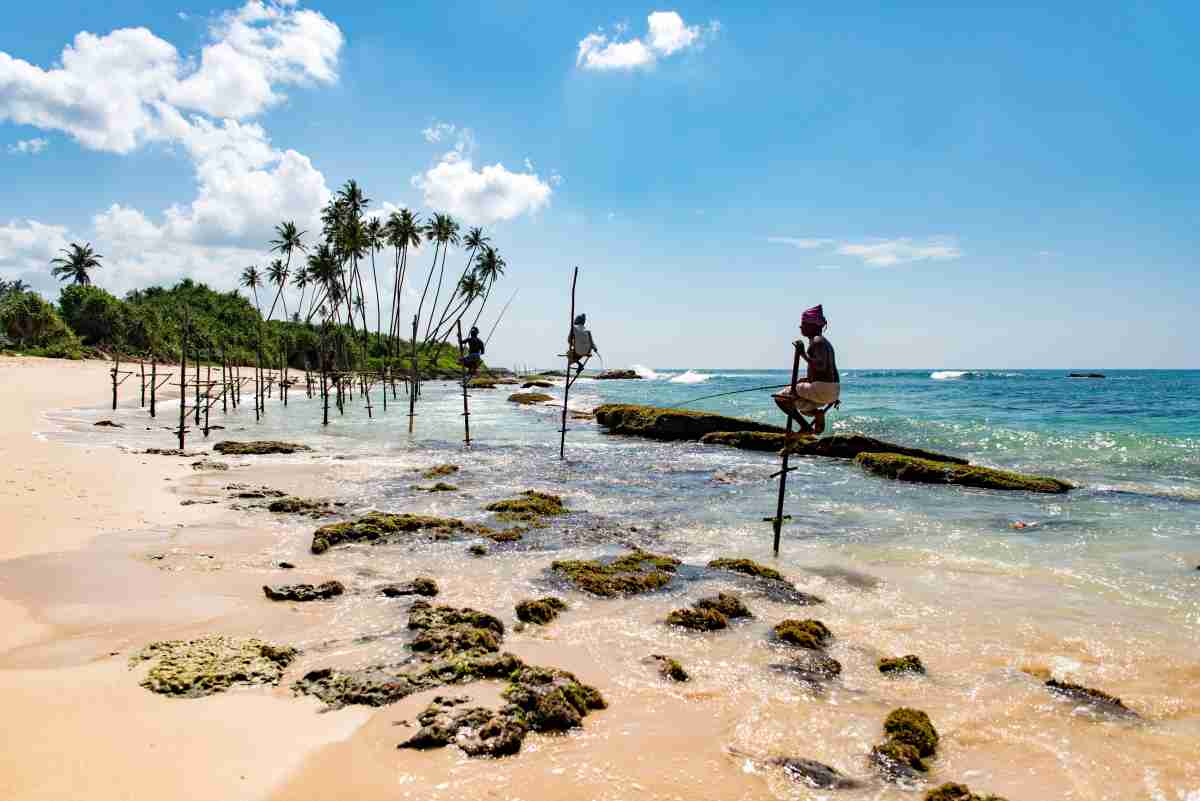
Pic Courtesy-Daniel Klein at unsplash.com
(The views expressed are those of the author and do not represent views of CESCUBE.)
Gaurav Sen is a graduate from Delhi University. He is currently doing his Masters in International relations from Jawaharlal Nehru University, New Delhi. His research area includes IR theories, Great Power competition in Indo-Pacific, Maritime Security, Emerging Warfare Concepts, and Military Strategies.