Syria-Ten years after war
"Arab Spring" became the turning point in the history of the Middle East, especially Syria, among others. The movement that started in December of 2010 Changed the face of many countries in the region. However, Syria stood out to be distinc...
Nevertheless, Arab Spring brought into daylight that running an autocratic regime is primarily done through the show of strength. Assad is the only leader that survived the turmoil of Arab Spring.
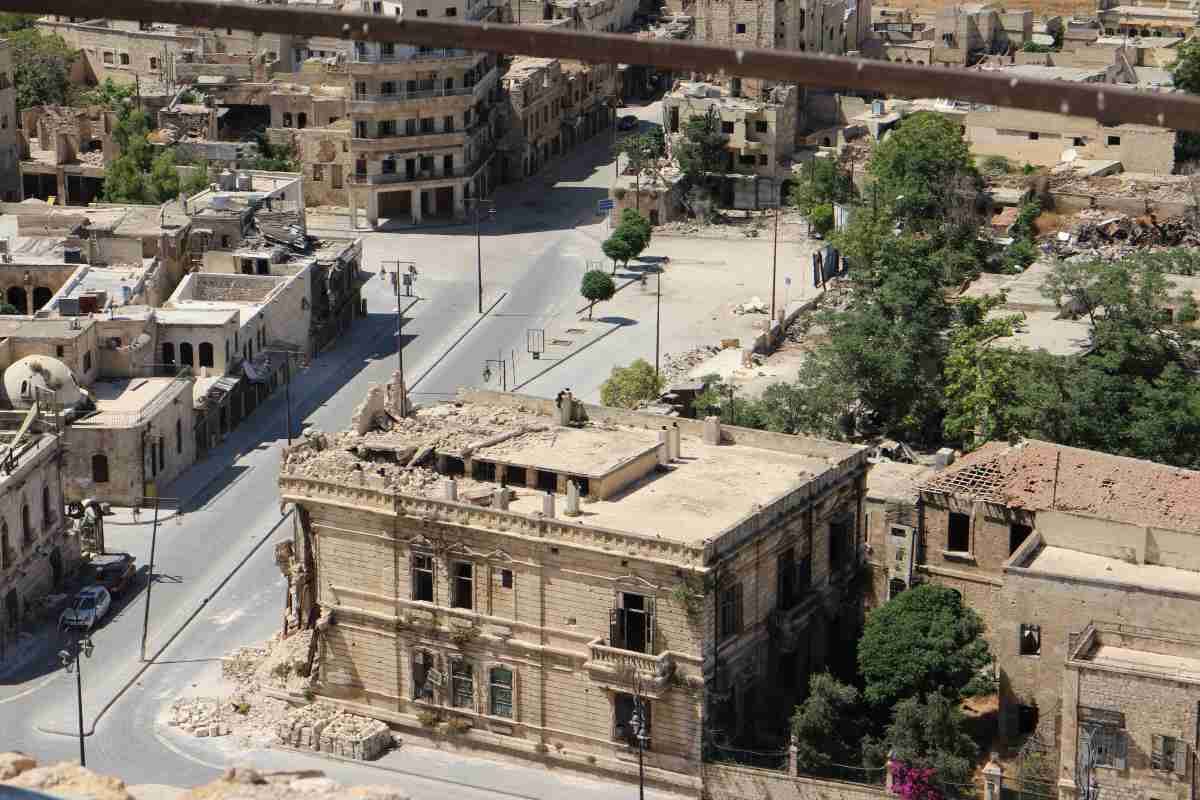
Once a paradise on its own, Syria is now in ruins and chaos of death and destruction. Peace and stability are a dream of Syrians with no hope of becoming a reality anytime soon. What once started as an anti-regime protest soon turned into a civil war.
Destruction of the Society
The decade-long war has decimated Syrian society. The mayhem that the war has caused is unfathomable. In the pre-war era, Syria's population accounted for nearly 22 million. Nevertheless, after a decade of war, more than half the population have been displaced. Around 5.6 million Syrians have been staying away from their homeland as refugees. To highlight the misery back at home, one would have to look at the figures of people internally displaced, which stands at roughly 6.7 million. The number of deaths varies from source to source; however, most estimates put it somewhere between 350000 to 550000. According to a UN report, more than half the pre-war population require some humanitarian help. The war has impacted the region's food supply, leading to almost 12 million people finding it hard to arrange a day meal. Children are one of the worst affected. Nearly five hundred thousand children are chronically malnourished. According to a report, around 2.45 million children have been out of the education system due to the schools' destruction, while 1.6 million are on the verge of losing school access. Syria, one day, might be rebuilt from the ashes of post-war detritus. However, the psychological trauma amongst the generations & henceforth would take decades to heal or, in some cases, remain for a lifetime. For example, around three-fourth of the Syrian refugees have posttraumatic stress disorder. To make things worse, access to mental health support is minimal. There are also cases of gender-based violence on the rise. To add to the wounds of the war, the pandemic has only exacerbated the miseries of the Syrian people.
Multiple Participants in the Chaos
After the decade long death and destruction, Syria has become the hotbed of geopolitical rivalry. To gauge the bigger picture, one must take a sweeping glance at the different players involved. One of the most brutal terrorist organisations, ISIS, gained prominence amidst the Syrian civil war in 2014. IT became the rallying point for the external powers to mark their presence in Syria. The US, in 2014, led a coalition to the region by deploying its troops to fight the menace of ISIS. They supported the Syrian Democratic Forces (SDF), an alliance of Kurd & Arab militias, to fight against ISIS in the northeast. Seeing the Assad regime on the brink, his old-time allies Iran & Russia stepped up to the occasion. Iran, through Hezbollah, a Shia militant group, stepped up its support for Assad's regime. Hezbollah deployed its fighters along with the Syrian Army.
The turning point of the war came when Russia joined the action in 2015. Russia launched airstrikes on the pretext of fighting ISIS; however, it also attacked the opposition rebel groups. Turkey, one of the most crucial players, has supported the rebel groups, especially anti-Kurd groups. Saudi Arabia & Qatar have been among the major suppliers of finances & weaponry to different rebel groups to counter their rivals, namely Iran and Saudi Arabia. If one would look at the current context, Syria has been divided among the various factions. The Assad regime has regained most of the territory except for areas northeast and northwest. The Kurdish forces control the northeastern region of Syria. While Turkey, along with its Syrian rebels, has created a 120 km long buffer zone on the borders. Jihadists have a small area under their control in the northwest of the country. To sum the essence in the words of a UN official, this is nothing more than the Balkanisation of Syria.
Economic Crisis and Regional Fallout
The war-torn country is suffering from a devastating economic crisis. According to the World Bank, the Syrian economy has witnessed a contraction of more than 60 per cent compared to 2010. The Syrian pound to dollar trade has shot up from 46 to a dollar to 3000 to a dollar. The inflation rate on consumer goods stands at a whopping 300 per cent. Corruption and bribery have aggravated the problems for the Syrian people. For example, for a trader to import wheat into Syria, he must pay the Kurds and the Syrian forces. The Kurds generally charge by the ton, whereas the Syrian forces charge some $3000 each load. Thus, eventually raising the price of the wheat in the market. The collapse of the Syrian infrastructure proves to be an obstacle in supplying humanitarian assistance to the population. The electricity needs of the country sustains on the functional 30 percent of electricity infrastructure.
The grim situation of the economy has severely impacted the health sector—forty-two per cent of the hospitals' function, with only 30 percent of healthcare workers left in the country.
Syria's economic crisis has a dwindling effect on its neighbours, namely- Iraq, Jordan, and Lebanon. In the words of the World Bank, the Syrian crisis has decreased the economic output of Iraq, Jordan and Lebanon and has contributed to the increase in the poverty level. It has also disturbed the labour market conditions.
The Lebanese bank crisis also had a cascading effect on the Syrians. The Lebanese bank served as a haven for the Syrian deposits.
Conclusion
Looking at the ground realities, one can only present a bleak picture. Despite the UN-mediated talks, peace is a distant reality for the Syrian. The presence of multiple actors with their narrow interest have bewildered the peace process. The Syrian crisis has repercussions for the neighbours and the extended region, i.e., the European Nations. The increasing refugee crisis in Europe has led to an imbalance in social harmony and increasing security concerns for the nations. With the Russian help, Assad has been able to consolidate his power. However, recapturing the areas is one part of the story but leading the country on the path of stability and reconstruction is different. Though Assad might have saved his regime with Russian help, his capabilities to bring back peace and normalcy is a reality too far. The trauma of a decade long war on the Syrians within the border and those living as refugees cannot be done away with any time soon. The perilous sea journey of many Syrians to Europe is the testimony of the fragility & vulnerability at home. Syria needs more humanitarian help than is in the offering. Assad has blocked the delivery of humanitarian aid (mainly food and medicines) to rebel-held areas despite a UNSC resolution about securing the supply lanes of the assistance. There can only be a political solution to the Syrian crisis. But that process would involve some give and take among the opposition factions. Reflecting on the current scenario, one could hardly expect many concessions from any of the parties involved.
References
1. https://www.cfr.org/article/syrias-civil-war
2. https://timesofindia.indiatimes.com/world/middle-east/timeline-ten-years-of-war-in-syria/articleshow/81491379.cms
3. https://reliefweb.int/report/syrian-arab-republic/10-years-10-facts-explain-syria-s-conflict
4. https://www.bbc.com/news/world-middle-east-35806229
5. https://www.economist.com/middle-east-and-africa/2021/03/13/ten-years-of-war-have-broken-syria-into-pieces
6. https://news.un.org/en/story/2021/03/1086872
7. https://digitallibrary.un.org/record/814715?ln=en
8. https://www.csis.org/analysis/syrias-economic-collapse-and-its-impact-most-vulnerable
9. https://www.reuters.com/article/us-syria-security-anniversary-economy-in-idUSKBN2B80NU
10. https://www.thenationalnews.com/business/economy/decade-long-syria-war-ravages-economies-of-neighbouring-iraq-lebanon-jordan-world-bank-says-1.1035027
Pic Courtesy –Aladdin Hammami at unsplash.com
(The views expressed are those of the author and do not represent views of CESCUBE.)

Aditya Kumar Singh is pursuing masters in International Relations from the School of International Studies, JNU. His interest area includes Indo-Pacific, West Asia(Israel), Nuclear diplomacy and India's security challenges. He is research intern with CESCUBE.