Takeaways from the US-China Summit Meeting
President Joe Biden and President Xi Jinping, in an attempt to normalize ties between the USA and China hampered by trade and security issues, met for a meeting that lasted over four hours on the sidelines of the Asia Pacific Economic Coope...
The two presidents commended the work done by their teams to talk about the development of principles for U.S.-China relations and emphasized the need to keep lines of communication open, avert disputes, honor the U.N. Charter, work together on projects of common interest, and handle the relationship's competitive elements responsibly. They hailed the productive recent conversations between their respective special envoys on climate change, which focused on issues such as operationalizing the Working Group on Enhancing Climate Action in the 2020s to expedite real climate action, as well as national initiatives to cut emissions in the 2020s and shared strategies for a successful COP28 [3].
Highlights of the meeting:
In recent years, US companies have looked to expand or relocate their China-based businesses to Mexico, Southeast Asia, India, and even back in the USA due to rising tensions between the two nations over issues like tariffs, semiconductor chips, surveillance, and China's growing militarization in the South China Sea [4]. APEC provides a common platform for discussion on economic matters and given this was the first time Presidents Biden and Xi met since their last meeting in Bali, Indonesia, this meeting between the leaders of the two major powers occurred with an understanding of fostering communication and cooperation amidst these increased geopolitical uncertainties and subsequently rising challenges in the global economic and trade sector.
As per a senior official of the US government, the discussion between the two leaders was frank and candid where President Biden was able to communicate his concerns and views while President Xi is reported to have responded with his own arguments. Topics during the meeting included bilateral, regional, and global challenges including Ukraine, Iran, Taiwan, the Middle East, and the Indo-Pacific alongside AI systems, climate change, and transnational drug trade [5]. Amidst strained bilateral relations due to issues like China's claims over Taiwan and the South China Sea, US export restrictions on cutting-edge technology, the spy balloon controversy and senior US officials regularly visiting China on several occasions this year to mend the damage, the meeting showed certain positive results like the resumption of high-level military communications and cooperating to stop the fentanyl supply entering the USA, however, challenges persist in the form of the so-called chip wars and Taiwan [6].
‘Dictator’ remark on Xi:
Following the discussions between the two leaders, President Biden held a solo press conference where President Biden’s earlier remark when he called President Xi a “dictator” was brought up. Back in June when this remark was made, China responded by calling it ludicrous and provocative, however, the altercation did not stop the two parties from having lengthy discussions at this meeting aimed to mend strained relations [7]. The Chinese foreign ministry called the remark an "irresponsible political manipulation", however, the state media of China portrayed the meeting in a positive light. A week prior to the summit, the tone and rhetoric of Chinese official media had already changed with media outlets abandoning their typical anti-US rhetoric in favor of messaging that emphasized cooperation and engagement [8].
Control over Fentanyl and related substances.
Prior to 2019, China was the primary source of illicit fentanyl transported into the USA as smugglers used methods like international mail and express consignment operations. Following up on the promise made in 2018 by President Xi to regulate fentanyl and related substances, China passed a law on 1 May 2019 that put all fentanyl and related substances under government control. As a result, direct shipment of US-bound fentanyl and related substances dropped to almost zero by 2022. This cooperative effort was officially suspended by China upon House Speaker Nancy Pelosi’s visit to Taiwan. When China started strictly regulating fentanyl-related substances, Mexican drug cartels got involved with both the production and distribution of illegal fentanyl in the USA. These cartels would buy precursor chemicals from China, mass produce fentanyl, and then transport it into the USA [9]. This meeting resulted in an agreement by China to act against Chinese companies that manufacture these chemical precursors to fentanyl [10].
Climate Change and Artificial Intelligence:
The USA and China reached an agreement to restart a climate cooperation working group and pledged a significant increase in the use of renewable energy. Announced just hours before Presidents Biden and Xi Jinping met, a public statement mentioned that the two sides have agreed to "operationalize" a suspended bilateral working group to "engage in dialogue and cooperation to accept concrete climate actions". In their international climate pledges for 2035, both countries pledged to reductions in all greenhouse emissions, including carbon dioxide, methane, and hydrofluorocarbons. The deal involves seeking to reduce emissions to limit global temperature rise to a critical threshold of 1.5 degrees Celsius [11].
The two presidents also talked about AI systems and agreed upon the associated risks when used in military or nuclear operations. In this regard, a senior US official stated that while both sides were "very much focused" on AI safety, no mutual declaration was out [12]. The current US administration has made AI safety a primary issue and alongside an executive order on the issue, has pushed hard for global regulations on military use of AI. Furthermore, the Chinese have also shown signals of being affirmative on this issue, particularly in terms of abandoning AI command-and-control systems for nuclear weapons. However, so far nothing officially from the meeting explicitly stated the link between AI and nuclear weapons being discussed[13].
Resumed Military Communication:
Both counterparts also agreed to resume talks between their military after several years of mounting fear about a possible clash over Taiwan. At the press conference, Biden stated that the two countries had reached a number of agreements, including China's commitment to reopen military communication channels that were closed after then-US House Speaker Nancy Pelosi visited Taiwan in August 2022 [14]. The agreement comes as US military authorities repeatedly expressed concerns about a lack of communication with China, especially as the frequency of risky or unprofessional incidents involving the two countries' ships and aircraft has increased [15].
While both sides were able to reach an agreement on this matter, disagreement over the issue of Taiwan has remained persistent. During the press conference, President Biden reiterated the USA's position on Taiwan's claims to sovereignty [16]. President Biden highlighted that the “One China” policy has remained consistent throughout decades and administrations. He reaffirmed that the USA opposes unilateral changes to the status quo from either side and expects cross-strait disagreements to be settled peacefully urging China to exercise prudence in its military operations in and around the Taiwan Strait [17].
USA's position on the matter is critical because it balances recognition of the 'One China' policy with a promise to support Taiwan's self-defense, suggesting a strategic approach to discourage aggression without publicly contesting China's territorial claims [18]. Conversely, according to a senior US official, President Xi stated that China prefers peaceful reunification with Taiwan, but also continued to discuss circumstances in which force could be employed. According to the same official, President Xi was attempting to convey that China is not planning a huge military strike on Taiwan, but this does not affect the USA’s approach [19]. The USA’s acceptance of the 'One China' policy indicates that it does not officially recognize Taiwan as a separate entity from China but the promise to militarily support Taiwan, on the other hand, indicates a firm intention to ensure Taiwan's defense capabilities against prospective aggression. This twin strategy strikes a compromise between preserving diplomatic relations with China and ensuring Taiwan's security [20].
Conclusion:
This bilateral meeting happened with an understanding of mitigating the global challenges as well as the subsequent effects of their rivalry affecting the international state system. Furthermore, the meeting saw some of the complex issues being addressed including the situation of Taiwan and the halted communication between the militaries of the two nations which had led to numerous near-miss incidents. While, concerns over transnational challenges like AI, climate change, and narcotics flow were addressed without disarray, the issue of Taiwan remained persistent. Both sides have maintained their original position on Taiwan’s sovereignty, however, they actively tried to find a common ground away from an armed conflict on the issue. Here, it should be noted that the issue of Taiwan has had an excessively negative effect on the US-China ties, however, both sides were able to convey their position on rhetoric and policies simultaneously conveying that they do not seek military confrontation. In this way, the meeting can be called a success as it could potentially pave the way for future cooperative communication and efforts on much larger issues in the backdrop of growing geopolitical uncertainties.
Endnotes:
1. Saumya Roy, Will Xi and Biden mend US-China relations at the APEC summit?, Al Jazeera, 15 November 2023 https://www.aljazeera.com/economy/2023/11/15/will-xi-and-biden-mend-us-china-relations-at-the-apec-summit
2. Readout of President Joe Biden’s Meeting with President Xi Jinping of the People’s Republic of China, The White House, 15 November 2023 https://www.whitehouse.gov/briefing-room/statements-releases/2023/11/15/readout-of-president-joe-bidens-meeting-with-president-xi-jinping-of-the-peoples-republic-of-china-2/
3. President Xi Jinping Meets with U.S. President Joe Biden, Ministry of Foreign Affairs of the People’s Republic of China, 16 November 2023 https://www.fmprc.gov.cn/mfa_eng/zxxx_662805/202311/t20231116_11181442.html
4. Saumya Roy, Will Xi and Biden mend US-China relations at the APEC summit?, Al Jazeera, 15 November 2023 https://www.aljazeera.com/economy/2023/11/15/will-xi-and-biden-mend-us-china-relations-at-the-apec-summit
5. Vani Mehrotra, 'Look, he's a dictator': Joe Biden on Xi Jinping after 4-hour summit talks in US, India Today, 16 November 2023 https://www.indiatoday.in/world/story/joe-biden-says-chinese-president-xi-jinping-is-dictator-us-china-summit-california-san-francisco-2463477-2023-11-16
6. Kelly Ng and Fan Wang, China hails Xi-Biden meeting despite 'dictator' remark, BBC, 18 November 2023 https://www.bbc.com/news/world-asia-china-67447121
7. Trevor Hunnicutt and Jeff Mason, Biden calls Xi a dictator after carefully planned summit, Reuters, 16 November 2023 https://www.reuters.com/world/biden-calls-xi-dictator-after-carefully-planned-summit-2023-11-16/
8. Kelly Ng and Fan Wang, China hails Xi-Biden meeting despite 'dictator' remark, BBC, 18 November 2023 https://www.bbc.com/news/world-asia-china-67447121
9. Zhang Legu, China-US Fentanyl Agreement Restarts Stalled Cooperative Fight Against Deadly Drug, VOA News, 18 November 2023 https://www.voanews.com/a/china-us-fentanyl-agreement-restarts-stalled-cooperative-fight-against-deadly-drug-/7360424.html
10. Trevor Hunnicutt, Jeff Mason and Steve Holland, Biden, Xi's 'blunt' talks yield deals on military, fentanyl, Reuters, 17 November 2023 https://www.reuters.com/world/biden-xi-meet-us-china-military-economic-tensions-grind-2023-11-15/
11. Nectar Gan and Ella Nilsen, US and China pledge to ramp up renewables in place of planet-warming fossil fuels ahead of Biden-Xi summit, CNN, 15 November 2023 https://edition.cnn.com/2023/11/15/world/us-china-climate-announcement-summit-intl-hnk/index.html
12. Trevor Hunnicutt and Jeff Mason, TAKEAWAYS - Biden and Xi meeting: Taiwan, Iran, fentanyl and AI, Reuters, 16 November 2023 https://www.reuters.com/world/takeaways-biden-xi-meeting-taiwan-iran-fentanyl-ai-2023-11-16/
13. Sydney J. Freedberg Jr., Biden launches AI ‘risk and safety’ talks with China. Is nuclear C2 a likely focus?, Breaking Defense, 15 November 2023 https://breakingdefense.com/2023/11/biden-launches-ai-risk-and-safety-talks-with-china-is-nuclear-c2-a-likely-focus/
14. Gordon Smith, FirstFT: US and China to resume high-level military communication, Financial Times, 16 November 2023 https://www.ft.com/content/47edcd0e-1778-430b-80aa-c1e7f4850855
15. Biden-Xi meet: US-China agree to restore some military communication, Business Standard, 16 November 2023 https://www.business-standard.com/world-news/biden-xi-meet-us-china-agree-to-restore-some-military-communication-123111600089_1.html
16. Evelyn Cheng and Rebecca Picciotto, U.S. and China agree to resume military talks. Takeaways from the Biden-Xi summit, CNBC, 15 November 2023 https://www.cnbc.com/2023/11/16/xi-biden-takeaways-from-us-china-summittaiwan-military-talks-fentanyl.html
17. Readout of President Joe Biden’s Meeting with President Xi Jinping of the People’s Republic of China, The White House, 15 November 2023 https://www.whitehouse.gov/briefing-room/statements-releases/2023/11/15/readout-of-president-joe-bidens-meeting-with-president-xi-jinping-of-the-peoples-republic-of-china-2/
18. Geeta Mohan, At APEC, Taiwan a central issue for Biden, Xi in delicate US-China balancing act, India Today, 17 November 2023 https://www.indiatoday.in/world/story/apec-summit-us-china-tensions-joe-biden-xi-jinping-balancing-act-taiwan-issue-beijing-2463917-2023-11-17
19. Jack Lau and Lawrence Chung, Taiwan ‘most dangerous’ issue in China-US relations, Xi tells Biden in meeting, South China Morning Post, 16 November 2023 https://www.scmp.com/news/china/diplomacy/article/3241699/xi-biden-summit-military-military-talks-resume-equality-and-respect
20. Geeta Mohan, At APEC, Taiwan a central issue for Biden, Xi in delicate US-China balancing act, India Today, 17 November 2023 https://www.indiatoday.in/world/story/apec-summit-us-china-tensions-joe-biden-xi-jinping-balancing-act-taiwan-issue-beijing-2463917-2023-11-17
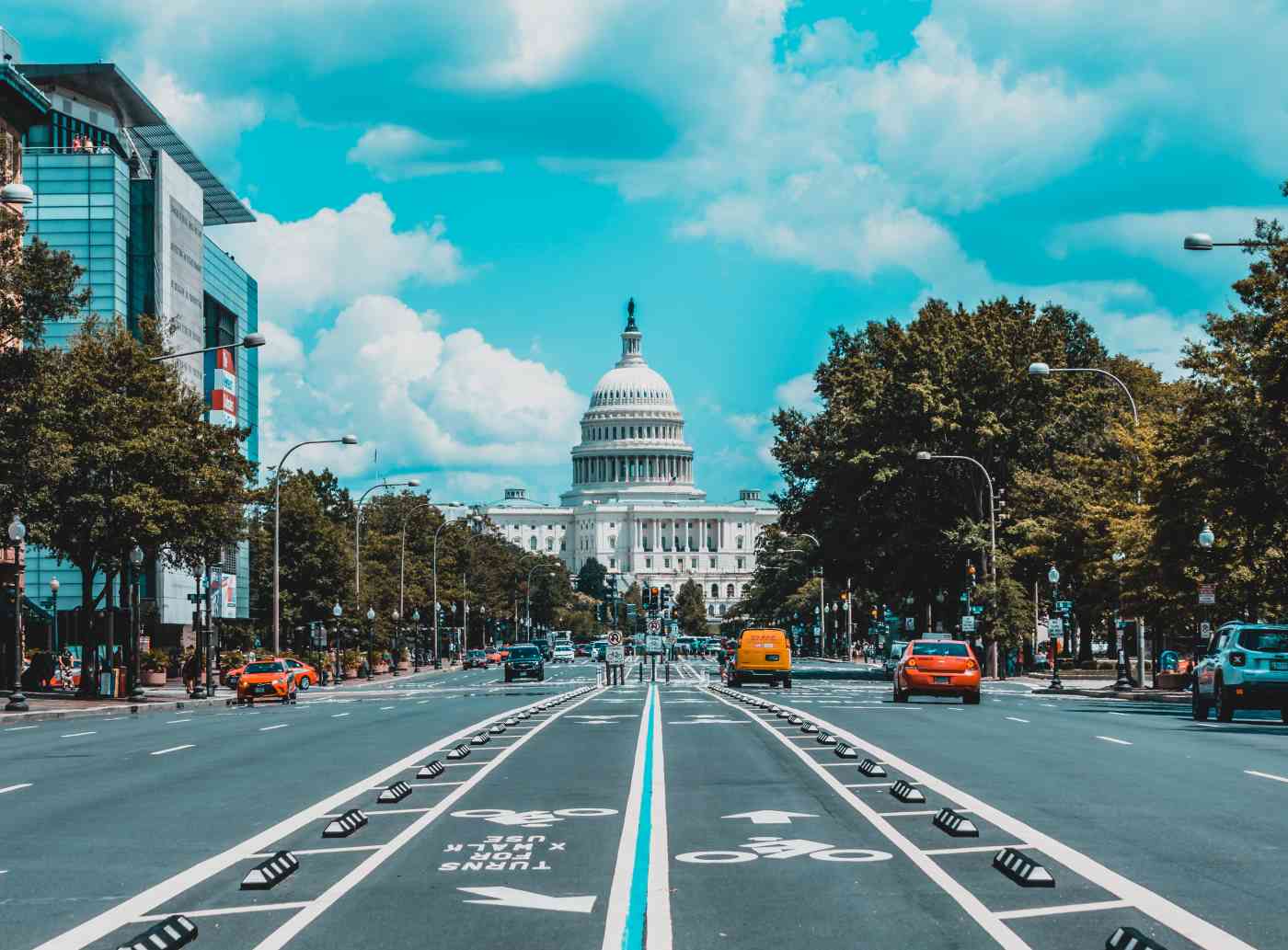
Pic Courtsey-Jorge Alcala at unsplash.com
(The views expressed are those of the author and do not represent views of CESCUBE.)
Ridipt Singh is currently pursuing MA. International Studies from Symbiosis School of International Studies, Symbiosis International University, Pune, Maharashtra (2021-23)