TAPI Gas Pipeline: Opportunities and Challenges
Energy infrastructure has garnered its own place in the international politics discourse. South Asia over the years has become a fertile ground for several hydropower and gas projects. With this, it has brought new conflicts in limelight an...
TAPI Project: What and Why?
Energy diplomacy has taken a front seat in bilateral and multilateral cooperation from past two decades. When it comes to energy diplomacy in South Asia, there is no developed framework based on international theories via which policy making is done. Proposed in 1990's, the talks of TAPI pipelines took shape when the Taliban regime in Afghanistan started negotiating with the US firm, Unocal as well as the Argentinian company, Birdas about the transit rights. But the project was shelved due to the increase in human rights abuses perpetuated by Taliban during the 1998's bombings of Kenyan and Tanzanian embassies in USA. The project revived in 2002 when the Taliban regime was overthrown.
TAPI pipeline project is not only ambitious in nature, but if completed will be benefit and fulfil the energy needs of all the four countries involved. Also known as the “Peace Pipeline’, the project aims to strengthen the multilateral ties between the participant states, thereby, increase the regional cooperation. It aims to monetise on the natural gas reserves of Turkmenistan, supply it to the neighbouring countries, and promote the use of natural gas and improve energy security. It is planned to extend from the Galkynysh gas fields in Turkmenistan and traverse Herat, Nimruz and Kadahar in Afghanistan, Quetta, Dera, Ghazi Khan and Multan in Pakistan and culminate in the Indian border town of Fazilka.
The Asian Development Bank has been one of the main stakeholders of the project and has been its secretariat since 2002. It has taken a lead on the legal, institutional and technical aspects of the project. From 2012, the gas companies of all the four countries slowly started signing the agreements and came on board to create the TAPI Pipeline Company which aims to build, finance, own and operate the pipeline. In December 2015, the signing of Shareholders Agreement marked the official inauguration of the project.
Cost and benefit analysis
For the four countries, Turkmenistan, Afghanistan, Pakistan and India, their interests are directly connected to the benefits which it will enjoy. For India, the project if successful will diversify its energy sources to meet it. For Turkmenistan, it will export the natural gas and generate revenues from the exports while for Pakistan and Afghanistan, the project will provide them with not only gas supply but also transit revenues.
India and Pakistan have converging interests in Afghanistan as its stability will help the TAPI pipeline in integrating with their respective countries. The pipeline projects aims to inject and strengthen the stability in Afghanistan. It will also ease Turkmenistan's growing concern regarding the spread of extremism in its south-eastern border. Hence, for the four partner countries, this energy project overlaps with its security interests and gives more incentives to increase the stability in the region.
This project has many countries involved as stakeholders which play an active part in the decision-making process. The reason of their increased involvement and taking a share of the responsibilities is because they have several opportunities and benefits to reap from it. Some analysts also believe that the presence of the external stakeholders can prove to beneficial when there is a deadlock between the involved countries and can also help in overcoming the security impediment to the project. Hence, the need to de-securitize the pipeline project becomes important as it will make sure that the project progress is not delayed.
There have been talks of including China and Russia as external stakeholders in the gas project. China has been on a spree to expand its influence across the world and has undertaken many such development projects to meet its demands. China has evolved as a pragmatic power with profit maximisation and power maximisation strategy and has taken advantage of the lost opportunities of other states to benefit from it. One such example can be the building of Central Asia-China Pipeline that delivers Turkmen and Kazakh gas to Xinxiang province of China through Uzbekistan. This project was successful only when Myanmar-Bangladesh-India pipeline project was shelved in 2005.
In the present times, where China is acting as an aggressive power especially after its deteriorating image in the global stage due to the on-going pandemic, it is better to accommodate China in the project rather than having it as an aggressive opponent. It is not secret that China has been going full throttle with the BRI project. Its involvement in TAPI project while may seem ambitious and nearly impossible to many, it does prove as strategic benefit. A significant portion of CPEC (China Pakistan Economic Corridor) runs through Baluchistan, a volatile region in Pakistan. TAPI project aims to reduce the regional tensions and ensures the threat of insurgents and terrorist groups reduces and eliminates with its completion. This overall stability would and assurance of regional security raises the stakes for Chinese involvement and cooperation in TAPI, if it wants to continue with its ambitious OBOR Project.
While Turkmenistan would not welcome the idea of Russia as an external stakeholder, it is often overlooked that Central Asia-China pipeline was constructed by Stroytransgaz, a Russian engineering company which was originally a part of Gazprom. The Kazakhstan portion of this pipeline is also used by Russia. Gazprom has shown interest in TAPI and it is in favour of all the stakeholders to involve Russian company in the project because of its expertise.
One may question China and Russia as being hegemons in the region and often at odds, but they cannot ignore that both the countries have established several agreements and partnerships on gas trade. Both the countries have convergences when it comes to energy and strategic interests. Therefore, this challenges notion where both these countries can be hostile to the TAPI project. In turn, they can bring forth the fact that energy geopolitics is as much about competition as it is about cooperation and diversification of the stakeholders. Consulting Moscow and Beijing not only bring in a new zest to the already delayed project, but also brings in local knowledge and technical expertise by Russia, financial aid and stability in the conflict prone area by China.
SAARC (South East Association of Regional Cooperation) was built with the aim to increase the regional cooperation between South Asian countries. In past few years, the credibility of SAARC as organisation has been questioned because of its inability to implement any policies. While many continue to doubt its effectiveness, it is an important organisation and can act as a primary regional body in the TAPI project. It has existing institutional mechanisms like the Technical Committee on Energy which can steer the regional cooperation and provide technical knowledge. It can enhance the regional prospects of the project and can extend it to countries like Bangladesh and Nepal. This move can not only revive SAARC as an organisation but can also smoothen the bilateral conflict and deadlock between Pakistan and India, which has been a dampener on most of the SAARC projects. It can play a pivotal role as both mechanism advisory body and a confidence and peacebuilding actor between the two nations.
Challenges
One of the major problems with the project has been the bilateral tensions between the involved countries. India and Pakistan's bilateral dispute is not news for anyone. India is concerned that Pakistan would be in charge of releasing the gas supply in India. This has not sat well with India and it has raised its concern on the relevant platforms about it. The deteriorating bilateral relationship between the two countries has impacted several development projects and many scholars are wary that TAPI Project would meet the same fate.
India and Pakistan have identified terrorist and insurgents’ groups in Afghanistan and Pakistan as major threat to the pipeline. Some of the land in the both the countries has been occupied by the terrorist groups. In order to lay the pipelines, the Pakistani government has had to pay royalties to the Balochis from laying down the pipelines on the land occupied by the land. If this is not done, then there are very high chances that these organisations would bomb the areas in which the project would be built.
More so, TAPI's future is also somewhat dependent on the Afghanistan's political stability and the ability of the government to ensure sustained security transit. While the political deadlock between the political leaders of Afghanistan has ended, there seems to be no update on the TAPI project from the government's end. There has been a delay in the progress of the project has mainly been because the laws of land acquisition have not been signed by the MP's. Unless this is done, the land cannot be utilised for the pipeline building. This has proved to be a stalemate in the pipeline project.
Many scholars have also questioned the infrastructure security-centric policy making of the TAPI Project. The human security component has completely been ignored. The success of the project would be highly dependent on clearing off the land and transfer of land rights to the stakeholder communities. Many local communities will be displaced as a result of the project infrastructure building. Most of them also risk losing their livelihood. It will be difficult to traverse through this situation and one cannot put it past any authority, that land grabbing would not take place. In such a scenario, no legal framework guidelines or Rehabilitation and Compensation Policy exist.
The issue of human rights and adherence to it is also matter of concern. From a planning perspective, it is imperative to include human rights issues in state level agreement of TAPI and undertake consultations with security forces to advocate the importance of respecting the human rights of the local communities. There is has been no information about how the project's negative impact on the environment will be dealt with.
Conclusion
While the establishment of the TAPI project is a substantial step in the domain of energy and security cooperation, there surely are many geopolitical impediments. If successful, all the stakeholders will benefit immensely from this project, both in terms of economic revenue and energy security. Without undermining the security threats, the issues of the human rights, land rights environment, displacement, rehabilitation and compensation, livelihoods and employments are of equal importance.
Expanding the group of stakeholders will lead to several convergences of interests. TAPI should include Russia, China and SAARC as technical advisors who would provide their expert advice in the project. TAPI Project operators and countries need to come up with a committee to address the human security issues. The proposed committee would deal with the R&C Policy and address the concerns of the local communities. A part of the committee should be experts on environment security and come up with measures and policy to make the project more sustainable.
It is of utmost importance to include the local communities in the project building. It will not only provide with livelihood and employment opportunities but will also help the insurgent and terrorist forces from attacking the project as the groups will no longer be employed in anti-state activities or to affiliated terror groups.
At this point, the project is delayed due to several reasons and the current pandemic will further delay its completion. This serves as an opportunity to review the challenges and take a step in addressing them. The TAPI project lacks a qualitative, human security and environment friendly approach. The project needs to be made more viable and sustainable by including human security concerns about land-based livelihoods and human rights in order to prevent a conflict in the future.
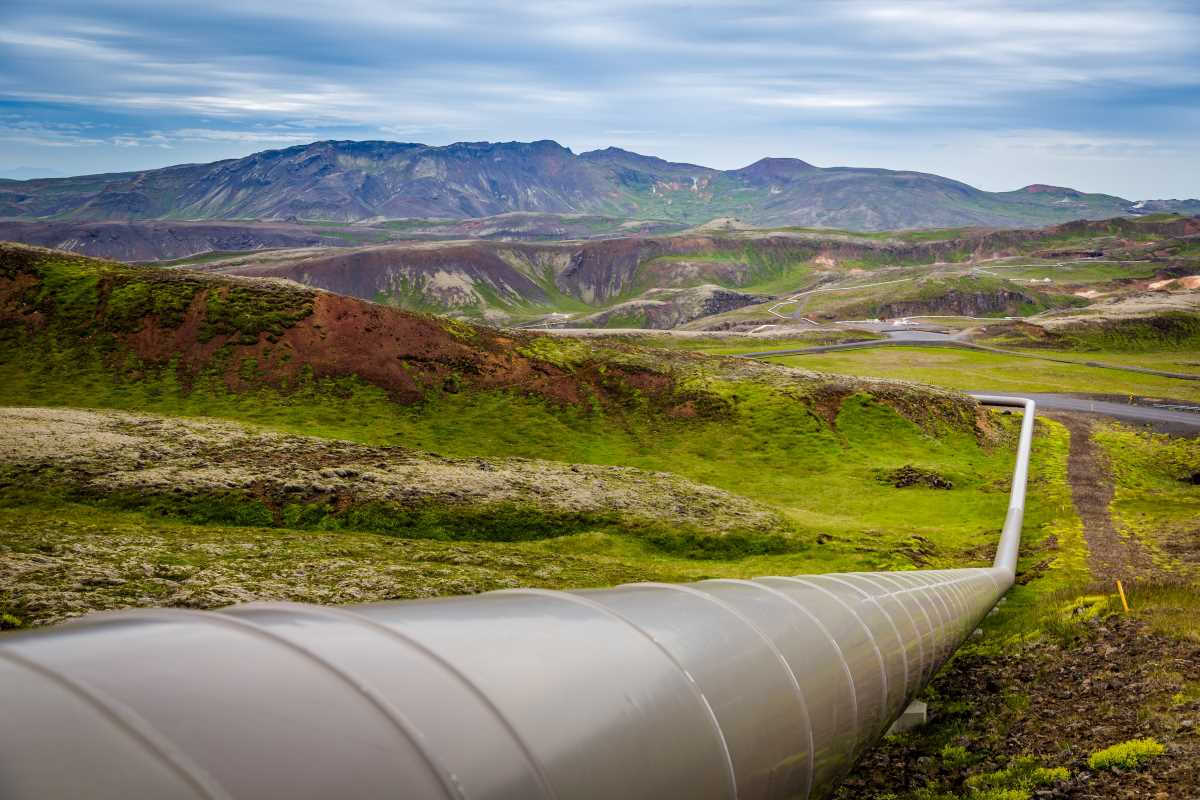
Pic Courtesy- Mike Benna at unsplash.com
(The views expressed are personal.)

Krupa Vasani is a current Scholar at The Vedica’s Scholar Program, New Delhi and is pursuing her MBA in Management and Leadership. An undergraduate from O. P Jindal Global University, Krupa holds a bachelors in International Relations. Over the course of three years as an undergraduate, Krupa has developed an interest in the Security and Strategic Studies and Development Sector. Indian Foreign Policy, South South Cooperation and the Strategy in Indo-Pacific and South Asian Politics and the emerging Quadrilateral Diplomacy are some of her areas of interest. She is currently associated with CESCUBE as part time researcher.