Terrorist attack on Nasheed highlights the increasing radicalism in Maldives
On 6 May 2021, Maldivian ex-President and the current Parliament Speaker, Mohammad Nasheed was gravely injured in a bomb attack. Post an intense lifesaving surgery, Nasheed seems to be stable, but the same cannot be said for the Maldivian n...
A close ally of the current Maldivian President Mohamed Solih, Nasheed was the first elected President of Maldives in 2008. But he was overthrown following a coup in 2012, and was unable to participate in the 2018 elections due to the criminal allegations against him. The terrorist attack aimed to assassinate Nasheed hardly comes as a surprise given the role Nasheed has played in Maldivian politics. When Nasheed won the multiparty elections in 2008, he ended 30 years of autocratic rule in Maldives, ushering in democratic rule. Hailed as a hero and loved fiercely by his supporters, during his tenure in the office he snubbed many conservative opponents. His bid to create Maldives into a secular nation was not received well by the older generation as well as the supporters of the autocratic rule. In Maldives, citizenship is closely tied to being a Muslim, and Nasheed locked horns with multiple religious leaders, who were not keen on his anti-Islamic agenda. Nasheed has been one of the strongest voices in the country against extremist forces in the country, especially against those Maldivians who joined ISIL, who are suspected to be masterminds behind the attack on Nasheed.
Violent extremism is not a new phenomenon in Maldives. The clear divide within the conservatives, and the current leadership which has issues with the power of governance in the country is one of the major reasons of rise in extremism in Maldives. Nasheed’s response to bringing in liberal practise of religion has been considered to be anti-Islamic by Gayoom and his supporters. Added to this, socio-economic issues and rampant unemployment also have pushed people to take path in joining terrorist organisations. In Maldives, only 5 per cent of the population holds the 95 per cent of the total wealth in Maldives, leaving the rest of the population to barely scrape by. Therefore, the path of crime and violence is the only way left for gaining an alternate living. The financial incentive and a sense of purpose provided by the terrorist groups prove to be effective in order for some Maldivians to escape their old lives of misery. According to newspaper coverage of Maldives Independent, it was revealed by the security services of the country, there are close to 1400 Maldivians in the country who have fallen prey to extremist ideologies and would not hesitate to kill someone in the name of Islam. According to the head of police, 423 Maldivians attempted to join terrorist organisations in Syria and Iraq and out them, 173 managed to enter war zones. Some of the radical extremists have also travelled to Afghanistan and Pakistan, the neighbours of Maldives, who also face issues with radical extremism. Some scholars also blame the increasing connection between Pakistan’s terrorist groups and exposing Maldivians to the path of terrorism.
Apart from the influencing and recruiting factors, many religious hardliners refuse to accept the constitution and its laws, as they consider Maldives to be the land of the sin and those who do not share their views are infidels and their wealth should be rightfully seized. Back home, Maldives faces a huge risk of the extremism impacting the lives of the other citizens. Several members of the local terrorist organisations, forcefully and illegally marry underage girls and refuse to vaccinate their children. They also refuse to educate their children, as they believe that education is a Western ideology and would corrupt them. Post the 2004 tsunami in Maldives, Pakistani Islamist terrorist organizations set up rehabilitation and relief programs throughout the country. Terrorist organisations like Lashkar-e-Taiba's affiliated group Idara Khidmat-e-Khalq went to Maldives not only to assist in redevelopment but also to recruit new members who would study at Madrassas in Pakistan and eventually join the terrorist groups. Madrassas in Pakistan primarily follow the fundamental edicts of Salafi Islam and have been known to groom students towards eventually participating in violent jihad.
Another factors for the increasing Islamic extremism in Maldives is also due to the increasing closeness between Maldives and Saudi Arabia. With the influx of cash for development projects in Maldives by Riyadh, religious influence has been a by-product which has accompanied freely. In 2014, the Saudi Crown prince, Salman bin Abdulaziz Al Saud pledged to build mosques in the country and also to put more efforts to educate the Maldivian religious scholars on religious texts and preaching. Due to political liberalisation, Wahhabi imams and activists have deepened their work on preaching about Wahhabism which coupled with the above reasons has also pushed Maldivians to take the path of extremism.
The attack on Nasheed is not the first terrorist attack of Islamic extremism in Maldives. In September 2007, a bomb exploded in Sultan Park in Male. It not only left 12 foreigners injured, but also ensued a standoff between police officers and the islanders at Dhar-ul-Khair mosque in Himandhoo. One month after the attack, a video resurfaced online which featured the scenes of confrontation at Dhar-ul-Khair mosque and a message for others to join the 'Maldivians brothers' in fight for jihad. In 2020, five bombs detonated at Mahibadhoo harbour, destroying a sea ambulance, four speedboats, and two dinghies. ISIS claimed the responsibilities of the attack and a month later, ISIS published a letter in their third issue of ‘Voice of Hind’ calling for Maldivians to join jihad and carry out extremist attacks in Maldives and India.
Therefore, a terror attack on Nasheed is directly an attack on the current democratic Maldivian government and all it stands for. While suspects have been arrested and the investigation about the attack is going on, Maldives now cannot dismiss this act of terror even after the case is solved. It has just begun a new development in the region which has a possibility to topple the government by not only influencing the general public but by also using violence as its means. Neighbours like Sri Lanka, India and even Australia have condemned the attack. The Australian police is going to help Maldives in investigating the attack.
This attack is on Nasheed is not only a sign of attacking and challenging the democracy in Maldives, but also a sign of escalating Islamic extremism in country. India has expressed concern over the attack because it also stands at a point where extremism in Maldives could spur radicalism in its own country. Given the catastrophic impact of the ongoing pandemic, none of the South Asian countries have the ability to deal with this at the moment. Clearly, Maldives alone cannot solve the issue of terrorism and needs a multilateral platform to solve the challenge. However, much more needs to be done apart from just making policies and holding summits in order to contain the growing threat of Islamic extremism in South Asia in order to prevent it.
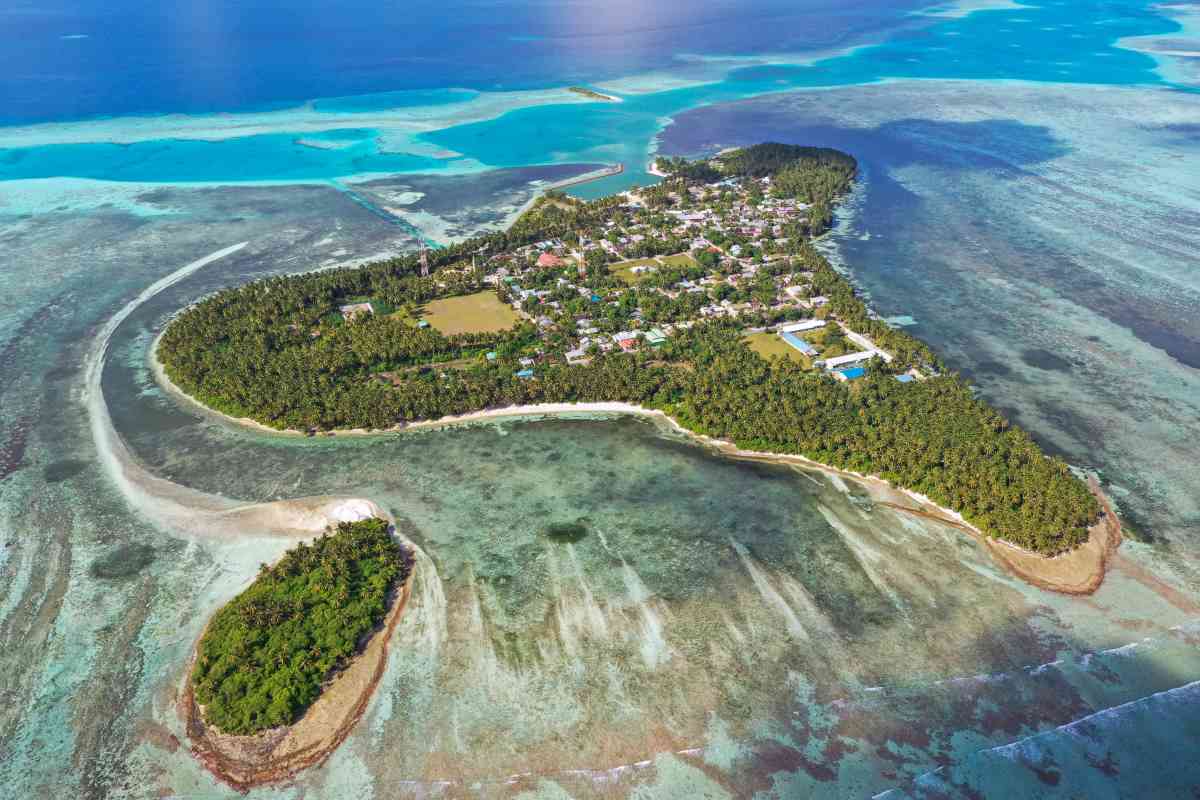
Pic Courtesy-Saud Edum at unsplash.com
(The views expressed are personal and do not represent views of CESCUBE.)
Krupa Vasani is a current Scholar at The Vedica’s Scholar Program, New Delhi and is pursuing her MBA in Management and Leadership. An undergraduate from O. P Jindal Global University, Krupa holds a bachelors in International Relations. Over the course of three years as an undergraduate, Krupa has developed an interest in the Security and Strategic Studies and Development Sector. Indian Foreign Policy, South South Cooperation and the Strategy in Indo-Pacific and South Asian Politics and the emerging Quadrilateral Diplomacy are some of her areas of interest. She is currently associated with CESCUBE as part time researcher.