The Evolution of Australian Submarine fleet: Past, Present and Future
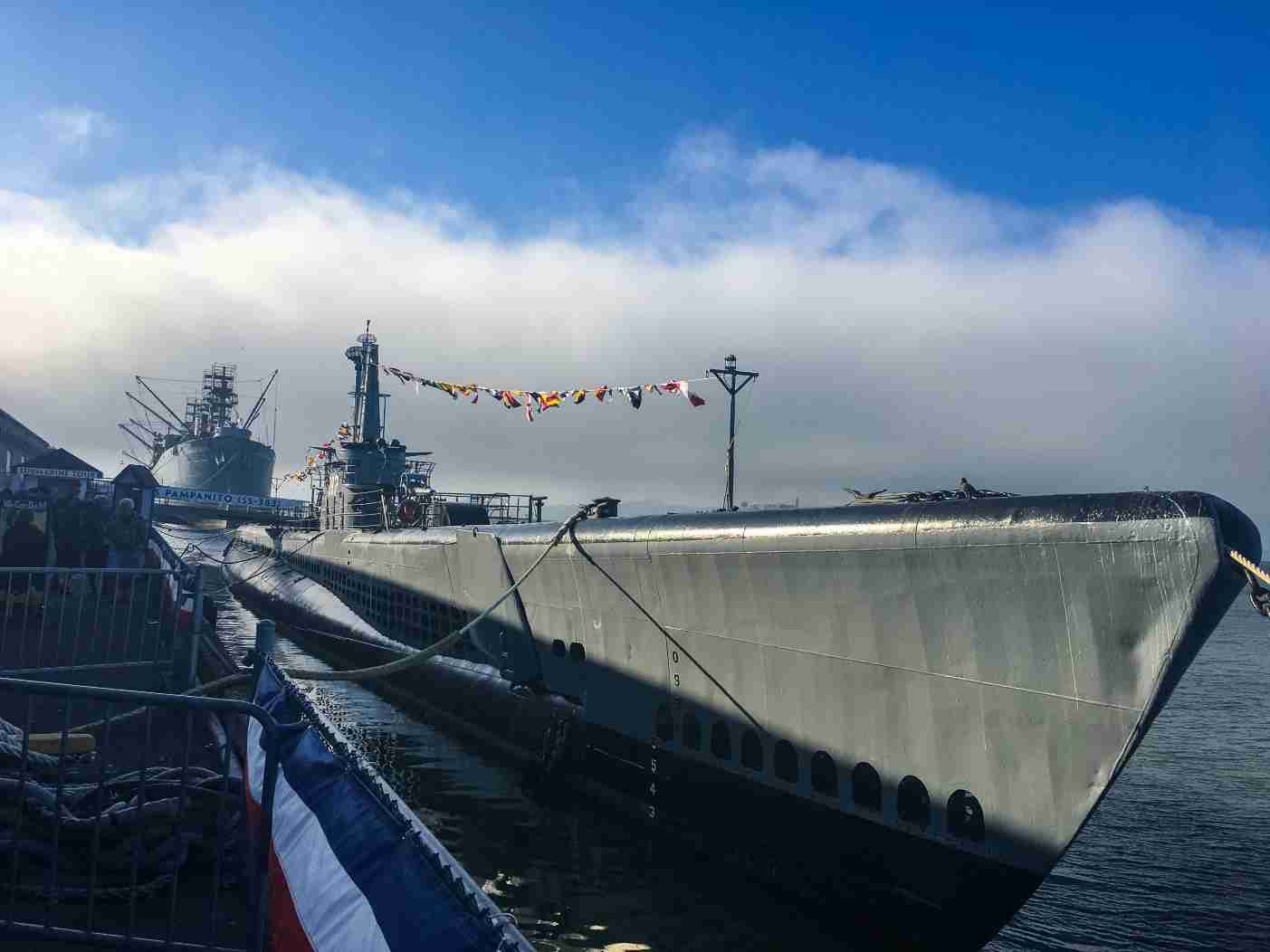
AUKUS is less surprising, but it does point to a historical pattern in Australia's troubled submarine history. Prior to the deal's implementation in 2021, Australia had agreed to purchase 12 conventional submarines from France, but this has...
Until the late 1990s, when Australia began manufacturing indigenous Collins class submarines, Australia's experience with submarine holding was always marred by disappointment. In May 1914, Australia received its first submarines from the Royal Navy — the AE1 and AE2 – which were destroyed during World War I, leaving Australia without submarines. Canberra attempted to fill the void with six “j” class submarines, which arrived in poor condition and required major repairs. Due to an inexperienced crew to rebuild the submarines and a decreased military budget in the postwar scenario, Canberra was forced to discard the submarines in 1922. In 1924, Australia sought to reintroduce submarines to the RAN fleet, agreeing to purchase the Oxley and Otway from the United Kingdom, but bad luck struck the Australian submarine fleet once more. The submarines were not ready for service until 1929, and shortly afterward, they were returned to the Royal Navy. Even though Australia saw a lot of shipbuilding activity during WWII, it did not result in a favorable sign for the Australian Navy fleet, which operated without a submarine for the whole of the war.
Even after WWII, the Australian Navy shows little interest in maintaining the submarine fleet, but a positive activity has begun in Cockatoo Island, which became the Royal Navy's fourth submarine flotilla in 1949; this development has allowed Australian workers to become familiar with submarine refit and maintenance skills. The Australian cabinet approved the purchase of four Oberon class submarines from Britain in 1963, sparking debate about Australia's inability to develop submarines. However, the shipbuilding industry believed submarines could be manufactured in Australia, but it would be too expensive. Thus, the delivery of the Oberons class submarines completed by 1977 from Britain. During the Cold War, these submarines proved to be effective at undertaking long-duration underwater missions, assisting the US Navy's operations in the Pacific. Although these hulls were built in the United Kingdom, they were refitted at the Cockatoo Island Dockyard, with the cost of the refurbishment (which occurred every five years) approaching 76 percent of the vessel's original purchase price. This prompted Australia to seriously consider developing indigenously produced submarines to reduce their dependency on the United Kingdom. However, when it comes to the massive challenge of constructing submarines, Australia must contend with local difficulties.
Despite the support of industry and government officials, the new submarines did not have widespread support inside the Navy because the RAN is small and has limited funding, the development of the new submarines affects the funding of surface combatants. Furthermore, the Australian economy was in shambles following the 1970s oil crisis and wage inflation, prompting the Labor Party government to cancel the RAN's aircraft carrier replacement program; manufacturing submarines at home necessitates submarine construction capabilities from the ground, which was estimated to be expensive.
Nonetheless, there was a great political support for the new submarines, the government approved the first phase of the new submarines acquisition in the 1981-82 budget, and the Collins class submarines project was officially launched on February 20, 1982, as Project 1114. The six Collins-Class submarines were to be built by Submarines Cooperation Pty Limited, a company created by Swedish shipyard Kokum and Australian partners, in 1987. Submarine manufacturing in Australia has resulted in increased industrial capability to build, service, and modernize submarines in the country. The RAN's first conventional submarine, based on the designs of Kokums type 471, was launched in 1990 and commissioned in 1996. Over the next seven years, the remaining five Collins class submarines were commissioned.
The new Indo-Pacific geopolitical realities, as well as Australia's developing conflict with China, compelled it to build a powerful Navy that can patrol the whole Indo-Pacific. As the other Navies in the Indo-Pacific modernizes its navy to meet their needs, the Collins class conventional submarines were found unsuitable for the task. Canberra was aware of its position. The Australian government announced its intentions to replace the fleet of Collins submarines with twelve 4000-ton long-range submarines by 2030, in a defense White Paper published in 2009. With the purchase of twelve submarines by the Australian government, plans for a new attack class of submarines from French company to conduct anti-ship and anti-submarine warfare duties. The cost of the submarines initially finalized to $50 billion, and the delivery of the submarine expected by the end of 2019 but the project legged behind the deadline. The development had been delayed by 9 months, with expenditures ballooning to $80 billion, according to the Australian National Audit Office study, giving the project a 'high risk' classification. The project's cost has been increased to $90 billion, causing senior ministers to voice their displeasure with the ongoing project. As a result, on September 16, 2021, Australia's Prime Minister declared that he would cancel the French contract in favor of a new nuclear submarine arrangement with the United States.
Even though the AUKUS has sparked a quarrel among western partners, it fully suits Australian needs. Canberra, according to the Australian 'Defense Capability Planning' paper, must keep its Navy powerful in order to meet the threats that are arising in its backyard. For the first time in Australia's history, the submarine acquisition allows the country to keep nuclear submarines in its Navy, which will aid in Australia's ability to play a leading role in the Indo-Pacific, as envisioned in the plan.
References
1. Australia's submarine history | Submarines | ASC: https://www.asc.com.au/submarines/australias-submarine-history/
2. Australia Submarine Capabilities - The Nuclear Threat Initiative: https://www.nti.org/analysis/articles/australia-submarine-capabilities/
3. Timeline: how Australia’s submarines have evolved from World War one to Aukus | Australian military | The Guardian: https://www.theguardian.com/australia-news/2021/sep/16/from-world-war-one-to-aukus-how-australias-submarines-have-evolved
4. History of Australia’s Submarine Fleet: https://www.jstor.org/stable/pdf/10.7249/j.ctt3fh0pr.9.pdf?refreqid=excelsior%3A160e11f66643d436f0f8f17276decaa1
5. “Guided Missile Submarine, Diesel-Electric (SSG),” Royal Australian Navy, www.navy.gov.au.
6. David Wroe, “Sydney set to become base for new fleet of submarines,” The Sydney Morning Herald, 3 July 2018,
www.smh.com.au.
7. Derek Wollner, "Procuring change: how Kockums was selected for the Collins class submarine," Research paper No. 3, 2001-2002, Information and Research Services, Department of the Parliamentary Library,
www.aph.gov.au.
8. “Collins Class Submarines,” ASC,
www.asc.com.au.
9. "Defending Australia in the Asia Pacific Century: Force 2030," Australian Government Department of Defence, Defence White Paper 2009,
www.defence.gov.au.
10. “Collins Class Submarines,” ASC,
www.asc.com.au.
11. Minister for Defense Media Release, “Future Submarine Announcement,” Navy Daily, 26 April 2016,
http://news.navy.gov.au.
12. David Lague, "Submarines Lift Export Hopes," Sydney Morning Herald, 7 November 1994, www.lexisnexis.com.
Pic Courtesy-Thomas Haas at unsplash.com
(The views expressed are those of the author and do not represent views of CESCUBE.)

Gaurav Sen is a graduate from Delhi University. He is currently doing his Masters in International relations from Jawaharlal Nehru University, New Delhi. His research area includes IR theories, Great Power competition in Indo-Pacific, Maritime Security, Emerging Warfare Concepts, and Military Strategies.