The Future Prospects of the BRICS-Looking into Agenda
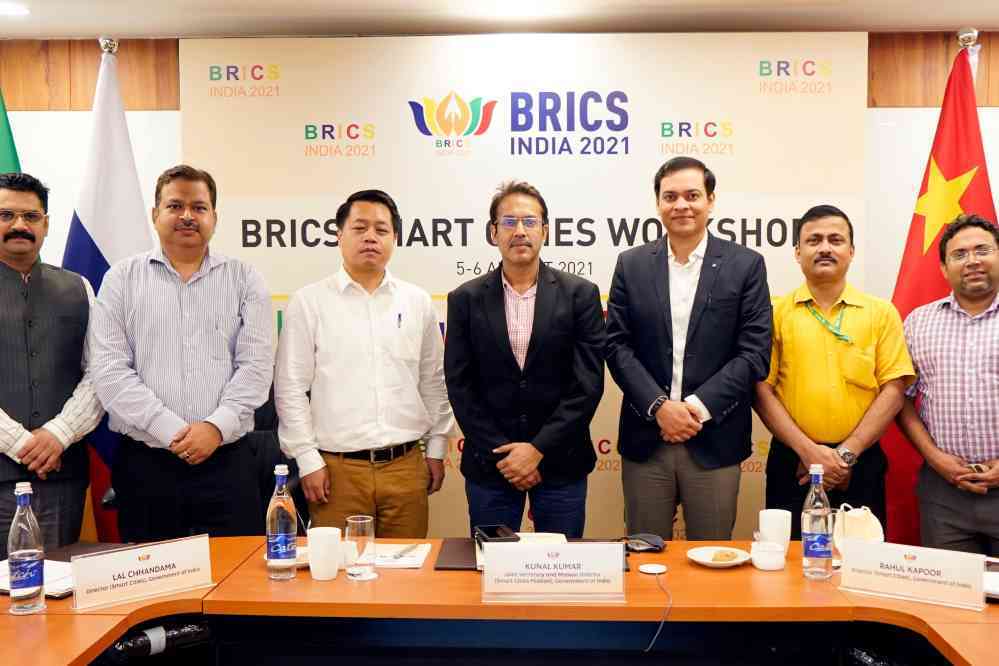
The likely agenda of the BRICS summit becomes a hot topic of the town since India will chair it. The foreign policy scholars initiated the prediction of the issues that would be a top priority in the 13th BRICS summit occurring under the au...
The group's evolution can be traced back to 2001 when 'Goldman Sachs' coined the term 'RIC' (Russia, India and China); however, the group gained the formal outfit when the leaders of the BRIC met at the margins of the G8 in July 2006. The first summit happened in Yekaterinburg, Russia, in 2009 since the group leaders met every year, switching on the alternative venue. Since organizing in its contemporary form in 2011 after adding South Africa to the fold, BRICS has been a diverse platform for economic, political and security interests. Though the groupings, several times, received denigration and were dubbed by Western scholars as an ineffective talk shop with an extravagant investment bank type structure, the BRICS remain intact despite various disagreements within it. As an essential member of the group, India emphasized the intra-BRICS cooperation around counterterrorism, energy, trade, health, and recently the ways to mitigate the Covid-19 pandemic. That manifest in the theme of the event 'BRICS@15: Intra-BRICS cooperation for Continuity, Consolidation and Consensus', which provide the fulcrum for the awaited summit of the BRICS.
Nonetheless, despite all the criticism, the group has been touted as the beacon of the developmental world with an average growth rate higher than the global growth rate, whose weight of the economy soon going to overtake the USA and set to contribute one-fourth of the economy of the world. But the 2020, all the plans of taking forward the growth of the world shattered by the outbreak of the covid-19 pandemic and the exciting fact that stemmed the importance of the 13th BRICS summit lies in the fact that it is BRICS countries that are the most affected by the covid-19 pandemic which has devastatingly impacted the economy and society of these countries. The recovery measures after the covid-19 pandemic must have been the members' top priority, especially for India and Brazil, on whom the impact is most severe and visible. The people's vaccination could be on the priority list. The South African President emphasized that the 'no one is safe until all are safe' the BRICS countries need to immunize at a higher pace as the prediction of another wave looming large. However, the BRICS groupings have lauded the South Africa and India proposal for the patent waiver in the virtual meetings of the BRICS foreign minister. The cooperation has been shredded when it comes to formula sharing despite being the vaccine manufacturer country. Since its inception, it has focused on integrating these five economies. The group has always been admired for its developmental potential; as mentioned, the countries have greatly contributed to the global economy, but the fact has faltered after the close observation of progress as a group. China has achieved the quintessential growth, leaving behind others rather than group progress and BRICS remain unequal. The further distortion provided by the covid-19 pandemic in already eschewed balance China is the only country that gathers a positive growth rate while other participants gathered the dust. Therefore, the 13th meeting will be the real test of the BRICS cooperation, which is, in different ways, the platform to warring off the differences that emerged between India and China, which have supposed to halt the further collaboration as India look westward. For India, strategic autonomy and the multilateral international system are the topmost priority on which India cannot compromise. At the same time, China enveloped itself as the polar power that stood against the US hegemony. Moreover, The prediction of the third wave to be stronger than they appear, India's focus will be on the effective support on the ground to fight the pandemic, and early warning discussed in the previous meeting could be on the priority list as well.
The theme for the 13th BRICS summit manifests its plan with the precise headline as 'BRICS@15: Intra BRICS Cooperation for Continuity, Consolidation and Consensus'; the group looks forward to celebrates its 15th anniversary. MEA, in a statement, said, 'The priorities will include reform of the multilateral system, counterterrorism cooperation, technological and digital solutions for sustainable development goals and enhancing people to people cooperation. The three pillars that BRICS formalized under the intra-BRICS partnership, Counterterrorism cooperation, have a long disparagement history. However, India has successfully finalized the BRICS Counter-Terrorism Action Plan containing specific measures to implement the BRICS Counter-Terrorism Strategy adopted by BRICS leaders in 2020.
It will be interesting to know if BRICS leaders must look forward to any earth-shaking pronouncement, probably in the Economic and Financial field of cooperation, especially all the members suffering from the low growth rate. Implementation of the BRICS Economic Partnership Strategy 2020-25 will aim to secure and promote economic growth and development for mutual prosperity. Another issue which will be part of the plan are the 'operationalization of the BRICS Agriculture Research Platform', 'Cooperation on Disaster Resilience', 'innovation Cooperation' and 'Digital Health and Traditional Medicine'. Nonetheless, the recent meetings have gone unnoticed and western media especially did not take much of it. Yet, the BRICS all showed them that the group supposed to challenge the G7 group advanced countries were still together and building consensus for future collaboration.
References-
1. MEA, BRICS India 2021, 13th BRICS Summit, MEA.GOV.In.
https://brics2021.gov.in/13th-summit
2. JAYSHREE SENGUPTA, (Dec 2019), The economic agenda of BRICS, ORF.
https://www.orfonline.org/research/the-economic-agenda-of-brics-58286/
3. India Begins BRICS 2021 Chairship With 3-day-long Sherpas' Meeting; China Extends Support, 25th February, Republicworld.com
https://www.republicworld.com/india-news/general-news/india-begins-brics-2021-chairship-with-3-day-long-sherpas-meeting-china-extends-support.html
4. Karin Costa Vazquez (Nov 17,2020), “BRICS Summit: A new agenda for cooperation?”, Financial Express.
https://www.financialexpress.com/world-news/brics-summit-a-new-agenda-for-cooperation/2127965/
5. Rezaul H Laskar, ‘BRICS backs Covid-19 vaccine patent waivers’ Hindustan Times, New Delhi
https://www.hindustantimes.com/india-news/brics-backs-vaccine-patent-waivers-101622574659675.html
6. Luanda Mpungose (Aug 16, 2021) The BRICS’ Lagging Vaccine Diplomacy, Project Syndicate.org.
https://www.project-syndicate.org/commentary/failure-of-brics-covid19-vaccine-diplomacy-by-luanda-mpungose-2021-08
7. 6th Meeting of the BRICS Counter Terrorism Working Group, July 30, 2021, mea.gov.in
https://mea.gov.in/press-releases.htm?dtl/34089/6th_Meeting_of_the_BRICS_Counter_Terrorism_Working_Group
8. Kallol Bhattacherjee (July 30, 2021) BRICS Counter Terrorism Action Plan finalized, The Hindu
https://www.thehindu.com/news/national/brics-counter-terrorism-action-plan-finalised/article35639806.ece
Pic Courtesy- BRICS Website
(The views expressed are those of the author and do not represent views of CESCUBE.)

Gaurav Sen is a graduate from Delhi University. He is currently doing his Masters in International relations from Jawaharlal Nehru University, New Delhi. His research area includes IR theories, Great Power competition in Indo-Pacific, Maritime Security, Emerging Warfare Concepts, and Military Strategies.