The Implications of Afghanistan and Iran’s Ethnic Equation
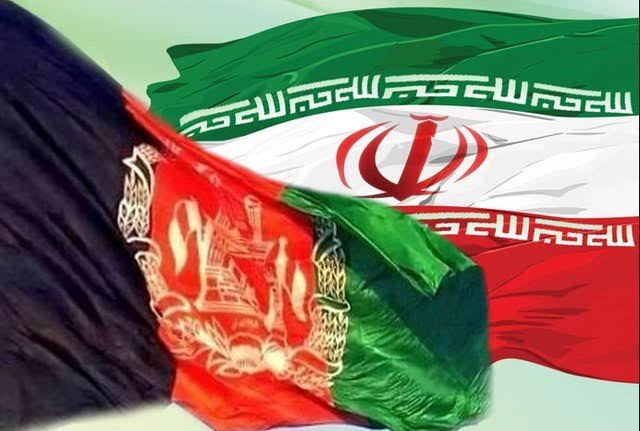
The on-going war in Afghanistan has spilled over its borders into its neighbouring states, and Iran has been one such neighbouring state which has been involved in Afghanistan’s politics. While many scholars believe that Tehran does not wan...
Afghanistan – Iran: A Complicated Relationship
Iran and Afghanistan share 936 km long physical border and both the countries are prominent players in the region. But the countries have many things in common: shared language, shared culture and history and at times have had common enemies too. But these commonalities have not translated into a strong and smooth relations between the two nations. From the 16th to 20th century, Afghanistan and Iran had engaged in several military battles and ideological conflicts.
Afghanistan’s internal security issues and the ongoing war has affected the Iran’s national security and socio-economic conditions, as Tehran has had to house a huge number of Afghan refugees. Iran has also suffered heavily from the illegal narcotics trade due to the Afghan exports of narcotics in Iran. Due to this, Tehran has internal drug problem with more than one billion drug consumers, including heroin and cocaine.
But one the biggest concern which Iran had was with the rise of Taliban. A Shi'a dominant country, Iran has always had a strong political and ideological difference with the Afghan Taliban, which propagates Sunni extremism and aims to establish a theocratic state in Afghanistan. During the Taliban regime in 1990’s, Iran was known to be a supporter of the anti-Taliban Northern Alliance, a non-Pashtun coalition of the other ethnic groups in the region. Iran also held back-door talks with USA post 9/11 in 2001 on how to eliminate Al-Qaeda, but the talks were not institutionalised.
Iran has tried to maintain its influence via gaining support of the Shi'a ethnic groups in the region. While it may not want to be a hegemonic power in the region, it sure does want to increase its influence in the region. It aims to solve its issues with Afghanistan by building a sphere of influence amongst its own ethnic group. Iran aims to leverage this influence in order from the various lobbying groups in order to gain support to eliminate its security issues like Taliban and the illegal narcotics trade.
Afghanistan’s Shi’a Hazaras who reside in the Western fringe of Hindu Kush range in central Afghanistan in Koh-i-Baba Mountains, have deep rooted social and cultural bonds with Iran. During the civil war in Afghanistan, many Hazaras saw Iran as an opponent power to counter Sunni Taliban. Iran is also now a home to millions of young Hazaras who have fled their home country, Afghanistan and its miserable conditions for a better life.
Iran, since 2001, has tried to promote Afghanistan's economic, social and security recovery. It has provided around $ 1 billion worth of foreign aid to Afghanistan. While some of these funds have been channelled towards humanitarian projects, they still aim to increase the Iranian clout in Afghanistan. Just like Iran has kept the Shi'ite Hazara groups in the Afghanistan as allies, it has also tried to unite the Dari speaking minority groups like Tajiks and Uzbeks as their allies. It has not only supported their development by providing funds to make local power centres, Iran has also promoted the teaching and studying of Persian to help raise cultural awareness of the shared linguistic traditions of Iranian and Afghan people.
But post 9/11, the world order has changed, which has compelled the countries to shift their priorities and their alliances. While Tehran welcomed the US mediation and militarisation in order to fight the Taliban, Iranian leaders have been worried the a pro-Western political model in Afghanistan might trigger unrest in the neighbouring countries like Iran, might trigger unrest amongst the people as they will protest for a more liberal and less oppressive form of the government. While Iran and USA have same interests when it comes to Afghanistan, that is to eliminate Taliban, the mutual animosity has led to Iran pursuing anti-USA policies in Afghanistan.
Iran was seen a country which tried to shoot twin aims with an arrow. While it supported US in its fight against Taliban in Afghanistan, according to some sources, it has also allegedly also supported certain Taliban fighters and warlords like Gulbuddin Hekmatyar and other groups fighting the US military in Afghanistan. But this support has been at a much smaller rate that what has Iran given to forces fighting US in Iraq.
Despite being anti-Taliban from a long time, Iran has now changed its path as Taliban no longer seems to be persecuting Shi’a Hazaras. Taliban has been seeking legitimacy among Afghan Hazaras (Shi’as) as the Peace Talks come near. It needs support from all ethnic groups in Afghanistan if it aims to have a say in the ruling of the country when the US troops leave. For instance, Taliban’s new Northern district governor, Mawlawi Mahdi Mujahid is an ethnic, Shi'a Hazara cleric. In a recent video message which emerged, Mujahid has asked his co-religionist to fight against the 'Jewish and Christians invaders' and not the Muslim brothers. He called for a united front saying that Shi'as and Sunnis has held the flags together in jihad against the Soviet in the past and history can repeat itself. Taliban spokesperson, Suhail Shaheen, has went on record and said that this is not the first time that Taliban has accommodated a Shi'a leader. People from other communities have always been a part of Taliban from a long time. Taliban has argued in recent times, that commanders from Tajik and Hazara community have played a pivotal role in the Taliban operations.
This shift of Taliban can also be because it is fighting wars at many ends. Iran and Taliban have common enemies: USA and the Islamic State of Khorasan which in past few years has become powerful. IS has emerged as a more extreme and radical organisation than Taliban with a stronger anti-Shia stand than Taliban. This has further led to the increased cooperation and support between Taliban and Tehran.
Conclusion
Taliban's effort to include the Afghanistan's ethnic minorities have been welcomed by Tehran. Since the beginning of the Peace Talks with United States, many high-level Taliban leaders have been to Tehran for consultation and Iran has tried to maintain good relationship with all its stakeholders. Iran's representative to Afghanistan, Mohammad Ebrahim Taherian has been in regular contact with the leaders of organisations such as Afghanistan’s Jamait-e-Islami and Islamic Dawah Organisation of Afghanistan.
Iran also has maintained good relationships with the political leaders of Afghanistan. During the fallout between Abdullah Abdullah and Ashraf Ghani, Iran's Ministry of Foreign Affairs had stressed on the creation of an inclusive government. In this light, Tehran has been highly welcoming of the recent Power Sharing Agreement signed between both the leaders. Iran has used its ethnic ties with minorities in Afghanistan to maintain its influence in Afghanistan. Iran's hedging policy has helped it maintain the balance with different stakeholders in Afghanistan to achieve its political goals.
Several geopolitical and cultural links have enabled Iran to exercise significant influence in Afghanistan in the past few years. But now Tehran faces greater constraints due to the growing social and economic problems back home. The authoritarian rule in Iran is now facing protests for a more liberal order from the country’s youth. Its economy has deteriorated due to the on-going Western sanctions and low oil prices. While Iran is unlikely to present itself as an example for Taliban on how to establish a theocratic state on political Islam, it is likely to continue its relationship with Taliban. Iran sees Taliban as counter force against the United States and wants to leverage its relations with Taliban against the US to keep US away.
While Tehran and Taliban also share a mutual animosity toward the rise of IS-K, these shared interests remain highly debatable. Only time can tell whether Tehran's covert and overt support to Taliban will win it any real influence in Afghanistan in the long run, especially if Taliban is integrated in the Afghan governing structures. This new alliance which has risen from strong ethnic divisions, seems like a temporary marriage of convenience as it is highly opportunistic in nature. The question of how long it might last remains unclear.
Pic Courtesy-The Tehran Times
(The views expressed are personal.)
Krupa Vasani is a current Scholar at The Vedica’s Scholar Program, New Delhi and is pursuing her MBA in Management and Leadership. An undergraduate from O. P Jindal Global University, Krupa holds a bachelors in International Relations. Over the course of three years as an undergraduate, Krupa has developed an interest in the Security and Strategic Studies and Development Sector. Indian Foreign Policy, South South Cooperation and the Strategy in Indo-Pacific and South Asian Politics and the emerging Quadrilateral Diplomacy are some of her areas of interest. She is currently associated with CESCUBE as part time researcher.