The P5+1 Agreement: Is There a Hope?
On June 19th, 17.9 million Iran citizens voted ultra-conservative Ebrahim Raisi, the former judicial chief, as the President of the country. He enters the office at a time when Iran is caught between a chaotic domestic situation with a trai...
The Joint Comprehensive Plan of Action (JCPOA), signed in 2015 was an international accord signed between Iran and the P5+1 which includes five permanent members of the U.N. Security Council (U.S., Russia, China, France and U.K.) along with Germany. The agreement was signed keeping in mind Iran’s nuclear enrichment under its nuclear program.
After 20 months of negotiations, Iran agreed to limit its uranium enrichment to 3.67% for 10 years and limit its IR-1 centrifuge stockpile while the EU and UN provided relief in some sanctions. Iran was mandated to give access to the nuclear-watchdog International Atomic Energy Agency (IAEA) for collection of data on some of Tehran's activities and cease enrichment at the underground Fordo facility.
Former U.S. President Donald Trump walked out of the deal in 2018 and imposed sanctions on Iran, including its Supreme Leader and then-judicial chief Raisi. Trump had called the agreement "defective at its core" and pursued Iran to negotiate a replacement. [1]
What Might Work in Favour of the Nuclear Deal
Iran’s economy is crippling under the U.S. sanctions and . Apart from sanctions of the political elites, the U.S. has also managed to keep Iran away from global oil markets. Ayatollah Khameinie has previously shown interest in bringing the U.S. back on board with a hope of getting rid of the crushing sanctions and reviving its oil-based economy. Iran’s entry to the global oil regime is likely to drive down the oil prices.
The strings of the deal are being pulled by none other than the Supreme Leader himself, who
Some scholars believe that the revival of the deal is being strategically staged to the last moment so the conservatives take credit for relieving Iran from western sanctions.
Vali Nasr, a professor of Middle East studies and international affairs at Johns Hopkins University’s School of Advanced International Studies writes in Foreign Policy how the nuclear deal is important for Ayatollah Khameini to ensure a smooth transition of power without large domestic implications.[2]
“If the election of a moderate President was crucial in sealing the deal, the election of a hard-line conservative might be crucial in concluding one,” he added.
As soon as Raisi was elected to office, the process was kicked off, according to a European Union statement. What is being called the “Vienna Talks”, a meeting between representatives of China, France, Germany, Russia, the U.K. and Iran was held in Vienna, with hopes to bring the U.S. back to the nuclear deal. However, no timeline has been fixed for a seventh round of talks.[3]
Some analysts suspect that the U.S. and its European stakeholders are looking to lock the deal in the transition period, before Raisi actually takes power in August.
Challenges Ahead
Election of Raisi gives control of the executive to the hardliners who also control the legislative and judiciary. The policy of the hardline political leaders have been categorically confrontationist as opposed to reformers or moderates who are more accommodative.
Hardliners have strengthened their stance against the west since U.S. and EU sanctions kicked in, making experts believe that a moderate leader will have a better chance on the negotiating table. The U.S. has sanctions in place for the Supreme Leader along with the new President-elect Raisi who was accused of carrying out mass execution of political prisoners in 1988 as a judicial official.
The nuclear deal with the West came in the presence of former President Hassan Rouhani who aligned with moderate policies. Commentaries and op-eds in the media showed that not just the West but many Arab nations were rooting for a moderate to take the President’s role. Among the candidates who faced voters, the only moderate candidate was Abdolnaser Hemmati, the head of Iran’s central bank who came third with 2.4 million votes.
Another challenge is to ensure continuing cooperation with the IAEA amid the fallout since Trump walked out of the deal. Iran responded to the reimposed sanctions of the U.S. by violating many of the obligations related to nuclear enrichment and have repeatedly restricted access of IAEA officials to its prime nuclear sites. Since 2019, Iran has breached the 3.67% enrichment cap and increased enrichment levels to 20% and in some cases even 60%. Though Iran cites it's activities are for peaceful purposes, security experts fear that increasing levels of enrichment will make it easier for Iran to reach weapon-grade enrichment level i.e. 90% in near future.
The three-month bilateral technical understanding with the nuclear agency inked in February 2021 ended on May 24th but got one-month’s extension. Upon the expiry of the extension on June 24th, Iran has brushed off IAEA’s request for another extension. Iran also refused to share images of the nuclear sites citing the end of the bilateral understanding.[4] The refusal to review cooperation with IAEA will be disastrous in the larger context of the revival of the 2015 nuclear deal since it will complicate the web of negotiations. The hardline approach has been critical of multilateral institutions. Nuclear enrichment without cooperation with international institutions makes the Iranian neighbourhood alarmed by the potential development of a nuclear weapon.
A third challenge is Israel that has also seen the entry of a right-wing conservative, Naftali Bennett decried the talks of revival of the deal with Iran’s “Butcher”, calling his victory a "wake up" call for Western powers.
Israel, the strongest U.S. ally in the region is also the strongest opposer to the JCPOA agreement. Israel views Iran’s nuclear program as an existential threat and accuses the West of being too easy on Iran, for instance the cap on development of ballistic missiles does not make any difference in Iran’s capabilities to destabilize the Middle East. Israel is also wary of lifting sanctions on President Raisi once the deal is revived. [5] The complex relationship between the two is likely to continue with two hardliners at the driver’s wheel. Israel fears a backlash from Iran after the latter accused Israel of sabotaging its Natanz nuclear facility and killing Mohsen Fakhrizadeh, the founder of the country's nuclear program.
A New York Times article makes the case of the Biden administration paying heed to the critics of the six-year old deal that originally expires in 2030, after which Iran is free to make as much nuclear fuel as it wishes. Biden is looking at ways to build a “better”, “stronger” and “longer” deal to keep Iran responsible for its actions. A “new deal” would require public withdrawal of Iran’s support to Shia militants in Syria, Hamas and Hezbollah militant groups that the country is not interested in doing.[6] On the other hand, Iran demands a guarantee against abandoning the deal by a future U.S. President.
The future of the P5+1 Agreement relies primarily on the relationship shared between the two Presidents who have been in office less than a year. Unless Iran agrees to hold unconditional talks with the other side, no progress is likely. On the other hand, Biden may have to rethink its approach in winning the other party’s confidence and bringing Iran to the table. A delicate has to be maintained between lifting Iran out of its economic conundrum while ensuring to plug its nuclear aspirations.
References:
[1]https://www.bbc.com/news/world-middle-east-48776695
[2]https://foreignpolicy.com/2021/06/23/ebrahim-raisi-iran-nuclear-deal/
[5]https://www.jpost.com/middle-east/six-takeaways-from-iran-nuke-negotiations-analysis-672018
[6]https://www.nytimes.com/2021/06/19/world/middleeast/iran-nuclear-deal-Ebrahim-Raisi.html
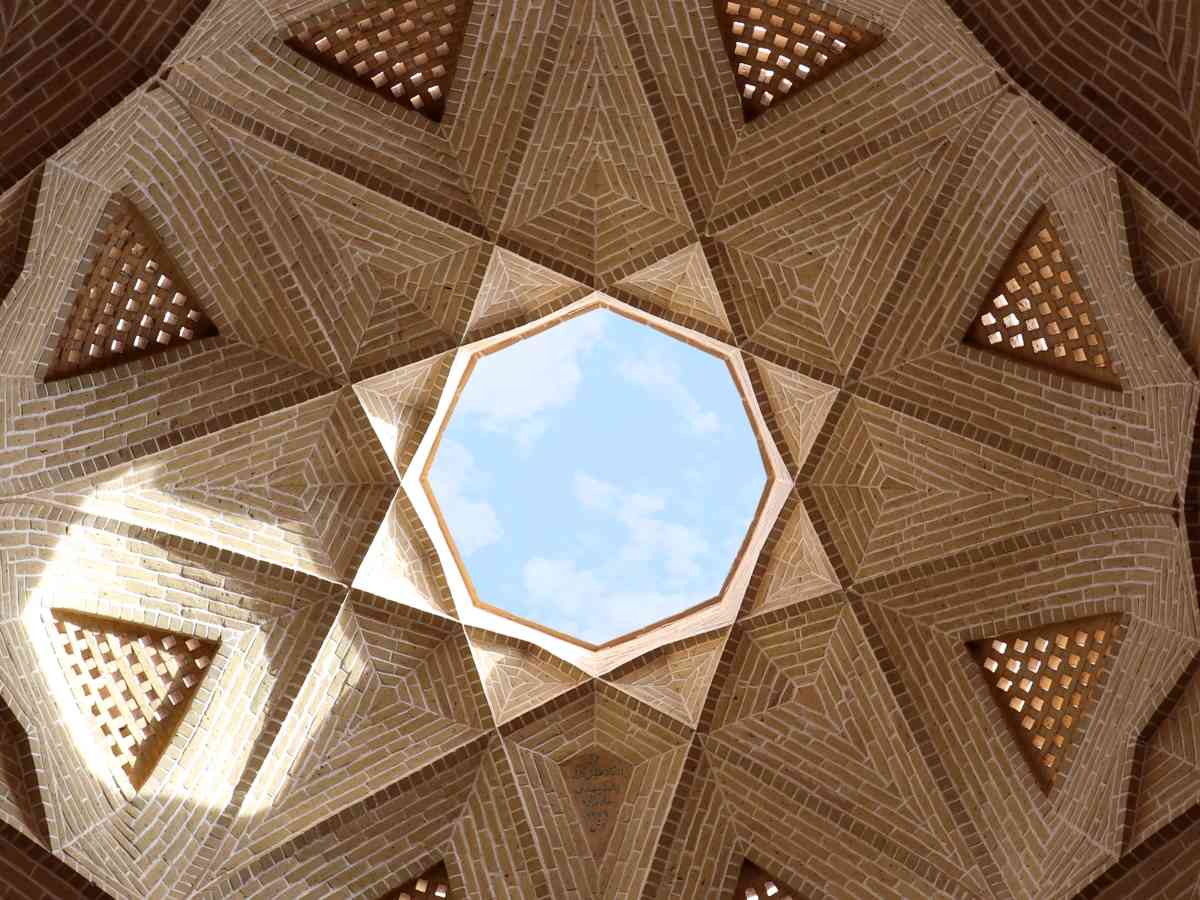
Pic Courtesy -Mohamad Mahdi Abbasi at unsplash.com
(The views expressed are those of the author and do not represent views of CESCUBE.)
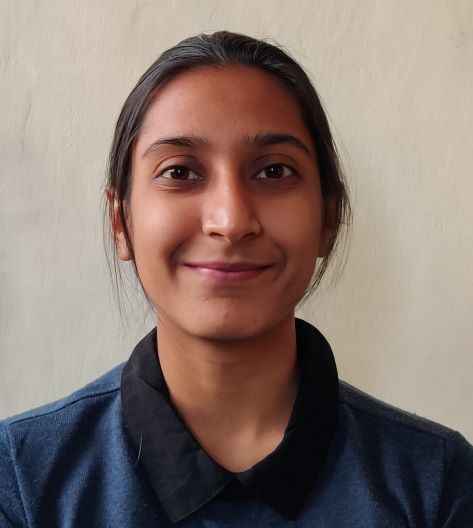
Apoorva Jain is a graduate in political science from Delhi University. Her interest in politics, governance and international relations led her to pursue a master's degree in Politics and International Studies from Jawaharlal Nehru University. Her research interests include Diplomacy, Indian Foreign Policy and Indo-Pacific Affairs. She is presently research intern with CESCUBE.