The Sino-US Realpolitik in the Pacific Region
The once politically peaceful, geographically isolated and sea-locked Pacific region is becoming a pawn in the game of power politics among traditional and regional powers over the past years. The assertive and bold Chinese behaviour in the...
The viral outbreak of COVID-19, originating in Wuhan China and causing a global pandemic, has literally brought the world to its knees with no signs of abating in sight. Nevertheless, the notoriously deadly outbreak has created an opportune moment for the People’s Republic of China (PRC) to flex its military muscles and expand its maritime reach particularly in the SCS and ‘harass’ its neighbours with Taiwan being ‘menacingly’ targeted. The People’s Liberation Army (PLA), in a complete show of force and domination sunk a Vietnamese fishing trawler In April 2020. In March 2020, Beijing conducted military exercises in the SCS, which is believed to be illustrative of its aggressive behaviour and threat to regional peace and tranquillity.
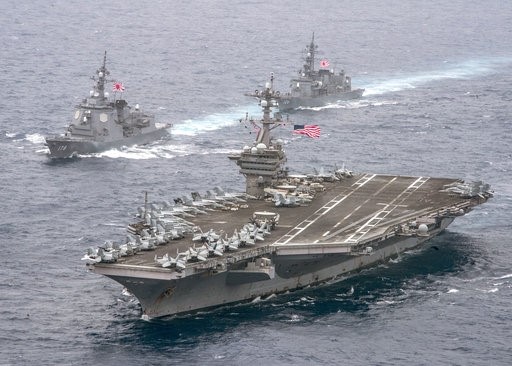
All these renewed Chinese aggressive power posturing come at a time when both regional and extra regional powers are grappling with the fast-pace outbreak of the COVID-19 and are intensively preoccupied to arrest the almost uncontrollable transmission of the deadly disease. Last month, the US warships halted their routine operations in the Asia-Pacific waters after the outbreak of COVID-19 aboard the USS Theodore Roosevelt aircraft carrier, where nearly 800 of its personnel were infected and one sailor died. Regardless of its strong denials, analysts believe the COVID-19 outbreak has provided PRC with the opportunity to ensure military gains beyond its continental shelf given that its potent adversary, the US, would not react immediately due to the life-threatening pandemic and tyranny of distance. For Beijing the situation was ripe to cast its net as wide as it possibly could, given its close proximity to the region – giving it a comparative advantage over the US.
However, despite being in a disadvantaged position during the COVID-19 pandemic, the US has reacted strongly by rolling out technologically advanced weaponry and strategy in a bid to ‘close a wide missile gap’ with PRC. There are reports that the Trump administration is aiming to deploy ‘long-range, ground-launched cruise missiles’ to the Asia-Pacific region. It is also fast-tracking deployment of new ‘long-range anti-ship missiles’ in decades. These strategic moves have infuriated Beijing, which urged US to “be cautious in word and deed,” and “stop moving chess pieces around” the region, and to “stop flexing its military muscles around China.” It also warned that Beijing would “not stand by, and firmly oppose that.”
Sinologists on the other hand argue, during the Russo-US cold war ideological rivalry, China mostly lay low and remained off the US radar for many decades. During this long period the US largely stood by while Chinese military strategists significantly expanded its military firepower and technological advancements, given that it was not party to the cold war Intermediate-range Nuclear Forces Treaty (INFT). The treaty banned the US and former Soviet Union from developing ground-launched ballistic and cruise missiles with a range of 500 to 5500 kilometres. Now the PLA, China’s armed forces, possess some of the most sophisticated long range missiles that arguably outrange those of US and its regional allies. It is due in large part to this ‘range war’ that the US is ramping up its military arsenal to counter Beijing’s overwhelming upper hand in land-based cruise and ballistic missiles.
The Pacific region is becoming a microcosm of a military confrontation between the two military giants. This begs the question as to why PRC is interested in the Blue Pacific. The first luring element is Beijing’s strategic interest in showcasing its military might and as part of its ‘island chain’ defence strategy to get military and naval access in the region. It is also claimed that in the event of a war with the US, China could resort to its sea denial strategy, which is basically meant to approach US ‘asymmetrically’. The region also provides an excellent opportunity for ‘Signals Intelligence Monitoring’. Before switching diplomatic allegiance to Taiwan, China had built a satellite tracking station in Kiribati. However, in 2019 the Kiribati government once again switched its diplomatic recognition to China. It is alleged that a Chinese satellite stationed in Kiribati could be used to monitor US defence system test site in Marshall Islands.
Furthermore, Beijing’s interest in the Pacific region also stems from its strategy to dislodge the United States as a dominant power. The geostrategic location of the Pacific islands has high strategic potential for the PLA, to deny US military intelligence gathering and naval manoeuvring rights across the Indo-Pacific. The presence of PLA in this strategic location, which is the link to a second island chain, will threaten US military bases in the region, as well as complicating its ability to operate unchallenged. In such an eventuality, the US activities will be severely curtailed and it would not remain a regional hegemon anymore. It is in this spirit that PRC is using its soft power and foreign aid with the Pacific Island Countries (PICs) to entrench its footprint there.
In addition, Beijing’s ‘dollar diplomacy’, as it is commonly known, has been exceptionally successful in alluring the cash-starved island nations to recognise and adhere to the infamous ‘One China Policy’ in the interest of sustainable inflow of Chinese aid. Besides aid, China has also hiked up its foreign direct investment and bilateral trade and commerce particularly with countries that have diplomatic relations with Taipei. Beijing considers Taiwan, staunch US ally, as its renegade province and hence aims to isolate it diplomatically. In 2019, two of Taiwan’s diplomatic allies, Solomon Islands and Kiribati, switched side and opened diplomatic relations with PRC.
Soon after the opening of new diplomatic relations with Beijing, a Chinese company signed a secretive deal securing an exclusive development right in the strategically located island of Tulagi in the Solomon Islands. The Solomon government called it off later, after perhaps realising its negative ramifications in the future. Prior to that, there were unconfirmed reports that Beijing was secretly negotiating the possibility of opening a naval base in Vanuatu after building a deep sea port on one of its strategic islands. Both governments later denied such a deal was in the making after it aroused a regional media frenzy particularly in Australia and New Zealand.
There is no doubt that PRC has grand global strategies. In recent years, Beijing has been projecting its economic power and military might in a quite brazen manner. Indeed, China has futuristic ambitions to become a global hegemon and introduce its own version of global order, which would significantly deviate from that of the current established Western version under the auspices of the US. Unlike the Western powers, which used their hard power to advance their ideological and territorial gains, for PRC it is the soft power, provision of much needed capital, to lead the way in expanding its ideational global reach. The Pacific developing and least developed island nations prefer to cooperate with China in a bid to secure its concessional loans and foreign direct investments – something that the traditional donors have largely neglected.
(Pic Courtesy-Sun Media Group)
(Saber Salem is Phd scholar with JSIA, O P Jindal Global University. His areas of interests are Pacific region, climate change and aid politics. The views expressed are personal)

Dr Saber Salem is an Associate Professor of International Relations and Diplomacy at the University of Fiji. Prior to joining academia, he worked with the United Nations in various roles and capacities and served as a Policy Analyst with the Canadian International Development Agency (CIDA). Dr Salem has authored and co-authored numerous scholarly articles published in Scopus-indexed journals in India and the United States. His research interests include foreign aid, conflict resolution, and climate change. He holds a Doctorate in Politics and International Relations from O.P. Jindal Global University.