Time to reinvigorate BIMSTEC
For India, the Bay of Bengal Initiative for Multi-Sectoral Technical and Economic Cooperation (BIMSTEC) presents an exceptional opportunity in forwarding its major foreign policy goals of ‘Neighbourhood first’ and ‘Act East. The geostrategi...
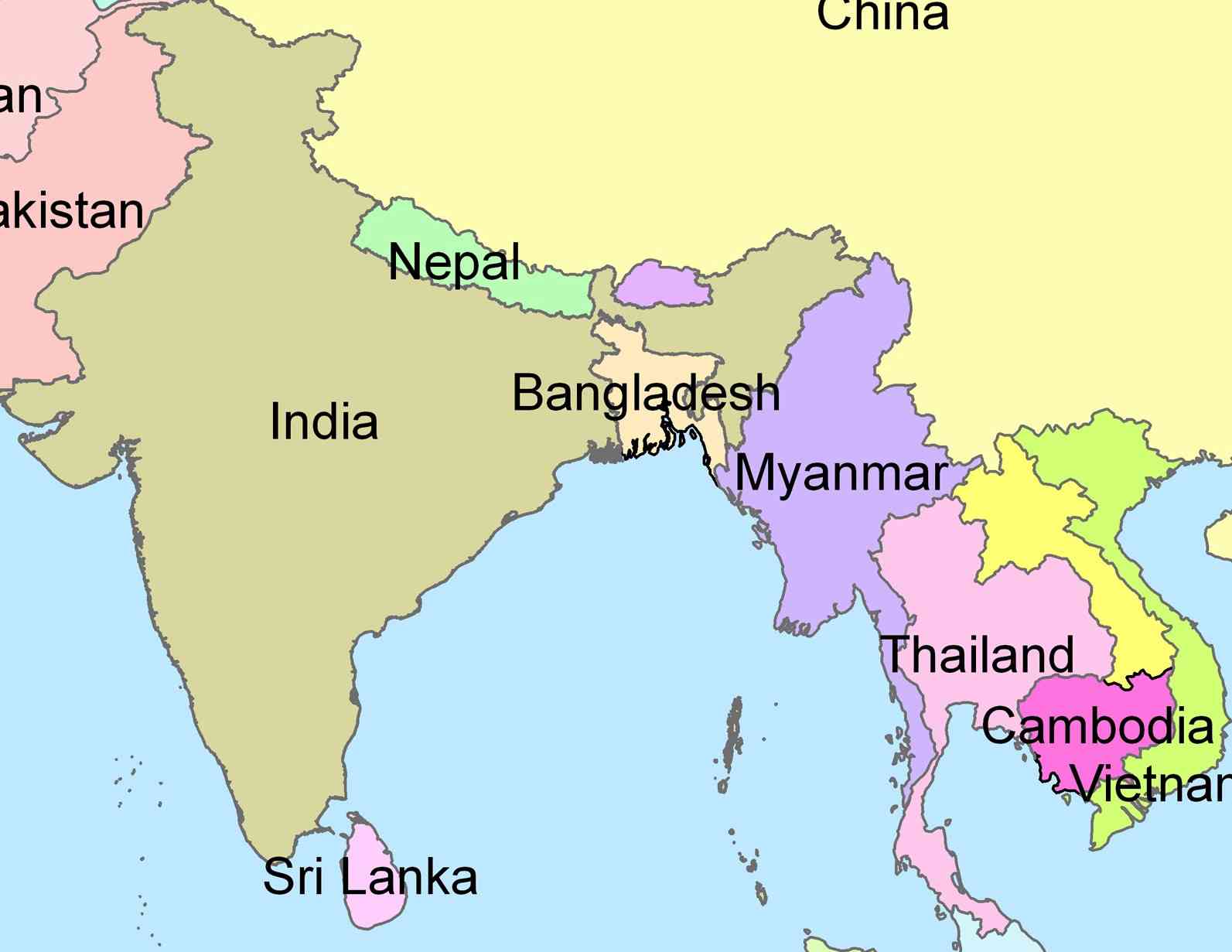
With the bickering of India-Pak relations coming in a way of smooth functioning of the SAARC, the prospect of BIMSTEC in taking forward the regional cooperation becomes glaring. BIMSTEC is a seven-member subregional that comprises the states lying and adjacent areas of the Bay of Bengal forming the contiguous regional unity. The group came into being on 6 June 1997 through the Bangkok declaration; touted as the Bay of Bengal Camp, the group also includes two south Asian landlocked countries – Nepal and Bhutan and stretches towards south-east Asia via Myanmar and Thailand. As this interregional group looking forward to celebrating its silver Jubilee next year it failed to emerge as the consistent regional structure upon which states of the Bay of Bengal can rely for connectivity and growth, four meetings have been conducted so far speaks about the issues faced by the organization to affect a paradigm shift in raising the level of our cooperation and regional integration.
Recently, the pundits on foreign affairs called for the reinvigoration of this sub-regional grouping largely in the effect of changing geopolitical scenario in the Indo-Pacific and China’s increasing footprint in the Indian Ocean. As we have learnt the sceptic relation between India and Pakistan have shattered the plans of SAARC which largely become defunct, India started to look towards BIMSTEC. The war-ridden Afghanistan where the Taliban is likely to prevail is another factor for India’s disenchantment towards SAARC. BIMSTEC merely replace the two of these states with Myanmar and Thailand, relocating India’s connectivity project targets from Central Asia to Southeast Asia. The inclusion of two ASEAN countries is instrumental in the connectivity and development of India’s northeast region as well as the grouping, for India, cater for the wider concept of Indo-Pacific and the Indian Ocean community long espoused by New Delhi. Furthermore, the growing footprint of China in the Indian ocean and the geostrategic importance of the Bay of Bengal for China resulted in the pivotal role of BIMSTEC in balancing Beijing in the region.
However, the BIMSTEC is often touted as India dominated intra-regional subgroup, other participants also see an opportunity in strengthening it as BIMSTEC means different for every member of the group. As for Sri Lanka, the assumed leadership is the chance to play a larger role in the Indian Ocean to prove itself indispensable in the Indian Ocean game. The group is vital in connecting Sri Lanka with other regional littorals and by providing alternatives, it can be instrumental in neutralizing mounting Chinese pressure in the country. Bangladesh, which has seen some quintessential growth rate in recent years and became the second-largest economy in South Asia is looking forward to maintaining the growth that cannot be possible without enhanced connectivity in the region. Bangladesh has been collaborating with India on some of the railroad connectivity projects an also shown interest to join the India-Myanmar-Thailand Trilateral highway project. Regional connectivity is at the heart of the BIMSTEC agenda therefore the landlocked countries like Nepal and Bhutan sees the organization as a way to further integrate with the Bay of Bengal. Myanmar and Thailand can also shove off the overdependence on the China by being part of the group and can diversify their foreign policy which heavily eschewed towards the ASEAN.
BIMSTEC, though being existed for more than 20 years, has achieved meagre visibility and interest. Now when the sub regional grouping started to gain momentum the members of the group should need to be clearing the obstacle hitherto faced by the group.
To start with the focus areas, BIMSTEC need to narrow down or at least need to prioritize the crucial sectors over other less relevant sectors. Trade, connectivity, and counter terrorism should be given priority over other sectors and the sectors allocation system need to be little cautious with the capability of respective country that will not save BIMSTEC from being cumbersome without producing results on the ground. BIMSTEC is the least connected area of the world despite having a population of 1.5 billion and a market of nearly $3 trillion, direly need to operationalize free trade agreement as soon as possible which is gathering dust after signing in the 2004, it could also broaden the areas its covers making it more comprehensive. The trade agreement cannot be effective without the enhanced connectivity in the region, but the region appears to be stuck in the uncompleted projects, lingering ahead of their finishing date. The kaladana multimodal connectivity projects and India-Myanmar-Thailand trilateral highway projects both are standpoint plan to connect India’s northeast region with neighbouring countries in addition it can upgrade the regional connectivity to next level. BBIN agreement signed in the 2015 permit the vehicle in each other territory helps these countries with increased interconnectivity furthermore, the Thailand port connectivity scheme of ‘connect he connectivities’ is also can be game changer in the regional connectivity drive which envisaged to connect the Bimstec members through the network of ports. However. All these projects should be the focus point of the group, the group needs to be more consistent in conducting meetings which has been postponed on a regular basis.
Although the strong and prosperous BIMSTEC presupposes the cordial and tension free bilateral relations among all its members, the recent spat in Indo-Nepal and Bangladesh-Myanmar relation show that it is not the case. Furthermore, the Myanmar coup has thrown the new challenges of border management in front of other countries, the military set up and brutal crackdown on protester has downplayed Myanmar’s image as a partner for peace and stability. China’s presence in the Southeast Asia and South Asia always had limiting effect on Indian Influence and the Calls for adding China, that can be heard sporadically, in the group, is the attempt to blend the group with counter balancing powers. India needs to be careful from rendering itself as the big brother rather time warrants India to reinvigorate ‘Gujral Doctrine’ which will supposedly be conducive for India’s interest to promote peace and prosperity in the neighbourhood without being understood as a dominant power.
References
1. Sudha Ramachandran (May 31, 2019), ‘India’s BIMSTEC Gambit’, The Diplomate.
https://thediplomat.com/2019/05/indias-bimstec-gambit/
2. Sohini Nayak and Sreeparna Banerjee, “The Role of BIMSTEC in Revitalising India's Northeast,” ORF Special Report No. 150, June 2021, Observer Research Foundation.
https://www.orfonline.org/research/the-role-of-bimstec-in-revitalising-indias-northeast/
3. MEI (June 2021), India-BIMSTEC, Gov.in.
https://mea.gov.in/Portal/ForeignRelation/BIMSTEC_June_2020.pdf
4. Harsh V. Pant (August 30, 2018), ‘Making Sense of India’s Revived Interests in BIMSTEC’, The Diplomate.
5. https://thediplomat.com/2018/08/making-sense-of-indias-revived-interests-in-bimstec/
6. What is BIMSTEC and why is it important for India? Hindustan Times, New Delhi, AUG 30, 2018
https://www.hindustantimes.com/india-news/what-is-bimstec-and-why-is-it-important-for-india/story-SPT8asnufTPmW1kxG5PLaP.html
7. BIMSTEC, About BIMSTEC
https://bimstec.org/?page_id=189
8. Smita Shrivastava, “BIMSTEC: Political Implications for India,” The Indian Journal of Political Science, Indian Political Science Association, Vol. 66, No.4, (October-December 2005), 986
http://dcac.du.ac.in/documents/E-Resource/2020/Metrial/511CihnnitaBaruah1.pdf
9. Maritime Gateway, “India-Myanmar-Thailand Trilateral Highway: Significance,” December 29, 2020.
https://www.maritimegateway.com/india-myanmar-thailand-trilateral-highway-significance/
10. Need for paradigm shifting raising level of cooperation in BIMSTEC,” India News Network, April 1, 2021.
https://www.indianewsnetwork.com/20210401/need-for-paradigm-shift-in-raising-level-of-cooperation-in-bimstec-eam
11. Gurpreet S. Khurana, “BIMSTEC and Maritime Security: Issues, Imperatives and the Way Ahead,” Maritime Foundation, November 16, 2018.
https://www.maritimeindia.org/View%20Profile/636781234421341565.pdf
Pic Courtesy- IDSA GIS Lab
(The views expressed are those of the author and do not represent views of CESCUBE.)

Gaurav Sen is a graduate from Delhi University. He is currently doing his Masters in International relations from Jawaharlal Nehru University, New Delhi. His research area includes IR theories, Great Power competition in Indo-Pacific, Maritime Security, Emerging Warfare Concepts, and Military Strategies.