Trans Pacific Partnership (TPP) or CPTPP: Will US return to its fold?
Trans-Pacific Partnership (TPP) or the rechristened Comprehensive and Progressive Agreement on Trans-Pacific Partnership (CPTPP) represents a regional situation of flux, with tariff wars and decoupling of technology taking place amidst mega...
This was a time when the two nations and the US in general moved with the intentions of advancing high quality economic standards for the countries of the region. The vision was of prime importance because it represented the sole opportunity of challenging against China’s rule-based approach at the time. Hence, the TPP was originally formed to confront Chinese market distorting policies and to further United States regional economic vision. The Comprehensive and Progressive Agreement for Trans-Pacific Partnership (CPTPP) on the other hand, is a free trade agreement (FTA) between Australia, Brunei Darussalam, Canada, Chile, Japan, Malaysia, Mexico, Peru, New Zealand, Singapore, and Vietnam having been signed by the 11 countries on 8 March 2018 in Santiago, Chile.
The region underwent geopolitical transformations when the United States had to turn inwards on account of its inability to manage its domestic economy and China taking advantage of the situation. China soon increased its industrial intervention and enhanced its self-sufficiency to the maximum. The new Asian reality witnessed a new strategic competition when with US withdrawal, Japan acquired a new Pivot’s role in the Pacific. Comprehensive and Progressive Trans-Pacific Partnership emerged as a new branding but faced the tremors of its past identity. With the emergence of the Regional Comprehensive Economic Partnership (RCEP), middle power diplomacy assumed significance.
To answer the question if the United States would rejoin CPTPP, it is important to consider the grounds of its withdrawal. Some supporters argue that ideally, TPP held the potential to have cured and improved US’s trade and investment streak, spurred economic growth, created jobs, all of this while advancing the US hegemony in the Asia Pacific region. Yet, however, Donald Trump saw the plan as contrary to US’s interest and withdrew to protect its decline in manufacturing and equity. Trump in fact emphasized on making USA whole again by prioritizing “America first”. Therefore, it would not be wrong to suggest that it was the opposition from the US political spectrum that, Obama’s TPP under his Pivot to Asia faced opposition. This led to US trade deficit and resulted in its manipulation rather than doing it any good. It also faced criticism due to the persistent fear of labor and environmental standards being eroded. TPP was equated to the experience of NAFTA which led to jobless manufacturing in 1994.
Ultimately after Trump’s exit in 2017, the revamped CPTPP emerged in 2018, retaining its original TPP intent but with some adjustments. The most significant change was with regards to intellectual property. In contrast to TPP’s critical over emphasis on copyright terms, investor-state dispute settlement and automatic patent extensions, CPTPP did away with most of these long procedures. It partially relaxed labor and environmental rules and limited the scope of provisions. The agreement, which was based on the central idea of expansion, however facing contention, is now experiencing renewed interest from Thailand, Colombia, and South Korea amongst others. It remains to be seen that how and for how much longer can US resist taking back its own brainchild. Not to forget, if it does not, China enjoys the driver’s seat and an unwavering Indo-Pacific to behold. With Biden’s presidency, it is important to see how US acts ahead. In his presidential campaign, Biden underlined his alignment with TPP’s original intent as not being a bad one. Yet however, he has also emphasized that the US domestic economy is not fully ready to commit to the transformed TPP. Also, while the CPTPP countries would be more than willing to welcome US back, it would be a tough call given the many political concessions that have taken place. It would be wise instead for US to explore the idea of pursuing the region again narrowly and step by step. That is, what it is doing through its QUAD membership or must with the CPTPP member countries otherwise.
US’s rejoining is also at a critical point now because with the finalization of RCEP and China’s clear intent of joining CPTPP, regional diplomacy in the region faces a myriad of geo-political interests. US now finds itself outside the Asian question, especially given Trump’s isolationism, the countries in Asia seem keen to move away from the American shadow. In this scenario, even if the new Biden administration as seemingly more internationalist in its approach does pacify the domestic opposition to re-signing of the CPTPP trade deal, it is yet to note how this will unfold. Especially, given the fact that all the provisions US earlier resented and as a result withdrew, are still only suspended, and not revoked. This leaves the possibility for them being reintroduced once again. Also, it remains unclear if the other countries would be willing to comply with US demands and standards, having left them dismayed earlier with its rigid and capricious stance. CTPPP members would be faced with a choice between a stringent US and a forced China who is expected to comply with the present rules.
Joining the CPTPP beholds the US desire to strengthen Taiwan. Since Taiwan has expressed its willingness to join the agreement, this would provide US with an ideal opportunity to do so. Similarly, it would be beneficial for dealing with the United Kingdom which has also floated the idea of joining the CPTPP. And finally, until and unless, the US joins the CPTPP it will continue to be outside the Asian platform and benefits especially when China has shown the willingness to join it.
When the US first drafted TPP, it knew the choice was going to be between being subjected to extra WTO standard regional trade rules at the cost of containing China or ignoring the idea altogether. Importantly, it is also critical to observe that it was only TPP’s initial intent that has been the defining feature. In fact, the region has and continues to grow interconnected through trade ties. All prospective TPP members have been a part of the Asia-pacific regional trade agreements. Further ahead with TPP and RCEP, the aim has only intensified. The rejoining of US requires approval of all the existing members. Therefore, if it decides to rejoin, it must do before China does. Even if china doesn’t, delay in re-entry only leaves US harmed as China continues to expand and assert through the RCEP.
References
1. Akimoto, D. (2021, february 12). Japan Expects Biden to Rejoin the TPP. Retrieved from the diplomat: https://thediplomat.com/2021/02/japan-expects-biden-to-rejoin-the-tpp/
2.Buxbaum, P. (2021, february 22). Will CPTPP welcome US back? Retrieved from ajot: https://ajot.com/premium/ajot-will-cptpp-welcome-us-back
3.Daniel C.K. Chow, I. S. (2018). How The United States Withdrawal From The Trans-Pacific Partnership Benefits China. University Of Pennsylvania Journal Of Law & Public Affairs, 38-77.
4.Hung, H.-f. (2020, november 8). After RCEP’s Launch, the US Urgently Needs to Rejoin the TPP. Retrieved from the diplomat: https://thediplomat.com/2020/11/after-rceps-launch-the-us-urgently-needs-to-rejoin-the-tpp/
5.James McBride, A. C. (2021, feb 21). What’s Next for the Trans-Pacific Partnership (TPP)? Retrieved from cfr.org: https://www.cfr.org/backgrounder/what-trans-pacific-partnership-tpp
6.Miere, C. L. (2020, november 26). Is it too late for the US to join the CPTPP? Retrieved from channel news asia: https://www.channelnewsasia.com/news/commentary/us-china-rcep-tpp-cptpp-trade-joe-biden-join-trans-pacific-13635230
7.Solís, M. (2017, march 24). Trump withdrawing from the Trans-Pacific Partnership. Retrieved from brookings: https://www.brookings.edu/blog/unpacked/2017/03/24/trump-withdrawing-from-the-trans-pacific-partnership/
8.Solís, M. (2021, january 4). Is America back? The high politics of trade in the Indo-Pacific. Retrieved from brookings: https://www.brookings.edu/blog/order-from-chaos/2021/01/04/is-america-back-the-high-politics-of-trade-in-the-indo-pacific/
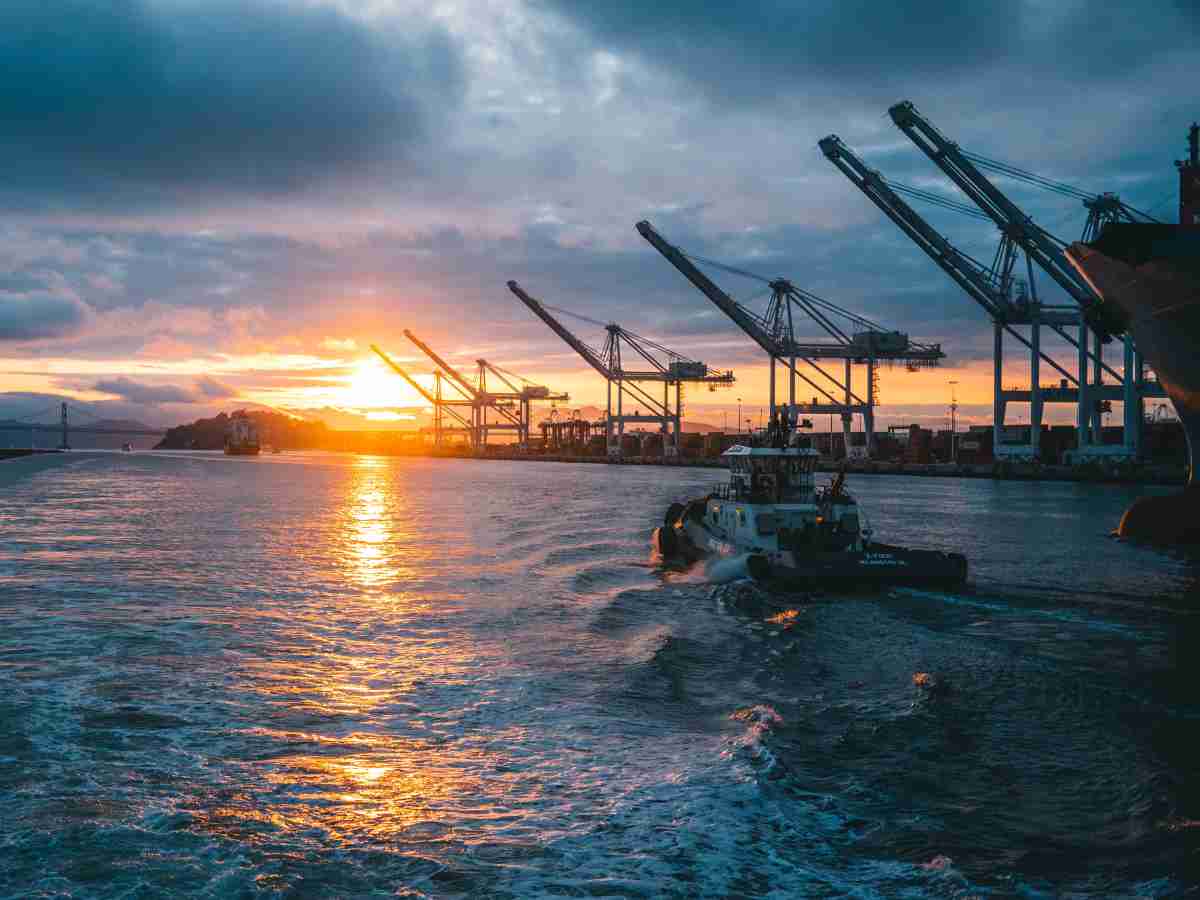
Pic Courtesy-Ronan Furuta at unsplash.com
(The views expressed are those of the author and do not represent views of CESCUBE.)

Aastha Saluja is a graduate from lady Shri Ram college, Delhi University and is currently pursuing her masters in politics with specialization in international relations at Jawaharlal Nehru University. Her area of interest includes emerging trends of the Indo -pacific region and challenges of democratization and economic development post Cold War.