LIVE DISPATCH
Loss and Damage Finance: From COP28 Pledges to Policy Architecture Extended Deterrence Under Strain: Credibility, Assurance, and the Stability-Instability Paradox in the Indo-Pacific Beyond Consultation: BIMSTEC's Emerging Role in Regional Intelligence and Security Cooperation Maritime India: Security, Trade, and Great Power Competition Between the Desert and the Savannah: Conflict and the Political Economy of Instability in the Sahel Beyond Ukraine: Understanding Putin's Vision of Russian Power The Politics of Ali Khamenei's Funeral Silicon Sovereignty: How Semiconductors Are Redrawing Global Power Hierarchies Operation Sindoor and the Changing Dynamics of India–Pakistan Security The Negative Impact of US–Iran War on the Pacific Region Generative AI, Labour Sovereignty, and the Geoeconomics of India's Service Economy BRICS Expansion and the Multipolar Moment: Opportunity or Strategic Contradiction? India's AI Diplomacy and the Future of Strategic Technologies Foot-Dragging as Feminism: Iran, South Korea, and the Ungovernable Body Lethal Autonomous Weapons Systems and the Governance Deficit: Challenges to International Humanitarian Law and Accountability Beyond Proximity: Why the UAE Occupies a Growing Place in Iran’s Strategic Calculus Great Power Rivalry and the Crisis of the United Nations Why Fiji Matters: The New Geopolitics of the Indo-Pacific Islands Ten Years After Brexit: Regret, Reform, or Reversal? The Long Shadow of 1953: Understanding the Iran–US Conflict Sports, Strategy and Statecraft of Mega Sporting Events as Geoeconomic Instruments: Qatar 2022 to Saudi Arabia 2034 Border Fencing and National security: India’s Strategy along the Bangladesh Border Hardening the Quad: From Strategic Dialogue to Operational Cooperation Lingering Effects of the Bush Doctrine on Contemporary US Foreign Policy The Maghreb of States: Identity, Sovereignty, and the Limits of Non-Interference India’s BRICS 2026 Chairmanship Navigating a tightrope Amidst the Chinese Geopolitical Rise Beyond the Battlefield: Understanding Unconventional Security Challenges in Contemporary Geopolitics The Control Paradox: How Proxy Warfare Enables Strategic Deniability While Constraining Strategic Control Trapped in Deterrence: Nuclear Stability and the Persistence of Conflict in South Asia The Return of Unipolarity? U.S Strategic Primacy and the Future of the Global Order Supply Chains and Complicity: The Role of Global Corporations in Forced Labour in Xinjiang The Distant Threat: Is Israel Constructing a Strategic Rival in Pakistan Island Militarisation and Techno-Diplomacy: Turkey’s Eastern Mediterranean Fault Lines Amid India-Greece Alignment India’s Security Scenario: An Assessment of its Continental and Maritime Challenges The Geopolitical Architecture of European Defence: Navigating NATO Synergies, Transatlantic Retrenchment, and the Hybrid Threat Landscape The Artemis Accords and the Future of Global Space Governance AI and the Securitization of Critical Infrastructure: Implications of India's AI Summit Beyond Rhetoric: Evaluating the Effectiveness of International Sanctions on China’s Treatment of Uyghur Muslims The Emerging Maritime Rivalry in the Western Indian Ocean: India’s Response to Extra-Regional Powers India's Maritime Grand Strategy on Trial : The IRIS Dena Incident and the Indian Ocean Question Loss and Damage Finance: From COP28 Pledges to Policy Architecture Extended Deterrence Under Strain: Credibility, Assurance, and the Stability-Instability Paradox in the Indo-Pacific Beyond Consultation: BIMSTEC's Emerging Role in Regional Intelligence and Security Cooperation Maritime India: Security, Trade, and Great Power Competition Between the Desert and the Savannah: Conflict and the Political Economy of Instability in the Sahel Beyond Ukraine: Understanding Putin's Vision of Russian Power The Politics of Ali Khamenei's Funeral Silicon Sovereignty: How Semiconductors Are Redrawing Global Power Hierarchies Operation Sindoor and the Changing Dynamics of India–Pakistan Security The Negative Impact of US–Iran War on the Pacific Region Generative AI, Labour Sovereignty, and the Geoeconomics of India's Service Economy BRICS Expansion and the Multipolar Moment: Opportunity or Strategic Contradiction? India's AI Diplomacy and the Future of Strategic Technologies Foot-Dragging as Feminism: Iran, South Korea, and the Ungovernable Body Lethal Autonomous Weapons Systems and the Governance Deficit: Challenges to International Humanitarian Law and Accountability Beyond Proximity: Why the UAE Occupies a Growing Place in Iran’s Strategic Calculus Great Power Rivalry and the Crisis of the United Nations Why Fiji Matters: The New Geopolitics of the Indo-Pacific Islands Ten Years After Brexit: Regret, Reform, or Reversal? The Long Shadow of 1953: Understanding the Iran–US Conflict Sports, Strategy and Statecraft of Mega Sporting Events as Geoeconomic Instruments: Qatar 2022 to Saudi Arabia 2034 Border Fencing and National security: India’s Strategy along the Bangladesh Border Hardening the Quad: From Strategic Dialogue to Operational Cooperation Lingering Effects of the Bush Doctrine on Contemporary US Foreign Policy The Maghreb of States: Identity, Sovereignty, and the Limits of Non-Interference India’s BRICS 2026 Chairmanship Navigating a tightrope Amidst the Chinese Geopolitical Rise Beyond the Battlefield: Understanding Unconventional Security Challenges in Contemporary Geopolitics The Control Paradox: How Proxy Warfare Enables Strategic Deniability While Constraining Strategic Control Trapped in Deterrence: Nuclear Stability and the Persistence of Conflict in South Asia The Return of Unipolarity? U.S Strategic Primacy and the Future of the Global Order Supply Chains and Complicity: The Role of Global Corporations in Forced Labour in Xinjiang The Distant Threat: Is Israel Constructing a Strategic Rival in Pakistan Island Militarisation and Techno-Diplomacy: Turkey’s Eastern Mediterranean Fault Lines Amid India-Greece Alignment India’s Security Scenario: An Assessment of its Continental and Maritime Challenges The Geopolitical Architecture of European Defence: Navigating NATO Synergies, Transatlantic Retrenchment, and the Hybrid Threat Landscape The Artemis Accords and the Future of Global Space Governance AI and the Securitization of Critical Infrastructure: Implications of India's AI Summit Beyond Rhetoric: Evaluating the Effectiveness of International Sanctions on China’s Treatment of Uyghur Muslims The Emerging Maritime Rivalry in the Western Indian Ocean: India’s Response to Extra-Regional Powers India's Maritime Grand Strategy on Trial : The IRIS Dena Incident and the Indian Ocean Question
ADVERTISEMENT
Politics May 29, 2022 1504 Reads

Ukraine’s Bid to Join EU: How stakeholders are responding?
G
By Gaurav Sen
Author • Centre for Security & Strategic Studies
Ukraine’s Bid to Join EU: How stakeholders are responding?
Share Analysis:
EXECUTIVE SUMMARY & STRATEGIC TAKEAWAYS

After leaving the Soviet Union in 1991, Ukraine has indeed been eager to forge its own path, establishing deeper ties with other part of Europe. Although, Ukraine has had tight relations with Russia, which is determined to retain ...

ADVERTISEMENT

Before that, under the auspices of the Eastern Partnership(EaP), the EU has offered significant assistance to Ukraine, Georgia, and Moldova during the previous decade . The huge sums in aid have surely contributed to Ukraine's cultural and structural resilience, which has wowed the international community since the invasion began. However, the EU has refused to issue what these countries claim would be a game-changer for them: a membership offer. Since the late 2000s, the EU has believed that a "halfway house" approach would better serve its geopolitical interests in the region. It did not accept Russia's contention that the EaP states are in a privileged sphere of influence, instead providing significant support to the EaP states, despite their clear refusal to grant them membership. This was a delicate and unsettling blend of collaborating and defensive-realist geostrategic thinking. As a consequence of the war, the topic of these countries joining the EU is once again on the table. Ukraine has reinforced its call for a positive indicator, claiming that perhaps the war has made it all the more urgent. Georgia and Moldova have also officially requested for membership, feeling more insecure than ever. Until yet, the EU's reaction has been indecisive and split. "We want them in," stated European Commission President Ursula von der Leyen. The EU should provide Central European and Baltic states a participation viewpoint, and the European Parliament has voted in support of this. France, Germany, the Netherlands, Denmark, Spain, and others have reacted more negatively, emphasizing the impossibility of enlargement occurring anytime soon. The member countries requested the European Commission to resume assessing the three membership applications on March 7, signalling a possible shift in policy. Yet, at their two summits since then, leaders have equivocated and refused to deliver the Association Trio a firm, unambiguous promise.

Many Western diplomats suspected Putin was trying to remove Zelensky and start with a more pro-Kremlin leader when Russian military invaded Ukraine more than a month ago. The move virtually put an end to Ukraine's on-again, off-again attempt to strengthen ties with NATO and the EU, a ploy that Russia strongly opposes. The Russian military, on the other hand, has faced stiffer-than-expected Ukrainian resistance, which may force it to scale down its aspirations. The Kremlin stated earlier this month that it is open to neutrality for Ukraine, similar to Austria or Sweden, neither of which are NATO members. However, knowing the potential conflict Diplomats from Russia and Ukraine are considering a compromise that would require Ukraine to be militarily neutral, prohibiting it from entering NATO or harbouring foreign bases, but would allow it to seek assurances from other nations and pursue EU membership.

Although NATO indicated in 2008 that it will eventually join Ukraine, Ukraine enacted a constitutional amendment in 2019 that entrenched NATO and EU membership as objectives for the country. However, progress has been slow. Membership of the single market of EU is also a difficult and time-consuming procedure that requires Ukraine to achieve a number of political, economic, and legal prerequisites as well as gain unanimous support from the bloc's 27 members. However, France's Europe minister has stated that the Ukrainian quest to join the European Union will not be finalized for '15 or 20 years.' This has dealt a blow to the hopes of the Ukrainian membership into the European Union. Looking from Ukrainian Point of View apart from its security needs it has huge economic imperatives to Join European Union. In the sector of renewable power, the European Union is Ukraine's major economic partner. This is unaffected by Russian aggression or conflict. Ukraine's exports of metallurgy, agricultural products, and mechanical engineering to the EU surged by 150 percent in 2021 alone. Ukraine's exports include more than just items. Exports in the IT industry topped $5 billion last year. Ukraine is also the most desirable country in Eastern Europe for IT outsourcing and recruiting IT professionals. Ukraine's exports to the EU totalled 19.1 billion euros in 2019. As a result, Ukraine's economic and trade connections with the EU have a lot of promise. On Ukrainian soil, 30 percent of the world's chernozem, one of Europe's most fertile soils, is found.

The EU will need to rethink its policy regarding Ukraine and other Eastern European countries in the aftermath of the war. Much has been said about how the invasion has sparked new European solidarity and prompted the EU to take previously unimaginable initiatives, such as supplying Ukraine with weaponry. Following the EU's misreading of Eastern Europe's geopolitical tendencies previous to the incursion, a much more Ukraine-led, more pragmatic approach to the accession process is now more appropriate. While member states have increased their defense spending, the EU will require a more optimistic perspective and more efficient power over regional political developments.

Notes

1.       How the EU is supporting Ukraine | News | European Parliament: https://www.europarl.europa.eu/news/en/headlines/world/20220127STO22047/how-the-eu-is-supporting-ukraine

2.     EU solidarity with Ukraine | European Commission: https://ec.europa.eu/info/strategy/priorities-2019-2024/stronger-europe-world/eu-solidarity-ukraine_en

3.      Ukraine’s EU Membership and the Geostrategy of Democratic Self-Preservation - Carnegie Europe - Carnegie Endowment for International Peace: https://carnegieeurope.eu/2022/04/01/ukraine-s-eu-membership-and-geostrategy-of-democratic-self-preservation-pub-86771

4.     Will Ukraine Join The EU? After Country Completes Membership Questionnaire, Here’s What Could Come Next: https://www.forbes.com/sites/alisondurkee/2022/04/18/will-ukraine-join-the-eu-after-country-completes-membership-questionnaire-heres-what-could-come-next/?sh=31dd2d19f9a1

5.     France sees EU membership for Ukraine in '15 or 20 years': minister - The Hindu: https://www.thehindu.com/news/international/france-sees-eu-membership-for-ukraine-in-15-or-20-years-minister/article65447418.ece

6.     Ukraine’s Road to EU Membership | Center for Strategic and International Studies: https://www.csis.org/analysis/ukraines-road-eu-membership


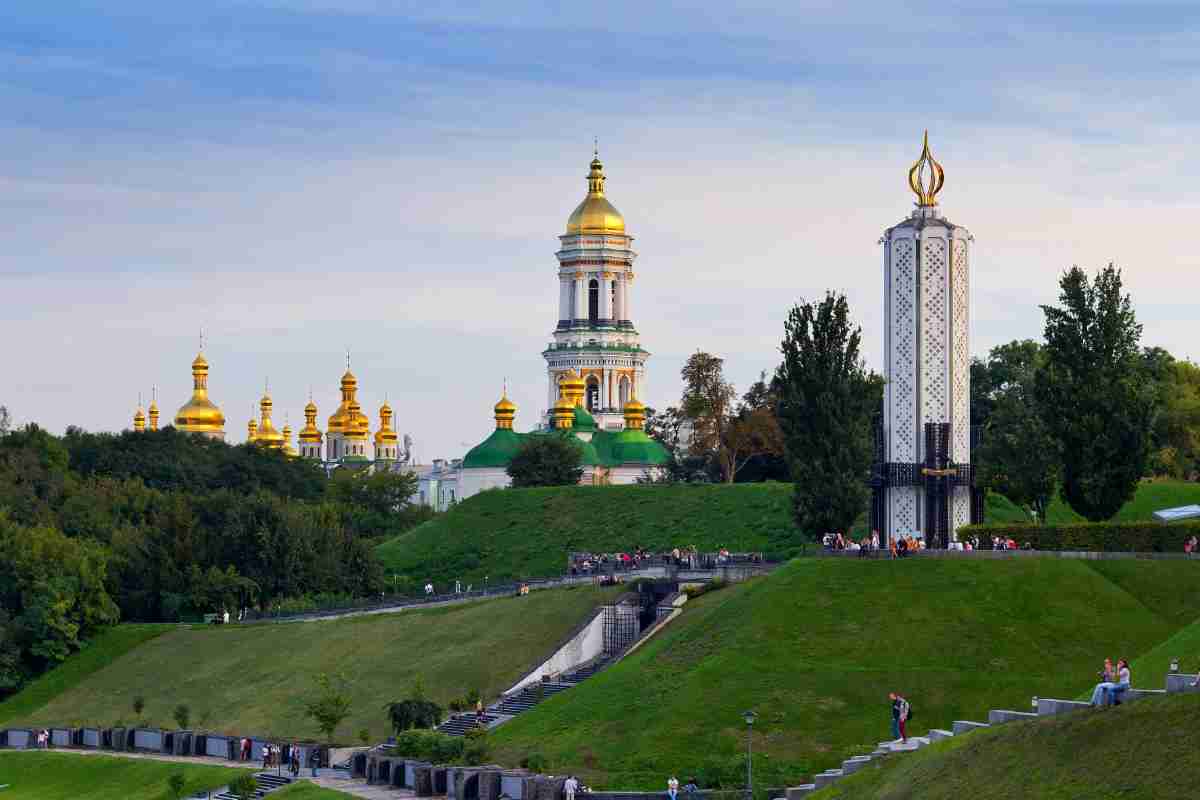
Pic Courtesy-eugene at unsplash.com

(The views expressed are those of the author and do not represent views of CESCUBE.)

Topics & Index: #Eastern Partnership
Gaurav Sen
About Gaurav Sen →

Gaurav Sen is a graduate from Delhi University. He is currently doing his Masters in International relations from Jawaharlal Nehru University, New Delhi. His research area includes IR theories, Great Power competition in Indo-Pacific, Maritime Security, Emerging Warfare Concepts, and Military Strategies.
ADVERTISEMENT

Related Strategic Analysis