Understanding Japan’s Diplomacy in the 208th Session of the Diet
On 17 January 2022, the Japanese Foreign Minister Hayashi gave a foreign policy speech at the 208th Session of the National Diet and focused on the key factors of Japanese Diplomacy. The present article would be highlighting these key facto...
Foreign Minister Hayashi spoke about “opening a new frontier of Japanese Diplomacy with three determinations amid the epoch-making changes”, where he highlighted that the present global community was being confronted with epoch-making changes which focused on the balance of power becoming more and more complex.[1] The complexity of the global scenario was worrying for Japan as the security environment around Japan was becoming increasing severe as well as uncertain and this happening because of the challenges created by the advent of innovation technologies. It has to be understood that China has continuously investing in developing its technological means in all domains and this can be seen in the 14th Five Year Plan and Vision 2035 document of China. Further, the document has said that China to needs to improve toward a strong military and economic growth which would be a part of the new journey that China is taking.[2] North Korea too has been developing its ballistic missile system and these concerns (China and North Korea) has made Japan vary of technological development as they pose a direct threat to Japan’s security and create an imbalance in the balance of power situation.
Another issue which was highlighted in this speech was about the challenges faced due to the countries not following the universal values of freedom, democracy, human rights and rule of law and this has a serious impact on the global situation. Today, the world is facing issues on multiple fronts like the resurgence of the COVID-19 cases globally, climate change effects, disarmament and non-proliferation and on the contrary, many countries are trying to centralise their power globally and to achieve this, many of them are creating instability for their own selfish reasons. It is important to understand that Japan over the years has invested and worked extremely hard to build trust and foster relations globally over generations and this has been the bedrock of Japanese diplomacy where it focused on need to defend universal values, safeguarding peace and stability of Japan along with advocating humankind by leading by example. Today, these efforts are being threatened.
Cornerstone of Japanese Diplomacy
The primary cornerstone of Japan’s foreign policy is the US-Japan alliance which aims for peace and prosperity in the region of the Indo-Pacific. It has to be understood that under the Kishida administration, the relations between the two countries will continue to grow and strengthen and this was reaffirmed in the Japan-US 2+2 meeting. In the present times, the two countries have agreed to work and collaborate on issues such as combatting the Coronavirus, dealing with climate change and taking the Free and Open Indo-Pacific vision forward.[3] One has to understand that the engagement between US and Japan is only set to grow especially with regard to Chinese expansionism and also the problems that China has been constantly causing whether at the US-China trade rivalry or at the Senkaku Islands.
The second cornerstone of Japan’s Foreign Policy is the free and Open Indo-Pacific vision which aims for peace, prosperity and maintaining rule of law with like minded countries like the US, Australia, India, ASEAN and Europe along with focusing more on the Quad. Apart from a global perspective, Japan is concerned about its neighbourhood especially China and North Korea. China’s continuous attempts on Senkaku Islands is a sour point between Japan and China and these disruptions are against the international laws as China is using force and coercion. North Korea is another issue as North Korea is involved in abductions, nuclear and missile issues against Japan. Russia is another problem point for Japan as there are disputes over the Northern territorial issues. It has to be understood that Japan is in a rather volatile environment where it is surrounded by adverse conditions and their national interest is at stake. That is preciously the reason, Japan has been emphasising on working on peaceful relations in its neighbourhood and also working on building better relations with other countries involved in the Quad.
The third cornerstone is regional diplomacy which mainly focuses on strengthening Japanese diplomatic relations with ASEAN, Middle East, Afghanistan, Latin America, Africa and Caribbean countries. Japan is the only country in the world which has excellent working relations with almost all countries in the world and has always supported countries with humanitarian aid and assistance in times of need. Even in the present time of the Coronavirus, it aims to medically support other countries and help them fight this deadly virus.
Economic security is the fourth cornerstone of Japan’s foreign policy. It aims to focus on building efforts on expanding a free and fair economic order with like minded countries and this has also been supported by the Kishida administration. This is followed by the Global issues point where Japan has been extremely vocal about the sustainable development goals which mainly cover marine flora and fauna, marine plastic litter, biodiversity conservation, refugees and displaced people, counter terrorism and promoting gender equality along with protecting human rights.[4]
Conclusion
Japan’s foreign policy cover a wide range of aspects and aim for a balanced diplomatic vision for oneself. As the world is getting revamped, Japan too is looking at other ways to revamp its country and its outlook and to do so, it is embarked on a journey of digitalisation. Japan is working to create a global community which helps to cooperate with Japanese immigrants and focuses on people-to-people interactions. Japan understands that foreign policy needs to go hand in hand with military policy and so, it has been working to strengthen its military policy and has also increased its defence budget for the same. Also, Japan’s economic growth is much needed and so, Japan has been investing in economic diplomacy to not only give world class goods and services to the world but also help create and balance out its economic bubble bursts that it has been facing for many years now. The changes in the security policy are also another interesting turn in the foreign policy especially with regard to China’s overgrowing and concerning presence in the East China Sea and South China Sea. Thereby, Japan’s cornerstone of foreign policy would keep evolving in the coming years which would help Japan become a stronger country in the future.
Notes
[1] Ministry of Foreign Policy. 2022. Foreign Policy Speech by Foreign Minister Hayashi to the 208th Session of the Diet, January 17, 2022 https://www.mofa.go.jp/fp/pp/page3e_001166.html accessed on 21 January 2022.
[2] The People’s Republic of Fujian Province. 2021. “Outline of the 14th Five-Year Plan (2021-2025) for National Economic and Social Development and Vision 2035 of the People's Republic of China”, 9 August 2021. https://www.fujian.gov.cn/english/news/202108/t20210809_5665713.htm#C1 Accessed on 22 January 2022.
[3] Ministry of Foreign Policy. 2022. Foreign Policy Speech by Foreign Minister Hayashi to the 208th Session of the Diet, January 17, 2022 https://www.mofa.go.jp/fp/pp/page3e_001166.html accessed on 21 January 2022.
[4] Ibid.
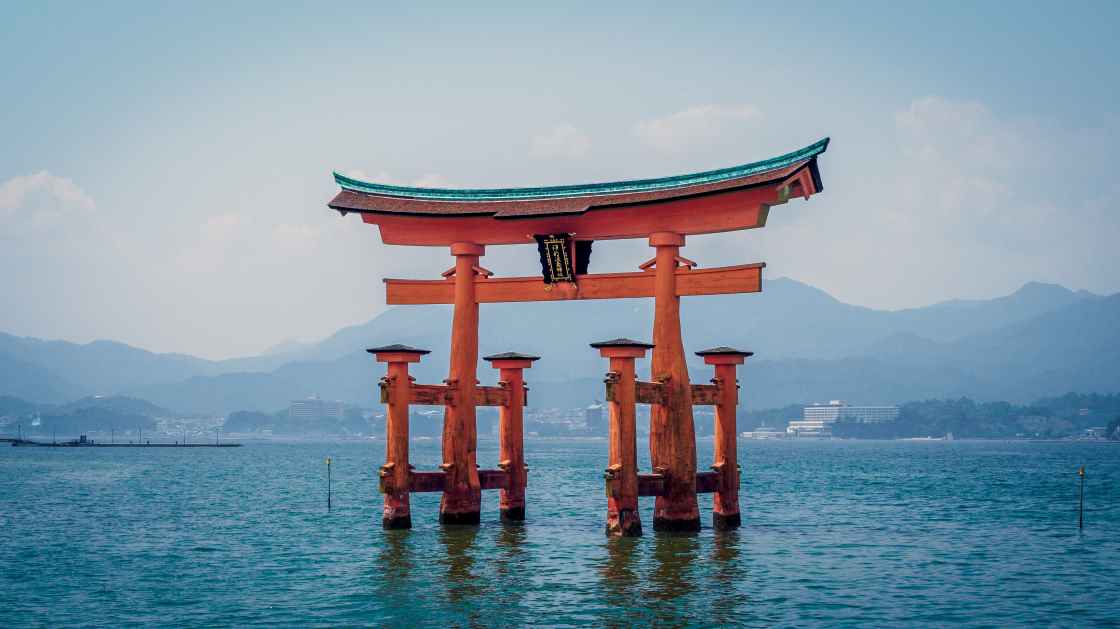
Pic Courtesy-Nicki Eliza Schinow at unsplash.com
(The views expressed are those of the author and do not represent views of CESCUBE.)

Gitanjali Sinha Roy is Assiatnt Professor at O P Jindla Global University and is a Ph.D. scholar at the Department of East Asian Studies, University of Delhi with specialisation in Japanese Studies. At present, she is a visiting Monbukagakusho (MEXT) Scholar at the University of Tokyo. Her M.Phil dissertation was Role of Female Labour Force in Japanese Economic Development: A Case Study of Womenomics in Abe's Reform Strategy. Gitanjali is a graduate in Political Science (Hons) from Miranda House and completed her post-graduation from Lady Shri Ram College of Commerce in Political Science as well. Her interest areas comprise of India and Japan's Foreign Policy, Security Strategy and Diplomacy, India-Japan Relations: Maritime Security and Strategy in the Indo-Pacific and Southeast Asian and South Asian Politics, Security Strategy and Diplomacy. Ms Roy had worked working with Centre for Land Warfare Studies(CLAWS) as a research assistant. Gitanjali Sinha Roy is a Research Associate at the Centre for Security and Security Studies (CESCUBE) and apart from this, she is a Fellow at the Japan Division at CESCUBE