Understanding Taiwan's approach towards integration with China
The visit of Nancy Pelosi, the speaker of the US House of Representatives, to Taiwan around the first week of August has negatively altered several aspects of the relationship between the United States and China. The visit was deemed to be ...
Recently, the Chinese forces launched 11 ballistic missiles very close to Taiwan’s northeast and southwest shores. The People’s Liberation Army (PLA) is believed to have conducted its greatest missile test in decades close to Taiwan’s shores. In arguably starker words than ever before, China is reasserting its claim to dominate Taiwan. China stated its commitment to uniting Taiwan with the mainland in a declaration issued a few days ago, adding that it would not rule out using force if necessary. In retaliation for the island country hosting the American, China has also placed a number of economic and trade restrictions on Taiwan.
2. POLITICAL HISTORY OF CHINA AND TAIWAN-
According to historical records, the island, namely Taiwan, was first fully governed by China in the 17th century, when the Qing dynasty took it. After losing the first Sino-Japanese war, they later ceded the island to Japan in 1895. Then, Japan lost the Second World War and it resulted in China seizing the island once more in 1945. However, a civil war broke out in mainland China between Mao Zedong’s Communist Party and Chiang Kai-nationalist government forces. In 1949, the communists triumphed and seized power in Beijing. The vanquished party that was headed by Chiang Kai-shek and the Kuomintang Nationalist Party relocated to Taiwan then. They ruled the island for a very long time, and it has played a significant role in the island nation’s history. For many years, Taiwan, not the CCP-ruled mainland of China, was a member of the UN and its Security Council. In the 1970s, that, too, changed. The United Nations General Assembly decided to admit Mainland China as a member in place of Taiwan in 1971. As part of the One China Policy, the United States broke up diplomatic ties with Taiwan in order to establish official diplomatic ties with China on January 1, 1979.
3. WHAT IS THE ‘ONE-CHINA POLICY’?
It is a diplomatic recognition of China’s stance that there is only one Chinese government, and it is the cornerstone of US-Sino ties. Under the policy, China, not the island of Taiwan, is recognised by the US and is the party to official relations. As a result of this policy, the US recognises and maintains diplomatic relations with China rather than Taiwan, which China views as a secessionist province.
Taiwan, according to China, is an integral component of its country. Therefore, any nation seeking to establish diplomatic connections with mainland China must sever all diplomatic ties with Taipei. The main clause of this One-China 1979 agreement, which was made under President Jimmy Carter’s administration, reads, “The People’s Republic of China and the United States of America have agreed to recognise and respect each other and to establish diplomatic relations as of January 1, 1979. The United States of America acknowledges the People’s Republic of China’s government as being the only legitimate government in China. The people of the United States will continue to have informal cultural, economic, and other relationships with the people of Taiwan within this framework.” Since then, the US has continued to adhere to this policy and has kept official diplomatic connections with Beijing and unofficial links with Taiwan.
4. TAIWAN STRAIT CRISIS-
The First Taiwan Strait Crisis of 1954–1955 had the greatest potential for escalation. The People’s Liberation Army successfully conducted amphibious operations that resulted in the capture of many tiny islands, and there was heavy shelling of outlying islands and nuclear weapons discussions by the United States. Then came the Sino-Soviet split, which was exacerbated by Mao Zedong’s boldness during the Second Taiwan Strait Crisis in 1958, which even scared off Soviet leader Nikita Khrushchev. The third Taiwan Strait crisis started when President Lee Teng-hui accepted a speech-giving invitation from Cornell University, his alma school, to discuss “Taiwan’s Democratization Experience.” The PRC opposed similar visits by ROC (Taiwanese) officials in an effort to isolate the Republic of China diplomatically. The House approved a concurrent resolution urging the State Department to let Lee visit the United States in May 1995. The US’s change in policy infuriated Jiang Zemin, the general secretary of the CCP, and the leadership of the People’s Republic of China. The People’s Liberation Army (PLA) undertook missile tests, and the PRC responded on July 7, 1995, claiming that this stance would jeopardise regional security and peace. The PRC also assembled its soldiers in Fujian at the same time. From August 15 to August 25, 1995, the second round of missile firings was combined with live fire drills. August’s naval drills were followed by November’s widely publicised amphibious assault drills. The US government’s response was the largest exhibition of American military power in Asia since the Vietnam War. The PLA began its third round of testing and launched missiles off the ports of Keelung and Kaohsiung, barely inside the ROC’s territorial seas. These experiments hampered the targeted ports through which more than 70% of commercial shipping went. President Clinton’s administration declared that the USS Independence carrier battle group (CVBG), which was already stationed in the western Pacific, would be sent to international seas close to Taiwan. As a result of the back-and-forth use of force, PRC’s attempt was counter-productive. The military tests and drills bolstered the case for more US arms sales to the ROC and increased military cooperation between the US and Japan, which increased Japan’s contribution to Taiwanese defence.
5. THE FOURTH TAIWAN STRAIT CRISIS-
The Fourth Taiwan Strait Crisis was brought on by Chinese military drills that got underway on August 3, 2022. Speaker Nancy Pelosi’s travel to Taipei was the primary cause of this. However, there are greater issues at play in this situation. The Sino-American relationship has been steadily deteriorating, and in a related development, Beijing sees the change in the US-Taiwan relationship to be extremely concerning. Possibly today, it is worse than the third and is likely to last for weeks or even months. Events have already crossed significant thresholds. On their way to targets east of the main island, five to nine missiles flew over Taiwan. Two of the original exercise boxes included areas that fell within Taiwan’s claimed territorial seas, and one of them is located just a few miles from a tiny Taiwanese island. Five missiles were fired at targets outside of China’s disputed exclusive economic zone, which Japan claims to be there. Although breaches of Taiwan’s air defence identification zone have increased lately, they have also become worse recently. Two Chinese carriers have been launched, Chinese helicopters have circled Taiwan’s offshore islands, and further drills have been announced. Other nations’ military activity has been considered in addition to China’s. More than just a normal deployment, the US has built up significant naval assets in Northeast Asia. These deployments may have been planned for a while. Others, though, like one of the small carriers launched recently, are unmistakably responses to Chinese aggressiveness. As a result, there is a significant buildup of forces that are ready to keep an eye on the environment around Taiwan. The overflight of Taiwanese airspace undoubtedly enhances the requirement for surveillance and raises the possibility of a force-on-force confrontation. China has intensified the military aspect of this crisis beyond the previous one and the diplomatic and economic aspects. The Democratic People’s Party’s more strident supporters were the focus of several carefully constructed economic penalties imposed on Taiwan. Since Pelosi’s arrival, basic distributed denial-of-service assaults have occasionally brought down official and media websites in Taiwan. Even if Beijing concludes its upcoming round of military drills soon, the historical record and current environment indicate that a rapid resolution is improbable.
Beijing believes that Washington is abandoning its “One China Policy” and forging an increasingly formal alliance with Taiwan. This jeopardises Beijing’s primary strategic objective. The national security apparatus of the United States will not stand idly by as Chinese military coercion appears. This is crucial for Washington to continue supporting Taiwan while also assuring its regional friends, some of whom will be far more concerned about the Chinese drills than American citizens at large. A well-written, polished white paper outlining the current aspects of Chinese policy towards Taiwan was published.
6. WAY AHEAD-
This crisis would certainly heighten mistrust between Washington and Beijing. Relations between the two sides had already deteriorated, probably starting in 2008 and escalating after 2018. The current situation will exacerbate tensions and solidify shared perceptions on both sides that the relationship is one of military rivalry. The fundamental military balance on both sides of the Taiwan Strait has shifted, Chinese nationalism has adopted a repulsive militaristic tone, and Xi has suggested that “progress” on the Taiwan problem is necessary. It is obvious that the United States cannot “fix” the situation on its own without forsaking a crucial regional ally. Whatever occurs, the Fourth Taiwan Strait Crisis will be remembered as a critical turning point in Sino-American relations. While the United States works to reassure Taiwan and other friends, China specifically aims to stop a gradual but persistent change in Taiwan’s status. Outright conflict can be averted with good statesmanship and a little luck, but none of these things is ever guaranteed. It remains to be observed how things are going to pan out in the Strait.
REFERENCES-
1. Affairs, M. of F. - [Text]. Ministry of Foreign Affairs; Ministry of Foreign Affairs. http://www.taiwan.gov.tw/content_3.php
2. Background and Overview | Center for Strategic and International Studies. (n.d.), from https://www.csis.org/programs/international-security-program/isp-archives/asia-division/cross-strait-security-initiativ-0
3. China and Taiwan: A really simple guide. (2022, August 8). BBC News. https://www.bbc.com/news/world-asia-china-59900139
4. Explained: The ‘One China’ policy on Taiwan and India’s stance on it. (2022a, August 4). Firstpost. https://www.firstpost.com/explainers/explained-the-one-china-policy-on-taiwan-and-indias-stance-on-it-11009041.html
5. Explained: What is One China Policy, US’s delicate balancing act on the dispute between China and Taiwan? (2022b, May 23). The Indian Express. https://indianexpress.com/article/explained/everyday-explainers/us-one-china-policy-taiwan-dispute-explained-7932395/
6. Explained: What Is The Conflict Between China & Taiwan? Know The Reasons, History & Present-day Scenario! (2022c, August 9). Jagranjosh.Com. https://www.jagranjosh.com/general-knowledge/what-is-the-conflict-between-china-taiwan-reasons-history-present-day-scenario-1660049843-1
7. Hass, J. C. and R. (2021, March 30). Understanding Beijing’s motives regarding Taiwan, and America’s role. Brookings. https://www.brookings.edu/on-the-record/understanding-beijings-motives-regarding-taiwan-and-americas-role/
8. Milestones: 1953–1960—Office of the Historian. (n.d.), from https://history.state.gov/milestones/1953-1960/taiwan-strait-crises
9. N, P, & R. (2022, August 14). Why China is reasserting its right of control over Taiwan. NPR. https://www.npr.org/2022/08/14/1117418888/why-china-is-reasserting-its-right-of-control-over-taiwan
10. Taiwan History. (n.d.), from https://www.mfa.gov.cn/ce/celv/eng/zt/twwt/t251056.htm
11. When China Did Missile Tests in Taiwan Strait in 1996; Is Beijing Miscalculating Pelosi’s Visit? (2022, August 4). News18. https://www.news18.com/news/world/when-china-went-ballistic-with-military-drills-in-taiwan-in-1996-is-beijing-miscalculating-nancy-pelosis-visit-5687941.html
12. Why China-Taiwan Relations Are So Tense. (n.d.). Council on Foreign Relations, from https://www.cfr.org/backgrounder/china-taiwan-relations-tension-us-policy-biden
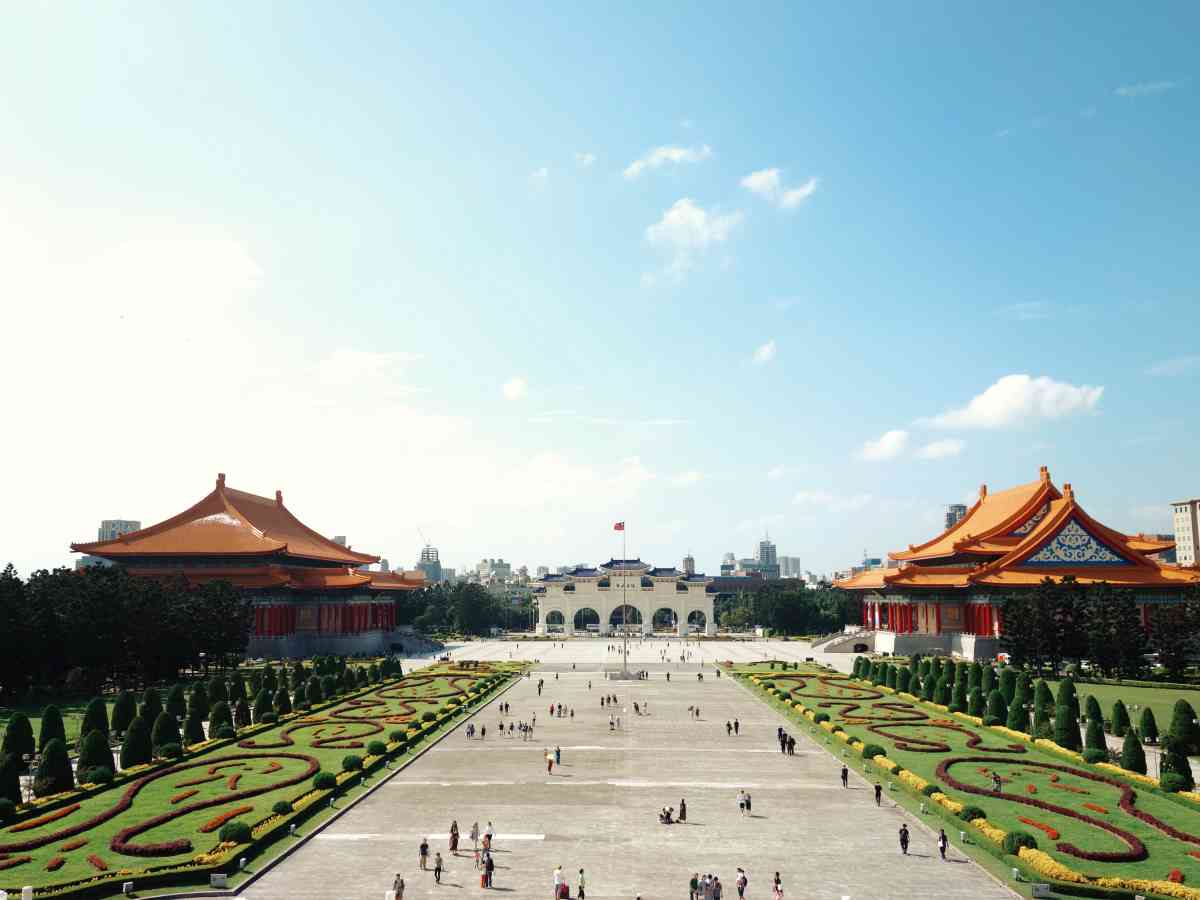
Pic Courtsey-Rovin Ferrer at unsplash.com
(The views expressed are those of the author and do not represent views of CESCUBE.)

Samikshya Das currently is pursuing Masters in International Studies at Symbiosis School of International Studies. She is a law graduate and has worked as a reporter. She is also working as a content writer and research intern for various online portals.