Unlocking of Brobdingnagian Economic Value
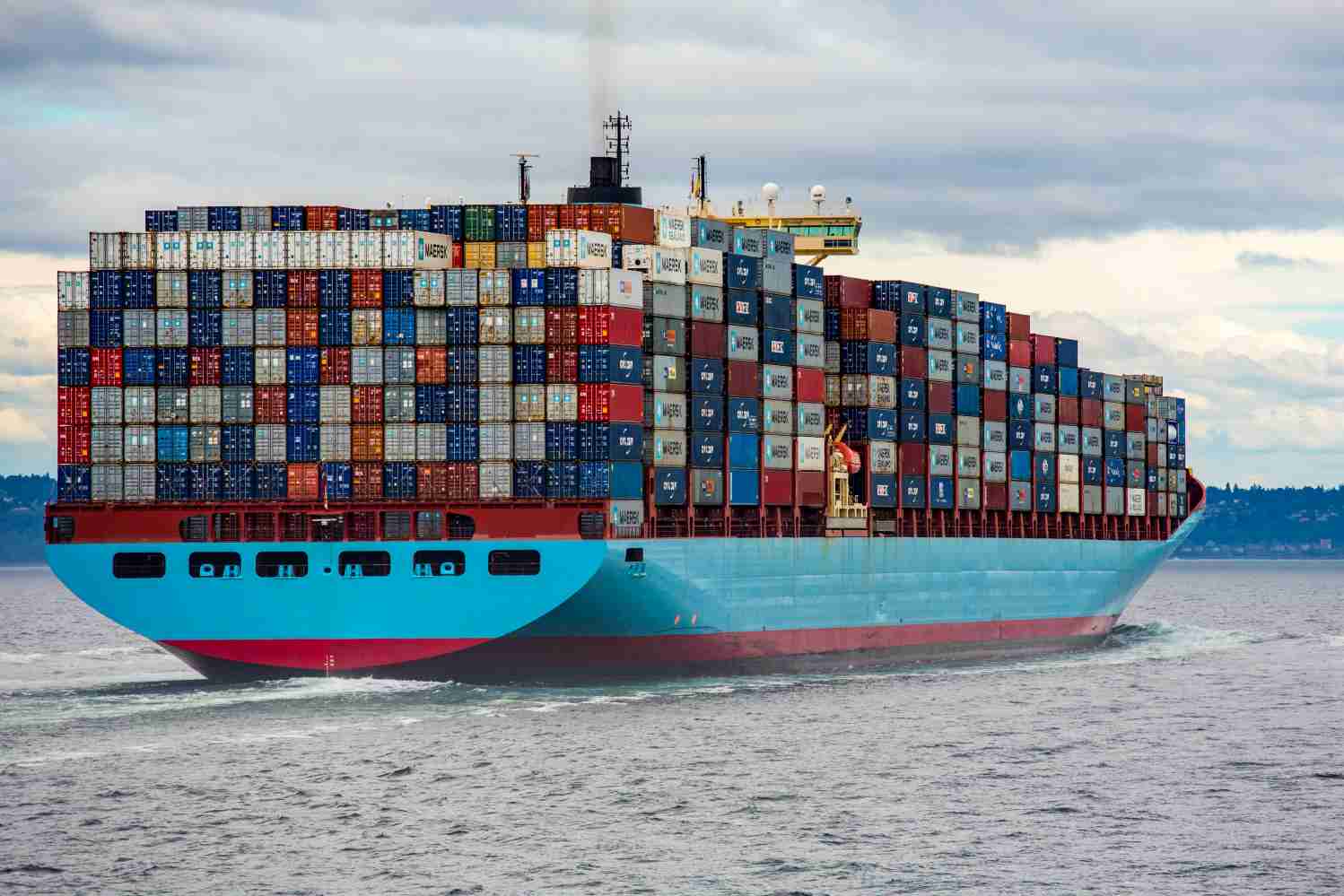
A project that can boost exports by 110 billion, lead to an infrastructure investment mobilization of 4 lakh crore, logistics cost saving of 35000-40000 crore per annum and double the share of inland and coastal waterways is none other than...
Cabinet Committee on Economic Affairs (CCEA) accorded approval for the implementation of PM Gati Shakti Master Plan on 21st October, 2021. This plan lays down a transformative approach for economic growth and sustainable development. It’s primarily driven by 7 engines with the development of freight corridors being one of them. Approximately, 95% of India’s merchandise trade passes through sea ports but without the necessary concomitant of these ports being industrially efficient. Indian ports still have quite a few infrastructural challenges on their paths before they are given the tag of being “fully efficient”.
There is a dire need for port-led development which makes the Sagarmala project even more relevant today. The GDP growth rate in India is 8.7% and developed ports are only going to increase these numbers by a greater margin. To sustain future economic growth, many ports are evolving into centres of economic activities and services like the Jawaharlal Nehru Port Trust, Mundra Port, Sikka Port, and Hazira Port. 87% of Indian freight uses either road or rail for transportation of goods. What calls for the need to develop sea ports? Water-borne transport is much cheaper, safer, and cleaner compared to other modes of transport. It’s share in India’s total modal split is only 6%.
There are primarily three compelling reasons for the enhancement of the ports’ operational efficiency. Firstly, turnaround time (TAT) which is the period of time required for completing a particular process or task since the moment it’s formally demanded was 2.5 days in 2018-19 but the global average stood at 1-2 days. Only a handful of private sector ports like Mundra and Gangavaram are in the global league. Secondly, a significant share of cargo experiences “idle time” during its transit to the ports due to capacity constraints on highways and railway lines connecting ports to production and consumption centres. Thirdly, the large distances between industries/ manufacturing centres with respect to the ports presents the last problem. The large lead distances further add to the stakeholders’ cost.
This project was ideated upon as the policy makers were aware of the potential of India’s 7,500 km coastline that could be effectively harnessed. Hence, the concept of Sagarmala was approved by the Union Cabinet on 25th March, 2015. As part of the programme, a National Perspective Plan (NPP) for the comprehensive development of India’s coastline, 14, 500 km of potentially navigable waterways and maritime sector was released by the prime minister on 14th April, 2016 at the Maritime India Summit 2016. Its vision is to reduce logistics cost for both domestic and EXIM (any loose cargo/ bulk cargo/ liquid cargo/ break-bulk cargo/ containerized cargo bound for export and import) cargo with optimized infrastructure investment. In addition to this, Sagarmala aims to reduce carbon emissions from transportation sector by 12.5 MT per annum.
Manufacturing industries will be structurally more competitive if developed proximate to coastline/ waterways. This is because they would be supported by efficient and modern port infrastructure and seamless multi modal connectivity. Some sort of a symbiotic relationship would also emerge in the sense that the denizens of the areas adjoining the coastline could earn a livelihood from the economic opportunities that the industrially efficient coastline will have to offer. This would require the government to sponsor skill development in the targeted localities. Sagarmala’s main aim was unleashing India’s vast economic potential. In addition to that, this novel project will also lead to employment generation. Yet another manifestation will be human resource development.
For ease of understanding, this project’s goals can be broken down into four components namely logistics incentive industries, efficient ports, seamless connectivity and requisite skill base. De-bottlenecking and capacity expansion of existing ports and development of new greenfield ports will facilitate the construction of logistics incentive industries. Enhancing the connectivity of the ports to the hinterland, optimizing cost and time of cargo movement through multi-modal logistics solutions including domestic waterways (inland water transport and coastal shipping) will foster seamless connectivity. Developing port-proximate industrial clusters and Coastal Economic Zones to reduce logistics cost and time of EXIM and domestic cargo will further enhance efficiency. Skill development of the locals will lead to overall development of the coastal communities. Fisheries development and coastal development will also get strengthened as a result. As water-borne transport is cheaper and environmentally friendly; coastal shipping and inland waterways transport will become sustainable.
The institutional framework of this programme provides a platform for the Central, State and local governments to work in tandem under the established principles of “cooperative federalism”. The structure of the programme consists of three separate bodies- National Sagar?mala Apex Committee, Sagarmala Coordination and Steering Committee, and Stage Sagarmala Committee. The Apex committee which is chaired by the Minister of Shipping, Cabinet Ministers from the stakeholder ministries Chief Ministers/ Ministers in charge of ports of maritime states approves the national perspective plan, reviews the various aspects of planning and implementation. The Coordination committee is chaired by the Cabinet Secretary, and Chief secretaries of states whose projects are included in the agenda. It reviews the progress of implementation of NPP, Detailed Master Plans and projects, examines the financing options available for project funding, and provides coordination between efforts of various ministries, state governments and agencies. The state committee consists of Chief Minister/ Minister in charge of ports and takes up matters on priority as decided in the National Security Analysis Center (NSAC).
Ports are at the heart of sustainable development. Port management has implications for economic growth, crisis response efforts, environmental protection and gender equality. According to the World Bank and S&P Global Market Intelligence, Middle East container ports are the most efficient in the world. China has also fared well on this index. Saudi Arabia’s King Abdullah Port tops the ranking in 2021, with regional competitors Port Salalah in Oman, Hamad Port in Qatar and Khalifa Port in Abu Dhabi rounding out the top five. Saudi Arabia’s Jeddah Islamic Port also featured strongly in eighth place overall. The new report also highlights the resilience of East Asian ports and the capacity of Chinese ports in particular to effectively handle challenges brought about by the pandemic. Chennai’s rank on this report is 79 out of 320. This comparative analysis suggests that India still has a long way to go.
With the aim to strengthen the coastal economy, old ports are being modernized and new ports are being built. Currently, a total of 802 projects of worth Rs 5.53 lakh crore are a part of the Sagarmala Programme. Out of these, 172 projects worth of Rs. 88,235 crores have been completed and 235 projects worth Rs. 2.17 lakh crore are under implementation. The total volume of traffic handled by Indian ports has risen from 1,052.1 in FY 2014-15 to 15,00 million tonnes per year now. At the same time, a roadmap has been prepared to increase the Indian port capacity to 3300+ MMPTA by 2025 to meet the growing traffic. The real potential of this sector was ignored for decades in India. However, the periods of oblivion are finally over. As of now, under Project Unnati, global benchmarks have been adopted to improve the Key Performance Index (KPI) of efficiency and productivity for 12 major ports. A new port at Vadhavan in Maharashtra is likely to be developed to fill the demand gap. The old acts and regulations had restricted the development of Indian ports. With the growth of the Indian economy and its liberal laws and policies, Project Sagarmala is free to revolutionize India’s coastline.
REFERENCES
1. 25th May, 2022, Middle East Container Ports are the most efficient in the world, https://www.worldbank.org/en/news/press-release/2022/05/25/middle-east-container-ports-are-the-most-efficient-in-the-world
Pic Courtesy-Iam Taylor ta unsplash.com
(The views expressed are those of the author and do not represent views of CESCUBE.)

Annesha Sarkar, a first year student pursuing a Bachelor of Arts (Honours) in Economics with a minor in Psychology from Lady Shri Ram College for Women, University of Delhi. She is currently working as a Resource Liaison for Dweebs Global North India which aims to provide free mentorship, career advice and mental health help. Her areas of interest include writing, economics and dramatics.