LIVE DISPATCH
Loss and Damage Finance: From COP28 Pledges to Policy Architecture Extended Deterrence Under Strain: Credibility, Assurance, and the Stability-Instability Paradox in the Indo-Pacific Beyond Consultation: BIMSTEC's Emerging Role in Regional Intelligence and Security Cooperation Maritime India: Security, Trade, and Great Power Competition Between the Desert and the Savannah: Conflict and the Political Economy of Instability in the Sahel Beyond Ukraine: Understanding Putin's Vision of Russian Power The Politics of Ali Khamenei's Funeral Silicon Sovereignty: How Semiconductors Are Redrawing Global Power Hierarchies Operation Sindoor and the Changing Dynamics of India–Pakistan Security The Negative Impact of US–Iran War on the Pacific Region Generative AI, Labour Sovereignty, and the Geoeconomics of India's Service Economy BRICS Expansion and the Multipolar Moment: Opportunity or Strategic Contradiction? India's AI Diplomacy and the Future of Strategic Technologies Foot-Dragging as Feminism: Iran, South Korea, and the Ungovernable Body Lethal Autonomous Weapons Systems and the Governance Deficit: Challenges to International Humanitarian Law and Accountability Beyond Proximity: Why the UAE Occupies a Growing Place in Iran’s Strategic Calculus Great Power Rivalry and the Crisis of the United Nations Why Fiji Matters: The New Geopolitics of the Indo-Pacific Islands Ten Years After Brexit: Regret, Reform, or Reversal? The Long Shadow of 1953: Understanding the Iran–US Conflict Sports, Strategy and Statecraft of Mega Sporting Events as Geoeconomic Instruments: Qatar 2022 to Saudi Arabia 2034 Border Fencing and National security: India’s Strategy along the Bangladesh Border Hardening the Quad: From Strategic Dialogue to Operational Cooperation Lingering Effects of the Bush Doctrine on Contemporary US Foreign Policy The Maghreb of States: Identity, Sovereignty, and the Limits of Non-Interference India’s BRICS 2026 Chairmanship Navigating a tightrope Amidst the Chinese Geopolitical Rise Beyond the Battlefield: Understanding Unconventional Security Challenges in Contemporary Geopolitics The Control Paradox: How Proxy Warfare Enables Strategic Deniability While Constraining Strategic Control Trapped in Deterrence: Nuclear Stability and the Persistence of Conflict in South Asia The Return of Unipolarity? U.S Strategic Primacy and the Future of the Global Order Supply Chains and Complicity: The Role of Global Corporations in Forced Labour in Xinjiang The Distant Threat: Is Israel Constructing a Strategic Rival in Pakistan Island Militarisation and Techno-Diplomacy: Turkey’s Eastern Mediterranean Fault Lines Amid India-Greece Alignment India’s Security Scenario: An Assessment of its Continental and Maritime Challenges The Geopolitical Architecture of European Defence: Navigating NATO Synergies, Transatlantic Retrenchment, and the Hybrid Threat Landscape The Artemis Accords and the Future of Global Space Governance AI and the Securitization of Critical Infrastructure: Implications of India's AI Summit Beyond Rhetoric: Evaluating the Effectiveness of International Sanctions on China’s Treatment of Uyghur Muslims The Emerging Maritime Rivalry in the Western Indian Ocean: India’s Response to Extra-Regional Powers India's Maritime Grand Strategy on Trial : The IRIS Dena Incident and the Indian Ocean Question Loss and Damage Finance: From COP28 Pledges to Policy Architecture Extended Deterrence Under Strain: Credibility, Assurance, and the Stability-Instability Paradox in the Indo-Pacific Beyond Consultation: BIMSTEC's Emerging Role in Regional Intelligence and Security Cooperation Maritime India: Security, Trade, and Great Power Competition Between the Desert and the Savannah: Conflict and the Political Economy of Instability in the Sahel Beyond Ukraine: Understanding Putin's Vision of Russian Power The Politics of Ali Khamenei's Funeral Silicon Sovereignty: How Semiconductors Are Redrawing Global Power Hierarchies Operation Sindoor and the Changing Dynamics of India–Pakistan Security The Negative Impact of US–Iran War on the Pacific Region Generative AI, Labour Sovereignty, and the Geoeconomics of India's Service Economy BRICS Expansion and the Multipolar Moment: Opportunity or Strategic Contradiction? India's AI Diplomacy and the Future of Strategic Technologies Foot-Dragging as Feminism: Iran, South Korea, and the Ungovernable Body Lethal Autonomous Weapons Systems and the Governance Deficit: Challenges to International Humanitarian Law and Accountability Beyond Proximity: Why the UAE Occupies a Growing Place in Iran’s Strategic Calculus Great Power Rivalry and the Crisis of the United Nations Why Fiji Matters: The New Geopolitics of the Indo-Pacific Islands Ten Years After Brexit: Regret, Reform, or Reversal? The Long Shadow of 1953: Understanding the Iran–US Conflict Sports, Strategy and Statecraft of Mega Sporting Events as Geoeconomic Instruments: Qatar 2022 to Saudi Arabia 2034 Border Fencing and National security: India’s Strategy along the Bangladesh Border Hardening the Quad: From Strategic Dialogue to Operational Cooperation Lingering Effects of the Bush Doctrine on Contemporary US Foreign Policy The Maghreb of States: Identity, Sovereignty, and the Limits of Non-Interference India’s BRICS 2026 Chairmanship Navigating a tightrope Amidst the Chinese Geopolitical Rise Beyond the Battlefield: Understanding Unconventional Security Challenges in Contemporary Geopolitics The Control Paradox: How Proxy Warfare Enables Strategic Deniability While Constraining Strategic Control Trapped in Deterrence: Nuclear Stability and the Persistence of Conflict in South Asia The Return of Unipolarity? U.S Strategic Primacy and the Future of the Global Order Supply Chains and Complicity: The Role of Global Corporations in Forced Labour in Xinjiang The Distant Threat: Is Israel Constructing a Strategic Rival in Pakistan Island Militarisation and Techno-Diplomacy: Turkey’s Eastern Mediterranean Fault Lines Amid India-Greece Alignment India’s Security Scenario: An Assessment of its Continental and Maritime Challenges The Geopolitical Architecture of European Defence: Navigating NATO Synergies, Transatlantic Retrenchment, and the Hybrid Threat Landscape The Artemis Accords and the Future of Global Space Governance AI and the Securitization of Critical Infrastructure: Implications of India's AI Summit Beyond Rhetoric: Evaluating the Effectiveness of International Sanctions on China’s Treatment of Uyghur Muslims The Emerging Maritime Rivalry in the Western Indian Ocean: India’s Response to Extra-Regional Powers India's Maritime Grand Strategy on Trial : The IRIS Dena Incident and the Indian Ocean Question
ADVERTISEMENT
Military January 3, 2021 2465 Reads

US Base in Diego Garcia and the Mauritian Deal
K
By Krupa Vasani
Author • Centre for Security & Strategic Studies
US Base in Diego Garcia and the Mauritian Deal
Share Analysis:
EXECUTIVE SUMMARY & STRATEGIC TAKEAWAYS

When the Mauritian Prime Minister Jugnauth congratulated the U.S President elect Joe Biden, the political storm on the issue of the Diego Garcia became intense. A secret military island, Diego Garcia is an important territory for USA as it ...

ADVERTISEMENT

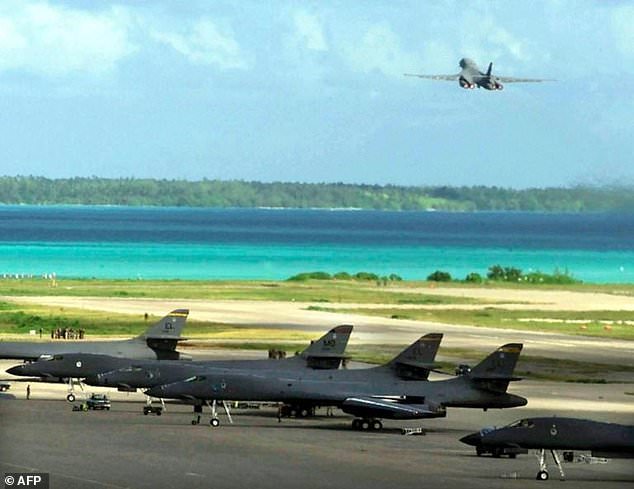
Diego Garcia is one of the largest islands of Chagos Archipelago situated in the Central Indian Ocean. A narrow strip of land which only measures 63 kilometres in length, the island has an open access to a lagoon of 21 kilometres which provided access to inbound and outbound naval ships supplying goods and personnel. Even though the island serves a military base of United States, it is a colonial remnant of Britishers which now is under the sovereign territory of Mauritius.

United States presence on the island can be traced back to the 1960's when they recognised that the growing importance of the Indian Ocean in the geopolitics. Stretched between, the continent of East Africa, Persian Gulf, and the shores of Australia, Indian Ocean covers around 70 million square kilometres of area. The nations which share a border with the Indian Ocean are home to around one third of the world population. The Indian Ocean is also of great importance because this geographical space is home to 62 per cent of the oil reserves, 35 per cent of the gas reserves, 40 per cent of the gold, 60 per cent of the aluminum and 80 per cent of the world's diamond. The Indian Ocean also has some of the world's key transit sea routes through which 20 per cent of the world's oil supply is imported and 93per cent of the oil from the Persian Gulf is exported.

When in 1971 the British decided to withdraw from its major military bases east of the Suez in 1971, there was a fear of power vacuum in the Indian Ocean. At the same time, the Cold War was going on and it’s the increased presence of Soviet Union was already being felt in the East Africa. At this point, USA decided to increase its foothold in the Indian Ocean to counter the Soviet presence and created bases in the sparsely habited islands of colonial Britain. But the power vacuum was soon replaced by power confrontations in the Indian Ocean as both the blocs, USA and USSR, deployed their naval fleets in the region.

Diego Garcia is important for four main reasons. It operates as a staging ground for one third of all the strategic sealift ships which are located in the lagoon. These ships help in supplying personnel, supplies and ammunition to support all the branches during the situations of rapid deployment. Secondly, it is also the docking location for the US navy fast attack submarines and surface ships that need fueling. Third, the airfield of the island also supported the military campaigns in Iraq and Afghanistan. Finally, the island also supports the US military worldwide communication within the Indian Ocean region.

While the Chagos Archipelago was initially under the control of Britain; in 2019, The International Court of Justice affirmed that the Chagos is a part of Mauritian territory. This has created a dilemma as according to the lease signed between United States and UK, the lease of tenant ship has been renewed according to which the Mauritius cannot take the control of the island (the lease is interpreted this way). But after the verdict of the ICJ, there has been a global push for UK to divest itself from the British Indian Ocean Territory (the name of the tenant lease which was signed between US and UK for Diego Garcia) and return the small collection of islands to its former colony - Mauritius.

It has also been highlighted that UK has not lived up to its end of bargain with Mauritius to grant it political and economic access to Archipelago. UK is putting up a stiff game even after the decision of the ICJ to cease its illegal occupation of Diego Garcia. UK issues a statement that it was lawfully in legal possession of Chagos and hence this reaffirmed UK's continued sovereignty of the island group. While US has issued a statement that the BIOT is a bilateral issue between UK and Mauritius that should be addresses through negotiations, one cannot ignore that Diego Garcia and its control is of utmost importance to US in the current geopolitical climate.

The Mauritian government has made an offer of 99 year lease to the US and this move has the support of the Mauritian people as well as the other political parties. Most of the scholars are of the opinion that the US should agree to the deal given that a lot of its foreign policy manoeuvres are at the stake. Given the shifting tides in the strategic planning with an emphasis on the Indo-Pacific region and the increased focus on the Quad (a US, India, Japan and Australia security grouping to counter the rise of Chinese influence in the region), the analysts are now following all the diplomatic moves between the three countries.

While London says that the control of BIOT is not in doubt and their rule is legitimate despite the ICJ verdict, Mauritius is determined to keep the issue on the U.N agenda in a bid to isolate UK's decision. In doing so, it has also shed spotlight on Washington to take a stand on the matter regarding a contested territory in South China Sea where it could not only challenge China's claims. While the Trump government did not speak a lot on this matter, the Biden government will in some ways have to take a position, given that the rule of law under the Biden government will be different from what is was under Trump. This will not be a smooth sailing as UK is an important ally of US and taking a 'correct and legal' stand would mean going against UK.


Pic Courtesy-https://www.lemauricien.com/

(The views expressed are personal.)
Krupa Vasani
About Krupa Vasani →

Krupa Vasani is a current Scholar at The Vedica’s Scholar Program, New Delhi and is pursuing her MBA in Management and Leadership. An undergraduate from O. P Jindal Global University, Krupa holds a bachelors in International Relations. Over the course of three years as an undergraduate, Krupa has developed an interest in the Security and Strategic Studies and Development Sector. Indian Foreign Policy, South South Cooperation and the Strategy in Indo-Pacific and South Asian Politics and the emerging Quadrilateral Diplomacy are some of her areas of interest. She is currently associated with CESCUBE as part time researcher.
ADVERTISEMENT

Related Strategic Analysis