LIVE DISPATCH
Loss and Damage Finance: From COP28 Pledges to Policy Architecture Extended Deterrence Under Strain: Credibility, Assurance, and the Stability-Instability Paradox in the Indo-Pacific Beyond Consultation: BIMSTEC's Emerging Role in Regional Intelligence and Security Cooperation Maritime India: Security, Trade, and Great Power Competition Between the Desert and the Savannah: Conflict and the Political Economy of Instability in the Sahel Beyond Ukraine: Understanding Putin's Vision of Russian Power The Politics of Ali Khamenei's Funeral Silicon Sovereignty: How Semiconductors Are Redrawing Global Power Hierarchies Operation Sindoor and the Changing Dynamics of India–Pakistan Security The Negative Impact of US–Iran War on the Pacific Region Generative AI, Labour Sovereignty, and the Geoeconomics of India's Service Economy BRICS Expansion and the Multipolar Moment: Opportunity or Strategic Contradiction? India's AI Diplomacy and the Future of Strategic Technologies Foot-Dragging as Feminism: Iran, South Korea, and the Ungovernable Body Lethal Autonomous Weapons Systems and the Governance Deficit: Challenges to International Humanitarian Law and Accountability Beyond Proximity: Why the UAE Occupies a Growing Place in Iran’s Strategic Calculus Great Power Rivalry and the Crisis of the United Nations Why Fiji Matters: The New Geopolitics of the Indo-Pacific Islands Ten Years After Brexit: Regret, Reform, or Reversal? The Long Shadow of 1953: Understanding the Iran–US Conflict Sports, Strategy and Statecraft of Mega Sporting Events as Geoeconomic Instruments: Qatar 2022 to Saudi Arabia 2034 Border Fencing and National security: India’s Strategy along the Bangladesh Border Hardening the Quad: From Strategic Dialogue to Operational Cooperation Lingering Effects of the Bush Doctrine on Contemporary US Foreign Policy The Maghreb of States: Identity, Sovereignty, and the Limits of Non-Interference India’s BRICS 2026 Chairmanship Navigating a tightrope Amidst the Chinese Geopolitical Rise Beyond the Battlefield: Understanding Unconventional Security Challenges in Contemporary Geopolitics The Control Paradox: How Proxy Warfare Enables Strategic Deniability While Constraining Strategic Control Trapped in Deterrence: Nuclear Stability and the Persistence of Conflict in South Asia The Return of Unipolarity? U.S Strategic Primacy and the Future of the Global Order Supply Chains and Complicity: The Role of Global Corporations in Forced Labour in Xinjiang The Distant Threat: Is Israel Constructing a Strategic Rival in Pakistan Island Militarisation and Techno-Diplomacy: Turkey’s Eastern Mediterranean Fault Lines Amid India-Greece Alignment India’s Security Scenario: An Assessment of its Continental and Maritime Challenges The Geopolitical Architecture of European Defence: Navigating NATO Synergies, Transatlantic Retrenchment, and the Hybrid Threat Landscape The Artemis Accords and the Future of Global Space Governance AI and the Securitization of Critical Infrastructure: Implications of India's AI Summit Beyond Rhetoric: Evaluating the Effectiveness of International Sanctions on China’s Treatment of Uyghur Muslims The Emerging Maritime Rivalry in the Western Indian Ocean: India’s Response to Extra-Regional Powers India's Maritime Grand Strategy on Trial : The IRIS Dena Incident and the Indian Ocean Question Loss and Damage Finance: From COP28 Pledges to Policy Architecture Extended Deterrence Under Strain: Credibility, Assurance, and the Stability-Instability Paradox in the Indo-Pacific Beyond Consultation: BIMSTEC's Emerging Role in Regional Intelligence and Security Cooperation Maritime India: Security, Trade, and Great Power Competition Between the Desert and the Savannah: Conflict and the Political Economy of Instability in the Sahel Beyond Ukraine: Understanding Putin's Vision of Russian Power The Politics of Ali Khamenei's Funeral Silicon Sovereignty: How Semiconductors Are Redrawing Global Power Hierarchies Operation Sindoor and the Changing Dynamics of India–Pakistan Security The Negative Impact of US–Iran War on the Pacific Region Generative AI, Labour Sovereignty, and the Geoeconomics of India's Service Economy BRICS Expansion and the Multipolar Moment: Opportunity or Strategic Contradiction? India's AI Diplomacy and the Future of Strategic Technologies Foot-Dragging as Feminism: Iran, South Korea, and the Ungovernable Body Lethal Autonomous Weapons Systems and the Governance Deficit: Challenges to International Humanitarian Law and Accountability Beyond Proximity: Why the UAE Occupies a Growing Place in Iran’s Strategic Calculus Great Power Rivalry and the Crisis of the United Nations Why Fiji Matters: The New Geopolitics of the Indo-Pacific Islands Ten Years After Brexit: Regret, Reform, or Reversal? The Long Shadow of 1953: Understanding the Iran–US Conflict Sports, Strategy and Statecraft of Mega Sporting Events as Geoeconomic Instruments: Qatar 2022 to Saudi Arabia 2034 Border Fencing and National security: India’s Strategy along the Bangladesh Border Hardening the Quad: From Strategic Dialogue to Operational Cooperation Lingering Effects of the Bush Doctrine on Contemporary US Foreign Policy The Maghreb of States: Identity, Sovereignty, and the Limits of Non-Interference India’s BRICS 2026 Chairmanship Navigating a tightrope Amidst the Chinese Geopolitical Rise Beyond the Battlefield: Understanding Unconventional Security Challenges in Contemporary Geopolitics The Control Paradox: How Proxy Warfare Enables Strategic Deniability While Constraining Strategic Control Trapped in Deterrence: Nuclear Stability and the Persistence of Conflict in South Asia The Return of Unipolarity? U.S Strategic Primacy and the Future of the Global Order Supply Chains and Complicity: The Role of Global Corporations in Forced Labour in Xinjiang The Distant Threat: Is Israel Constructing a Strategic Rival in Pakistan Island Militarisation and Techno-Diplomacy: Turkey’s Eastern Mediterranean Fault Lines Amid India-Greece Alignment India’s Security Scenario: An Assessment of its Continental and Maritime Challenges The Geopolitical Architecture of European Defence: Navigating NATO Synergies, Transatlantic Retrenchment, and the Hybrid Threat Landscape The Artemis Accords and the Future of Global Space Governance AI and the Securitization of Critical Infrastructure: Implications of India's AI Summit Beyond Rhetoric: Evaluating the Effectiveness of International Sanctions on China’s Treatment of Uyghur Muslims The Emerging Maritime Rivalry in the Western Indian Ocean: India’s Response to Extra-Regional Powers India's Maritime Grand Strategy on Trial : The IRIS Dena Incident and the Indian Ocean Question
ADVERTISEMENT
Military February 11, 2023 1851 Reads

US-Philippines Alliance 2023
V
By Vaibhav Tomar
Author • Centre for Security & Strategic Studies
US-Philippines Alliance 2023
Share Analysis:
EXECUTIVE SUMMARY & STRATEGIC TAKEAWAYS

In 2014, the Philippines and the US signed an agreement that allowed the US to build facilities on the country's military bases. The alliance between the nations is driven by threats. As China's power has increased, the relationship between...

ADVERTISEMENT

Scope of Enhanced Defence Cooperation Agreement (EDCA)

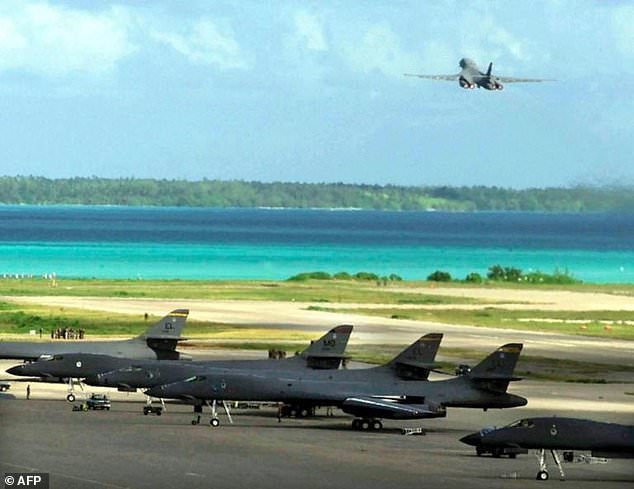
These facilities are intended to enhance the security cooperation between both the nations. However, the allies also need to go beyond these areas to develop a stronger relationship. Military concerns can spill over to other areas, and these can sometimes go unnoticed. Therefore, this EDCA agreement is scheduled to be reviewed in 2024. It provides the Philippines with the opportunity to retain the facilities and improvements that the US has built on its bases even if the deal is terminated. This is a low-risk, high reward deal for the Philippines. It guarantees the country's continued access to the US' security framework.

The modernization of the Philippines' Armed Forces is a vital part of the country's national security. This is evidenced by the annual Balikatan exercises, which are held with the US. They include various types of training and operations such as amphibious exercises and air defense missions. In addition, a U.S.-based firm was able to acquire a shipyard near the former US naval facility in Subic Bay. It will allow the Philippines Navy to have a strategic location and berthing facility on the South China Sea. The US also agreed to provide the Philippines with 12 new helicopters, which will help the country, modernize its military.

Aside from acquiring new equipment, the modernization of the Armed Forces will also require changes in the structure and procedures of the security sector. This can be done through the establishment of new rules and regulations that are designed to improve the effectiveness and accountability of the security sector. Even with the agreement to establish four new bases, the security sector still has a long way to go before it can fully benefit from the partnership. This is why the Philippines and the US have committed to develop a comprehensive roadmap to improve the country's security. One of the most important factors that the two countries must consider is the development of a civilian bureaucracy that can complement the military's modernization.

One of the ways to strengthen the relationship between the US and Philippines is to include various security concerns that are not traditionally considered as core issues of the partnership. These include climate change, illegal fishing, and coastal management. Although these issues are important to the Philippines' national security, they are often neglected. The smooth working of the partnership depends on regular dialogues. One of the most important factors that the Philippines and the US can consider is the establishment of a professional network. This platform can help build a stronger relationship by allowing both countries to exchange ideas and improve their security perceptions.

The new government of the Philippines has taken various steps to improve the relationship with the US. One of these is the establishment of a more measured and significant presence in the country. This allows the US to increase its stakes in the region and counter the growing influence of China. Throughout the time, the Chinese embassy in the Philippines has urged the country to remain vigilant against being exploited by the US following the latest developments regarding the agreement. The presence of the facilities in the country's military bases has made it difficult for China to publicly criticize the deal. This is because it would look like it is interfering with the Philippines' sovereign decision. According to the ambassador of the Philippines to the US, the revamped agreement is not focused on discriminating against any country.


Conclusion

The Philippines' participation in the ongoing US-China competition could help strengthen the country's strategic ambiguity toward its neighbor. This can help compel Beijing to engage in more serious negotiations.  Under the leadership of President Duterte, the Philippines started to cut through the political noise and focus on its national security. This led to a temporary cooling of its relations with China. In 2016, the Philippines secured an arbitration award against China, which effectively limited the country's future presidents' ability to make strategic concessions in the South China Sea. This was a clear indication of President Aquino's intention to maintain the country's territorial integrity. Despite this, the Philippines' relations with China are still considered to be the main factor that affects the country's relationship with the US. The developments that have occurred in the Philippines under the Marcos administration can help strengthen the country's national interest. As a potential ally of the US, it is clear that the Philippines can be a force to be considered in the region. This is why it is important for China to understand that the country can be a "holder-of-balance" in the region. The number of troops and capabilities that the US provides to the Philippines will continue to increase. This is why it is very important that the country's security is reinforced through the implementation of the Enhanced Defense Cooperation Agreement. However, this agreement does not fully address the concerns of the Philippines' policymakers. For instance, it does not provide the country with the security guarantees that are promised under the South China Sea Treaty. Despite the Philippines' geographical position and strategic importance, it is still important for the US to have the country's consent when it comes to its suggestions regarding the development of its force posture. The US would be wrong to interpret the actions of President Ferdinand Marcos as a restoration of normality. Instead, he might be described as a more flexible and less charitable leader than his predecessor, Aquino. The Philippines has started to make a more credible statement regarding its independent foreign policy. This is a step toward establishing a more balanced power structure. It is not as if it is trying to avoid the tensions between China and the US.


Pic Courtsey-The Wire

(The views expressed are those of the author and do not represent views of CESCUBE.)

 

Vaibhav Tomar
About Vaibhav Tomar →

Vaibhav Tomar is pursuing his MA in Environment and politics , and done his MBA from Narsee Monjee Institute of Management Studies, Mumbai. His Key interest areas are International relations, maritime security, defence strategies, foreign policies etc. Email: vtomar866@gmail.com
ADVERTISEMENT

Related Strategic Analysis